What's the difference?
Most buyers don’t care for sedans these days, but those in the premium market are still spoilt for choice, with new model after new model being launched.
The latest on offer is the new Audi S6, which once again attempts to mix executive style with boy-racer performance.
With its predecessor’s 4.0-litre twin-turbo V8 succeeded by an engine that is 1.1 litres and two cylinders short, does it still serve up enough bang for your back?
Of course, the only way to find out is to put the new S6 sedan to test, so that’s exactly what we did. Read on.
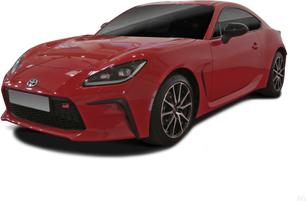
The new, second generation take on the hachi-roku formula adds a serious amount of 'GRRRR' to the mix. This is it - the new-look, more powerful and much angrier Toyota GR86.
It takes the familiar front-engine, rear-wheel-drive sports car formula and mixes in a bit of madness - there’s a more focused chassis setup, redone steering, a firmer ride and of course, a bigger capacity engine. Still no turbo, though.
The question is - does it improve on the original? And can it live up to its new jaw-dropping price?
We adore the new S6 sedan. It looks great, feels comfortable and goes like stink all at the same time. What’s not to like?
It also helps that it is relatively good value, safe and practical by large-sedan standards, so it’s a bit of a no-brainer.
But will buyers be quick to dismiss the new S6 sedan because it’s not a more practical SUV? Time will tell, but we hope not.
Does the new Audi S6 sedan represent the best mix of executive style and boy-racer performance? Tell us what you think in the comments below.
If you’re expecting a faster, angrier and more focused version of the original 86, you’re going to be happy with this car. If you’re expecting it to be as fun and chuckable as the first one, you might be upset.
It has a different character, this GR86 - certainly with more GRRRR than ever before - and it still represents a strong sports car option for buyers, even if it is a fair bit more expensive this time around. It'd be hard not to recommend the GTS version to anyone considering it.
Note: CarsGuide attended this event as a guest of the manufacturer, with travel and meals provided.
To these eyes, the new S6 sedan is very attractive, albeit not outlandish, in keeping with its executive focus.
Up front, the subtly aggressive S body kit immediately comes into frame, with the bumper sporting sinister-looking side air intakes.
And, of course, there’s Audi’s signature Singleframe, which is not only large and in charge, but also finished in gloss-black, like many of the S6 sedan’s exterior design elements.
Below the heavily creased bonnet, the HD Matrix LED headlights look both angry and sophisticated, with their integrated LED daytime running lights (DRLs) providing a crisp signature.
Around the side, the S6 sedan goes about its business quietly, but its blistered wheelarches do add some bulk and help to accentuate its strong shoulder line.
And then there are the thick skirts and 21-inch alloy wheels (with a space-saver spare), which have a sporty twin five-spoke design. It’s all very classy.
Speaking of which, the rear end is arguably the S6 sedan’s best angle thanks to its wicked LED tail-lights, which have a segmented signature.
The chunky bumper below incorporates a diffuser element that houses the quad exhaust tailpipes, while a blink-and-you’ll-miss-it bootlid spoiler rounds out the look.
Inside, the S6 sedan is a technological tour de force, with 10.1- and 8.6-inch touchscreens dominating its centre stack. The former is responsible for most of Audi’s latest multimedia system’s functions, while the latter takes care of the climate controls.
This set-up works pretty well, although a few too many taps are required for certain functions, and then there’s the issue of the glass display coverings, which are absolute fingerprint magnets alongside the gloss-black accents used throughout.
That said, the 12.3-inch digital instrument cluster and windshield-projected head-up display on hand are brilliant. In fact, they set the standard for the entire industry thanks to their design and breadth of functionality.
The S6 sedan does, of course, feel a little bit more special than the regular A6 inside, with the obvious additions being the front sports seats, which are covered in supple Valcona leather alongside the armrests. They even have diamond-stitched inserts.
Then there’s the obligatory flat-bottom steering wheel (with paddle-shifters), which is trimmed in Nappa leather alongside the gear selector, upper dashboard, door shoulders and knee rests. Indeed, hard plastics are hard to find here.
Meanwhile, a black headliner adds to the sportiness alongside the black Alcantara door inserts, but the cabin is otherwise a familiar (read: classy) affair.
The GR badges mean a lot, here. Not just because they signify that this is a proper Gazoo Racing product for Series 2, but also because they help you pick it as the Toyota and not the Subaru BRZ.
They are even more closely aligned in terms of exterior design this time around, and while both are good looking sports coupes, I wish more had been done to differentiate the two.
Sure, if you’re paying attention you’ll see the shape of the intake / grille area is different, and it has a different bumper shape to the BRZ, too - and both of them are bloody good looking cars, if you ask me.
The rear is particularly smart, I reckon - a more sporty and sleek appearance than the last one, and even if the tail-lights are somehow familiar, I think it’s a neat rear end. Can’t wait to see who makes the best looking aftermarket rear spoiler for it.
If you’re curious about the size and dimensions of the new GR86 compared to the old one, Toyota says it measures 4265mm (up 25mm) on a 2575mm wheelbase (up 5mm), sits 1310mm tall (down 10mm), and has the same overall width of 1775mm excluding mirrors.
There have been some big design changes in the cabin, though the overall layout is tremendously similar to the last car. It has similar controls for the air-con, a new touchscreen above, and similar layout to the storage, too.
The interior design is a bit plain, though - the screen is big and colourful, and I’m thankful for that. Because unless you option the GTS with the red carpet, it’s a bit bland in there.
Measuring 4954mm long, 1886mm wide and 1446mm tall, the new S6 sedan is a large sedan in every sense of the term, which is mostly good news when it comes to practicality.
Cargo capacity is decent, at 520L, but can be increased to an undisclosed amount with the 40/20/40 split-fold rear bench stowed.
Speaking of the boot, there are four tie-down points and a cargo net to help secure loose loads, while a bag hook and a side storage net are also on hand, alongside a 12V power outlet. Bulkier items will, however, be confronted by a decent load lip.
In-cabin storage options are numerous, but not all are effective. The glovebox is well-sized, while the driver-side cubby is surprisingly large, but the central bin is shallow, mostly taken up by the wireless smartphone charger, two USB-A ports and the SD and SIM card readers.
A pair of cupholders is located in the centre console, with a 12V power outlet found in between, while the front door bins can accommodate one regular bottle each, just like their rear counterparts.
In the second row, there’s a fold-down armrest with two more cupholders as well as a shallow storage tray, while cargo nets are affixed to the front seat backrests.
The rear bench is pretty comfortable, with four inches of legroom available behind my 184cm driving position alongside decent toe-room. Headroom is also good, with about two inches on offer.
That said, three adults sitting abreast won’t enjoy the experience, due to the large transmission tunnel, which makes for limited footwell space. At least they’ll have access to a couple of USB-A ports and a 12V power outlet, below the central air vents.
For reference, child seats can be fitted to the outboard seats via top-tether and ISOFIX anchorage points.
You’re not buying a sports coupe if you value practicality as a primary purchase consideration, but rest assured, the GR86 has a decent level of usability to the interior.
There are bottle holders in the doors, storage sections in front of the gear selector, and a pair of cup holders with a closing lid that doubles as a centre armrest, if you don’t have drinks. Thing is, the one on the car I drove at launch was pretty hard to open with a single press of the button.
The 8.0-inch multimedia touchscreen is straight from Subaru, with Subaru graphics and fonts still included. That’s not necessarily a bad thing, as the screen is colourful and has easy menus and controls, and thankfully there are still knobs and dials for things like volume and tuning.
It has the requisite Apple CarPlay and Android Auto phone mirroring tech, but I had the system lose connection with my iPhone 13 Pro on the launch. (Note: I have a long-term Subaru WRX Sportswagon that drops the phone connection all the time, so it’s a bit annoying to see this characteristic mirrored on other models.)
Below the screen are the ‘they-look-familiar’ air-con controls, with dials for temp and fan. They’re nice and chunky so you can easily locate them when you’re focusing on driving. I like that.
The newly designed folding seat mechanism is supposed to allow you easier access to the back seats, not that you’ll want to be in there if you’re an adult. Or anyone over, say, 10 years old.
I got in there (for scientific research purposes) and found it was, as you’d expect, not very comfortable for someone my size (182cm / 6’0”). My head was at an awkward angle, I had little leg or toe room even with the seat ahead of me pitched way forward, and there’s not much in terms of rear-seat amenities, either.
But, if you have younger children, there are ISOFIX points and top-tether points for both of the rear seat positions.
Boot space is 237 litres - which isn’t enormous. But the opening is wide enough to easily slide suitcases in, and you can fit four wheels and tyres in with the back seat folded down (according to Toyota - and it folds down in a single piece, there’s no split-fold rear seat).
Oh, and the last one used to be available with a spare - this one isn’t. Just a repair kit.
The new S6 large sedan is priced from $149,900 plus on-road costs and is far better value than before, even if it does command a $33,900 premium over the regular A6's flagship variant.
Compared to its predecessor, the new S6 sedan is $21,480 cheaper, while Audi Australia claims it has also added $20,000 worth of kit.
Standard equipment not already mentioned includes metallic paintwork (our test vehicle was finished in Tango Red), dusk-sensing lights, rain-sensing windshield wipers, soft-close doors, auto-folding side mirrors with heating, rear privacy glass and a hands-free power-operated bootlid.
Inside, satellite navigation with live traffic, Android Auto and wireless Apple CarPlay support, digital radio, a 705W Bang & Olufsen 3D sound system with 16 speakers, a panoramic sunroof, keyless entry and start, power-adjustable front seats with heating, a power-adjustable steering column, four-zone climate control, an auto-dimming rearview mirror and LED ambient lighting feature.
Of note, buyers can opt for the $7700 Dynamic Package that bundles in speed-sensitive electric power steering, a rear limited-slip differential and all-wheel steering. It was not fitted to our test vehicle.
In terms of rivals, the BMW M550i sedan is identically priced, while the Mercedes-AMG E53 sedan is much more expensive, at $173,800. The S6 sedan arguably has the former beat on value but loses the performance battle due to its 390kW/750Nm 4.4-litre twin-turbo V8.
I was there, that fateful day in June 2012 when Toyota Australia announced that the base model 86 manual was going to come in at less than $30,000. My jaw dropped, as did almost everyone else’s in that shed near the track where the launch was being held.
Fair to say my jaw also dropped when the price of the new 2023 Toyota GR86 was announced in the shed near the track (this time it was Phillip Island, not the Sutton Road driver training centre outside Queanbeyan).
That’s because the new model is between 15 and 35 per cent more expensive than the original 86.
The GR86 GT six-speed manual is now $43,240 (MSRP - before on-road costs). The price for the six-speed auto is identical, meaning - depending how you look at it - the manual is a rip-off, or the auto is compellingly priced.
The GR86 GTS model also employs the manual-or-auto-for-the-same-price strategy, listing at $45,390 (MSRP).
You get a few worthwhile items to justify the extra $2150 over the GT, and you can read all about the standard equipment inclusions here.
But it’s fair to say the GR86 might well be angrier in a lot of ways, but customers might be angry about the increase, too. Toyota even admitted that if it had kept the original price in line with inflation, it would have only cost $38,000 for the base GT grade. But it argues there’s a lot more value for buyers in this new model, by way of the drive experience and upsized engine, primarily.
However, there are some startling safety equipment exclusions that you might want to consider. More detail below.
OK, so what about rivals and pricing? Well, you can get the mechanically-identical Subaru BRZ for less. It starts at $40,290 for the manual (and has additional standard safety kit), but you have to pay extra for the auto, which starts from $44,090.
Or you might wish to think about a Mazda MX-5, which has the added cool factor of being a convertible, and starts at $37,990 for the base manual soft-top, or $42,300 for the hard-top.
The new S6 sedan is powered by a hard-hitting 2.9-litre twin-turbo V6 petrol engine that produces a strong 331kW of power from 5700-6700rpm and a punchy 600Nm of torque from 1900-5000rpm.
Compared to its aforementioned predecessor, power is unchanged, while torque has increased by 50Nm.
This unit is mated to a 48V mild-hybrid system that includes a trick Electric-Powered Compressor (EPC), which helps to reduce its turbo lag.
A reliable eight-speed torque-converter automatic transmission is responsible for swapping gears, while drive is sent to all four wheels via Audi’s rear-biased quattro system.
This combination helps it sprint from a standstill to 100km/h in an impressive 4.5 seconds, while its top speed is electronically limited to 250km/h.
It’s a bigger engine - now a 2.4-litre horizontally-opposed ‘boxer’ four-cylinder petrol unit - and that increase of 20 per cent engine capacity has yielded some good horsepower increases, too. And it has a Subaru badge on the engine cover. Because it’s a Subaru engine.
The new model pushes out 174kW of power (at 7000rpm), which is up from a max output of 152kW on the old model.
It’s the torque figure that’s interesting, though. There’s 250Nm at 3700rpm, which isn’t huge. But Toyota claims there’s 240Nm available from 3500-6500rpm, meaning a long flat torque build-up. The old model had 212Nm for the manual.
Now, both the six-speed manual and six-speed automatic transmission have the same power and torque outputs - in the last gen, the auto was held back by 5kW and 7Nm compared with the max-power manual.
Of course, it’s rear-wheel drive, and has a Torsen limited slip differential in the mix.
Toyota says the 0-100km/h time for the manual is 6.3 seconds, which is 1.8sec faster than the last manual. The auto’s 0-100 is claimed at 6.8sec.
Wondering about weight? The new one has four different masses to consider: GT manual - 1287kg; GT automatic - 1308kg; GTS manual - 1291kg; GTS automatic - 1312kg. Toyota says the bulk of the additional circa-44kg increase across the board is down to the larger capacity engine.
The new S6 sedan’s fuel consumption on the combined-cycle test (ADR 81/02) is 8.4 litres per 100 kilometres, while claimed carbon dioxide emissions are 197 grams per kilometre. Both figures are pretty keen given the level of performance on offer.
Audi says the aforementioned 48V mild-hybrid system reduces fuel consumption by 0.4L/100km thanks to its coasting ability, which sees the engine turn off for up to 40 seconds between 55km/h and 160km/h. It also engages idle-stop from 22km/h.
In our real-world testing, we averaged 14.4L/100km over 100km of driving skewed towards country roads over city traffic, with limited highway time. It’s worth noting that my spirited driving inflated this result. That said, while its fuel consumption is not as bad as it appears, this is still a thirsty sedan.
For reference, the S6 sedan’s 73L fuel tank takes 98RON petrol at minimum.
Official combined cycle fuel consumption is also a matter of spec-by-spec: GT manual - 9.4L/100km; GT automatic - 8.7L/100km; GTS manual - 9.5L/100km; GTS automatic - 8.8L/100km.
On test, the GTS manual I drove on the road loop at the launch was showing 9.8L/100km on the display after a mix of mostly higher-speed country road testing around Phillip Island and surrounds.
The fuel tank capacity is 50 litres, but keep in mind you’ll need to be fueling up with 98RON premium unleaded.
The S6 sedan has no right being this good in a straight line and around corners…
Much of its success is owed to the 2.9-litre twin-turbo V6, which is now one of my favourite engines being built today. Simply put, it absolutely hammers.
Punch the accelerator from a standing start and it doesn’t take long for 600Nm to be on tap all the way through, and just a little bit beyond, the mid-range.
Occupants are firmly pressed into their seats as the S6 sedan sprints towards the horizon with vigour. Soon enough, 331kW arrives and hangs around until just prior to the redline.
Needless to say, this acceleration is addictive, and the EPC deserves some of the credit, as it effectively mitigates any dreaded turbo lag and ensures the engine is always seemingly on boost.
But we also need to acknowledge the eight-speed torque-converter automatic, which is a real beauty. Gear changes are nice and smooth, which is great, but what’s even better is their relative quickness – dual-clutch transmissions be damned!
Of course, extra performance can be extracted by switching between the engine and transmissions’ settings but, rest assured, they both stand up, no matter what.
However, we’d suggest spending time in the former’s most aggressive setting, as it unleashes the sports exhaust system, which sounds unreal.
Upshift with intent and you’re met with a booming ‘brap’. Downshifts and the overrun will even gift you a series of pops. In fact, the S6 sedan soundtrack sounds strangely similar to that of the five-cylinder RS3, and we have absolutely no problem with that.
Better yet, the S6 sedan has an appetite for corners, with its neutral handling a standout, partly thanks to its hard-working rear-biased quattro all-wheel-drive system, which works in tandem with all the other electronics to ensure there is plenty of grip at any given time.
This controlled driving pleasure is enhanced by the electric power steering on hand, which has a variable ratio. At low speed, it’s nice and light, but those after more heft can always switch to another one of its settings, which become progressively heavier… arguably too heavy.
Feedback through the wheel is also good, while the steering itself is pretty direct, lending itself to sporty driving, which, of course, is half of the S6 sedan’s mantra.
Coming into corners, braking performance is solid, thanks to the massive 400mm front and 350mm rear discs with red callipers, so the driver is brimming with confidence at every turn, even though there’s an unladen weight (with 75kg driver and luggage) of 1985kg to manage.
But let’s not forget the S6 is an executive sedan, so it has to ride like one. Thankfully, it does. The independent five-link suspension has air springs and adaptive dampers, which serve up comfort in spades, especially at high speed.
Its firm tune does come into frame when travelling on unsealed or uneven roads, with this exacerbated by the large 21-inch alloy wheels, which have a penchant for catching sharp edges.
Have you ever been cutting veggies for dinner and realised you need to sharpen your knife? And then, once you’ve done it, you realise what the knife is really capable of?
That’s kinda the feeling between the last generation of the Toyota 86 and this new Toyota GR86.
I loved the old 86. Still do. Would have one in a heartbeat. But this - as the analogy suggests - is a much sharper tool.
The engine is a big improvement on the old 2.0-litre - it feels considerably more urgent, and it gathers pace without fuss. You can really rely on the torque of the engine more in the new GR86 - that wasn’t so much the case in the last car, which you had to row through the gears more in. Now you can leave it in fourth and allow the engine to do the work, whereas in corners in the old car, you’d probably have elected to downshift to third, maybe second.
The manual transmission is good, for the most part. It’s easy enough to operate, though the shift action can still feel a little bit notchy (first to second, fifth to sixth in particular in the car I drove). The clutch feel was reasonable, but not stall-proof at low speeds.
The sound of the engine is a bit more pleasant now, too. It doesn’t have the nasal overtones of the last one - with a deeper, more enjoyable noise. It’s not the best sounding boxer engine, but it’s not the worst, either.
I only had a short amount of time in the GR86 automatic, and it was on the Phillip Island race track. It has paddles, which I appreciate - but the gearbox will overrule you if you try and downshift and haven’t managed to get the engine revs down. Self preservation at the expense of outright fun? Yeah. A bit. A dual-clutch auto would be an interesting development in this car - but it’s not going to happen.
Drivers who live in areas where there are lots of potholes and bumpy sections of road - so, most of Australia, then - might feel the now-stiffer chassis is a bit too rigid at times.
It feels much more like a sports car than a sporty car, with Gazoo Racing having honed the suspension to the tastes of Toyota president and master driver, Akio Toyoda. I’ve been to Japan. I know the roads there are a heck of a lot more agreeable than here.
Look, it mightn’t be a deal-breaker for the enthusiast, but the curious customer might find the ride a bit hard.
The trade-off, of course, is terrific handling. It tucks into corners nicely, and with the reworked suspension (Macpherson front, multi-link rear), there’s less of that playful “please keep pushing me so we can have some slidey oversteer” character to it. It will drift, no doubt. But in the last 86, it didn’t take much effort to make that happen.
The steering is excellent, with terrific accuracy and weight, and decent feel through the wheel, too. You don’t feel every single thing at the front axle, but you do have a better gauge of it than you might have in the last GT grade, which famously ran those Prius tyres that were part of the reason sliding it around was a lot easier, too. The rubber on the new GR86 is far better - the GT runs Michelin Primacy HP (215/45/17), and the GTS has Michelin Pilot Sport 4 (215/40/18).
Look, it's still a lot of fun. But it’s fun in a different way. I actually prefer the last one in terms of the drive experience - even though this one is technically more impressive in all the important ways.
ANCAP awarded the A6 range (including S6) a maximum five-star safety rating in 2018.
Advanced driver-assist systems extend to autonomous emergency braking with pedestrian detection, lane-keep and steering assist, blind-spot monitoring, rear cross-traffic alert, adaptive cruise control with stop-and-go functionality, high-beam assist, driver attention alert, hill-start assist, tyre pressure monitoring, surround-view cameras and front and rear parking sensors. Yep, buyers aren’t left wanting here.
Other standard safety equipment includes six airbags (dual front, side and curtain), electronic stability and traction control systems, anti-skid brakes (ABS), brake assist and electronic brake-force distribution, among others.
If you buy the manual version of the Toyota GR86, you’re getting a car that isn't as safe as the auto. It’s that simple.
That’s because the manual models miss out on now-expected (and, frankly, embarrassingly absent) potentially life-saving safety features like forward autonomous emergency braking (AEB) or lane keeping assistance.
You get AEB in the auto, as well as a form of rear AEB (parking support brake) with rear parking sensors, and adaptive cruise control, as well as lane departure warning.
Another kicker? You have to choose the GTS if you want blind-spot monitoring and rear cross-traffic alert, which is on both manual and automatic models.
The BRZ gets that rear-facing safety gear on all versions. Advantage Subaru, I guess.
There’s no ANCAP crash test safety rating for the new GR86.
The S6 sedan comes with Audi Australia’s three-year/unlimited-kilometre warranty, which falls short of the premium market’s relatively new five-year standard that was set by Genesis and followed by Mercedes-Benz.
Three years of roadside assistance is also bundled in, although this term can be extended up to nine years if the vehicle is serviced at an authorised dealership, which is great.
Speaking of which, service intervals are every 12 months or 15,000km, whichever comes first. Capped-price servicing plans are available, costing $2350 for three years/45,000km or $4110 for five years/75,000km. They’re pricey, but you weren’t expecting the opposite.
Toyota’s five-year/unlimited kilometre warranty runs to the GR86, too. And if you maintain your car with the brand, that extends out to seven years for the powertrain.
The brand offers a capped-price servicing plan for five years/75,000km - meaning servicing intervals of 12 months/15,000km.
Is it fairly priced when it comes to maintenance costs? Well, at $280 per visit for the first five services, it represents an annual saving of about $215 over the equivalent Subie. So that’s a nice way to recoup a bit of the cost.
There’s no included roadside assist, which you do get if you buy a BRZ.