What's the difference?
It's the end of the line for that Audi A4 as we know it. In saying goodbye to the ‘B9’ generation A4 that launched in 2015, we welcome the Audi RS4 Competition Plus.
It is the most hardcore example of the breed yet, sitting lower to the floor with hard-edged gear changes, lightweight wheels and snuggly bucket seats. You can also get it in swoopy RS5 Sportback guise.
Audi is only bringing 75 units of each down under as a swan song for the B9 generation RS4 and RS5 before the even-numbered model moves into its all-electric future.
As we’ll go on to discover, these two special models see the A4 and A5 bow out in style.
You’re getting flooded with new electric mid-size SUVs from China, I know. But if you’re struggling to recall them all, just remember – this is the good-looking one.
It’s the Deepal S07, the spearhead for the Deepal brand's new presence in Australia, and I reckon it looks damn sharp.
But is there substance to match the style? And can it take on the likes of the Kia EV5, Tesla Model Y and XPeng G6?
Let's find out, shall we?
What a way to send off this generation of Audi RS4 and RS5. The extra focus courtesy of those trick coil overs and drama from the exhaust plus the sharper gear changes deliver the best Audi has done with these RS products.
There are some compromises, with the suspension favouring outright control over low-speed comfort. It’s also true that the current BMW’s M3 and M4 are more impressive, but when the products are nearly seven years fresher than Audi’s, what do you expect?
Plus, those looking for a more restrained and polite fast executive sedan (or wagon) will gel with the Audi’s sophistication. There aren’t many of these Competition Plus RS4 and RS5s coming to Australia and they are impressive visually and from behind the wheel. It’s a fitting way to send off the current generations.
Note: CarsGuide attended this event as a guest of the manufacturer, with accommodation and meals provided.
The Deepal S07 has the makings of a great family friendly EV, but with some quirks that really need to be ironed out.
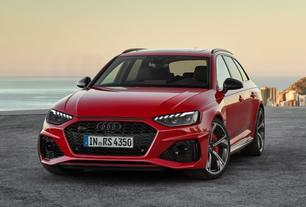
The RS4 Avant’s 'Progressive Red' metallic helps the black milled 20-inch alloy wheels pop. Its stance is hugely purposeful with wheels tucked right up in the blistered arches courtesy of the lowered ride height — it's how the Avant would have looked in a design sketch.
The visual bulk of the long-roofed RS4 gives it the sort of proportions motoring journalists love to wax lyrical about, even if plenty of buyers still prefer coupes or lifted SUVs.
The RS5's more flowing, elegant lines match well with the Navarra Blue paint work, silver-accented wheels and conventional leather-appointed seats within.
Both cars have effectively identical front cabins reflecting Audi’s classy and sleek design language. The integration of technology is pretty good and the RS4’s additional red styling pack really makes it feel sporty within.
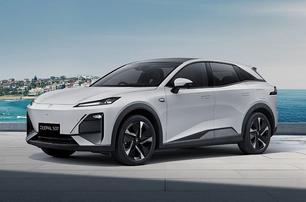
If you’re left a little underwhelmed from the bland same-sameness of so many new SUVs, I reckon you’d like the Deepal S07 in the metal. Because boring it ain’t.
It’s sharp and purposeful and full of lovely creases and angles, and it stands out on the road — especially in this 'Sunset Orange' colour.
Deepal says it was designed in Turin, Italy, but I'm not sure that matters much. I mean, being in Italy doesn’t guarantee design success – just look to the modern Lancia range for proof – but I guess it’s something for a newish Chinese brand to hang its hat on.
Inside, the design is lovely, too. I like the materials used, the extended dash and the size of the central screen (though it tilting towards you or the passenger is probably overkill). And the flat-bottom wheel is a nice touch.
I'd like to know where the air con was designed, though. It feels massively underwhelming on a piping hot Sydney day. The main outlet is at the bottom of the dash, which is perfectly positioned to chill absolutely nothing, and you can’t really change the direction of the vents, either. Or, at least, I couldn't figure out how to.
The RS4's cabin is excellent, with a good mix of physical buttons and responsive touchscreens for control. There’s enough storage space for this kind of vehicle, with good door bins and well-sized cupholders in the centre as well as USB-C and -A charge points.
Audi’s multimedia system is friendly though the large touch targets and dark background aren’t as crisp as those fitted to the latest rivals. The screen isn't as big, either, measuring 10.1 inches for the multimedia item. The RS4 supports wireless Apple CarPlay and Android Auto.
That said, Audi’s 12.3-inch digital driver’s display with bright and poppy mapping software and generous customisation remains right at the head of the pack.
There is a panel of switches below the touchscreen for climate control, physical selection of the five-or-so drive modes and a collection of helpful buttons on the perfectly-shaped and sized leather-appointed steering wheel.
It lacks F1 or DTM wow-factor compared to the C63 and M3 with their easy-access driver mode buttons and toggles on the steering wheel but the RS4's restrained looks will resonate with those that prefer a bit more elegance inside.
Neither the RS4 nor RS5's back seats are designed for those over about 175cm. The RS4’s roof is a little higher so it is good enough for most adults but the RS5’s sloping profile compromises things. It has two individual buckets compared to the RS4’s three-wide bench.
Rear seat passengers get air vents, an individual climate zone, bottle holders in the doors, USB charge points and ISOFIX attachments for the outboard seats, with matching top tethers in the seat backs.
The Audi RS4’s boot is a generous 505L with under floor storage and a netted area on the driver’s side. Folding the 40/20/40 split-fold bench increases space to 1495L. That said, the RS5’s 465L is still very good, though it is not quite as practical in the real world.
Being fitted with roof rails makes for sleek integration of roof racks for the RS4 to slip roof pods, bike racks or whatever else you might choose to take on a trip away.
At just over 4.7m long and 1.9m wide, with a 2.9m wheelbase, the Deepal is a sizeable proposition, which means good passenger room and decent luggage space.
Starting at the boot, you’ll find 445 litres with the rear seats in place, but with the seats folded flat that number grows to 1385 litres. There’s a frunk up front, too, that holds another 125 litres.
In the back, the room is ample for full-size adults. When sitting behind my own 175cm driving position, I had more than enough knee and headroom to sit comfortably.
There’s also a heavy pulldown divider that’s home to twin cupholders, and there are two more up front, and USB connection points galore. Bonus points for the back seat riders being able to adjust their own air temps, too.
You'd expect the RS5 to be more popular given how uncool wagons are these days but Audi's whole thing is wagons — or Avants, for the initiated — so it makes sense that the RS4 Avant outsells the RS5 Sportback about two-to-one.
For the RS4 Avant’s basic asking price of $165,015, before on-road costs, you get luxury features such as LED headlights, an RS design package, Nappa leather upholstery, power-adjust seats, a Bang & Olufsen 19-speaker sound system and metallic paint on top of the significant changes to the RS4’s chassis and zingy 331kW V6.
The RS5 is a little dearer, reflecting the addition of Matrix LED headlights that aren’t available on the wagon.
But we have the 'Competition Plus Pack', which is a $13,990 indulgence that swaps adaptive dampers for Audi’s 'RS Sport Suspension' coil over package with manual rebound and compression adjustment and height adjustment.
The cars sit 10mm lower than a normal RS4 but you can go to a dealer to move the ride height up or down from there.
That’s not it, though. You also get a louder exhaust system with matte black pipes, fixed-ratio steering system, a retuned eight-speed automatic with more aggressive shifts, different rear differential programming, black exterior badging, 2.0kg lighter 20-inch Audi Sport wheels (in silver or black), special LED entrance lights and your speed limiter raised to 290km/h.
The 'Navarra Blue' RS5 pictured is a ‘basic’ Competition Plus. You can go further, as done with the RS4 Avant with its manual-adjust bucket seats ($1300), 'Interior Design Pack' in red ($3400), matte carbon exterior pack ($6300) and carbon trim, bringing its total cost to $191,405, before on-road costs.
That makes the RS4 and RS5 the most affordable in their competitor set, below a BMW M3 Competition xDrive Touring ($183,500) and Mercedes-AMG C63 S E Performance hybrid, which is $187,900, before on-road costs.
It’s easy picking in the Deepal range, given there’s one model with just the one trim level, simply called the S07.
It’s currently $58,521 drive-away in NSW, or $53,900 before on-road costs. And that’s probably about right. You can get an entry-level Kia EV5 for $56,770, though with less range and kit, or the XPeng G6 Standard Range for $54,800, though that’s before on-road costs. The new Model Y is a bit of a jump, at $63,400 on the road.
For that you get 19-inch alloys, a fixed sunroof with a sun shade, LED lighting all around and a powered boot.
Inside, there’s a giant 15.6-inch touchscreen that can swivel towards the driver or the passenger, wireless Apple CarPlay and Android Auto, a 14-speaker Sony stereo and wireless device charging.
There’s dual-zone air con, the seats (heated and ventilated up front) are trimmed in synthetic leather and there’s an interior camera with gesture control, so you can use a kind of sign language to take a photo, control the stereo or answer or hang up the phone. It's weird and makes you look like a turkey, which is why I used it once and once only, but you might like it.
Audi’s 2.9-litre twin-turbo petrol V6 has seen plenty of use across performance products from Audi and Porsche, including the Macan S and Audi S6.
In the RS4 and RS5 Competition Plus, it develops the same 331kW (at 5700-6700rpm) and 600Nm (at 1900-5000rpm) as the regular car. This makes it an extremely flexible engine that delivers predictable punch anywhere in the power band.
That said, it lacks the explosive character of BMW’s twin-turbo inline six — the figures are only 15kW and 50Nm higher on paper yet the M3’s response is that much more ferocious.
Audi’s RS division has tried to capture a bit more emotion, retuning the eight-speed torque converter automatic transmission for crisper shifts. This also benefits the RS4’s 0-100km/h sprint time, which falls two tenths to 3.9 seconds in Competition Plus guise.
The V6 breathes a little easier, too, with a different exhaust. Audi says the extra sound is down to 8.0kg less sound deadening in the car.
There’s more resonance at idle that does feel tiring sitting in traffic idling but the trade-off is a brawny mid-range baritone that develops into a shrill bark approaching the redline.
The S07 is powered by a single 160kW/320Nm rear-mounted electric motor and it's rear-wheel drive. That’s enough output, says Deepal, to push the S07 to 100km/h in 7.9 seconds — not bad for a two-tonne-plus SUV.
The Audi RS4 wagon is rated to use 9.5L/100km in ADR combined cycle (urban/extra-urban) consumption testing while the slipperier RS5 returns 9.4L/100km in the same test.
We weren’t able to run accurate or particularly relevant fuel figures on the event but the trip computers showed around 12L/100km in both RS4 and RS5.
While these numbers are high compared to your average passenger car, the Audi is more efficient than BMW's rivals, and gets remarkably close to the hybrid C63 in the real world.
The fuel tank is quite small for this kind of vehicle at 58 litres. That limits the RS4’s theoretical driving range to 611km.
Unsurprisingly, the Audi RS4 and RS5 require 98 RON premium unleaded petrol.
The 79.97kWh ternary lithium battery delivers a claimed driving range of 475km. It is, however, set up for just 92kW DC fast charging, which means going from 30 to 80 per cent will take just over half an hour. That’s at an appropriate DC fast charger, of course. Your 7.0kW AC home wallbox will take 11 hours, or eight hours if you can draw 11kW.
The time allocated to driving the RS4 Avant Competition Plus was fairly limited and we were sadly unable to sample how the highly adjustable coil over suspension performed where it makes most sense — on the racetrack.
Still, winding country roads between Sydney and the Southern Highlands served up some challenges, demonstrating how the Competition Plus pack changes the character of the RS4 and RS5.
The only real negative is comfort, specifically over those horrible plastic speed bumps that litter shopping centre car parks. With adaptive dampers, carmakers can set programs for these kinds of obstacles to soften and stiffen the clever shocks at just the right time. Not so the Competition Plus pack cars, which ride these bumps harshly.
That about does it, though, and everything thing else is a net benefit. The steering system addresses some criticism of the earlier RS4s. Further than a retune, the Competition Plus gets a new rack, that is non-progressive with a fixed ratio of 15:1 (instead of 13.3:1) and 2.4 turns lock-to-lock. The reactions to each input feel a hint more faithful.
When above 40km/h the coil overs come into their own. Even though the RS4 rides firmly it doesn’t constantly jiggle over small bumps. Over sharp-edged hits, the suspension rounds the hits off so, while you feel them, there’s a sense of control and sophistication.
Having speed limits to contend with means it is essentially impossible to find the limits of grip of the 275/30R20 Continental SportContact 6 tyres on the road and there isn’t much body roll, either.
The RS4 is still rewarding, though, getting up on its toes just enough through a series of bends to feel engaging. It gives an impression of being quite light and at 1820kg it is now considered featherweight next to rivals.
The RS4's Quattro all-wheel drive system favours the rear wheels when driving normally (60 per cent rear) and can send up to 85 per cent of the drive to the back axle.
The tweaked electronically-controlled rear limited-slip differential amplifies the throttle steer-ability of the RS4, giving you the confidence to squeeze the gas on exit.
It helps that the Competition Plus bucket seats are a little thinner and set closer to the floor giving you more feedback. This is the key differentiator between the RS4 and RS5 we drove — the buckets make the car feel alive.
Strong brakes are made up of 375mm front rotors clamped by six-piston calipers. Optional carbon ceramic brakes with larger 400mm front rotors help save 6.5kg and, if you plan to use the RS4 on track, are a smart buy along with a set of Pirelli P Zero Corsa semi slick tyres ($850).
Really, though, neither the RS4 nor RS5 are the perfect car for the track. They are plenty capable and fast on the road with just enough fun, reward and character thrown in to keep you coming back for more.
Binging, bonging safety systems aside, the Deepal S07's drive experience is relatively peaceful.
It can feel heavy, and isn't dynamically perfect through tighter bends, and even in the city the suspension - which does a good job ironing out most road imperfections - can clang over sharper, bigger stuff, especially if you're too enthusiastic with a speed bump.
But provided you're not asking too much of it on some twisting pass, and you're gentle enough over really big bumps, the S07 behaves much as you'd expect a big, wafty electric SUV might.
That is, with a smooth flow of power, steering that isn't overly direct, but not overly sharp either and with comfort the order of the day.
There are some annoying quirks, though, that would seem easy enough to iron out. The safety systems are often intrusive – and other Chinese brands can get them to be far less annoying – but I also found the tech and user interface annoying and fiddly, which again would be easy enough to fix.
The Audi A4 range was rated a maximum five stars in ANCAP safety testing in 2021, with the rating now considered expired. The stamp also only applied to four-cylinder models — so not the RS4 we drove.
It has lots of safety equipment, including eight airbags (dual frontal, side chest, front and rear side head curtains), autonomous emergency braking (AEB) functional up to 250km/h with pedestrian detection, front and rear cross-traffic alert, lane-keep assist, blind-spot monitoring, safe exist warning and tyre pressure monitoring.
Adaptive cruise control with lane-trace assist makes it an easy car to use on the motorway. The systems are well integrated and easy to switch on and off as you like.
Handing out a low score for a five-star ANCAP car seems harsh, but bear with me.
All the major bases are covered, the standard spec including auto emergency braking (AEB) with car-to-car and 'vulnerable road user' (pedestrian, backover, cyclist, motorcycle) detection, blind-spot monitoring, lane-departure warning, lane keeping assist and more. And there are front, front side (chest), side curtain and front centre airbags.
But the single biggest drawback of the Deepal experience has to be the most annoying, infuriating active (crash-avoidance) safety systems I’ve ever come across. Honestly, it has to be experienced to be believed.
For one, whenever I wear sunglasses it gives me an “occlusion” warning, which I genuinely had to Google, but that’s nothing compared to the driver attention monitor, which seems rigged to go off if you so much as blink, sending chimes binging and bonging throughout the cabin, increasing in number like a bomb about to go off.
And if you have to turn them off every time you get in, you have to wonder if they have any business being there at all.
So yes, it wears a maximum five-star ANCAP rating from assessment in January this year, but it’s a tree falling in the forest, kind of vibe, like if a car has every active safety system known to man, and you want to switch them off every time you get in, is it any safer than a car that doesn’t have any systems at all?
Audi covers the RS4 and RS5 with a five-year/unlimited kilometre warranty which is now the expected norm across the premium part of the market.
A five-year service plan can be pre-purchased, costing $3630 for both models with maintenance due annually or every 15,000km.
After the five-year warranty period, owners can choose to extend the service packaging and warranty for two extra years at a cost of $4260. This can be done twice, extending the warranty up to nine years.
The S07 is covered for seven years or 160,000km, while the battery is covered for eight years or 240,000km.
Servicing is required every 12 months or 10,000km, and the brand’s capped-price servicing program covers the first seven services (or eight, if you include the initial 5000km check-in, which is free), for a total $2981.43 (or an average of $426 per paid workshop visit).