What's the difference?
Can a hatchback still be a fun and fashionable way to get around when the SUV has become such a status trend?
The facelifted Audi A3 certainly makes a case for it.
The refreshed 2025 A3 is, as Audi puts it, more competitive than before when it comes to not only value but also, you might agree, style.
Last year, before the update even arrived, the A3 sold almost as well as its Volkswagen Golf corporate sibling. In fact, it’s Audi’s third most popular model behind the Q3 and Q5 SUVs.
It’s also third in its segment of ‘Small cars under $40,000’, behind only the MG4 electric car and, you guessed it, the VW Golf.
As such, it also outsells its actual closest rivals the BMW 1 Series and Mercedes-Benz A-Class, both of which are close to the A3 on price.
Now that it’s been given a bit more razzle dazzle, let’s see if the A3 can keep that momentum going.
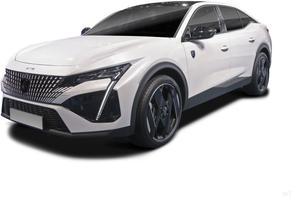
Peugeot has launched a new plug-in hybrid model, the ambitiously design 408 GT. The 408 is carving out a little niche for itself with its body style. Blending a sedan, liftback and an SUV together means you get the benefits of all styles but it also means there are few direct rivals.
The closest are the Citroen C5 X and the Cupra Formentor VZe.
The 408 GT has killer looks and style for days but I'm spending a week with it to see whether this plug-in hybrid is worth a look!
Closing in on $60,000 for a small car isn’t cheap. Ask a car dealer and they might even say the hatchback is a good way to get someone into a showroom to eventually look at an SUV.
But I reckon you’d be doing the A3 a disservice to count it out. It’s always been one of those cars that does everything well, and with this current facelift manages to keep its practicality without becoming boring.
It looks good on the outside, it’s smart on the inside and it’s fun to drive while remaining sensible. Even if you get it in bright yellow.
The Peugeot 408 GT plug-in hybrid features tech that could be improved upon and like all plug-ins, you get the best economy if you regularly charge it and that’s not always realistic. It is a little expensive compared to its rivals but sports a killer design that looks fresh and the cabin is roomy with nice features.
Eye of the beholder and all that, sure, but the A3 looks cool from the outside. It’s got this angular design but manages it without being too aggressive or busy with other design elements, so it still has a ‘premium Euro’ feel to it.
Shooting pics of the car for this review, the harsh light accentuated its sharp lines. It looks sculptural rather than just some little blob.
At the same time, thanks to the proliferation of sports design packs like the S Line, The A3 looks like it could be an S3, almost. Which makes sense, because the front bumper and rear diffuser as well as the roof spoiler are all partly inspired by RS models.
New for the A3 is the flat, 2D Audi badge, the model name on the B pillar and the new font for its name on the tailgate.
The lights in the cluster are able to look narrower than before thanks to their customisable settings, which allow you to choose the light signature, while the grille has a flatter appearance and the air intakes are bigger. Even the wheels look like they’re from a sports car.
Whether you’d have the A3 in the Python Yellow of our test car is another thing. I don’t mind a loud colour but I reckon a bit of 'District Green', 'Ascari Blue' or 'Progressive Red' would be the vibe.
Also, any colour that isn’t white is a cost-option on the A3, all of them coming in at $1350, except Ascari Blue which is an Audi Sport colour and costs $1850.
Speaking of the vibe, inside the A3 feels properly nice. It’s not just a spruced up Golf in there. There’s proper Audi character to the car, though that means plenty of piano black trim to get smudgy.
Audi’s done a good job making the layout look sleek without resorting to locating all the controls in the screen. There are design elements in the cabin that aren't strictly necessary but are worth doing for the way they look.
Things like the way the vents flank the driver display or the trim inlay on the passenger side of the dash.
There’s quite a lot happening with the design because of the mash-up of body styles. The long sleek body has sedan vibes but it sits high enough to tag itself as an SUV and the rear has that classic coupe pinching.
It won’t be everyone’s cup of tea but I like it. It's bold and different, which feels like a bit of fresh air in this SUV-heavy market.
The lights also set this apart from its Peugeot stablemates and look more refined, too. You can still see the remnants of the original ‘claw’ design in the tail-lights if you look closely but it's the long vertical DRLs at the front that give the design real edge. They resemble the fangs of a snarling cat (just too cool).
The sophisticated sleekness is extended to the interior where you find a cabin that is flush with high-end materials and soft touch points.
The curved dashboard, high-end tech screens and the mix of Nappa leather upholstery and synthetic leather trims definitely cement its grade position. While not a fan of the green contrast stitching myself, it does create an interesting focal point.
Starting from what’s right in front of you as a driver, the steering wheel is the same as in bigger, more expensive Audis. That’s a good thing, because it’s nice to hold, has a good shape for the nine-and-three hand position and it’s not too thick.
As well as the nice, clear buttons on the wheel, you’ve got some physical controls for the climate control and some of the vehicle functions like parking assist and stop-start under the multimedia screen.
For a car this size, the 10.1-inch central touchscreen is plenty big enough, and the fact it doesn't sit up high over the dash is great. It's like a perfect arm's length for your standard-sized adult (like me). I can reach the other side of the screen without needing to lean.
The fact there’s no head-up display is a bit of a let-down, but the now-standard 12.3-inch driver display is very good. It’s configurable yet clear, and means you can get detailed navigation information in front of you rather than having to look to the multimedia screen.
The test A3 has genuine leather upholstery, which is $1100 extra. Not the most you’d pay for leather seats in a Euro, and the seats are comfortable. They're nicely bolstered, the drivers’ side is electrically adjustable and the leather doesn’t feel hard or rough to the touch.
Sitting behind my own seating position in the second row is a little tight, however. At 178cm, my knees almost touch the seat in front. There's also no sunroof, and even though there's just about enough light, that omission doesn’t help the cramped feeling.
There are, like the front, two USB-C ports and the air vents in the back, the latter separately adjustable to avoid arguments, though the cupholders in the armrest are in an awkwardly central position.
Behind that, under the 380-litre boot's floor is a space-saver spare tyre. That's better than some SUVs designed for family adventures that only offer up an inflator/repair kit. Keep that up, Audi. Good job. Well done.
If you fold the rear seats, you get 1200 litres of space. Interestingly, those luggage space figures are the same as the BMW 1 Series.
Both rows have ample leg- and headroom for my 168cm height. Even my father, who is 183cm tall, felt comfortable in both rows.
The seats are comfortable and offer enough padding to be enjoyable on a long trip. The heat and massage functions on the front seats make the cabin experience feel refined but the massage function sometimes stops when the heat function is also on.
Individual storage is good for the class with the front getting some centre console storage spots, including a phone shelf, as well as a dual-opening middle console, glovebox and two cupholders. There are also a small storage bin and drink bottle holder in each door.
In the rear, there are directional air vents, two USB-C ports, map pockets and a drink bottle holder in each door but you miss out on cup holders, an armrest and other items you might expect for this grade level, like heated outboard seats or climate control.
The other charging options are solid with the front row getting two USB-C ports, a wireless charging pad and a 12-volt socket. There is another 12-volt socket in the boot.
The 10-inch touchscreen multimedia system looks great and you can customise your ‘buttons panel’ to the features you use most often, which is very clever. However, the system isn’t always responsive which gets very annoying - the seat functions in particular can be laggy.
The system does feature built-in satellite navigation and wireless Apple CarPlay and Android Auto but the multimedia system is too glitchy to truly charm.
The boot features a tyre puncture repair kit, relatively level loading space and 471L of boot capacity, which has been fine for all of my errands this week. You also get a hands-free powered tailgate, which is always handy.
For $54,800, before on-road costs, the A3 can be had as a hatchback - aka Sportback if you’re Audi - or for $57,800 as a sedan.
It’s a little over $4000 more expensive than the pre-facelift version, but Audi reckons there’s about $10,000 more value than before.
And value can be an important when you’ve got the BMW 118 ($57,600) and Mercedes A200 ($61,900) not sitting too far away in terms of price.
Part of the A3’s value equation comes thanks to the addition of the S Line package as standard, which not only makes the A3 look sportier but adds heated sports seats, aluminium interior trim elements and stainless steel on the pedals.
There’s also a larger 12.3-inch screen for the driver display as standard rather than an option. Audi has also reconfigured the air vents for the three-zone climate control, as well as adding a new style gear shifter.
Continued standard kit on the A3 is a wireless phone charger as well as a 10-speaker sound system, an ambient lighting package, a leather steering wheel and synthetic leather trim on the seats which all make for a sporty feel on the inside.
But on the outside there’s also customisable LED headlights and daytime running lights, as well as dynamic indicators and a set of 18-inch alloy wheels.
The car we tested also has a couple of options, its 'Python Yellow' paint is $1350 which I’ll come back to in the design section, but there’s also optional leather seats for $1100 and an electric tailgate for $660, the latter certainly worth it, I reckon.
All up, the car on test comes to $57,910, before on-roads, so even an optioned-up A3 comes in at either the same or less than its closest rivals from BMW and Mercedes-Benz.
The 408 is being offered in one grade for the Australian market, the GT model, and it’s priced from $67,990 before on road costs, making it more expensive than its rivals.
The closest rival, the Cupra Formentor VZe PHEV sits at $64,990 MSRP and the Citroen C5 X PHEV slides in as the most affordable at $57,670 MSRP.
However, only being offered in one grade does have its benefits because the GT is highly specified and most people will be satisfied with the long features list.
In terms of luxuries, there is a heated steering wheel, powered front seats with heat and massage functions, with Nappa leather upholstery and synthetic leather trims throughout.
The technology looks gorgeous with a 10-inch touchscreen multimedia system and a 10-inch digital instrument cluster headlining the dashboard. It's rounded out by the wireless Apple CarPlay and Android Auto, built-in satellite navigation, four USB-C ports, two 12-volt sockets and a wireless charging pad.
The key practical features include a powered tailgate, dual-zone air-conditioning, push-button start, keyless entry and the front driver's seat features a two-position memory function.
You can option a panoramic sunroof for an extra $2000, if you want it.
The 408 only comes in five colours, with the Obsession Blue on our test model being the only included colour. The rest are priced at $690 but the Elixir Red jumps up to $1050.
The A3 is powered by a 1.5-litre, turbocharged four-cylinder petrol engine that makes 110kW and 250Nm.
It drives the front wheels via a seven-speed dual-clutch auto transmission and it can hit 100km/h in a claimed 8.1 seconds.
It’s also got a 48-volt mild hybrid system to help with efficiency, though you’d need to be told about it to notice. It also helps with the A3’s (smooth) stop-start system.
The 408 GT is a front-wheel drive that has an eight-speed auto transmission and is powered by a 1.6-litre turbo-petrol engine and an 81kW electric motor, which produce combined outputs of 165kW/360Nm. It can do a 0-100km/h sprint in 7.8 seconds.
The switch between the electric and petrol components isn’t always seamless and you can feel some shudders as it flips between them at lower speeds but the power feels adequate for everyday driving.
The A3’s 50-litre fuel tank needs to be filled with RON 95 premium fuel and it’ll drink a claimed 5.3-litres per 100km on the combined (urban/extra-urban) cycle.
Theoretically you’re topping 900km a tank there, but given how fun this car is to drive you’d have to be well behaved to get even close.
For reference, whenever I was on a normal, day-to-day drive on test the A3's trip computer was returning figures in the mid to high sixes.
The official combined cycle fuel consumption figure is 1.5L/100km but that’s if you were recharging the car every time the electric range dropped out.
My real-world consumption sat at 5.5L after a mix of open-road and urban driving. I only charge it every other day as that’s realistic for my family life but like all plug-ins - you will get the best efficiency if you charge it regularly.
The 408 GT has a Type 2 charging port and a small 12.4kWh lithium-ion battery that can accept up to 3.7kW of power. You get up to 60km of pure electric driving range (but I only saw a top of 38km available) and on a domestic socket, you can go from zero to 100 per cent in around six hours.
On a 7kW or 11kW AC power charger, that drops to three and a half hours. So, it’s a tad slow to charge but worth it if you can leave your car on charge overnight.
First things first, the A3’s exterior and S Line pack are a clue to the way the car drives. It’s probably not the perfect car if you like a cushy, soft ride.
Its suspension errs towards the stiffer side of things, and certain bumps can feel more significant than they need to. But even on particularly bad roads or tram tracks in the city the dampers do a decent job of soaking up the harsh stuff.
It also means there’s more road noise than you’d like on some older highway surfaces, but only in a way that might get annoying if you’re on a road trip with the stereo off for some reason.
The upside of that is its steering feels well weighted and accurate. Plus, the way it handles and corners feels like a bit more grunt would make this a proper driver's car.
It’s not too intense, and there’s enough feedback to make it feel like the A3 shouldn't be a city-dweller only when it comes to driving.
Of course, it’s a hatchback, so you've got the advantages that come with less weight and a lower centre of gravity.
It doesn’t have enough weight to push into understeer more than you’d like on a tight corner. But it also doesn’t feel so light that you’re not sure how it’s going to behave under sharp braking.
The A3’s drivetrain, despite looking underwhelming on paper, feels practical on the road. Sure, 110kW isn't anything wicked, but its 250Nm feel like they’re working in the right places - that being between 1500 and 3500rpm.
It isn't blisteringly quick but even with the seven-speed transmission operating in default auto mode it usually feels like it's in the right place, let alone chipping in with 'manual' shifts via the paddles or shifting drive modes. The A3 has a choice of 'Normal' and 'Sport' shift settings.
You might be a little disappointed if you thought you’d be getting anything approaching a hot hatch, but for an entry-level model the A3 more than holds its own. It’s a solid platform that performs well without compromising too much when it comes to daily driving ability.
The 408 GT has more than enough power to be a comfortable open-roader. You can keep your speed consistent on hills and it has enough gumption to cross traffic quickly in an urban environment.
Steering is responsive and the car is easy to manoeuvre in close quarters but the lane-keeping aid does severe corrections, so have your wits about you when you’re on the go because it can be a fright when the wheel starts fighting you.
With the ride comfort, there can be vibrations through the seats and steering wheel depending on the road surface and you’ll know about it when you hit a bump. It’s okay enough to not be classed as rough but it’s not as refined as you'd hope.
Despite the narrow rear window, the visibility is actually very good and it’s easy enough to park but the 180-degree camera system needs work.
You'll end up using the straight reversing camera because you need to ‘drive’ over the space for an image to pop up for the '180-degree' view and by the time it does, you’ve parked anyway!
Tested in 2020, the A3’s been awarded a maximum five-star rating from ANCAP which applies to the facelifted version.
Six airbags and a suite of active safety tech helped contribute to this, though, whether it would pass with five stars under ANCAP’s current assessment protocols isn’t certain.
That’s likely only down to its relatively non-invasive safety warnings and mild assistance with things like lane-keep and speed warnings.
If you’re someone who’s likely to turn off most of the electronic assistance, the A3’s systems are at a pretty good level as standard.
It’s missing some modern kit like surround-view parking cameras but it does have front and rear proximity sensors and things like rear cross-traffic alert.
The 408 is so new that it doesn’t have an ANCAP safety rating but it has a long list of safety features that it might not worry you.
That list includes all of the biggies like rear cross-traffic alert, blind-spot monitoring, forward collision warning and AEB.
It also includes a driver attention alert, dusk-sensing auto lights, tyre pressure monitoring, lane departure and keeping aids, traffic sign recognition, intelligent seatbelt warning and adaptive cruise control.
Parking is sorted with the 180-degree view camera system and front and rear parking sensors.
The 408 only features six airbags, which is low, and is missing out on the newer front centre airbag and even a drivers knee airbag.
For any families out there, the rear features ISOFIX child-seat mounts on the outboard seats and three top-tether anchor points. Two seats will fit best, though.
Audi offers a five-year/unlimited kilometre warranty, which is about par for a premium brand, but it also offers five years' free roadside assist and the ability to pay to extend the warranty.
Servicing is $2520 for a five year plan, but the extended two years of 'Audi Advantage' warranty is $3250 and comes with unlimited kilometres, roadside assist and covers two services.
The 408 comes with a usual warranty term of five-years/unlimited km and the battery is covered by an eight-year or up to 160,000km warranty.
You can pre-purchase three, four, or five-years worth of services, which all work out to be cheaper than the pay-as-you-go option. It costs $1200 (three-years), $1700 (four-years), and $2000 for the five-year plan.
On the five-year plan, services average $400, which is reasonable for the class. Servicing intervals are also good at every 12 months/15,000km, whichever occurs first.