What's the difference?
Aston Martin is best known for two things - being James Bond’s preferred mode of transport and building grand tourers.
The new DB12 is the latest in a long line of memorable grand tourers from Aston Martin that dates back to the DB2 of the 1950s and runs all the way through icons like the DB5 (1963-65) and more recently the DB7 (1993-2003), DB9 (2004-2016) and DB11 (2016-2023).
Except there’s a slight problem with this lineage - Aston Martin doesn’t think the DB12 is a ‘grand tourer.’ Instead, the brand has decided to define it as a ‘Super Tourer’ and claims this is a car that “takes a new direction” for a brand that is more than 100 years old.
It is hard to immediately think of a country more suited to the convertible life than Australia. Even our coldest states (you know who you are…) are blessed with more warming sun than almost anywhere else on the civilised parts of the planet, so you’d think we’d be swanning about in dropped-top bliss almost year round.
But it’s actually in the UK (despite being cold, grey and almost always underwater) that convertibles really fly out of dealerships, with sun-starved Brits buying more than anyone else in the world. Weird, right?
Still, here they remain something of an oddity, sold in small numbers to drop-top diehards. At least partly because the convertibles of old were almost always slightly worse than their hardtop equivalents.
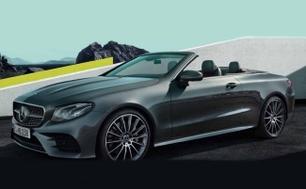
But Mercedes - which makes more convertibles than most - claims to have mastered the soft-top formula with the E400 4Matic, a car it says offers all the perks of open-air motoring without any of the dynamic or practical downsides.
Typically when a car company makes a bold claim in their press release it's hyperbole designed simply to grab attention. But in the case of the DB12, Aston Martin truly has built something different than before, elevating it beyond its previous ‘Grand Tourer’ status.
While ‘Super Tourer’ may be a bit dramatic in name, this is a very impressive car across the board. It’s fast, fun, luxurious, comfortable, opulent, stylish and liveable, so while it may require a heavy financial investment, you are duly rewarded.
Plus you also get to pretend to be James Bond…
A convertible that doesn't feel like one when the roof is in place is no easy task to build, but it's one Merc's engineers have pulled off with the E400 4Matic Cabriolet. Effortless power, a tonne of technology and a comfy, leather-wrapped cabin all make Merc's drop-top E-Class a strong proposition.
Personally, I felt like Aston Martin peaked with its ‘DB’ design nearly two decades ago with the DB9. It was a masterpiece of simplicity, elegance and heritage and the subsequent DB11 just looked more fussy and complicated for the sake of being different.
The DB12 manages to correct that mis-step from the designers, getting back to the classic silhouette of an Aston Martin, maintaining the trademark elements (specifically the unique grille shape) and the elegance of simplicity.
Aston Martins don’t need to be attention-grabbing like a Ferrari or Lamborghini. Instead, they attract attention with an understated but unmissable presence that just attracts eyeballs. You don’t need to know anything about cars to know that the DB12 is a very expensive, luxury sports coupe - it says all that the second you get a look at it.
The interior of DB12 looks and feels every bit as prestigious as the exterior does. High-quality materials have been used throughout and there is a level of fit and finish that elevates beyond most other cars on the market. It feels like a hand-made car, built with patience and detail, rather than something rushed down a production line.
The cabin design itself manages to feel both classical and modern, in the same way the exterior takes inspiration from Aston Martins of previous years but gives them a 21st century update.
Elegance. That's the word that springs to mind when you first clamp eyes on the E400 Cabriolet. While the Coupe version has a crouched-over sportiness about its exterior design, the convertible is all about big and boat-like proportions, especially with the fabric roof opened.
Like nearly all drop-tops, the E400 looks best with the cabin open to the elements, and the side profile especially paints a picture of well-heeled wafting, with only the AMG alloys and body styling hinting at the performance on offer under the bonnet.
Inside, expect perfectly executed modern luxury, with soft leather seats, touchpoints that melt under the fingers and a sprinkling of woodgrain trim. All of which feel like old-world luxury, nicely juxtaposed by the huge twin-screen display that dominates the dash.
Inside Aston Martin’s designers have understood the typical customer isn’t a Gen Alpha who does everything on their smartphone, so there’s a neat array of proper buttons, switches and dials to take care of all the functions without taking your eyes off the road. If you are into technology you may be disappointed by the relatively small infotainment screen, but from a usability perspective it does the job well.
As you’d expect the level of fit and finish is impressive and the diamond quilting on the leather seats looks exceptional. The seats themselves are comfortable and supportive, with generous cushioning rather than the sportier, less comfortable seats found in purebred sports cars.
The DB12 is a 2+2, with a pair of seats in the rear, but to be frank you’d need to be desperate to use them. They are ‘emergency use only’ seats that will deeply compromise the front seat occupants just to squeeze anyone in the back.
It's a two-door, four-seat convertible, so practicality isn't at the very top of its list of strengths.
That said, life is peachy for upfront riders, both of whom will travel in spacious luxury. There are two cupholders hidden beneath a woodgrain cover underneath the climate controls - also home to a power outlet - as well as a clever double-hinged central storage bin that can be opened by either the passenger or driver, and which opens to reveal two USB points.
There's room in the doors for bottles, too, and the entertainment system can be controlled via a touchpad controller mounted above the traditional click wheel - although, to be honest, using it is harder and more time consuming than simply pretending it doesn't exist.
Climbing into the back (and we mean climb - there are no rear doors) is made easier by the fact you can fold and slide the front seats automatically by pulling a lever mounted near the headrest. Once there, though, you'll find space is a little tighter, and you feel weirdly cocooned, owing to the huge raised tunnel that runs through the middle of the cabin, and the low roof line.
There are two cupholders that live in the space where the middle seat would normally go, and there's a little bottle-holder cubby to the left of both backseat riders. There are air vents back there, too, but no temperature controls.
The front doors are huge and really very heavy, requiring considerable heft to open them.
The boot space is predictably a little limited, with 385 litres on offer. There's also a little flip-down separator, which shows you how much room the roof will need to come down, reducing boot space to 310 litres. Speaking of which, the soft-top can be lowered in just 20 seconds, and at speeds up to 50km/h.
One practicality quirk, though. The front (and only) doors are huge and really very heavy, requiring considerable heft to open them, especially if you're parked on a slight angle. Honestly, I was reduced to kind of pushing them open with my foot at times.
Value is relative at this point in the market, as the DB12 is priced from $455,000 before on-road costs and any personalisation. For that price you do get a lengthy list of standard features you’d expect on a premium vehicle, including 21-inch forged alloy wheels, LED daytime running lights and tail-lights, keyless entry and ignition, 12-way electronically adjustable front seats, wireless phone charging, navigation, Apple CarPlay and a 390-watt 11-speaker Aston Martin sound system.
Of course, that’s what you should probably expect of much cheaper luxury cars. So on top of that there’s the high level of presentation, including both externally and in the cabin, with high-quality materials used across the entire vehicle.
Then there’s the ‘badge value’ that having an Aston Martin brings to the equation, which helps to play a part.
Finally, there’s how it compares when lined up against its competitors and on that front the DB12 looks well placed. The similarly powered Mercedes-AMG GT starts at $366,500, while V6-powered Maserati GranTurismo begins at $375,000 but the outgoing Ferrari 812 Superfast is priced at more than $600,000.
All things considered, the DB12 feels competitively priced and good value for this upper echelon of the new-car market.
At $157,400, the Cabriolet is the most expensive model in the E400 family, and is roughly $20k more than the sedan and $10k more than the coupe variants.
That money buys you a comprehensively kitted-out ride - as it really should - with the E400 Cabriolet arriving with 20-inch AMG alloys, LED headlights (made up of 84 LEDs) with high-beam assist, proximity unlocking with push-button start, air suspension and Merc's AIRCAP - a lip above the windscreen that's designed to push air up and over the cabin when the roof is down.
Inside, you'll find leather seats, dual-zone climate control and the clever 'AirScarf' system, which pumps hot air onto your neck when the roof is down (and it's cold out). You'll also nab heated front seats, power windows front and back and an automatic belt feeder, which saves you reaching over your shoulder to get to your seatbelt. So exhausting.
On the tech front, expect a killer 590W, 13-speaker Burmester stereo, controlled by the seriously impressive widescreen cockpit; two 12.3-inch screens that spill from about the centre of the dash all the way to the driver's binnacle, and control everything from navigation to Apple CarPlay and Android Auto.
There's a whole bunch of safety stuff, including semi-autonomous technology, but we'll drill down on that under the Safety sub-heading.
Aston Martin was once famous for its V12 engines, but with the brand changing hands so many times over the years and the pressure to develop increasingly expensive powerful, yet fuel-efficient engines means the brand now outsources some of its powertrains. So while the brand is developing a new V12 engine, the DB12 is powered by the 4.0-litre twin-turbo V8 built by Mercedes-AMG.
While Aston Martin fans may bemoan the use of a German engine in this British car, the truth is it’s a much better engine than the previous V12 used in the DB11, Vantage and other models. It offers up 500kW/800Nm and delivers all that performance in a broad spread across the rev range (unlike the old V12).
It gives the DB12 a sportier, more urgent and responsive driving character than its predecessors and helps to explain the new ‘Super Tourer’ name. Aston Martin claims it can run 0-100km/h in just 3.6 seconds and has a top speed of 325km/h.
It's a fabulous engine, this twin-turbocharged V6 - even if it doesn't feel quite so lively in Cabriolet form as it does in the hardtop equivalents.
The 3.0-litre unit produces 245kW/480Nm, sending it to all four wheels via a nine-speed automatic transmission, linked to the standard 4Matic all-wheel drive system.
Aston Martin claims a combined fuel cycle return of 12.2 litres per 100km, which is not what you would call sipping the unleaded, but given this is a large, grand tourer (sorry, Aston Martin, Super Tourer) it’s actually a solid return. If you’re in the market for a car like this, anything sub 15L/100km should be considered acceptable; if you’re worrying about emissions or the cost of petrol you probably shouldn’t be buying a $455k sports car.
Unfortunately we didn’t have the DB12 long enough to get a real-world fuel economy figure, so we’ll just have to take Aston Martin’s word for it.
With its 78-litre tank the DB12 does have a theoretical driving range of approximately 630km.
Mercedes claims 7.4L/100km on the combined cycle (but you can expect to be pushing nine litres in real-world conditions), with emissions pegged at 170g per kilometre of CO2.
The 66-litre tank will only accepts 95RON fuel.
The defining characteristic of a ‘Grand Tourer’ is that while fast, they aren’t typically agile and as responsive as a sports car. In other words, a grand tourer is best suited to a long, cross-country trip on faster, flowing roads, rather than a winding mountain pass or twisty switchbacks.
So, in keeping with the ‘Super Tourer’ theme that the brand is selling, the DB12 is notably more responsive and therefore more engaging to drive across any condition. It still has the comfortable, laid-back nature of a ‘GT’ but when you want to have some fun it’s capable of hiding its size and feeling very sporty.
The handling is highlighted by how quickly the front end of the car reacts. Typically with this front-engined 'GT' cars you feel like you're sitting at the very back of the car, so it feels slow to respond to inputs and that can create a feeling of laziness. But not in the DB12. The front end feels sharp and responsive, making you feel like you are right at the centre of the action.
It's helped by the engine that feels lighter than the old V12s but more urgent with its power delivery, too. It adds to that feeling of a more sporty and focused driver's car, rather than a 'GT' for just soaking up the kays. It shouldn't be surprising though, AMG doesn't really build relaxed, laid-back engines, rather ones designed for maximum excitement - and that's what the DB12 delivers when you bury your right foot.
Remarkably, it also plays the role of ‘daily driver’ well too. Which is an unusual way to think of a car like this, but for those fortunate enough to have the means to afford it, the DB12 could ferry you from home to work and back again in luxury and comfort.
Sure, the E400 Cabriolet can drive itself, but we’re equally pleased to note that it’s still a lot more fun handling the steering duties yourself.
And that is mostly due to that fabulous engine; quiet and effortless at city speeds, rorty and enthusiastic at pace, and genuinely angry with the drive setting switched to their most hardcore Sport+ mode.
We’ve already spent time in the sedan version, and while this Cabriolet is heavier (1935kg vs 1820kg) and slightly slower to 100km/h (5.5sec vs 5.2sec) it doesn’t immediately feel it behind the wheel, with a similar and satisfying lurch into the future when you plant your foot.
But hard charging is not what this car is about, and the E 400 is at its peachy best when rolling about the city or the ‘burbs with the top down, and the warm summer air washing through the cabin.
In its normal drive settings, the steering is light but engaged, and the ride on offer from the standard air suspension is outstanding, cosseting the cabin from all but the very worst road imperfections, while the torque from the V6 serves up effortless, unobtrusive acceleration.
With the roof up, Merc’s designers have done a stellar job of hiding the fact this thing is a convertible at all. It’s a solid-feeling cabin with the fabric roof fastened, and the cabin is quiet and free from wind noise.
The DB12 comes equipped with a lengthy list of active safety features as part of its Advanced Driver Assistance System (ADAS). These include adaptive cruise control, traffic sign recognition, lane keep assist, lane departure warning, lane change assist, front and rear cross traffic assist, driver drowsiness detection and hands-off detection.
There’s no ANCAP rating or equivalent, as crash testing these kinds of low-volume sports cars is unheard of from the safety authorities.
There are few cars on the road as overloaded with safety technology as the E400 Cabriolet.
The standard stuff is all there, of course. There's a 360-degree parking camera, as well as nine airbags (dual front, dual pelvic/thorax for front-seat passengers, dual sidebags for rear passengers, dual head bags in the doors and a knee airbag for the driver), rollover protection and tyre-pressure monitoring, as well as braking and traction aids.
But the E400 adds some really clever technology, including Merc's Driving Assistance Package Plus, which adds active lane keeping, blind-spot assist, cross-traffic alert and evasive steering assist.
It's this suite of systems that allows the E400 to navigate freeways autonomously, including changing lanes on demand. At the moment, the system will warn you to keep your hands on the wheel every so often, but you can sense a time when that will no longer be required. And that time is soon.
The E-Class range scored the maximum five-star ANCAP safety rating when crash tested in 2016.
The standard Aston Martin warranty covers three years/unlimited kilometres, which is unusually short by current industry standards; a curious case of the top end of the market lagging behind the mainstream brands.
Servicing is handled by individual dealers, so there’s no set cost structure, but the intervals are every 12 months/16,000km. Instead you’ll need to discuss what sort of costs are involved with keeping your DB12 running smoothly when you speak to a salesperson.
Expect the usual three-year, unlimited-kilometre warranty, with service intervals pegged at 12 months or 25,000km. Mercedes' capped-price servicing scheme limits maintenance costs to $2280 for the first three years of ownership.