What's the difference?
Aston Martin is best known for two things - being James Bond’s preferred mode of transport and building grand tourers.
The new DB12 is the latest in a long line of memorable grand tourers from Aston Martin that dates back to the DB2 of the 1950s and runs all the way through icons like the DB5 (1963-65) and more recently the DB7 (1993-2003), DB9 (2004-2016) and DB11 (2016-2023).
Except there’s a slight problem with this lineage - Aston Martin doesn’t think the DB12 is a ‘grand tourer.’ Instead, the brand has decided to define it as a ‘Super Tourer’ and claims this is a car that “takes a new direction” for a brand that is more than 100 years old.
I know, picture Ferrari and you'll likely be conjuring images of potent V12 or V8 engines, a scenery-shaking exhaust bark on start-up and a fuel bill that would make a Sheikh wince.
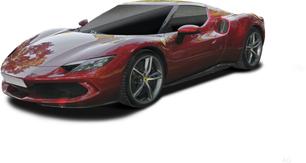
But this one, the 296 GTS, doesn't have, or do, any of those things. In fact, it doesn’t so much explode into life as it does kind of whirr gently, as though you’ve just switched on a photocopier.
And yet, people I trust on these matters reckon this just might be the best Ferrari to have ever worn the badge. So, I guess we better get to figuring out what the hell is going on with this plug-in Prancing Horse.
Typically when a car company makes a bold claim in their press release it's hyperbole designed simply to grab attention. But in the case of the DB12, Aston Martin truly has built something different than before, elevating it beyond its previous ‘Grand Tourer’ status.
While ‘Super Tourer’ may be a bit dramatic in name, this is a very impressive car across the board. It’s fast, fun, luxurious, comfortable, opulent, stylish and liveable, so while it may require a heavy financial investment, you are duly rewarded.
Plus you also get to pretend to be James Bond…
Anyone who says electrification somehow muddies the Ferrari formula is wrong. This plug-in Prancing Horse is among the most potent and direct vehicles I’ve ever driven, and the electric motor only adds to the experience.
Personally, I felt like Aston Martin peaked with its ‘DB’ design nearly two decades ago with the DB9. It was a masterpiece of simplicity, elegance and heritage and the subsequent DB11 just looked more fussy and complicated for the sake of being different.
The DB12 manages to correct that mis-step from the designers, getting back to the classic silhouette of an Aston Martin, maintaining the trademark elements (specifically the unique grille shape) and the elegance of simplicity.
Aston Martins don’t need to be attention-grabbing like a Ferrari or Lamborghini. Instead, they attract attention with an understated but unmissable presence that just attracts eyeballs. You don’t need to know anything about cars to know that the DB12 is a very expensive, luxury sports coupe - it says all that the second you get a look at it.
The interior of DB12 looks and feels every bit as prestigious as the exterior does. High-quality materials have been used throughout and there is a level of fit and finish that elevates beyond most other cars on the market. It feels like a hand-made car, built with patience and detail, rather than something rushed down a production line.
The cabin design itself manages to feel both classical and modern, in the same way the exterior takes inspiration from Aston Martins of previous years but gives them a 21st century update.
It is hard not to swoon when you gaze upon the 296 GTS, and I say that with no bias - I don’t think all Ferraris have looked this good.
But this is Ferrari at its dreamy, sweeping best, from the tarmac-kissing front — which generates so much downforce and cooling it negates the need for active aero — to its swollen haunches and the glass-topped engine window.
So what’s the difference between this and the GTB? Largely it is the ability to drop the folding roof, meaning you can feel the wind in your hair and that exhaust in your soul. To be honest, though, I reckon it looks better top up...
It’s a cockpit-style driver’s set-up inside, and there’s lots I love and some things I don’t. But let’s start with the steering wheel, which might be one of the best in existence.
It feels magic under the touch, as do the giant flappy paddles which remain fixed in place as you turn the wheel.
It’s also surprisingly comfortable in the figure-hugging sports seats, though climbing in and out of them is not necessarily something you want to do in front of a crowd.
Downsides? There is plenty of tech in the 296 cabin, but it’s all controlled from the steering wheel, making it fiddly and annoying to use.
Also, there are F1-levels of complexity on the control-everything steering wheel, and if I’m being honest, there are some buttons or switches, the function of which I still don’t fully understand.
Inside Aston Martin’s designers have understood the typical customer isn’t a Gen Alpha who does everything on their smartphone, so there’s a neat array of proper buttons, switches and dials to take care of all the functions without taking your eyes off the road. If you are into technology you may be disappointed by the relatively small infotainment screen, but from a usability perspective it does the job well.
As you’d expect the level of fit and finish is impressive and the diamond quilting on the leather seats looks exceptional. The seats themselves are comfortable and supportive, with generous cushioning rather than the sportier, less comfortable seats found in purebred sports cars.
The DB12 is a 2+2, with a pair of seats in the rear, but to be frank you’d need to be desperate to use them. They are ‘emergency use only’ seats that will deeply compromise the front seat occupants just to squeeze anyone in the back.
What do you want to know around practicality? We’re talking two seats, about 200 litres of cargo space total and a couple of smallish storage spaces in the cabin. And… that’s about it.
Next question, please.
Value is relative at this point in the market, as the DB12 is priced from $455,000 before on-road costs and any personalisation. For that price you do get a lengthy list of standard features you’d expect on a premium vehicle, including 21-inch forged alloy wheels, LED daytime running lights and tail-lights, keyless entry and ignition, 12-way electronically adjustable front seats, wireless phone charging, navigation, Apple CarPlay and a 390-watt 11-speaker Aston Martin sound system.
Of course, that’s what you should probably expect of much cheaper luxury cars. So on top of that there’s the high level of presentation, including both externally and in the cabin, with high-quality materials used across the entire vehicle.
Then there’s the ‘badge value’ that having an Aston Martin brings to the equation, which helps to play a part.
Finally, there’s how it compares when lined up against its competitors and on that front the DB12 looks well placed. The similarly powered Mercedes-AMG GT starts at $366,500, while V6-powered Maserati GranTurismo begins at $375,000 but the outgoing Ferrari 812 Superfast is priced at more than $600,000.
All things considered, the DB12 feels competitively priced and good value for this upper echelon of the new-car market.
Okay, hold your breath for a moment. The 296 GTS lists at $668,146, which is a sizeable jump over the hard-top GTB, which is more like $551,800. But what price a little open-air freedom?
What you get for that investment is a two-part (solid) folding roof, of course, but also what might be Ferrari’s most high-tech offering to date, with a plug-in hybrid system delivering potent performance rather than a usable EV driving range, a mega-clever braking system and an almost telepathic six-way 'Chassis Dynamic Sensor' designed to link the car’s key functions to make the experience, and the driver, somehow better.
Elsewhere, there are sports seats, Matrix LED headlights, 20-inch alloys, keyless entry and a very cool engine start touch-button on the even cooler steering wheel.
Oh, and there's wireless charging and Apple CarPlay, both thankfully standard in Australia, the latter controlled through the steering wheel and digital driver display.
It's all beautifully finished and a joy to behold and sit in.
Aston Martin was once famous for its V12 engines, but with the brand changing hands so many times over the years and the pressure to develop increasingly expensive powerful, yet fuel-efficient engines means the brand now outsources some of its powertrains. So while the brand is developing a new V12 engine, the DB12 is powered by the 4.0-litre twin-turbo V8 built by Mercedes-AMG.
While Aston Martin fans may bemoan the use of a German engine in this British car, the truth is it’s a much better engine than the previous V12 used in the DB11, Vantage and other models. It offers up 500kW/800Nm and delivers all that performance in a broad spread across the rev range (unlike the old V12).
It gives the DB12 a sportier, more urgent and responsive driving character than its predecessors and helps to explain the new ‘Super Tourer’ name. Aston Martin claims it can run 0-100km/h in just 3.6 seconds and has a top speed of 325km/h.
Now we're talking. The powertrain here is both tremendous and terrifying, pairing a 3.0-litre twin-turbo-petrol V6 with a rear mounted electric motor, and a 7.5kWh battery, to deliver a total 610kW and 740Nm. That power is fed through an eight-speed dual-clutch auto transmission.
Those are, frankly, scary numbers, and enough, Ferrari says, to dispatch 100km/h in just 2.9 seconds, and to push on to a top speed of 330km/h.
Aston Martin claims a combined fuel cycle return of 12.2 litres per 100km, which is not what you would call sipping the unleaded, but given this is a large, grand tourer (sorry, Aston Martin, Super Tourer) it’s actually a solid return. If you’re in the market for a car like this, anything sub 15L/100km should be considered acceptable; if you’re worrying about emissions or the cost of petrol you probably shouldn’t be buying a $455k sports car.
Unfortunately we didn’t have the DB12 long enough to get a real-world fuel economy figure, so we’ll just have to take Aston Martin’s word for it.
With its 78-litre tank the DB12 does have a theoretical driving range of approximately 630km.
As well as the ability to start up and slink away silently, the Ferrari 296 GTS’s little battery will deliver a 25km EV-only driving range, and contribute to the overall claimed fuel use of just 6.5L/100km.
Charging is AC only, and the the brand reckons it takes around 90mins to top up using an 11kW charger. The self-charging is on-point, though, with the Ferrari able to quickly recoup energy from braking and the like to top up the battery without needing to plug in.
The defining characteristic of a ‘Grand Tourer’ is that while fast, they aren’t typically agile and as responsive as a sports car. In other words, a grand tourer is best suited to a long, cross-country trip on faster, flowing roads, rather than a winding mountain pass or twisty switchbacks.
So, in keeping with the ‘Super Tourer’ theme that the brand is selling, the DB12 is notably more responsive and therefore more engaging to drive across any condition. It still has the comfortable, laid-back nature of a ‘GT’ but when you want to have some fun it’s capable of hiding its size and feeling very sporty.
The handling is highlighted by how quickly the front end of the car reacts. Typically with this front-engined 'GT' cars you feel like you're sitting at the very back of the car, so it feels slow to respond to inputs and that can create a feeling of laziness. But not in the DB12. The front end feels sharp and responsive, making you feel like you are right at the centre of the action.
It's helped by the engine that feels lighter than the old V12s but more urgent with its power delivery, too. It adds to that feeling of a more sporty and focused driver's car, rather than a 'GT' for just soaking up the kays. It shouldn't be surprising though, AMG doesn't really build relaxed, laid-back engines, rather ones designed for maximum excitement - and that's what the DB12 delivers when you bury your right foot.
Remarkably, it also plays the role of ‘daily driver’ well too. Which is an unusual way to think of a car like this, but for those fortunate enough to have the means to afford it, the DB12 could ferry you from home to work and back again in luxury and comfort.
The engine is undoubtedly a highlight, and we’ll get to that in a moment, but I first want to talk about the steering in this car.
It might sound like a weird point to get hung up on, but it is sensational, and maybe the best I’ve ever experienced. Generally speaking, super-responsive steering can risk feeling overly sharp and uncomfortable when cruising, but somehow the 296 manages to feel super natural, super responsive, and super engaging, without every feeling sharp or darty. It’s just predictable, responsive, and spectacular.
Honestly, it is a highlight of a drive experience filled with highlights, with another being the dual-nature of this drop-top supercar. Long before I got anywhere near a twisting road I needed to navigate the usual nightmare that is Sydney, tackling traffic, suburbia, freeways, tunnels and expansion joints galore, and the 296 never felt uncomfortable.
Instead, the 296 slipped into a comfortable kind of lope, never jarring or rough, and eminently easy to get along with. And yet, when you arrive on the right road that veil of sensibility drops, and the Ferrari quickly reminds you of its potential.
For a start, the acceleration is properly, startlingly aggressive. Engage the 'Qualification' drive mode (which unlocks the full might of the Ferrari's electrified powertrain) and flatten your right foot, and you'll find the world suddenly hurtling past your windows, and your knuckles will no doubt whiten as you feel the rear tyres fighting for traction against the onslaught should you try it on anything but the straightest of roads.
It's addictive, but it's just one element of a near-perfect combination on offer here, with the 296 GTS the stiffest Ferrari drop-top to date, which becomes immediately clear as you start to attack corners with ever-growing confidence.
Grip, stability and stiffness in spades, the GTS delivers. And all accompanied by an exhaust howl so angry and evil it’s hard to believe it’s being generated by a V6.
It’s a thing of very near perfection.
The DB12 comes equipped with a lengthy list of active safety features as part of its Advanced Driver Assistance System (ADAS). These include adaptive cruise control, traffic sign recognition, lane keep assist, lane departure warning, lane change assist, front and rear cross traffic assist, driver drowsiness detection and hands-off detection.
There’s no ANCAP rating or equivalent, as crash testing these kinds of low-volume sports cars is unheard of from the safety authorities.
Not much chance of the 296 GTS being crash-tested in Australia — you’d be able to hear the Italians weeping across the ocean.
You do get front and side airbags parking sensors, a reversing camera, auto high beam and tyre pressure monitoring.
The standard Aston Martin warranty covers three years/unlimited kilometres, which is unusually short by current industry standards; a curious case of the top end of the market lagging behind the mainstream brands.
Servicing is handled by individual dealers, so there’s no set cost structure, but the intervals are every 12 months/16,000km. Instead you’ll need to discuss what sort of costs are involved with keeping your DB12 running smoothly when you speak to a salesperson.
Standard is a three year warranty, but you can extend that for up to five years. Then, if your car has less than 90,000km on the clock, you can opt into the 'New Power15', which gives you up to 15 years total warranty coverage and is fully transferable.
The first seven years scheduled maintenance is free-of-charge.