What's the difference?
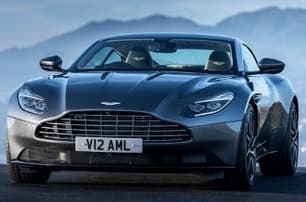
It might look like a stealth fighter, but this dramatic example of Aston Martin’s DB11 AMR didn’t fly under anyone’s radar during its time in the CarsGuide garage.
Forget the Duke and Duchess of Sussex, this piece of British royalty caused jaws to drop and camera phones to rise more effectively than any mere ginger celebrity or ex-TV trouper.
AMR stands for Aston Martin Racing, and this performance flagship replaces the ‘standard’ DB11, delivering even more fire under the hood and fury from the exhaust. Aston also claims it’s faster, dynamically superior, and sleeker on the inside.
In fact, the DB11 AMR’s 5.2-litre twin-turbo V12 now produces enough grunt to accelerate it from 0-100km/h in just 3.7 seconds.
More than just a flash Harry, then? Let’s find out.
Hybrid campers are no longer a new development in caravanning and camping. We've been seeing trailers like them, in some form or another, for nearly two decades.
The concept is straightforward: hybrid campers offer some of the best comforts of a caravan (solid walls, proper beds, little to no set-up time) with the best aspects of camper trailers (light, small, rugged and able to be towed nearly anywhere).
Although Blue Tongue Campers has been a leader in the traditional camper-trailer market for more than a decade, its first hybrid has been a long time coming. First chance we got, we hooked it up and headed out to Wee Jasper to see what it's about.
The Aston Martin DB11 AMR is fast, capable and beautiful. It has a unique character and charisma its Italian and German competitors can’t match. That said, some important media and safety-tech features are absent. So, it’s not perfect... just brilliant.
Given that Blue Tongue is a relative latecomer to the hybrid caravan market, it’s done its homework.
For $50,000, the HX15 is a great value, highly capable off-road camper with a comprehensive list of features to keep it self-contained and self-sufficient when you're camping.
That it includes an island bed, 2000-watt inverter, grey-water tank and enough battery capacity to free camp almost endlessly, is a testament to all that.
On one hand it’s hard to describe a supercar like the DB11 as practical when its primary purpose is to go ridiculously fast and look incredibly good in the process.
But this is, in fact, a ‘2+2’ GT, meaning a couple of occasional seats have been squeezed behind the front pair to allow obliging contortionists, or more likely small children, to enjoy the ride.
No one is claiming full four-seat capacity, but it’s a trick that has for decades made cars like Porsche’s 911 a more practical choice for high-end, high-performance sports car buyers.
At 183cm I can verify the chronically limited space back there, without anything in terms of connectivity, specific ventilation or storage options provided. Good luck, kids.
For those up front it’s a very different story. First, the doors are hinged to move up slightly as they swing out, which makes entry and egress a more civilised process than it might otherwise be. That said, those doors are still long, so it pays to pre-plan a workable parking spot, and the high-mounted, forward-facing interior release handles are awkward to use.
Storage runs to a box between the seats, complete with a two-stage electrically controlled lid, housing a pair of cupholders, an oddments space, two USB inputs and an SD card slot. Then, there are slim pockets in the doors, and that’s about it. no glove box or netted pouches. Just a small tray for coins or the key in front of the media controller.
And speaking of the key, it’s another strangely underwhelming part of the DB11 AMR’s presentation. Plain and insubstantial, it looks and feels like the key to an under-$20k budget special, rather than the heavy, polished and glamorous item you’d expect to be subtly placing on the table in your preferred three-hat restaurant.
The carpet-lined boot measures 270 litres, which is enough for some small suitcases and a soft bag or two. In fact, Aston Martin offers a four-piece accessory luggage set “expertly tailored to match the car’s specification.”
Don’t bother looking for a spare wheel, an inflator/repair kit is your only option in the case of a puncture.
A lot of these hybrid campers are little more than expensive metal boxes with a large bed inside, although the Blue Tongue is a little more than that.
It has a fold-out extension from the driver's side of the camper, which contains the queen-sized bed. By expanding sideways, rather than rearwards, Blue Tongue's managed to create access around the bed from three sides. The upside is, no one ever has to climb over the other, or shuffle along it, to get in. It's a feature almost unique in the genre.
Considering the XH15 also fits a small shower and toilet cubicle, cosy dinette, a small sink, bunk bed and heaps of storage, it's quite a practical little space that doesn't feel as cramped as it sounds.
The dinette lounge is good for the occasional meal away from the bugs, while the bunk above it folds up to improve access. And even if you're not travelling with a child, it makes a great shelf.
The en-suite, if we can call it that, is naturally compact. With its own toilet and shower plumbed into the grey-water tank, this is a fully self-contained camper, which is becoming increasingly more important at many free and remote bush camps.
The moment you press the starter the DB11 begins a theatrical performance worthy of the Royal Shakespeare Company.
A high-pitched whine reminiscent of a Formula One air-starter precedes a raucous blast of exhaust noise as the twin-turbo V12 bursts into life.
It’s spine-tingling, but for those wanting to remain on good terms with their neighbours a quiet-start setting is available.
At this point, rocker buttons on either side of the steering wheel set the tone for what follows. The one on the left, marked with a shock-absorber graphic, allows you to scroll the adaptive damping set-up through Comfort, Sport, and Sport+ settings. Its ‘S’ branded partner on the right facilitates a similar trick with the drivetrain.
So, throwing urban serenity out the window, we pushed into maximum attack mode for the engine, and by extension the exhaust, selected D and began to enjoy the first act.
A launch-control function is standard, so purely in the interests of science we explored its function and can confirm it works exceptionally well.
Aston claims the DB11 AMR will accelerate from 0-100km/h in just 3.7sec, which is properly fast, and two tenths of a second faster than the standard DB11 it replaces.
Keep the pedal pinned and two things will happen; you’ll reach a maximum velocity of 334km/h and generate headline news across the country while making your way directly to jail.
With 700Nm available from just 1500rpm, and remaining on tap to 5000rpm, mid-range thrust is monumental and the thundering exhaust note accompanying it is the stuff automotive dreams are made of.
Peak power of 470kW (630hp) takes over at 6500rpm (with the rev ceiling sitting at 7000rpm) and delivery is impressively linear, without a hint of turbo hesitation.
Aston claims the DB11 AMR will accelerate from 0-100km/h in just 3.7sec, which is properly fast.
The eight-speed auto is simply superb, picking up gears at just the right point and holding on to them for exactly the right amount of time. Select manual mode and the slender shift levers on either side of the steering column allow even more control.
In Sport and Sport+ drivetrain modes the howling exhaust is accompanied by an entertaining array of pops and bangs on up and down shifts. Bravo!
The DB11 AMR is underpinned by an ultra-stiff bonded aluminium chassis, with a double wishbone front/multi-link rear suspension set-up attached to it.
Spring and damper rates are unchanged from the previous DB11 and even on enthusiastic back-road runs we found suspension in Comfort and driveline in Sport+ to be the best combination. Flicking the shocks into Sport+ is best kept for track days.
Steering is (speed dependent) electrically power-assisted. It’s beautifully progressive, yet pin-sharp with excellent road feel.
The big 20-inch forged alloy rims are shod with high-performance Bridgestone Potenza S007 rubber (255/40 front – 295/35 rear), developed as original equipment for this car and Ferrari’s F12 Berlinetta.
They combine with the 1870kg DB11’s near perfect 51/49 front to rear weight distribution and standard LSD to deliver confidence-inspiring balance and ferocious power down on (quick) corner exit.
Braking is handled by huge (steel) ventilated rotors (400mm front – 360mm rear) clamped by six-piston calipers at the front and four-piston at the rear. We might have put them under decent pressure from time-to-time, but stopping power remained prodigious and the pedal firm.
In the calm of urban traffic the DB11 AMR is civilised, quiet (if you prefer) and comfortable. The sports seats can be adjusted to grip like a vice at speed or provide more breathing room around town, the ergonomics are spot-on, and despite its striking looks, all around vision is surprisingly good.
Overall, driving the DB11 AMR is a special event, flooding the senses and raising the heart rate no matter what the speed.
The 15-foot off-roader is well balanced behind our tow car. At tare, there's 150kg on the ball, which gives it room to move up once a load is added. We carried a load of camping gear, nearly 200 litres of water and the fridge, all of which helps add stability to the combination.
Towing the XH15 along the highway, it tracked beautifully and even with soft, off-road suspension it didn't wobble around. Onto the narrower, winding roads into Wee Jasper, it was compliant and followed without incident.
When the drive became a bit challenging, such as when we had to navigate steep, loose tracks into our campsite, the camper's high-clearance, angled cutaways and off-road hitch made sure none of its underbody scraped or bumped on the ground.
It rides on coil-spring, independent suspension with dual-shock absorbers each side and this is a robust, well-proven system, which is really great when roads become a little rougher.