What's the difference?
Nothing could’ve better prepared me for my drive in the 2019 Alfa Romeo 4C than a trip to Sydney’s Luna Park.
There’s a rollercoaster there called Wild Mouse - an old-school, single carriage coaster with no loop-the-loops, no high-tech trickery, and with each ride limited to just with two seats apiece.
The Wild Mouse throws you around with very little regard for your comfort, gently impinging your fear factor by making you consider the physics of what is happening underneath your backside.
It’s an unbridled adrenaline rush, and genuinely scary at times. You get off the ride thinking to yourself, “how the hell did I survive that?”.
The same can be said with this Italian sports car. It’s blisteringly quick, it’s superbly agile, it handles like it has rails attached to its underbody, and it could potentially do brown things to your underpants.
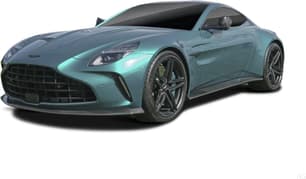
Aston Martin says the 2024 Vantage is designed to put the brand back where it belongs. And by that, it means thrust into the same conversation as Ferrari and Lamborghini when it comes to the ultimate in driver-focused supercars.
Which is why everything – and I mean everything – about this new model has been tightened, tuned or turned way the hell up in pursuit of performance.
Really, it has been a no-stone-left-unturned approach here. And the result, the brand reckons, is a car that delivers not just more power and more torque, but a near-telepathic connection between car and driver, too.
Well, that’s the promise anyway.
So how does the Vantage stack up in the battle for supercar supremacy? I was quite looking forward to figuring that out, to be honest.
People might wonder if there’s a reason to buy an Alfa Romeo 4C. It has some great dollar-for-dollar competitors - the Alpine A110 does most of the things the Alfa does, but in a more polished way. And then there’s the Porsche 718 Cayman, which is a considerably more, well, considered option.
But there is no doubt the 4C stands alone, a sort-of cut-price alternative to a Maserati or Ferrari, and nearly as rare to spot on the road as those cars, too. And just like the rollercoaster at Luna Park, it’s the sort of car that’ll leave you wanting another go.
It’s either a comfortable race car or a bonkers grand tourer, but it’s that best-of-both worlds positioning that makes this new Vantage so appealing. Think of it as like a supercar for proper grown-ups, and one you don’t need to grunt and groan to extract yourself from.
Note: CarsGuide attended this event as a guest of the manufacturer, with travel, accommodation and meals provided.
Slap a Ferrari badge on it, and people would think it was the real deal - a pint-sized performance hustler, with all the right angles to get plenty of glances.
In fact, I had dozens of punters nod, wave, mount ‘nice car mate’ and even a few rubber-neck moments - you know, when you drive past and someone on the footpath can’t help but forget they’re walking, and they stare so hard they might well collide with the upcoming lamp-post.
It really is a head-turner. So why does it only get an 8/10? Well, there are some elements of the design that make it less user-friendly than some of its rivals.
For instance, the step-in to the cabin is enormous, because the carbon-fibre tub sills are huge. And the cabin itself is pretty tight, especially for taller people. An Alpine A110 or Porsche Boxster are much more amenable for day-to-day driving… but hey, the 4C is markedly better than, say, a Lotus Elise for ingress and egress.
Also, as smart as it still looks, there are elements of Alfa Romeo design that have moved on since the 4C launched back in 2015. The headlights are the bit that I dislike most - I had a real thing for the spider-eyes lights of the launch edition model.
But even if it isn’t unmistakably Alfa Romeo, it’s unmistakably a 4C.
Ok, so the first thing you notice is this massive grille, which I now know is exactly 38 per cent bigger than before. That’s mostly for cooling, sucking in great lung-fulls of air – and any stray pets unlucky enough to wander into its path, I’d imagine — to keep that engine humming.
That air has to go somewhere, and the new bonnet vents complete the engine-cooling.picture.
Then there are 21-inch alloys are wrapped in performance rubber, and I love the swollen haunches at the rear tyres, giving the Vantage a mean and menacing vibe. At the rear, a very new and very loud quad-exhaust completes the picture.
In the cabin you'll find nothing in the way of hand-me-down Mercedes switchgear, which makes for change. This is all Aston Martin, and actually it all feels really nice.
The twin-screen setup looks tech-savvy and premium, the materials are all nicer than you'd find in something more track-obsessed, and even the optional race seats managed to be both snug-fitting and comfortable.
You can’t get into a car this small and expect a lot of space.
The dimensions of the 4C are tiny - it’s just 3989mm long, 1868mm wide and only 1185mm tall, and as you can see from the pictures, it’s a squat little thing. The Spider’s removable roof could be great for you if you’re tall.
I’m six-feet tall (182cm) and I found it to be cocoon-like in the cabin. You feel almost as though you’re tying yourself to the tub of the car when you get into the driver’s seat. And getting in and out? Just make sure you do some stretches beforehand. It’s not as bad as a Lotus for ingress and egress, but it’s still hard to look good clambering in and out of.
The cabin is a cramped space. There’s limited head room and leg room, and while there is reach and rake adjustment for the steering wheel, the seat only has manual slide and backrest movement - no lumbar adjust, no height adjust… almost like a racing bucket. They’re hard like a race seat, too.
The ergonomics aren’t terrific - the controls for the air-con are hard to see at a glance, the buttons for the gear select take some learning, and the two centrally-mounted cup holders (one for your double-shot mocha latte, the other for a hazelnut piccolo) are inconveniently positioned exactly where you might want to put your elbow.
The media system is rubbish. It’d be the first thing to go, if I bought one of these, and in its place would be an aftermarket touchscreen which would: a) actually let you pair to Bluetooth; b) look like it was from sometime after 2004; and c) be more fitting for a car of this price tag. I’d upgrade the speakers, too, because they’re poor. But I can totally understand if those things don’t matter, because it’s the engine you want to hear.
The materials - aside from the red leather seats - aren’t great. The plastics used are similar in look and feel to what you find in second-hand Fiats, but the sheer volume of exposed carbon-fibre does help you forget those details. And the leather pull straps to close the doors are nice, too.
The visibility from the driver’s seat is decent - for this type of car. It’s low, and the rear window is small, so you can’t expect to see everything around you at all times, but the mirrors are good and the forward vision is excellent.
You’ll be shocked to hear that Aston Martin didn’t dedicate too much of its limited track time to extolling the practicality perks of its new Vantage, mostly because there simply aren’t that many of them.
But the most obvious one, I think, is that most of the people in the market for a $400k-plus vehicle in this category are likely to be, well, of a certain vintage, and it’s for these people that the more traditional layout of the Vantage will no doubt appeal.
See, the engine is up front, and the doors open in the usual fashion, making getting in and out of the cabin easy, and free of the human-origami antics sometimes required to climb in and out of a scissor-door supercar.
But there have been practical improvements made to performance here, too. There’s 30 per cent more power, 15 per cent more torque, new cooling, better aerodynamics, retuned suspension and anti-roll tech, new brake booster tuning, improvements to the ESP system, more body stiffness. And it goes on.
Look, no-one considering an Italian sports car is likely to be wearing their common sense hat, but even so, the Alfa Romeo 4C Spider is an indulgent purchase.
With a list price of $99,000 plus on-road costs, it isn’t affordable. Not considering what you get for your money.
Standard inclusions consist of air conditioning, remote central locking, heated electric door mirrors, leather sports seats with manual adjustment, a leather-lined steering wheel, and a four-speaker stereo system with USB connectivity and Bluetooth phone and audio streaming. It’s not a touchscreen, so there’s no Apple CarPlay or Android Auto, and there’s no sat nav… but the thing about this car is going the fun way home, so forget maps and GPS. And there’s a digital instrument cluster with a digital speedometer - believe me, you’ll need it.
The standard wheels are a staggered set - 17-inch at the front and 18-inch at the rear. All 4C models have bi-xenon headlights, LED daytime running lights, LED tail-lights and dual exhaust tips.
Of course, being the Spider model, you also get a removable soft top and you know what’s neat? You get a car cover included as standard, but you’d want to put it in the shed, as it takes up a bit of boot room!
Our car was even further up the pay scale, with an as-tested price of $118,000 before on-roads - it had a few option boxes ticked.
First there’s that beautiful Basalt Grey metallic paint ($2000), and those contrasting red brake calipers ($1000).
Plus there’s the Carbon & Leather package - with carbon-fibre mirror caps, interior bezels, and a stitched leather instrument cover panel. It’s a $4000 option.
And finally, the Racing Package ($12,000), which includes a staggered set of 18-inch and 19-inch wheels with a dark paint finish, and those wheels are fitted with model specific Pirelli P Zero tyres (205/40/18 up front, 235/35/19 at the rear). Plus theres the sports racing exhaust system, which is awesome, and a racing suspension setup.
Let’s start with the big number, and that is the $410,000 you’ll need to park the new Vantage on your driveway. Interestingly, I was also on the launch of the previous Vantage, back in 2018, and that one was just under $300k. That’s quite the jump.
Anyway, for that spend you get a whole bunch of improved performance, obviously, but also quite a bit in terms of cabin tech and comfort. This isn’t a stripped-back supercar, and that’s a good thing, I reckon.
It starts outside with 21-inch five-spoke forged wheels wrapped in Michelin Pilot Sport rubber, matrix LED headlights and LED tail-lights, while in the cabin, there’s a 10.25-inch central screen with Apple CarPlay, a second 10.25-inch screen in front of the driver, an 11-speaker stereo, and wireless phone charging.
The Alfa Romeo 4C is powered by a 1.7-litre turbocharged petrol four-cylinder engine, which produces 177kW of power at 6000rpm and 350Nm of torque from 2200-4250rpm.
The motor is mounted amidships, and it is rear-wheel drive. It uses a six-speed dual-clutch (TCT) automatic with launch control.
Alfa Romeo claims a 0-100km/h time of 4.5 seconds, which makes it one of the quickest cars at this price point.
The 4.0-litre twin-turbo V8 is still borrowed from Mercedes-AMG, but this is the new-generation unit, making 489kW and 800Nm. It gets modified cylinder heads and bigger turbos, helping generate the extra grunt.
That’s fed through an eight-speed ZF automatic and channeled through to the rear tyres. The race to 100km/h? That 3.5 seconds. Meanwhile, the flying top speed is around 325km/h.
Claimed fuel consumption for the Alfa Romeo 4C Spider is rated at 6.9 litres per 100 kilometres, so it’s no miser.
But, impressively, I saw real-world fuel economy of 8.1L/100km, over a loop that included urban, highway and ‘spirited’ driving on twisty roads.
There’s the official figure, which is 12.1L/100km on the combined cycle, and then there’s the real-world figure. It’s not really fare to judge fuel use when you’ve just stepped off a racetrack, but rest assured it was a large number, which is to be expected really.
The Aston’s 73-litre fuel tank prefers 98RON fuel, too.
I said that it’s like a rollercoaster, and it really, truly is. The air doesn’t quite rush through your hair as much, sure - but with the roof off, the windows down and the speedometer constantly edging towards licence suspension, it’s a real hoot of an experience.
It just feels so tight - the carbon-fibre monocoque chassis is rigid and super stiff. You hit a cats-eye and its all so sensitive, you could mistake it for having hit an actual cat.
Alfa Romeo’s DNA drive modes - the letters stand for Dynamic, Natural, All Weather - is one of those proper examples of this type of system done well. There’s a marked difference between how these different settings operate, where some other drive modes out there are more sedate in their adjustments. There’s a fourth mode - Alfa Race - which I didn’t dare sample on public roads. Dynamic was enough to test my mettle.
The steering in Natural mode is lovely - there’s great weighting and feedback, super direct and incredibly in touch with the surface below you, and the engine isn’t quite as zesty, but still offers tremendous response on the move.
It’ll be a difficult choice between this and Alpine A110 and a Porsche Cayman
The ride is firm but composed and compliant in any of the drive modes, and it doesn’t have adaptive suspension. It is a stiffer suspension setup, and though the damping doesn’t change in Dynamic mode, if the surface is anything but perfect you will tram-track and twitch all over the place, because the steering feels even more dialled in.
In Dynamic mode the engine offers amazing response when you’re at pace, building speed incredibly and before you know it, you’re in licence loss zone.
The brake pedal requires some firm footwork - just like in a race car - but it pulls up strongly when you need it to. You’ve just gotta get used to the pedal feel.
The transmission is a good thing at speed in manual mode. It won’t overrule you if you want to find the redline, and it sounds tremendous. The exhaust is exhilarating!
With roof on and windows up there’s very noticeable noise intrusion - lots of tyre roar and engine noise. But remove the roof and drop the windows and you get the full effect of the drive experience - you’ll even get some "sut-tu-tu” wastegate flutter. It doesn’t even matter that much that the stereo system is so rubbish.
At normal speeds in normal driving you do need to be considerate of the powertrain because it is finnicky and slow to react at times. There’s notable lag if you’re gentle on the throttle, both from engine and transmission, and the fact peak torque doesn’t come on song until 2200rpm means there’s lag to contend with.
It’ll be a difficult choice between this and Alpine A110 and a Porsche Cayman – each of these vehicles has a very different character. But for me, this is the most go-kart like and it is, undeniably incredibly involving to drive.
It's funny, I never felt like the old Vantage wanted for power, but now I suddenly wonder how we ever made do with it. This feels like the engine and the outputs that should have always been, such is the way it suits the nature of Aston’s most performance-focused model.
Everything is about the driver here. From the suspension tune to the gearbox mapping and the increase in stiffness everywhere. You’re supposed to feel like the main character, and you do.
Aston Martin have come under fire in the past for delivering cars that are a treat to look at, but didn't quite deliver the drive experience to match the appearance, and it's something the brand says it is actively rectifying with with the Vantage, and the Astons that will follow it.
The mission, it says, is to be spoken of in the same sentence as the Italian supercar makers when it comes to delivering driver engagement, and this 2024 Vantage is a considerable leap in that direction.
It is, above all else, fun. From the multi-stage ESP settings that you can pair to your bravery, to the retuned and raucous exhaust and the blistering acceleration.
More than that, it feels light and lithe on a racetrack, and super communicative, the front wheels talking through your wrists, and the back tyres through, well, the bit of you that hits the bottom half of the racing seat...
It is plenty fun, right across the park. The power is immense, but somehow it doesn't feel terrifying, partly because you're so dialled-in to the drive experience, and partly because the carbon brakes fitted to our test car were able to slow the Vantage so savagely it's as though we'd dropped anchor out the back window.
The Vantage does have a split personality, though, and it's one that really shows itself once you venture out onto the road. It's quiet, comfortable even, at suburban speeds, leaning more into grand tourer than bonkers track-day special.
The only downside being that, should you sit behind the wheel long enough, it becomes easy to forget you're driving something "super" at all. Well, until your right foot finds its way back to the accelerator, that is...
You’re in the wrong spot if you want the latest in safety technology. Sure, it’s at the cutting edge because it has an ultra strong carbon-fibre design, but there’s not much else happening here.
The 4C has dual front airbags, rear parking sensors and an alarm with tow-away protection, plus - of course - electronic stability control.
But there are no side airbags or curtain airbags, there’s no reversing camera, there’s no auto emergency braking (AEB) or lane keep assist, no lane departure warning or blind spot detection. Admittedly - there are a few other sports cars in the segment which lack safety smarts, too, but
The 4C has never been crash tested, so there’s no ANCAP or Euro NCAP safety score available.
You’ll never see a Vantage crash-tested by ANCAP, but it does arrive with a solid safety package.
There are front and side airbags, plus a heap of active safety stuff like AEB, forward collision warning, adaptive cruise, lane keep assist, lane departure warning, lane change assist with centring and front and rear cross-traffic alert.
If you’re hoping that a ‘simple’ car like the 4C will mean low ownership costs, you might be disappointed in this section.
The Alfa Romeo website service calculator suggests that over 60 months or 75,000km (with service intervals set every 12 months/15,000km), you will have to fork out $6625 total. For a breakdown, the services cost $895, $1445, $895, $2495, $895.
I mean, that’s what you get when you buy an Italian sports car, I suppose. But consider you can get a Jaguar F-Type with five years of free servicing, and the Alfa looks like a rip-off.
The Alfa does, however, come with a three-year/150,000km warranty plan, which includes the same cover for roadside assist.
Aston Martins in Australia are covered by a three-year/unlimited-kilometre warranty, but you can extend that for one or two years, at a price. You’ll be visiting the service centre annually, too.