What's the difference?
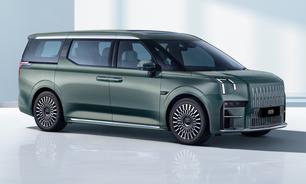
If Rolls-Royce was to make a Kia Carnival then the Zeekr 009 would probably be it, but without the stratospheric price tag.
Zeekr is Volvo’s sister from China under its massive Geely parent company and the 009 is a fully electric, luxury people mover that arrived in Australia to join the small X hatch and the forthcoming 7X mid-sized electric SUV.
The Zeekr 009 we tested is the seven-seater version and with a price of $135,900, before on-road costs, it's double the price of the fanciest Kia Carnival. Then again, the 009 is about $85,000 cheaper than the Lexus LM500h hybrid people mover.
If you are a family with more than two or three children, or a chauffeur service operator, then the 009 could be a much more practical and luxurious alternative to a high-end SUV. And, as I'll show you, even at this price it's a bargain.
While the local motor industry is engaging in much hand wringing and brow furrowing over the rapid influx of new makes and models, experts are busy predicting what may happen in the longer term. What brands will still be here in 10 years? Or even ten months…
It’s a bit of a lottery, really, but in the short term, one thing is for absolute certain: Cars are getting cheaper to buy.
That’s despite a never-before-seen level of technology and sophistication, too, and we’re now seeing full electric vehicles hitting the market at $30,000 or so - a number unheard of just a year or two ago when front-loading an EV’s ownership costs was a given.
But it’s happening in the dual-cab ute world, too. Disruptors like the BYD Shark 6 and the GWM Cannon Alpha have taught us that a turbo-diesel driveline is not necessarily the way forward for all of us. And now there’s this vehicle, the JAC Hunter dual-cab which stretches the concept of fries-with-that across an even tighter budget.
The Hunter is not just an off-road capable dual-cab: It’s also a plug-in hybrid with a sophisticated driveline that offers a claimed 100km of EV-only running from a full battery. But the Hunter is not just a techno statement, it also hits the market at under $50,000.
Interested? So were we.
The Zeekr 009 is difficult to fault. It's a luxurious, practical vehicle that's easy and enjoyable to drive. There's no SUV on the planet that can compete with its practicality, whether it's room for people and their cargo, or just getting in and out of the vehicle. The only thing I would change about the 009 in terms of family use are the captain's chairs in the second row; a bench seat here for three people would be more practical for a family. If, however, you are using the 009 as a chauffeur car then the captain's chairs would provide the comfort and luxury jet-setting executives would welcome.
The JAC Hunter is not yet perfected, but it’s a big step up from its diesel-powered sibling, the T9. The plug-in hybrid driveline not only has the potential to reduce running costs (provided its tech is used intelligently) but also provides an alternative to owners who are still gun-shy about the perceived problems of modern turbo-diesel engines.
The big improvements have been wrought in the chassis department, where thousands of kilometres of local testing and validation have achieved a much better car to drive than previously.
We still have our reservations about the calibration of some of the safety systems, and some of the ergonomics involved, however.
Of course, in the end, the success or otherwise of many brands like JAC and vehicles like the Hunter will come down to how the market reacts to the sudden influx of new names and badges. And in that context, purchase price will surely be a major factor. At which point the sub-$50,000 Hunter starts to shine a little brighter.