What's the difference?
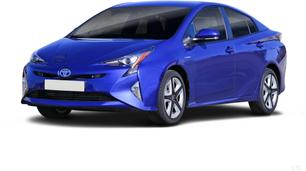
What to say about the Toyota Prius in 2021? A car that was once a technology trailblazer seems now to have become properly retro, even while it’s still being built and sold.
The awkward-looking wedge, an eco-punk icon, not only brought Toyota’s hybrid synergy drive to the masses, it also debuted the brand’s excellent TNGA architecture and set the scene for the company's absurd hybrid success, which now sees the RAV4 version topping the sales charts.
So, after all these years (25 to be precise), is the Prius’s time finally over? Or does this quaint hybrid hero still have more to offer? I took a top-spec I-Tech for a week to find out.
Cub Campers is Australia’s oldest camper-trailer manufacturer and one of the oldest businesses in the caravan and camping industry, having just celebrated 50 years of operation in 2018.
The company can lay claim to inventing the soft-floor camper trailer, pioneering the rear-fold and championing off-road campers when everyone else was concerned with the on-road market. Amongst all that, though, it was late to the game when it comes to forward-fold campers, not releasing the Frontier until early in 2016, well after the flood of Chinese manufactured versions became immensely popular. So why did Cub wait so long and was it worth it?
The Prius can rest its weary head. The Age of the Hybrid has begun. Even though this iconic eco car might have lost its ultimate purpose to more mainstream models in the last few years, it’s still the best execution of Toyota’s hybrid tech on the market and if you can look past its divisive-as-ever looks, it’s comfortable and practical, too.
The brand’s Australian division promises the Prius will stick around in one form or another, so we’re keen to see what its next iteration will look like. Plug-in? Fully electric? Time will tell.
All in all, the Frontier is the best forward-fold camper on the market, although it is also the most expensive. If you were making a buying decision purely based on features, you’d probably look elsewhere, but if you are prepared to pay a little more because this camper-trailer is Australian made, you get a very functional camper that’s easy to set up, reliable, strong and light.
If nothing else, all of the Prius’s edgy design gives it plentiful interior space. Toyota granted this generation of Prius a low seating position and tall roof, which combine with the distant dash elements to make for a spacious cockpit for the front two occupants.
The seat design in the top-spec I-Tech is also cushy, reminiscent of the seats in high-spec Camrys, and I had absolutely no trouble finding a comfortable driving position. If there’s one thing to be said for the annoying, centrally mounted instruments, it’s that you don’t need to consider the position of the wheel interfering with their visibility.
The Prius’s total glasshouse grants superb visibility out the front and sides, with large wing-mirrors, too. The only downside is that integrated spoiler at the back, which makes for a distracting view out the rear mirror that I’m sure any owner will quickly become accustomed to.
Soft trims across the doors and centre console, even in the back seat, make the Prius cabin a comfortable place to be, too.
Ergonomics have not been forgotten, with the multimedia screen and climate unit having useful and easy-to-reach physical dials and toggles for all the key functions. Even changing gear is a breeze in the Prius, with its odd little rosebud-shaped shifter simply a flick of the wrist from where your arm sits.
I do wish Toyota had made better use of the large area under the climate unit, however. The front part of the centre console is exclusively for the wireless-charging bay alone, and the rest of the space is constructed from a smoothly contoured gloss-finish plastic panel. It has looks to match the Prius aesthetic, but it’s no good for storing anything other than a single phone. It would have been better to make a large bay here with a rubberised finish.
Thanks to the lack of a physical handbrake in the centre or any other buttons or functions, there are two large bottle holders with variable edges.
A huge centre-console box and large door bins round out the Prius’s front-seat storage options.
Room in the rear seat is excellent, my 182cm tall frame had stellar amounts of space for my legs and head, as the roofline continues through to that raised rear spoiler. The comfy seat trim continues, although the padding in the base is notably not as good as it is in the front.
There are some useful pockets on the backs of the front seats and a drop-down armrest with cupholders for rear passengers, too.
Finally, the awkward rear of the Prius makes for a fantastic boot capacity, one advantage this car still holds over its hybrid Toyota stablemates. Capacity for the I-Tech is a mid-size-SUV rivalling 502-litres (VDA), which easily consumed our CarsGuide test luggage set and is even bigger than the base Prius, at the cost of the space-saver spare wheel. The I-Tech only has a repair kit to go with its larger alloys.
The real appeal of a forward-fold camper-trailer is the internal configuration. Because the bed folds out over the front of the camper, the trailer body is configured with a wrap-around lounge and dinette area, that also converts into a bed. It brings a certain level of caravan comfort to a camper-trailer-sized package. Cub’s execution is quite good. The lounge is comfortable and the dinette table is highly adjustable up and down or around and around. It converts into a bed more simply than any other on the market I’ve seen.
The downside of the forward-fold concept is the quantity and access of storage. Very little of the internal storage is easy to get to, and in truth there’s very little of it. That’s what happens when you put a couch in a trailer, sorry. There are hatches under the seats, but even they are limited by the slide-out kitchen and battery box across the back, plus, they’re not as easy to get to as a drawer. It’s the same in every manufacturers version, though. However, the Frontier has one unique features that makes it stand out – a series of pigeon holes under the foot of the bed which provide the only easy-to-access internal storage in any forward-fold I’ve come across so far.
The Prius was responsible for popularising Toyota’s Hybrid Synergy Drive, and fittingly, it still feels like the best execution of the technology on the market. That instantly available torque from the electric motor is sleek, quiet, and easy. It feels as though the Prius can make more extended use of purely electric drive than not only its rivals, but all other Toyota and Lexus hybrid products.
Despite its awkward exterior looks, the ride and handling of the Prius are excellent, thanks to its robust TNGA-C underpinnings (in fact, the Prius was the car to debut this platform for Toyota). It tilts into corners nicely, despite a frumpy ride height, and deals with bumps in its stride. This is a comfortable car, and the Lexus influence here is undeniable. The steering characteristics are also smooth and responsive. I wouldn’t go so far as to say the Prius is fun to drive, but it is certainly comfortable and compliant.
What the Prius lacks is the lower, firmer, and more aggressive ride and handling characteristics of its Hyundai Ioniq rival, perhaps a telling insight into the trajectory of each brand.
These characteristics add up to an around-town driving experience that really is a breeze. It’s quiet in the cabin and at times genuinely hard to tell whether the car is using its electric motors or the engine. When it comes to bursts of acceleration, the Prius might surprise you. Using both the motor and engine in tandem, I found that the Prius can sprint from the line with an alarming urgency, more so than its Corolla sibling. With the same tech behind the accelerator pedal, it’s hard to imagine why.
Once the electric motor has reached its strictly defined limit, though, the engine breaks in with a vengeance, and this car does have an anaemic follow-through when the electric components fall to the wayside. As in other applications of this drivetrain, the 1.8-litre Atkinson-cycle petrol engine can be thrashy and noisy when a lot is asked of it.
Of course, driving in such a sporty manner is hardly the point of the Prius, and where it really excels is in that day-to-day traffic grind, where the hybrid system works largely in the background to maximise the time spent with the engine off. The best part? While you can really fall into the hybrid system’s addictive fuel-saving displays, which really encourage hypermiling, this is a set-and-forget system. You can drive the Prius like any other car, and it will be trim on fuel consumption anyway. It’s not like I was trying awfully hard to attain my weekly figure of 4.0L/100km, so I’m sure it can do better over the long term.
The Frontier is quite good under tow. Cub designed and manufactures its own coil-spring independent suspension and has paid quite close attention to the balance and dynamics of the trailer.
As it’s not overly heavy, it’s not a handful, even on the beach, and behind the Mitsubishi Triton I tested it with, it was barely a struggle. On the road, the camper is well behaved, easy to see over and around and because it’s not very long, it’s not very daunting.