What's the difference?
See if you can guess the name of the world's first ride-sharing app. You're thinking Uber, right? Nope. It was a company called Sidecar. It's broke now, shuttered for good in 2015. What about the first video-on-demand service? Netflix? Nope. Amazon beat them to it, for starters, but so did many other, now-defunct companies who tried it even earlier.
The point is, being first on the scene is no guarantee you'll be the best, or the most successful. I mean, just look at electric cars; plenty of manufacturers were doing all-battery models before (and arguably better than) Tesla, and every one of them is now parked in Elon Musk's gargantuan shadow.
Before full-electric there were hybrids, and first to arrive on that particular scene in any meaningful way was Toyota and its awkwardly shaped Prius, back in 2001. And they had that field to themselves for a while, but soon enough the other manufacturers trotted out hybrid and plug-in hybrid models of their own.
And so Toyota shook up the Prius offering, launching the seven-seat Prius V, and the bite-sized (and Yaris-based) Prius c we've tested here, in 2012, hoping to broaden the appeal of its hybrid offerings. Problem is, 2012 was an awfully long time ago, and so Toyota has waved its wand over the ageing Prius c for 2018, changing its design, tech offering and interior in an effort to keep it fresh.
So, is the Japanese giant still head of the hybrid class? Or has it been beaten at its own game?
If you’re after a small performance-focused hatch or small SUV, there’s no shortage of solid offerings from semi-premium and premium brands like Audi, BMW, Cupra, Mercedes-Benz, Volkswagen and more.
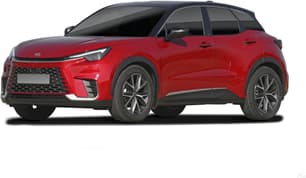
Another high-end brand dipping its toes in the segment is Lexus. Yes, Lexus. The Japanese luxury brand that’s famous for reliable and comfortable cars like the ES and RX.
It might be surprising that Lexus could build something like the LBX Morizo RR, but let’s not forget the many go-fast models in its back catalogue - the LFA supercar, the LC coupe and drop-top, IS F and GS F sedans and the RC F coupe.
At the urging of famed Toyota Motor Corporation (Lexus’ parent company) Chairman Akio Toyoda, Lexus has birthed a firecracker based on its humble, yet fun, LBX small SUV.
Akio has had a hand in developing the Morizo RR as well. Hence the name. Akio is head road tester for the carmaking giant, and a seasoned racer in his spare time. He uses the ‘Morizo’ alias when racing. The ‘RR’ stands for ‘rookie racer’.
Using the same powertrain found in Toyota’s GR Yaris and Corolla hot hatch cousins, the LBX has a lot of promise. But has Lexus done enough to bother those largely European rivals?
It's as if the the future is firmly rooted in the past at Toyota. The Prius is still undoubtedly clever, frugal and easy to drive, but it is feeling so old in places that the bad had begun to weigh on the good. If you're a tech-head or have a right foot crafted from lead, then there's nothing to see here. But if the thought of saving money at the bowser sets your heart aflutter, then step right this way.
Lexus has managed to combine two cars in one. A fast, impossibly fun back-road blaster perfect for weekends on your favourite winding roads, and a competent, compact city SUV that will easily handle urban runabout duties every day of the week.
It’s this duality that struck me the most. I would happily live with the Lexus LBX Morizo RR.Â
If you need a bit of space, maybe look elsewhere. But if you’re passionate about dynamic driving, and value comfort and a premium experience, this little rocket is hard to beat.
Note: CarsGuide attended this event as a guest of the manufacturer, with accommodation and meals provided.