What's the difference?
Another day, another China-backed EV brand launches in Australia. This one, though, should be at least be vaguely familiar, with Smart having previously operated in Australia about 15 years ago, back when it was a Mercedes-Benz sub-brand rocking the tiny and clever Smart ForTwo and ForFour.
Mercedes is still involved, though now as a 50/50 joint venture partner with Chinese giant Geely, though the new Smart family is not being delivered by either company, and are actually being distributed by Mercedes’ biggest global dealer group, LSH Auto.
All of which is a load of information you don’t really need. But you should know, as a result of all that, the brand is promising a fleet of semi-premium EVs designed in Germany and built in China, with the Smart #1 the first to touch down in Australia.
Oh, and they pronounce the “hashtag” part of the model name, but I just can’t see that strategy becoming part of the Australian lexicon.
Anyway, part-Chinese, part-German and all electric. So should the #1 be on your EV shopping list?
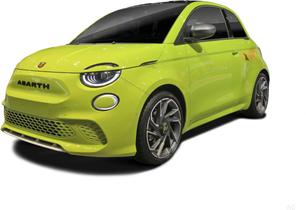
Meet the Abarth 500e, the mad-hatter sibling to the very good and all-electric Fiat 500e, and the Italian brand's first attempt at a bonafide EV hot hatch.
It's tiny, tough and – despite the lack of engine and exhaust – it burbles manically when you fire it up.
So does this mean Italy’s pint-sized, petrol-powered icon has a future in the all-electric era? Let’s go find out.
It’s easy to get lost in marketing hype, but — based on first impressions — the Smart #1 does what it says on the tin. This is a Chinese-built SUV that feels more premium than most, and one which is priced to tempt you from one of the German big three. The warranty isn’t good enough, though, and the multimedia screen can be infuriating, but it drives very nicely, especially on suburban roads.
Note: CarsGuide attended this event as a guest of the manufacturer, with travel, accommodation and meals provided.
It’s not perfect, but it’s everything a hot hatch should be in the electric era — engaging, exciting, and, above all, fun.
There is an impossibility pretty model in Smart’s new line-up, but the #1 ain’t it. While the #3 — which has also just launched — is a sleek-looking, coupe-style SUV, the #1 is a top-heavy small SUV that doesn’t shine from every angle.
Front-on, or from a front three-quarter angle, the #1 definitely works, with the brand setting out to remove unnecessary fussiness from the design, leaving smooth and rounded bodywork in its place.
There are no body creases or weird angles here, instead it’s a smooth, fluid-like design that flows from the front LED lights bar to the smooth shoulder lines to the matching light treatment at the rear.
But it’s at the rear where, for mine, the design begins to fall over. From that angle, the #1 looks skinny and top-heavy, especially when wearing the red hat of the Brabus model.
Still, eye of the beholder and all that.
Inside, though, the #1 kicks all sorts of goals, presenting as a properly premium-feeling EV space that’s swimming with technology and lovely cabin materials.
I particularly love the letterbox-style screen that replaces the traditional dashboard. It’s not distracting or overbearing like some twin-screen set-ups, but clearly shows you the key driving stuff you need when you’re on the road.
Side note, though, the massive central screen is super clear and lightning fast, but as usual you need to spend some (a lot) of time with it to figure out where all the functions are hiding, with most of the car’s key controls hidden within its labyrinth.
And side note two, the background graphics look like they were designed by a cordial-addled child, it is busy, cartoonish and out of keeping with the calm, grown-up nature of the #1’s cabin.
I’m just going to come right out and say it — I love the look of the Abarth 500e, even if the colour of our test car should be renamed Acid Trip, rather than Acid Green.
I love its perfectly proportioned, hunkered-down hot-hatch styling, the new ABARTH lettering on the body, and the new scorpion logo pasted to the side.
Basically, if you can look at the Abarth and not smile, then you need to find more fun in your life.
Inside, it’s a predictably cramped-feeling space, but it’s all nicely laid out, and the more I use them, the more I like the horizontal drive controllers that don’t eat up the little space you have with a traditional shifter. The materials are a bit hit and miss, though.
The Smart #1 measures just under 4.3m long, just over 1.8m in width and around 1.6m in height, and it rides on a 2.75m wheelbase. And the perk of the Smart’s EV powertrain, the brand says, is Mercedes-Benz E-Class levels of space in the back seat, despite the #1’s diminutive footprint.
It’s a big claim, and while I didn’t break out the tape measure I can say the backseat feels plenty generous, and because the rear pew slides forwards or backwards by 15cm, you can choose whether you want more legroom or more luggage space.
Speaking of which, pop the auto-opening boot (by hitting the ‘a’ in the ‘Smart’ lettering, which I couldn’t figure out without help) and you’ll find 323 litres of space with the back seat as far back as it goes, growing to 411 litres with it pushed all the way forward. There’s also a 15-litre frunk.
Smart says the #1 weighs 1800kg, adding it will tow 1600kg — but I’m sure you can imagine the impact a heavy load will have on your driving range.
While I like the addition of the central screen, it’s surprisingly annoying to use — I found myself jabbing at the buttons again and again before it reacts. You need a Stephen Hawking-level intellect to figure it all out.
I was trying to turn off the Abarth Sound Generator, which I'm reliably informed is possible, but after about five minutes digging through sub-menus, I abandoned all hope.
Normally I’d spend a bit of time exploring the back seat, but frankly, once in there I didn't really feel like spending excess time back there.
The Abarth 500e is only around 3.6m long, 1.7m wide and 1.5m tall, and suffice it to say, the space is tight, and you’ll only be using the two seats in the back in an emergency, or for the smallest of kids.
The boot is pretty tiny, too, starting at 185 litres (VDA) with the rear seats up, but growing to 550L (VDA) with the split-fold rear seat lowered.
So, not much to write home about. But criticising the tiny Abarth for a lack of practicality is like criticising a horse because it can’t swim – it’s not really in its job description.
The #1 is available in three trim levels — the Pro+, Premium and Brabus — and pricing (before on-road costs) climbs from $54,900 to $58,900 and $67,900.
Brabus, by the way, was a lesser-known Mercedes-Benz tuning arm, a little like AMG, which should give you some idea of what to expect from the performance-badged models.
Anyway, that pricing is good enough to undercut key rivals, including the Volvo EX30 (from $59,990) and BMW iX1 ($78,900), and it’s drastically less than Mercedes-Benz's EQA 250 ($84,900), all before on-road costs.
Also firmly in the Smart’s favour is that there isn’t a cheap-feeling model among them, with even the Pro+ feeling properly well-equipped and premium.
Entry-level cars score 19-inch alloys, a panoramic roof, LED lighting, a powered tailgate and a 12.8-inch central screen with wireless Apple CarPlay and Android Auto, and a 9.2-inch digital dashboard. There’s wireless device charging and a decent stereo, too.
The Premium then adds matrix LED headlights, leather trim, a huge head-up display and a better Beats stereo, while the Brabus scores a unique interior and exterior treatment, better suspension and a launch control function.
Ok, so bonkers thing number one: This Abarth 500e might look like it could fit in your pocket, but it is priced like a much bigger vehicle, starting at $58,900 plus on-road costs for the Turismo variant, increasing to $60,500 for the limited-edition Scorpionissima.
Outside, either trim gets 18-inch diamond-cut alloys, LED lighting all around, a fixed glass roof, the new e-latch front doors (meaning you can just push a button to open the door) from the 500e, along with some performance-focused add-ons, like a front splitter, greyed-out mirror caps, rear disc brakes and new front and rear bumper treatments.
Inside, there’s a leather-and-Alcantara steering wheel, sports seats, aluminium pedals and climate control, while on the tech front, a central 10.25-inch central screen pairs with a wireless charger and wireless phone mirroring, while a second 7.0-inch Driver Display Screen gives you all your driving data.
Oh, and there’s what the brand calls an Abarth Sound Generator, which is all kinds of crazy, but we’ll touch on that in a moment.
The difference between the Scorpionissima and the Turismo, by the way, is style led, with Abarth decals down the sides, and a certificate of authenticity confirming yours is one of 1949 vehicles sold around the world.
There are two drivetrains on offer here - one shared across the Pro+ and Premium, and another delivering the prodigious power of the #1 Brabus.
The first shared option is a single rear motor that delivers 200kW and 343Nm, which is enough to knock off the sprint to 100km/h in 6.7 seconds. Top speed for all models is listed as 180km/h.
The Brabus, though, adds a motor at the front axle, giving it AWD, which ups the outputs to a punchy 315kW and 543Nm, dropping the sprint to 100km/h to a very fast-feeling 3.9 seconds.
It’s a single-speed EV transmission in each, which means smooth, constant power delivery with no traditional ‘steps’, and all get 'Eco', 'Normal' and 'Sport' drive modes, though the only thing they impact is the accelerator response.
You can add weight to the steering, but that’s a separate item accessed elsewhere in the screen’s sub-menus.
There’s a single front-mounted electric motor providing the go here, with a total 113.7kW and 235Nm on offer fed through the single-speed gearbox, which is enough to push the 500e from 0-100km/h in 7.0 seconds.
Happily, the way that power is delivered makes it feel faster, and that Sound Generator does a pretty good impersonation of a petrol-powered hot hatch, rising and falling with your inputs.
All Smart #1 models share the same 66kWh battery, but how far you can travel between charges comes down to the trim you choose, with the WLTP driving range either 400km, 420km or 440km. The Brabus, of course, covers the least ground between charges, owing to its dual-motor set-up and amped up power outputs.
When it comes time to plug in, all models are equipped with 150kW DC fast-charging capability, and when plugged into said charger, you can expect to go from zero to 80 per cent charged in less than 30 minutes.
There’s also 22kW AC charging on board in the Premium and Brabus models, which means you can use three-phase power, but plugged into a regular 7.4kWh home wallbox should see you go from zero to 80 per cent charged in 7.5 hours, which means overnight charging should work a treat.
Right, there’s one obvious downside to the Abarth experience, and that is that it is fitted with a 42kWh battery that delivers a claimed 253km of driving range.
It’s worth noting that there are three Drive Modes — Turismo, Scorpion Street and Scorpion Track — and that only the first one will deliver the maximum range, because it limits inputs to 100kW and 220Nm.
Engage the other two — I’ve had it locked in Scorpion Track, for example, which gives you all of the power and deactivates one-pedal driving — and you can expect those numbers to drop.
When it comes time to charge, the Abarth 500e is set up for 85kW DC fast charging, which should take you from flat to 80 percent charged in around 35 minutes, as well as a maximum 11kW AC charging, which takes just over four hours to get to fully charged. Or you can plug it into a regular socket, which means more like 15 hours to recharge.
One last caveat: I actually wasn't able to get it to charge, which curtailed my adventures a little bit. I tried three chargers, all of which conjured an error message on the screen, and after a quick call to the folks at Abarth it transpired that a quick software update is required.
The #1 and its sister car, the #3, might share powertrains and batteries, but they are designed to drive very differently. The #3 is the sporty one (always code for a firmer ride), while the #1 is supposed to be softer, more comfortable and more city-friendly.
That’s the theory, at least. In practice, I have no idea. My time behind the wheel of the #1 was limited to its most fire-breathing model — the Brabus, which also scores its own suspension components — and soft is not a word that comes to mind once you’re strapped in behind its bright red seatbelt.
It begins with those bonkers power outputs, 315kW and 543Nm, which deliver genuine push-you-back-in-your-seat acceleration every time you stand on the go pedal.
Better still (well, I think so, at least), is that activating its sportiest 'Brabus' mode also unlocks a deep Abarth-style burbling soundtrack that rises and falls with your inputs.
But like most performance EVs, you can also dial the drive experience right back. In its softer drive modes the #1 Brabus feels calm and comfortable and not overly reactive, which makes sense, given the only thing the Brabus mode changes is accelerator sensitivity.
The result, though, is a car that you can tootle around in silently when you want to but hides a nuclear weapon under your right foot when you want to unleash that part of its personality.
Downsides? It’s got plenty of point-and-shoot power, but in the few corners we managed to find in it, it didn’t quite live up to the all-out-performance badge. There’s a bit too much movement in the body — a symptom of its near-2.0-tonne weight — and it doesn’t feel entirely engaging.
A couple of important caveats, though. We didn’t get long behind the wheel of the #1, and the dull-as-dishwater prescribed drive program revealed little about its true performance potential. So, we’ll have to wait until the model is properly through the CarsGuide garage to give you a deeper dive on this one.
Remember what I said about how just looking at the Abarth should put a smile on your face? Well, driving it paints on an even bigger grin, and it starts as soon as you fire it up.
While most EVs start silently, leaving you wondering if they're on at all, the Abarth takes a different approach, instead leaning on its sound generator, modelled on the exhaust note of the 695, to give you a throaty rumble when you fire it up. It even revs! And yes, you can turn it off (apparently), but why would you?
On the road, electric drive has actually improved the Abarth experience, I reckon, because all the harshness of the drivetrain has been ironed out, instead just leaving this smooth, potent flow of power every time you plant your right foot, with no gear changes or harsh vibrations to get in the way.
The steering is predictably direct, too, and the whole vehicle feels nimble and quick to react to your inputs.
It’s honestly the kind of car that’s fun driving anywhere, be it suburban streets or twisty backroads, and despite having a couple of options parked at my house, I found myself pulled to the Abarth for all of my trips.
Downsides? The ride is firm but comfortable on most roads, but downright uncomfortable when you clang over bumps or road imperfections. You’ll have to decide if that’s a price to high to pay, but I can live with it for the trade off. And while the cabin tech looks nice, but is fiddly and annoying to use.
Finally, the range relegates the Abarth to a second car, or for those who rarely leave the city. Which is a big ask at the price point.
Full credit to Smart on this one, because the #1 comes with a pretty stacked active (crash avoidance) safety tech list, and though our test drive was far from exhaustive, only the speed limit warning (which you can switch off) felt overly intrusive, with the rest just sort of humming away in the background.
The full package includes things like adaptive cruise control, lane keeping assist, traffic-sign recognition and the aforementioned speed limit warning. There’s also AEB, along with seven airbags, all of which has earned the #1 a five-star Euro NCAP safety rating.
The Abarth 500e is fitted with six airbags, and decent suite of active safety stuff, like AEB, Lane Keep Assist, Traffic Sign Recognition, Blind Spot Warning, auto high beam and and an attention monitor. It’s all pretty subtle, though, and it didn't bing or bong at me once, which was wonderful.
It scored four stars when tested by Euro NCAP.
Warranty is a definite soft spot, with LSH Auto offering five years or 150,000km, whichever comes first. For reference, other Chinese newcomers include Chery (seven years) BYD (six years) and GWM (seven years), while MG has just shifted to a 10-year warranty.
Still, service intervals are 12 months/20,000km, and you should be able to take your Smart to any LSH Auto Mercedes dealership (in Melbourne, Brisbane and Sydney) or either of the Smart dealerships in Sydney or Brisbane.
Service cost for the first four years averages $611 per workshop visit for the Pro+ and Premium (worth noting the fourth service is a big one) and $780 for the Brabus. Not particularly small numbers.
It’s an interesting ownership proposition, because the car is covered for three years or 150,000km, which is underwhelming and then some compared to the warranty offerings of its competition, but there is capped-price servicing, at $300 per visit, required every 12 months or 15,000km, which lasts 10 years.
The battery is covered for eight years or 160,000km.