What's the difference?
I'm going to reveal something of myself here - I used to be a RenaultSport Clio owner. This is what the purists call what we now know as Clio RS, and I find myself constantly corrected yet unrepentant. It was a 172 - a nuggety three-door with wheels that looked too small, a weird seating position and a 2.0-litre naturally aspirated engine that was big on torque as long as you belted it.
It was a classic and you could still see the links back to the epoch-making Renault Clio Williams, that blue and gold Mk 1 Clio we never saw in Australia that redefined the genre. The current Clio has been around for four years now and I even drove this current RS Clio at its launch in 2013, memorable for the sudden bucketing rain that drenched the circuit and made things very interesting indeed.
This Clio was a big change from the cars that went before - slimmer-hipped, less aggressive-looking and with a 1.6-litre turbo engine, five-door-only body and (gasp!) no manual, just Renault's twin-clutch EDC transmission. It was a hit, at least with enthusiasts. Back then it was the dawn of a golden age in small hot hatches. But that was then, this is now. With a small power bump and a couple of features thrown in, is the ageing RS still at the pointy end?
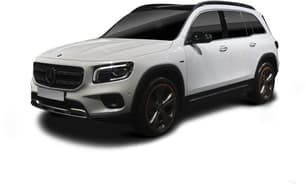
We all know by now Mercedes-Benz loves to fill a niche, and if it can't find a niche to fill, it will create one. So, please welcome its latest niche-filler, the GLB.
Despite shaping up as a mid-sizer, the GLB is a small SUV… with a twist. Whereas other small SUVs have five seats, the GLB has seven, lending itself to unrivalled practicality.
So, does the GLB operate in the 'Goldilocks Zone', or is it an answer to a question no-one asked? We put its mid-range GLB 250 variant to test to find out.
The Clio RS is still a ton of fun and in Cup spec, probably the best compromise between price and livability. Despite its advancing years (it turns five this year, so ready to start kindy) and big brother Megane hogging the limelight with a fancy new model on the way, the Clio is a stayer. It's missing some frustratingly obvious things like CarPlay, AEB, rear airbags and rear cross-traffic alert, but it's hardly alone in the segment.
With the departure of the Fiesta ST, though, the Clio returns to the top of the list of best small hot hatches on sale today.
Well, Mercedes-Benz has done it again, finding (or creating, depending on your position) a niche and filling it. But unlike some others that preceded it, this example is a good one.
Despite its safety and handling shortcomings, the GLB 250 looks the part, is undeniably practical and serves up surprising performance, which means it's a winner in our books.
The Clio is a handsome small car but nothing out of the ordinary until you apply the very cool Liquid Yellow paint. That hue really is quite something and works even better with the black alloys of the Cup chassis.
The car has some lovely surfacing and in a recent-ish refresh, the slightly odd headlights were reworked, as were the front and rear bumpers which now link to the RenaultSport Megane. Sorry, Megane RS. The RS flag signature lighting is a nice touch, acting as DRLs at the bottom corners of the front bumper.
The lovely organic shapes of the Clio's sides still look good and the rather tough rear end with the chunky diffuser leaves you in no doubt that it's the proper RS not the halfway-house, 1.2-litre GT-Line.
Inside is starting to look its age, but graceful, a bit like Jamie-Lee Curtis' or George Clooney's embrace of grey hair. There are still some of the sharp edges I didn't like. It's certainly a Renault to look at and ergonomically works pretty well. One thing that has been fixed at some point is the switch on the gear selector - it won't bite you if you curl your finger underneath when you press it. You might think that's a small thing, but when you did it, damn it hurt.
These days, so many SUVs try to toe the coupe line by incorporating a sloped-back roofline –and yes, the same is predominantly true of those that call themselves traditional wagons.
That said, prepare yourself for a bit of a throwback, because the GLB 250 is about as faithful to the classic two-box design as it gets in 2020, which we absolutely love.
Up front, it's undoubtedly a Mercedes-Benz SUV, albeit with a much squarer appearance. Simply put, the GLB 250 looks butch.
We particularly love its simple LED headlights, classic grille and strong bumper, which make it look smart but capable.
Around the side, the GLB 250 is a typical small SUV with black plastic cladding covering its wheelarch extensions and connecting skirts.
The otherwise plain design is spiced up by a sporty set of alloy wheels (our test vehicle was fitted with 18-inch items with 235/55 runflat tyres) and an unusual kink in the glasshouse, around the C-pillar.
The GLB 250 is at its best at the rear, where it exudes presence, with the tough look punctuated by the droopy LED tail-lights and a prominent bumper, which houses a diffuser element flanked by dual exhaust tailpipes.
Inside, the GLB 250 quickly reveals itself to be a technological tour de force. And yes, if its cabin looks familiar, it's because its mechanical relatives (A-Class, B-Class, CLA and GLA) more or less have the same cockpit.
As expected, a pair of 10.25-inch high-resolution displays sit side by side proudly atop the dashboard, with one the central touchscreen and the other the digital instrument cluster.
Both are items powered by Mercedes-Benz's new-generation 'MBUX' multimedia system, which is arguably the best there is today thanks its speed and breadth of functionality and input methods.
The GLB 250 is properly premium where it counts. Sure, trainspotters will notice the black 'Artico leather' upholstery covering the steering wheel, seats, armrests and door shoulders is of the artificial variety, but it's inoffensive, unlike in some of its SUV siblings.
Soft-touch materials are used for the upper dashboard, leaving hard plastics for the lower sections, which is exactly what you'd hope for at this price.
While a black headliner lends itself to a dark cabin, brighter highlights come by way of the metallic trim used throughout, notably on the steering wheel, dashboard, doors and centre console. And let's not forget the sensational ambient lighting. It's very, very cool.
And mercifully, gloss-black accents are limited to the surrounds of the steering wheel, turbine-style front air vents, dual-zone climate controls and centre console. The less scratches and fingerprints the better, we say.
The Clio's interior is certainly snug. Rear seat passengers do okay for legroom but headroom is a mite marginal with the falling roofline for six footers. There are no cupholders out back, that curious French habit of supplying just a couple of cup receptacles of different and weird sizes persists. The front doors have space for bottles, the rears do not.
The boot is class-competitive at 300 litres (worth knowing the Trophy loses 70 litres to the Cup) and with the seats down stretches to a claimed 1146L.
Measuring 4638mm long (with a 2829mm wheelbase), 1834mm wide and 1659mm tall, the GLB250 is closer in size to the GLC than the GLA, making it a small SUV on paper only. And that only means good things when it comes to practicality.
For example, cargo capacity with the 50/50 split-fold third row stowed is strong, at 565L, but it can be increased to a massive 1780L with the 40/20/40 split-fold middle bench also out of action. If six or seven seats are in use, though, there's limited space to play with.
That said, the boot is still very well thought out, as evidenced by its massive aperture, lack of a load lip, and flat floor, which make loading bulkier items a lot easier. And yes, its load cover can actually be stored underfloor when not in use!
There are also four tie-down points, two bag hooks, a side storage net and a 12V power outlet to make things that little bit easier, while the rear seats can be operated from behind.
Speaking of which, let's cut straight to the point: Mercedes-Benz claims the third row can accommodate occupants that are up to 168cm tall thanks to the middle bench's ability to slide fore and aft by up to 140mm.
Therefore, my 184cm (6.0ft) frame is a little too tall, but I was still able to sit in the back, albeit not in complete comfort, with about a centimetre of legroom and negligible headroom and toe-room on offer.
The biggest challenge for any occupant is getting in and out in the first place, as the middle bench doesn't tumble forward for easy access. Needless to say, you're not going to look graceful here. Children can learn to deal with it, but adults won't be excited by the prospect.
So, the middle bench is where it's at, even when slid all the way forward. Behind my driving position, it provides about a centimetre of legroom, but this can be increased to a generous 8.0cm by sliding it all the way back.
Either way, plenty of toe-room is available alongside more than an 2.0cm of headroom – and that's with a dual-pane panoramic sunroof fitted.
The second row can accommodate three adults at a pinch, partly thanks to the short transmission tunnel that ensure there's just enough space for three pairs of fully grown feet across the two footwells. Children will be fine.
While we're on the topic, four ISOFIX and five top-tether anchorage points are on hand for fitting up to four child seats across the second and third rows, making the GLB250 a genuine option for families.
In-cabin storage options are numerous, with the central storage bin on the larger side despite housing a pair of USB-C ports, and the glove box is also pretty handy, even if it does have an odd shape. There's also a sunglasses holder in front of the rearview mirror.
The centre console's cubby doesn't lend itself to storage, though, as it's more or less taken up by two cupholders, another USB-C port and a wireless smartphone charger.
The front door bins can take one small and two regular bottles each, while their rear counterparts can carry one small and one regular apiece.
Second-row occupants are further treated to a fold-down armrest with another pair of cupholders, although they're of the retractable (flimsy) variety.
These passengers also have access to two USB-C ports, which fold out below a small cubby and a pair of air vents, which are located at the rear of the front centre console. There are also storage nets on the front seat backrests.
And don't make the mistake of thinking the third row misses out on the action, as two cupholders (one regular, the other small) divide the seats, which have their own USB-C ports and device straps to the sides.
The iconic 'Liquid Yellow' ($750 option) Clio I had for the week was the Cup spec chassis. The Clio RS 200, as it is officially known, comes in two specs - Sport and Cup - and there's a Trophy 220 at the top of the range. I had the Cup, which retails at $32,490 (plus on-road costs). The RS220 Trophy, with a bit more poke and stuff, weighs in at $38,990 if you're interested.
The Cup spec is heavily based on the more affordable ($30,990) Sport, which means you get 18-inch alloy wheels (painted black, so watch those kerbs), climate control, four speaker stereo, keyless entry and start (the "key" is still that unwieldy keycard style thing), reversing camera, cruise control, front and rear parking sensors, fog lamps, LED daytime running lights, sat nav, auto LED headlights, auto wipers, launch control, leather bits and pieces and a tyre inflation kit instead of any kind of spare.
The 7.0-inch 'R-Link' touch screen software runs the four speaker stereo with DAB digital radio, Bluetooth and USB. If you get the optional RS Monitor, there is a full-on telemetry system from which you can save your, er, "track day" data and overlay in Google Maps to compare with your mates' or past efforts. You can also change the piped-in engine sound to various different sound effects which are delightfully silly.
Android Auto is part of the breathtaking $1500 'Entertainment Pack' option that includes RS Monitor (which used to be standard) and no, there's no Apple CarPlay. Leather is a further $1500.
Bottom line is that you do get a decent spec bump from the $30,990 Sport along with the more capable (and less comfortable) Cup chassis.
Priced from $73,900 plus on-road costs, the GLB 250 sits in the middle of the GLB range, above the $59,900 GLB 200 and below the $88,900 AMG GLB 35.
Standard equipment not already mentioned in the GLB 250 includes dusk-sensing lights, rain-sensing wipers, power-folding side mirrors, aluminium roof rails and a power-operated tailgate.
Inside, satellite navigation with live traffic, Apple CarPlay and Android Auto support, digital radio, a 225W sound system with nine speakers, keyless entry and start, power-adjustable comfort seats with heating and memory functionality, auto-dimming mirrors and illuminated scuff plates feature.
As with most Mercedes-Benz models, the GLB 250 has a long and expensive options list, so the purchase price can blow out quickly if you're a little too keen.
That said, aside from some safety equipment we'll cover momentarily, there's really not that much missing to begin with, making the GLB 250 the sweet spot in the GLB range.
Either way, our tested vehicle was finished in $1490 'Mountain Grey' metallic paintwork, which is one of six extra-cost exterior colour options.
As mentioned, the GLB 250 is a unique proposition, so it's only comparable rival, the $67,852 Land Rover Discovery Sport P250 SE, is from the segment above, despite its similar size.
The 200-equipped RSes pony up 147kW/260Nm, which is pretty much bang-on the obvious competition (Peugeot 208 GTI and the outgoing Fiesta ST), driving the front wheels through Renault's six-speed EDC twin-clutch. Unlike those two, there is no overboost function.
Dieppe's finest sprints from 0-100km/h in a claimed 6.7 seconds, pulling along a kerb weight of 1204kg.
The GLB 250 is motivated by a peppy 2.0-litre turbo-petrol four-cylinder engine that produces 165kW of power from 5500-6100rpm and 350Nm of torque from 1800-4000rpm.
This unit is mated to an eight-speed dual-clutch automatic transmission that's solid on debut, while Mercedes-Benz's 4Matic all-wheel-drive system is also in tow.
Thanks to this combination, the GLB250 can sprint from a standstill to 100km/h in a brisk 6.9 seconds while on the way to its top speed of 236km/h. It also enables a maximum braked towing capacity of 2000kg.
Renault claims 5.9L/100km on the combined cycle but, yeah, nah. My week was admittedly filled with plenty of horseplay and spirited driving, yielding 11.4L/100km. If you were careful you may fare better - but not that much better.
The fuel tank is a fairly standard 45 litres. It requires 98RON premium unleaded.
The GLB250's fuel consumption on the combined-cycle test (ADR 81/02) is 7.7 litres per 100 kilometres, while its carbon dioxide emissions are 173 grams per kilometre. Both claims are pretty solid.
In our real-world testing, though, we averaged 8.9L/100km over 180km of driving skewed towards country roads over highways. As such, it's a strong result, especially when you consider my lead foot.
For reference, the GLB 250's 60L fuel tank takes 95RON petrol at minimum.
The RS has always had a belter of a chassis. The Cup chassis became a thing just over a decade ago and is lauded by the fans as The One To Have. I've not always been convinced of this as my earlier drives of the Cup-equipped machines have usually been in close proximity to the Sport chassis.
The Cup is slightly lower than the Sport, with 15 per cent stiffer springs and dampers and perhaps more importantly it scores 18-inch wheels with Dunlop Sport Maxx RT2 tyres, which you can reasonably expect to be a bit firmer than the 17s with Goodyear F1s on the Sport. And they are.
However, in most situations, the Cup chassis is perfectly benign. You certainly feel the bumps and lumps, but you haven't bought a Cup chassis for Lexus-like isolation. It's certainly sharper than the Sport chassis and when you're really giving it a go around the bends, the comfort deficit is more than made up for by the extra grip and poise.
The RS has always had a belter of a chassis.
The chassis is aided and abetted by a torquey 1.6-turbo that cheerfully...no, gleefully spins to the redline which could do with another thousand revs, but that's forced induction for you. The aluminium shift paddles need a good positive pull to get a gear, but that gear is delivered quickly and effortlessly. The Clio is a great deal of fun in Sport and Race modes, with throttle mappings and gearshifts becoming more aggressive as you switch through the modes.
The brakes are tremendously effective and the electronic limited slip diff (*cough* brake-based torque vectoring) ensures you'll hit your apexes and the tyres spend more time gripping than spinning.
But it's not all hairpins and off-camber left-right-lefts, is it? Plenty of owners have to live with the car in traffic day to day. Driving the Cup in isolation, I've changed my mind about it. I reckon it's the best of the two chassis settings. The city ride is better than decent, with the hard edges potholes chamfered off by the dampers and decent compliance. It's not too noisy, either.
Families are sure to be pleased by the way the GLB 250 drives, because it can be summed up in one word - comfortable.
A lot of the credit has to go to the GLB 250's independent suspension set-up, which consists of MacPherson-strut front and trailing-link rear axles with adaptive dampers.
The ride is sensational, with the GLB just wafting along on the highway. Take it onto a coarse-chip road and this quality does suffer, but not much. That said, road noise does become more of a factor on lower-quality tarmac.
It's worth reiterating that our test vehicle was fitted with 18-inch alloy wheels, which are an inch smaller than the GLB 250's standard set that come with lower-profile tyres (235/50), so the chances are our glowing review doesn't apply across the board.
There were also some noticeable underbody creaks when navigating speed bumps and the like, but hopefully they're just specific to our test vehicle.
What will be more consistent, though, is the wind noise generated by the side mirrors at highway speeds. It penetrates the cabin and disturbs its serenity more than any underbody creak ever could, so turn up the sound system.
Handling-wise, the GLB 250 performs just as well as any other non-performance SUV with seven seats and a high centre of gravity, with body roll prominent when cornering with intent.
Put the aforementioned adaptive dampers into their sportiest setting and body control improves somewhat, but you'll still be conscious of the GLB 250's 1721kg kerb weight.
Either way, grip is quite good due to the all-wheel drive system, which works hard to keep things on track. Its front bias is apparent, though, with the GLB 250 running wide of its line at times.
While it's not the sharpest handler, the GLB 250 is far from awful, partly thanks to the electric power steering's variable ratio set-up.
This system goes from lock-to-lock with ease at low speed, making parking manoeuvres much easier to perform, while it's far more stable at high speed.
However, it's not the first word in feel despite being well-weighted… until you make the mistake of engaging the GLB 250's Sport drive mode, which adds too much artificial weight.
Speaking of sporty, the GLB 250 is surprisingly fun in a straight line thanks to its strong engine and transmission combination.
I particularly enjoyed the 2.0-litre turbo-petrol four-cylinder engine's mid-range, headlined by a useful 350Nm of max torque from 1800-4000rpm.
Once it comes and goes, though, it's a 'long' wait until 165kW of peak power kicks in from 5500-6100rpm, so best to up-shift early.
Doing so is very easy due to the new eight-speed dual-clutch automatic transmission, which serves up gear changes that are only smooth, but quick.
Engage Sport drive mode and the engine and transmission become that little bit sharper, with the former's throttle response improved, while the latter adopts more aggressive shift patterns.
That said, it's best to resist that temptation, as the GLB 250 is at its best when driven calmly, while it exudes family-friendly comfort.
On board the Clio is four airbags (no curtain coverage for those in the rear), ABS, stability and traction controls, a reversing camera and two ISOFIX points along with three top-tether anchors.
The Clio was awarded a five-star ANCAP rating in November 2013.
ANCAP awarded the GLB range its maximum five-star safety rating in 2019.
Advanced driver-assist systems extend to autonomous emergency braking with pedestrian and cyclist detection, lane-keep assist, blind-spot monitoring, rear cross-traffic alert, traffic sign recognition, driver attention alert, tyre pressure monitoring, hill-descent control, hill-start assist, high-beam assist, park assist, a reversing camera and front and rear parking sensors.
What's missing? Front cross-traffic alert, steering assist and adaptive cruise control all form part of the $1990 'Driving Assistance Package', which was fitted to our test vehicle but should be standard for the money.
Other standard safety equipment includes nine airbags (dual front, front-side, curtain and rear-side plus driver's knee), anti-skid brakes (ABS), electronic brake-force distribution (EBD) and the usual electronic stability and traction control systems.
Renault says it was the first European maker to offer a five-year/unlimited kilometre warranty in Australia, and who are we to argue? The package also includes up to four years of roadside assist and three years of capped-price servicing.
Renault expects to see you just once a year or every 20,000km, which gives you a bit more headroom than some similar service plans, at least on the mileage. The first three services will cost no more than $369 unless you need a new air filter ($38) or pollen filter ($46). At 60,000km or four years you'll cop $262 for a set of spark plugs. The company's website also suggests if the Clio doesn't like the state of its oil, it will beep at you until you have that attended to.
As with all Mercedes-Benz models, the GLB 250 comes with a five-year/unlimited-kilometre warranty, which is the gold standard for the premium market. It also comes with five years of roadside assistance.
The GLB 250's service intervals are every 12 months or 25,000km, whichever comes first. It is available with a three-year capped-price servicing plan for $2650, but its pricing can be reduced by $500 if paid upfront alongside the vehicle.