What's the difference?
The icon is electric. Well, kind of.
This is the new Porsche 911 Carrera GTS, which ushers in a facelift for the brand’s most famous model — and it’s one that introduces a pretty major change.
That faint whistling you hear is most likely the distant wails of the Porsche purists, because this new 911 is now a hybrid.
Yes, the Carrera GTS features Porsche’s clever T-Hybrid engine, which is the brand’s take on electrifying the world’s most famous sports car.
It’s faster than the model it replaces, but it also fundamentally alters the formula that has made the 911 the world’s most iconic sports car.
The question is, does it alter it for the better?
It doesn't feel like that long ago I spent a day with the brand spanking new Mercedes-AMG GLC 63 S when it first arrived in Australia. It's a car that stuck with me, the SpaceX-worthy thrust of AMG's 4.0-litre twin-turbo V8 translating into that dirty V8 exhaust note.
Turns out it wasn't that long ago, but time waits for no car - the 2020 GLC 63 S has arrived, with some useful upgrades and a deep suspicion that someone, somewhere thought the car needed some changes.
And they may be right, because in June 2018, the GLC 63 S assumed an empty throne. Now in 2020, it has the Jaguar F-Pace SVR and BMW X3 and X4 M twins to deal with.
So, under a scorching hot Bathurst sun, I examined the box-fresh GLC 63 S for signs of nefarious activity, hoping things have not changed for the worse just because there are a couple of challengers in town.
The more things change, the more they stay the same. The t-hybrid might be an entirely new propulsion system for the 911, but the net result is unchanged – power, poise and performance on tap.
Note: CarsGuide attended this event as a guest of the manufacturer, with travel, accommodation and meals provided.
Obviously, I had nothing to worry about. The GLC 63 S is the same boisterous, silly car I drove 18 months ago, just with a few new bits to improve the package. As ever, the GLC 63 S is all about the experience - big noise, huge grip but all in comfort with plenty of gadgets.
The only real issues are price, service pricing and the length of the warranty. The first two probably won't bother most owners and one hopes the third won't be problem, but it would be nice if the length was reflected in the price.
If you care about badge, it has impeccable credentials, the AMG stripes and that plate on the engine with the builder's name. They're good credentials. The GLC 63 S has some very determined and capable competition, but none of them blend the speed, overall comfort and sheer sensory silliness of the AMG.
This facelift debuts a revolutionary exterior design that has completely reshaped the 911.
Just kidding. If it ain’t broke and all that. The front air vents and exhaust have changed, the former now an active intake system that deploys via vertical flaps, but elsewhere it’s largely evolution over revolution.
Instead, Porsche has focused most of the updates in then cabin. In here, you’ll find a new digital instrument panel, they’ve changed some of the levers and the steering wheel.
In true Porsche fashion, though, this new 911 mimics the older versions in that it's one of the more intuitive cabins you’ll ever sit in. Everything feels as though it’s exactly where it should be, and all feels entirely centred on the driver.
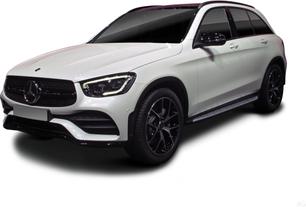
As before, the GLC 63 S comes in wagon and couple bodystyles. Little has changed, with just the usual tweaked front and rear bumpers and mildly redesigned headlights.
All the good bits have remained, like the 'Panamericana' grille from the AMG GT monsters, the jet wing-inspired front bumper and plenty of open space to feed the radiators and intercoolers.
Neither the wagon nor coupe is a pretty machine, but no mid-size SUV is much of an oil painting, with the exception of the Jaguar F-Pace.
The 'Night Package' is still a standard inclusion, blacking out various bits and pieces and looking good when allied with the dark alloys. They both look tough, though, which is classic AMG DNA.
Inside is pretty much the same as before, with just two obvious changes. The new Alcantara-trimmed steering wheel, again from the AMG GT, and also on the C 63 S, joins the party with a more expensive look and feel.
And the new MBUX screen is wider and looks much more at home in a $165,000-plus car. It's still a bit old-feeling, but the digital dash adds a bit of techno-style while the garish speaker covers don't.
This probably falls under the ‘next question, please’ umbrella, given that, while the Porsche 911 is known for a lot of things, vast acres of space with loads of practicality perks just ain’t a part of its portfolio.
The new 911 measures a not-insubstantial 4533mm in length, 1852mm width and around 1294mm in height, and it rides on a 2450mm wheelbase. Luggage space is a paltry 135 litres under the bonnet, plus whatever else you can fit in your pockets.
There’s seating for four, should you not like the people you’re squeezing back there very much, but really the 911 is best enjoyed as a two-seat proposition – which is why you can also delete the backseat, should you wish.
It also weighs a minimum 1595kg, or up to 1745kg, but Porsche says the hybrid tech only adds about 50kg to the total kerb weight.
A family of four will love any GLC. The wagon's extra headroom over the coupe is useful if not life-changing, while the knee, leg and foot room are generous. Front seat passengers enjoy comfortable seating as long as you're not too keen on pudding.
Underneath, the upward sweep of the centre console is a pair of cupholders and a wireless charging Qi pad that will fit larger phones. Under the split armrest is a small but handy console bin, inside which you'll find USB-C ports.
Two more USB-C ports in the rear join a 12-volt socket and there are also climate controls for the rear seat passengers. The centre armrest pops open with a shallow, carpet-lined tray and two cupholders pop out the front. Each of the four doors has a bottle holder, too.
The boot space is unchanged for each bodystyle - 550/1600 litres for the wagon and 500/1400 litres for the coupe. Both have high loading lips, which is something to consider if you're hauling heavy things about or have trouble lifting items to a reasonable height.
Yikes. Perhaps I wasn’t paying close enough attention, because the Porsche 911 range now suddenly seems very expensive.
In fact, it inspired some research. Some 10 years ago, in 2015, the Porsche 911 range kicked off at around $208,000. Today, though, you’re looking at more like $280,500 for the entry-level 911, and if you want this bahn-storming Carrera GTS, you’re looking at more like, deep breath, $381,200, before on-road costs.
If you want four-wheel drive, a cabriolet roof, or both, the price climbs from there, with the GTS range topping out with the Carrera 4 GTS Cabriolet listing at $437,900.
Now in Germany’s defence, the Porsche has gotten progressively faster and more powerful over the years, and that’s true again with the T-Hybrid version, but we’ll come back to the tech stuff in a second.
Outside, it rides on staggered alloys (21 inch at the rear, 20 inch at the front), and there are standard matrix LED headlights, vertical-mounted active cooling flaps, and you can have it as a hard top, a Targa roof or as a full Cabriolet.
The biggest updates (apart from the driving stuff, of course, occur in the cabin, where the 911 has now push-button start, and introduces a new digital dashboard, which defaults as a digital version of the old analogue setup. The screen is 12.6 inches, and there’s a second 10.9-inch screen in the centre cabin which does your phone streaming.
There’s also a BOSE Surround Sound System, 14-way adjustable comfort seats, and digital radio.
As before, we get two bodystyles and the high(er) performance version, the GLC 63 S (a 'base' GLC 63 is available in other markets). Mercedes followed everyone else's lead and realised nobody would buy the skim milk version.
Unfortunately, that translates to the highest sticker price of the three, with the wagon coming in at $164,900, and the coupe at $171,900, before on-road costs.
That doesn't seem to hurt Mercedes too much with other cars in the range, but it's a significant difference. Incidentally, both prices are up by about $3000.
It's loaded, though - 21-inch wheels, multi-zone climate control, air suspension with dynamic dampers, electric and heated front seats, active cruise control, head-up display, reversing camera, around-view cameras, sat nav, front and rear parking sensors, keyless entry and start, electric tailgate, Nappa leather and wood trim, active LED headlights, auto wipers, auto parking, roof rails, sunroof, DVD player, and TV tuner, but no spare tyre, just a repair kit.
A Burmester-branded 13-speaker sound system is powered by Mercedes' spangly MBUX system on a new 10-inch touchscreen, which is much nicer than the old software and hardware combo.
MBUX offers deeper integration with the car's systems. The 'Themes' function is like a series of shortcuts to set the car up for a particular mood, but let's face it, most GLC 63 S drivers are just going to find the 'Race' function and go for it.
MBUX also has Apple CarPlay and Android Auto, but via USB only.
A new (or at least, massively altered) 3.6-litre petrol engine has been developed for this T-Hybrid, which combines with two electric motors to produce a total 398kW and 610Nm. It’s only available with Porsche’s very good eight-speed Porsche Doppelkupplung (PDK) automatic, largely because the brand admits it would be… well… unpleasant to drive as a manual.
Now, there is lots of magic at work here, and I don’t want to bore you, but the Porsche setup sees a lightweight 1.9kWh battery placed basically in the middle of the front axle, and a 12-volt battery now behind the front seat. Then, a tiny e-motor lives as part of the gearbox (it’s just 55mm long) and delivers up to 150Nm at low speeds to supplement the petrol engine.
It’s joined by what Porsche calls an “electric exhaust gas turbocharger”, which essentially removes the spooling time from the turbo, delivering instant power.
The aim of the game here is excitement, not efficiency, and the launch-control-aided spring to 100km/h takes just 3.0 seconds. And it somehow feels, and sounds, faster.
The latter being important, with Porsche aware that if the new powertrain didn’t sound good, "nobody would like it”.
An AMG 4.0-litre twin-turbo V8 brings the thunder, with a massive 375kW and 700Nm of torque. That's plugged into a nine-speed MCT (multi-clutch as opposed to twin-clutch) transmission and Merc's '4Matic+' all-wheel drive system.
With all that power and grip, you'll crack the ton in a supercar-baiting 3.8 seconds. One little point to note is the engine has active mounts.
Should you fancy turning your tinny into a landspeedboat, you can tow up to 2000kg for a braked trailer, and 750kg unbraked.
Porsche in Australia is yet to lock in local fuel use for the Carrera GTS T-Hybrid, but international testing has it at 10.5-10.7L/100km, C02 emissions of between 239-244g/km.
Those aren’t exactly Toyota Prius numbers. But again, that was never Porsche’s intention. The electric power on offer here is intended to improve acceleration, not fuel use.
It’s fitted with a 63-litre fuel tank, which should deliver a driving range of around 600km per tank.
Mercedes reckons you'll get 12.2L/100km on the combined cycle which seems laughable at first and then you see what it actually does. To be fair, the car I drove on the launch copped a hammering and was hovering around the 17.0L/100km, with the start-stop and coasting functions playing only cameo roles.
Porsche did just about the Porschiest thing to ever Porsche in launching the 911 Carrera GTS T-Hybrid, in that we piled into cars in Melbourne, drove the many, many hours (well, it feels that long, at least) to the Phillip Island race circuit, beat the hell out of the cars on track and on the drag strip for several hours, then trundled back out on the road and drove them back to Melbourne.
The subliminal messaging here is pretty clear. This new 911 might have a new powertrain, but it can still deliver the road-track-road experience without breaking a sweat — or, more importantly, without breaking any expensive bits.
So let’s do this in order, shall we? On the road, this new 911 is every bit as sweet as it has ever been. Comfortable, quiet enough when you want it to be, and — save some road noise from those big wheels – quiet enough to let you forget you're driving something with one of Peter Dutton’s nuclear reactors hidden beneath its svelte metal work.
Mind you, that T-Hybrid powertrain will happily remind you of its presence every time you press the accelerator in anger, the exhaust erupting into life and the 911 genuinely rocketing into the future, but stay gentle with your inputs and this hybrid 911 is a genuinely comfortable, genuinely liveable daily driver.
Its split personality appears when you rumble out onto a race track though, where you quickly discover the electrified, and electrifying, Porsche is properly, properly rapid, both in a straight line or around Phillip Island’s fast and flowing circuit.
It’s so rapid, in fact, that it feels most closely related to a performance EV, like the Taycan. Of course it is louder and more engaging, but that’s the best way I can think of to describe the instant power on offer here. There’s no ICE-like lags or lumps in the way that 398kW and 610Nm finds its way to the tyres and into the tarmac. Instead it’s just this constant, savage flow of power that never seems to let up.
Porsche says this new powertrain is about 50kg heavier, but you’d need to be plugged into the race track like its the Matrix to ever feel it, with the T-Hybrid feeling lithe, grippy and athletic, aided by near-perfect steering, the best automatic gearbox in existence, and exactly zero roll through the body. In fact, the only thing that really moves when cornering hard in this new 911 is the driver, and I genuinely got out after several laps with a sore neck from trying to stay vertical.
Downsides? Well, it’s faster in a straight line (it will be some 7.0m further down the road after 2.5sec when compared to the older GTS) and faster around corners (8.7sec faster around the Nurburgring than its predecessor), but there’s something delightfully analogue about the outgoing car, which also manages to feel more aggressive under heavy acceleration, too, owing to the little ebbs and flows of power, and after driving both back-to-back, I still can’t decide which one I like more.
Like any V8-powered AMG, the twin-turbo engine absolutely dominates the GLC 63 S. Even at walking speeds you can feel the serious firepower on offer, just a flex of your ankle away.
The figures are colossal - 375kW (over 500 horsepower) and 700Nm pushing around two tonnes of mid-sized SUV. Its famed bark is bettered only by Jaguar's completely unhinged, and surely borderline illegal, 5.0-litre supercharged V8.
You need to know you've got plenty of tech underneath you to make this stick to the road. The 21-inch alloys are wrapped in 265/40s at the front and 295/30s at the back, Continental Cross Contacts if you're interested.
They should - and would - ruin the ride, but the standard fitment of air suspension means that in normal driving, the GLC 63 S is firm but comfortable. A BMW X3 M is much harder, especially at the rear, going without the complex and heavier air set-up.
The air suspension is probably the pivotal piece of chassis tech that makes this car so versatile. While it's got driving modes up the wazoo - including the new 'Slippery' mode - it's a perfectly agreeable daily driver.
Leave it in comfort, accept that it has a firm ride and you're in good shape for the school run or the commute. You just sail along on a light throttle because there is virtually no turbo lag.
Whack it in Race and you can attack your favourite empty, bendy road with all the grip you could ever need.
The steering is remarkably light and direct for such a chunker and the optional carbon ceramic brakes were never bothered by what I could throw at them.
The V8 roars and spits and crackles, the gearbox shifting seamlessly up and down through the ratios. It's blissfully silly.
In a way, it's a velvet fist in an iron glove - comfortable inside but happy to headbutt the horizon with little provocation.
I'd prefer it if the transmission was a bit more decisive on slow speed shifts and you'll have to prepare yourself for a lot of wearying road noise on long trips. The latter is the price you pay for a ton of grip.
This 911 arrives without an avalanche of active safety kit, but the key stuff is covered. There are airbags up front for the driver and passenger, side impact protection including thorax and curtain airbags, auto emergency braking (AEB) with pedestrian detection, a surround-view camera with parking lines, lane change assist, lane keeping assist, adaptive cruise control and a driver fatigue monitor.
All GLCs have nine airbags, ABS, stability and traction controls, traffic sign recognition, around-view cameras, reversing camera, rear cross traffic alert, blind spot monitor, forward AEB, forward collision warning and tyre pressure monitoring.
There are also three top-tether mounts and two ISOFIX points.
The GLC scored a maximum five ANCAP stars in January 2016.
The 911 Carrera GTS is covered by a pretty underwhelming three-year, unlimited-kilometre warranty, with servicing required every 12 months or 15,000kms. We don’t have the hybrid service pricing yet, but as guide, the last 911 split the services into minor and major, and charged either $785 or $1285 for each.
Mercedes Benz offers a three year/unlimited kilometre warranty with roadside assist which is not really up to scratch for a premium brand. Yes, the cars are complex but they're also expensive, so the investment should come with a commensurate warranty.
Service intervals are generous at 12 months/20,000km (as opposed to the 25,000km of other GLCs) and the capped price servicing means you'll know what you're paying.
Mercedes offers you the choice of an up-front payment or pay-as-you-go. Upfront ranges from $4050 for three services, $6100 for four, and $6850 for five.
If you go with PAYG, three services is a hefty $5000. Basically, each service is at least a grand when averaged out over time and that's pricey.
Service inclusions differ between your chosen method, but only slightly. The pricing includes filters, oil and, unusually, spark plugs and brake fluid, but that's small comfort.