What's the difference?
Ever since the middle of the 1990s, I've been captivated by the Mercedes-Benz S Class. It used to be known as Sonderklasse - special class - and teenage me certainly thought it was. The one that caught my attention was the W140. A huge, two-tonne beast when that sort of mass was rare, it was loaded with amazingness and owned the road.
Part of its unique appeal was that that it was properly ugly. When it hove into view it was like a battleship entering Sydney Harbour. And it used almost as much fuel, with the V12 on board.
Over the years, genuine style has invaded the S-Class and today I found myself, for the first time, in an unusually pretty pair of S Classes - the S560 and S63 Coupes. And, astonishingly, it's the first time I've ever driven an S-Class. So with all that baggage I've built up over the years, they had a lot to live up to.
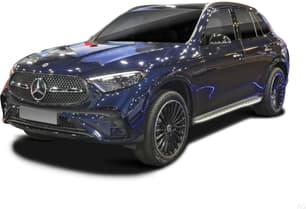
Let’s make one thing clear from the very beginning - this new Mercedes-AMG GLC63 S E Performance is technically superior to the model it replaces. Whether it’s actually better or not, is the real question at the heart of the matter.
Why? Because, like the C63 sedan stablemate, AMG has opted to replace the previous model’s 4.0-litre twin-turbo V8 engine with a new 2.0-litre four-cylinder hybrid powertrain. It was a move brought about in part because of increasingly stricter emissions standards in Europe, but also ties-in with the German firm’s success in modern Formula One racing.
While the new hybrid system offers more power, more torque and better fuel economy, as the lukewarm response to the C63 has demonstrated, the hard reality for AMG is that its buyers associate it with V8 and even V12 engines. That emotional pull is hard to replace with logic, even if the new model offers technical superiority.
But how does the new powertrain suit the GLC63 - is it just technically better or is it holistically improved?
Both of these vast vehicles are phenomenally comfortable - this is the kind of car that Mercedes does so well, and has done for decades. The S Class is rarely a disappointment but it's difficult to believe that such a big, heavy GT car can also dance the way the S63 does.
The S560 is far more weighted to being a GT - supremely comfortable with that active suspension, a growly, refined V8 and a cabin full of gadgets and comfort. The S63 is altogether more aggressive, to look at and to drive. Lopping the roof off both of them adds weight but, like any cruiser, also puts you out in the sun, the breeze and into your surroundings. Plus, in the case of the S63, you get more exhaust noise.
They're two very different cars and not just because of the engine. After all these years admiring it from afar, the S63 has delivered on my teenage expectations - fast, smooth and utterly mad.
Like I said right from the start, this new, hybrid version of the AMG GLC63 is technically superior to the model it replaces in every meaningful way. It is faster, more powerful and more fuel efficient and therefore a better performance SUV than the model it replaces.
Is it a better model than the one it replaces? Ultimately that will come down to how much stock you put into the soundtrack and your feelings on an AMG not powered by a V8 engine.
Because if you can see past that, then the AMG GLC63 is an absolutely fantastic performance SUV. Not only does the new powertrain make it faster in a straight line, but the chassis is very well-balanced, making for an engaging driving experience.
For those who can look past the smaller engine they will be rewarded with an incredibly fast and rewarding-to-drive member of the AMG family.
Note: CarsGuide attended this event as a guest of the manufacturer, with travel, accommodation and meals provided.
The S Class Coupe is obviously related to the sedan but manages a svelte appearance. Slimmer hipped and with a more Coke-bottle shape, the Coupe - if you squint a bit - has a bit of the classic old pagoda about it. Obviously you can't do pillars that slim anymore, but the glass roof takes away some of the visual weight inside and out.
The cabriolet's roof is nicely integrated and looks good when it's up, which isn't always the case.
They all look long, though. It's obvious to see why the cars all run on 20-inch wheels - anything smaller would look hilarious.
The cabin is a fairly sensible re-imagining of the E-Class. The big twin-screen layout of the dash and multimedia system seems a bit more at home here. The chintzy Burmester speakers in the doors let down an otherwise classy cabin, which steers clear of otiose vulgarity in looks and materials.
The GLC63 is unmistakably an AMG from the moment you first lay eyes on it. That’s thanks to the AMG-specific elements, starting with the grille with vertical strikes and the AMG crest on the bonnet; which is now a signature item for the performance sub-brand.
The GLC63 is also fitted with the Night Package II design kit; this adds a darkened grille and black chrome badging to further enhance its visual appeal.
The AMG-specific alloy wheels and more aggressive stance do mean the GLC63 stands out from the rest of the GLC range, helping it look fast even when it’s standing still.
Well look, if you end up in the back of the S Coupe, it's not a riot of space. Obviously it has back seats (the SL doesn't even squeeze a jump seat into its considerable length) but they're for occasional, if luxurious, use.
The boot is a reasonably decent 400 litres, obviously the cabriolet loses a few litres with the roof folded. Front and rear passengers will both enjoy a pair of cupholders and the whopping long doors will each hold a bottle.
Inside the GLC63 is clearly a derivative of the rest of the range, with its C-Class-inspired design and layout, but there’s enough AMG-specific elements to ensure it looks and feels special. This starts with the AMG steering wheel, which comes not only with a thick rim wrapped in Alcantara, but also some AMG special dials to adjust the various performance settings for the powertrain, suspension and transmission.
Then there are the AMG-specific seats, which look good and offer good support for the driver and front seat passenger. The rear seats offer decent space for what is a mid-size SUV, with room enough for two adults or teenagers or three smaller kids.
Those in the back aren’t particularly well looked after though, with only rear air-con vents and small door pockets but no USB charging ports or other small item storage.
The boot is 590 litres, down from 620L in the rest of the range, thanks to the addition of the rear-mounted electric motor. There’s also no room for the temporary spare the rest of the GLC range gets and instead you have to make do with a puncture repair kit.
One thing hasn't changed in nearly 20 years - the S isn't cheap. Available in coupe and cabriolet, the S560 starts at $314,900 for the former and $336,900 for the latter. Step up to the S63 pair and you'll pay from $370,500 for the coupe and $399,900 for the cab. If you're super keen for something spectacular, the twin-turbo V12-powered S65 is available for between $508,900 and $520,500, and features Swarovski crystals in the headlights, for some reason.
As you can imagine, there's quite a bit to cover, so for both cars I'll stick to the edited highlights. The S560s roll on 20-inch alloys, has a 590-watt 13 speaker sound system, digital TV, auto parking, active cruise control, panoramic glass roof, Nappa leather, active seats and power-closing doors.
It also comes standard with a heating pack that not only heats the seats but the steering wheel and centre console. In the cabriolet you also get the 'Airscarf' neck heater.
Both cars also feature's Mercedes' Magic Body Control with curve function. More of that wacky feature later.
The S63 AMG is a step up in power, price and spec. One notable change from the S560 is the loss of 'Magic Body Control', which is replaced with mere air suspension. The 20-inch alloys are 10-spoke forged units, the brakes higher performance composites with red calipers, while an AMG sports exhaust brings the noise.
Naturally, both are swathed in high-quality leather and feature dual-zone climate control, heated and cooled electric seats that adjust in every direction, deep carpets, keyless entry and start, fully digital dashboards and just about every gadget to which you can point your imagination.
Entertainment and sat nav are via Mercedes' 'Comand' system, which is displayed on a massive 12.3-inch slab of glass at the top of the dashboard. The 13-speaker Burmester-branded system is predictably impressive and with Apple CarPlay and Android Auto, you only have to use the basic software for the radio or various car controls.
The power and torque figures aren’t the only numbers that have risen sharply, with the GLC63 clearly impacted by a double whammy of inflation and the usual new-car price rise.
The GLC63 now starts at more than $191,814 for the SUV and $198,415 for the Coupe, which represents a nearly $30k increase over the old V8-powered model, which was priced at $164,600 just two years ago. Even for luxury car buyers that’s a big jump, especially when you’re trying to convince people of the merits of the four-cylinder powertrain.
That also means it's more expensive than all of its key competitors, including the BMW X3 M Competition, Maserati’s Grecale and the outgoing, petrol-powered Porsche Macan GTS.
To help explain some of this price increase Mercedes-Benz Australia has opted for a high level of standard specification for local cars. Standard equipment includes 21-inch alloys, AMG composite braking, a panoramic sliding sunroof, a unique AMG steering wheel, power-adjustable sports seats in Nappa leather, a head-up display, dual-zone climate control, wireless smartphone charging and a Burmester 3D Sound system.
Also included is the AMG Track Pace suite, for those who want to unleash their GLC on the racetrack.
There’s also a limited run, AMG Edition 1 Package available too, for an additional $12,900. On the outside you get Manufaktur graphite grey magno paint, foiling with colour gradation and large AMG logo on the sides, an AMG Aerodynamics Package, unique alloy wheels with Edition 1 and AMG branding, yellow brake calipers and an AMG fuel filler cap in silver chrome with AMG lettering.
Inside there’s AMG Performance seats, AMG Nappa leather in black with yellow contrasting stitching, AMG illuminated door sills, carbon-fibre AMG trim highlights, yellow seat belts and a unique AMG Performance steering wheel wrapped in carbon-fibre and microfibre.
All four coupes and cabriolets ship with Daimler's formidable 4.0-litre twin-turbo V8. The S560 scores 345kW/700Nm to drive the rear wheels through Benz's own nine-speed automatic. With all of that available, the S560 will crack the ton in 4.6 seconds and make a wonderful racket on the way.
Moving on to the S63, the same engine delivers a massive 450kW/900Nm. The run from 0-100km/h is dispatched in just 3.5 seconds and if I thought the S560 made a good noise, the S63 with its standard sports exhaust makes a better one. Again, Mercedes' nine-speeder is along for the ride.
This is what lies at the heart of the AMG GLC63’s success or failure. As I mentioned at the beginning, the previous generation’s 4.0-litre twin-turbo V8 has been replaced by an F1-inspired plug-in hybrid powertrain.
But don’t think that means AMG is suddenly focused on efficiency over performance. When AMG says the powertrain is inspired by the brand’s success in Formula 1 racing, what it means is the battery and electric motor provides a significant performance boost to support the internal combustion engine, not just save fuel.
To that end the combination of the turbocharged 2.0-litre four-cylinder petrol engine and the rear-mounted electric motor produces an impressive 500kW and 1020Nm. That’s a massive jump over the 375kW/700Nm made by the outgoing V8.
The lower-powered 560 drinks 98RON at the rate of 8.5L/100km for the coupe and 9.9L/100km for the heavier cabriolet.
The S63 ups the ante with 9.9L/100km for the coupe and an identical 9.9L/100km for the cab.
Our launch program contained some...er...spirited driving, which would explain the mid to high-teens fuel figures.
Mercedes makes no secret that the battery is designed for performance, not saving fuel. It only has a 14km EV range but can recharge quickly on the move to provide a power boost when needed.
But despite all that, the GLC63 is actually significantly more fuel efficient than the old V8, using a claimed 7.3L/100km, which is a massive 4.9L/100km improvement over the old model. Although, on our day-long test drive we didn’t manage to come close to that claimed figure and instead saw returns around 11L/100km, albeit after a lot of spirited open-road driving.
Let's start with the S560. That smooth V8 rumble is all you'll ever hear if you just slot into drive and go for a leisurely spin. The nine-speed automatic continues to be a revelation to me - in the GLC63 it's good and here, once again, it's excellent, finding the right gear for the occasion and riding the fat torque curve. Other nine-speed autos are not very good at all.
The test route for the S560 played to the strengths of the car. It had some lovely winding roads, which brought the trick suspension into focus - the Magic Body Control with curve function is hilarious. While the active suspension works hard at all times to ensure the ride is smooth and drama free, the Curve mode (no, really) actually leans the car into corners.
Those of you who remember the video game Wipeout 2097 will be big fans of Curve mode. As you approach a corner, you turn the wheel and then the car leans into the bend. This isn't active damping reading the road, it's the outside suspension lifting the car and the inside lowering it, so the car feels like it's gliding, like a hovercar. It's wild but oddly calming. Mercedes reckons it's great for those who get car sick. As I didn't have my wife on hand to test this theory - she chucks at the first sign of a corner - I couldn't verify this claim. That will have to wait.
The S63 AMG is a completely different proposition. The air suspension is more than up to the job of helping smother the effects of the car's considerable weight, meaning that no matter what you're up to, the car feels reasonably light on its feet. It never feels small, though, commanding the respect of the driver and plenty of space from other road users.
And boy, do you need some space if you kick the S63 into Sport mode. In true AMG style, the electronic reins relax and the big luxury coupe cheerfully kicks off. The tail will wriggle under an unsympathetic right foot, that signature V8 roar, crackle and hiss filling your ears. The S63 is always the harder-feeling car, but it delivers with a more sporting drive than the S560.
Being the generous soul I am, I volunteered to return the S63 to its home for the evening rather than consign it to the back of a truck. On the back roads I took to reach the highway, it was rock solid - fast, predictable and a lot of fun. Once I found the boring straight bits, it turned into a supremely comfortable cruiser, ticking along in ninth at the legal limit (and being Melbourne, it was very much the legal limit), dispatching overtaking with barely a flex of a toe.
The active cruise took the stress of keeping away from the State Revenue Office's clutches while being quiet and utterly pleasant.
Anyone who still believes in the adage ‘there’s no replacement for displacement’ hasn’t driven a modern turbocharged and hybridised engine. The GLC63 is a demonstration of the metaphorical and literal power of modern technology, combining an extremely efficient and potent internal combustion engine with an electric motor to make enormous real-world performance.
To be blunt, the GLC63 feels like a rocketship out of corners, launching with a ferocity and relentlessness the old V8 simply can’t match. It shouldn’t come as a surprise, a mid-size SUV with 1020Nm was always going to have plenty of performance, but even so it’s a shock to the system every time you give the GLC63 full throttle. Officially AMG claims it takes just 3.5 seconds to run 0-100km/h and has an electronically limited top speed of 275km/h - mighty impressive figures for a five-seat mid-size SUV.
To help get all that torque to the road, AMG deploys torque distribution technology that allows for it to be split an even 50/50 front/rear all the way to 100 per cent to the rear tyres.
Other technologies deployed to enhance its handling include AMG Ride Control suspension with adaptive damping and rear-axle steering. There’s also eight AMG Dynamic Select driving modes and four AMG Dynamics settings (Basic, Advanced, Pro and Master), so it’s a complex vehicle that is designed for the enthusiast.
While it’s easy to drive around town, once you get out on the open road you can really get a sense of the GLC63’s performance potential. Beyond just its powertrain the suspension offers good body control and the rear-axle steering helps it feel agile and responsive.
It’s not perfect though. At times the complexity of the system does lead to some hesitation when you put your foot down. It certainly lacks the linear power delivery of the old V8 and makes for a slightly trickier driving experience at times.
As for the sound, which is one of the biggest elements missing from the V8, Mercedes has added AMG Real Performance Sound, which features a pressure sensor in the exhaust that picks up on the engine note and plays it through the speaker system. It certainly helps make for a louder, more noticeable engine noise, but it still sounds more like an A45 than the previous GLC63 and for many would-be buyers, that’s a major turn-off.
The S-Class coupe comes loaded with eight airbags, ABS, stability and traction controls, forward and reverse AEB with pedestrian detection, reversing camera, crosswind assist (I know, right?), traffic-sign recognition and reverse cross traffic alert.
The S-Class Coupe does not have an ANCAP or EuroNCAP rating.
The GLC63 comes standard with a comprehensive suite of safety features including 'Distronic' (Mercedes’ name for adaptive cruise control), 'Active Lane Keeping Assist', 'Blind Spot Assist', 'Traffic Light Assist' and 'Adaptive Highbeam Assist'. It also includes Mercedes’ 'Pre-Safe' accident anticipation system - which pre-tensions the seat belts and will even play a white noise to protect your ears if it senses a crash is imminent.
A parking system that includes a 360-degree camera and active parking assist is also included.
The GLC range was awarded a five-star ANCAP rating in 2022, which pre-dates the latest testing protocols, so doesn’t provide a like-to-like comparison for vehicles tested after that date.
Mercedes offers a three-year/unlimited-kilometre warranty with roadside assist for the duration.
The company also offers both service plans (where you pay up-front as part of the vehicle purchase) and capped-price servicing on the coupes. Servicing over three years is in the order $2500.
The GLC63 is covered by Mercedes Australia’s usual five-year/unlimited kilometres warranty.
As for maintenance, Mercedes offers service plans, spanning three to five years. Three years will cost you $5025, $6455 for four years and five years is priced from $7180. Servicing intervals are 12 months or 20,000km, whichever comes first.