What's the difference?
Imagine a car that can pretty much drive itself, if you let it. And it’ll do that while you get a massage, pump some Beyonce, and enjoy the fragrance of a field full of flowers… And then, it can teach you to do stretches and exercises in the driver’s seat.
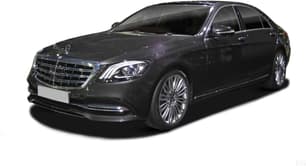
It may sound like fictional fiction, but it’s factual fact. And it’s the Mercedes-Benz S-Class 2018 model, which has taken the so-called ‘wellbeing’ of the driver to a new level.
The facelifted model has seen plenty of styling changes and some tech upgrades, and while making the flagship car in a particular brand’s line-up is often a task fraught with issues, the German company’s big, expensive, luxurious, limousine is undoubtedly a more thoughtful car for 2018.
But just remember, its predecessor was considered - at least for a little while - as the best car in the world by some automotive journalists.
Now Mercedes-Benz has updated it, and it reckons it’s better than before, bringing a bunch of new technology, new engines, a reworked model range and, perhaps not essentially, but still pleasantly, lower pricing.
Read on to see how Beyonce factors into the equation.
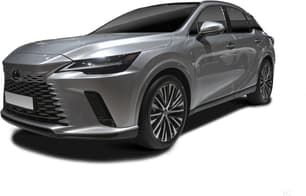
This is a BIG moment for the Lexus RX in Australia. And I'm not just referring to the spindle grille that adorns the front-end of this all-new model (though it too is almost commercially massive).
I'm talking more about the vehicle itself, and its importance to the Lexus brand here. The RX is one of Lexus' best sellers in Australia, and so this new one – which welcomes a new platform, new powertrain options and an all-new F Sport Performance trim level – is a big deal.
So, does it live up to the hype (and to its German competition)? Join me as we figure all that out ahead of the RX's debut here in early 2023.
The 2018 Mercedes-Benz S-Class remains a technological tour de force, a luxury sedan to be reckoned with - one that has safety, technology, comfort, finesse and performance all rolled into a stylish package.
It's hard to see why you'd need anything more than the S 350 d, which is now much more attractively priced. It'd be my pick, but I'd have to get the Energizing Comfort Control package, and probably the AMG styling pack, too. And even then it would cost less than its predecessor.
The RX is a big SUV that doesn't always look, or drive, like one, and – in 500h guise especially – can put a smile on a driver's face, too.
Gone are the cabin quirks and the polarising design elements (well, mostly...), and in their place you'll find a solid, premium-feeling family offering without much in the way of drawbacks.
Note: CarsGuide attended this event as a guest of the manufacturer, with travel, accommodation and meals provided.
I swear it has been facelifted, and the changes are bigger than they might appear. There is no doubt that the S-Class shape is largely unchanged, but the German company has kept the modifications minimal in the scheme of things.
That doesn’t mean those changes are unnecessary, though. The new headlights, for example, are standard on every model, and are constructed with 84 LEDs (including three for the daytime running lights), and of course they’re adaptive with automated high-beam - meaning they’ll shield other road users from the glare of the lights at night. And the lights themselves will throw a main beam up to 650 metres, according to the company.
Other things are slightly more cosmetic, like the revised three-bar grille treatment, new front and rear bumper designs that feature broader sculpted sections to widen the stance of the car, and there are new LED tail-lights as well.
The smallest set of wheels used to consist of 18-inch rims, but now the base car rolls on 19s, while the rest of the expansive range sits on 20s.
The inside has seen some changes, too, but the appearance of things in the cabin isn’t the focal point - its the usability of the technology that's the big change.
Oh, but I should tell you there are now 64 ambient lighting colours to choose from, which is up from seven, and now you can also set the lighting in three different zones - so theoretically you can have blue, orange and green areas of the cockpit, if you’re gross.
Honestly, the Lexus RX looks far more powerful, and cohesive, in the metal than it does in some photos, and in the right colour (we're fond on the deep black or the copper-rose hues), it looks downright fetching.
That Predator-shaped front-end is massive, but the way the Spindle grille kind of bleeds in the body work at the nose of the vehicle is a neat trick, and the whole design ethos gives the RX a sportier, more modern, and more intimidating, energy from almost every angle.
Perhaps the most clever element though is the wave-like design piece that links the rear window with the boot, somehow managing to shrink almost-five-metre SUV (visually, at least), and leaving the RX looking more sporty than hulking.
The door handles are cool, too. They’re fixed, and you just touch them to open the door, with a similar system used once inside to get out again.
Inside, Lexus has gone for a clean, modern-feeling space, and, thankfully, there isn't a Remote Touch trackpad in sight. Instead, you can choose between two screen sizes – 9.8- or 14.0-inch – which kind of dominate the dash, while the air-con controls are digital and interactive, too.
It must be said, though, some interior treatments feel far more special than others, and while Lexus in Australia isn't spilling on specifics for our market just yet, the top-spec models will almost certainly feel more plush than the cheaper ones.
If you’re buying a Mercedes-Benz S-Class there’s a good chance you’re more interested in the back seat than the front: you could be buying it for a business, or you could like to be driven around - and there are definitely worse places you could be.
We would suggest, though, that the best place you could be if that’s your caper is in the back of a long-wheelbase S-Class model, which has extra legroom.
And if you happen to be in a LWB model with the 'Business Class Package', you’ll enjoy two individual rear seats rather than a three-seat bench, folding tables for your bento box or laptop, and an ‘executive seat’ on the passenger side that features a foot rest and allows you to slide the front seat forward to liberate more room. Deluxe.
No matter if you are in one of the stretched models demarcated as such by the ‘L’ suffix or not, you will enjoy excellent seat comfort and good head- and shoulder-room. Legroom in the regular models isn’t as plentiful as you might expect: much more affordable cars like the Hyundai Sonata give the S-Class a run for its money in that regard.
There are good storage options for odds and ends, with the back seat featuring a fold-down armrest with pop-out cupholders and a storage box, as well as map pockets - and the boot space varies depending on the model, but the S 350 d has a 510-litre cargo capacity (VDA). All four doors have bottle holsters, and a bit of extra room besides. Of course there are rear-seat air-vents, and if you’re kids are lucky enough to ride around in a S-Class, the two ISOFIX/three top-tether points will be welcome.
Up front there are two cupholders between the seats, and a new wireless phone charger in the centre console (Qi compatible phones only). There are two USB ports as standard in most models, while models with the rear seat entertainment package fitted get rear USBs.
The huge screen that runs across two-thirds of the dashboard has seen the noticeable join marker removed for this update, with the monitors being upgraded to a higher resolution and the graphics have been reworked, too. The codpiece-style controller of the Comand media interface remains, and while it still isn’t as simple as other controllers, it is reasonably easy to get used to.
So … what about Beyonce?
She comes in as part of the Energizing Comfort Control system, which is standard in some models and a $1400 option in those that don’t have it fitted.
Essentially it allows you to choose between different set moods: 'Joy', 'Freshness', 'Vitality', 'Warmth', 'Comfort' and 'Training', the latter of which offers three different stretching/exercise programs that last for 10 minutes to stop fatigue. The instructions are given by voice over the sound system.
Each of the moods will adjust the temperature and ventilation (the Freshness setting offers ‘gusts’ of fresh air as if you’re at the beach!), ambient lighting, air fragrance and intensity, and the massage function for the seats. And the music bit - there are predefined songs the system can cue up to suit the mood, or it can identify songs on a hard-drive or USB that suit the programs by analysing the tempo of the tune. Amazing, right?
The new steering wheel looks a lot sportier than the one in the pre-update car, and it has finally done away with the awkward cruise control stalk in favour of steering wheel buttons for the adaptive cruise control system.
The entire RX range now rides on Lexus' GA-K platform, which is lighter (-40kg), more rigid, and offers a lower centre of gravity (-15mm) than the model it replaces.
The RX is wider (+25mm to 1920mm), lower (-10mm to 1695mm), but no longer (still 4890mm) than the outgoing model. But Lexus has lengthened the wheelbase (+60mm to 2850mm) to earn some extra backseat space for rear riders.
And it must be said, there is lots of room for backseat riders. Sitting behind my own 175cm driving position I had more than enough knee room, and enough head room, and a general feeling of airy spaciousness.
Elsewhere you get the usual practicality perks, with two cupholders up front, two more in the pull-down seat divider that splits the rear seat, and there are two ISOFIX attachment points in the back seat, too.
Charging is handled by a four USB ports, and depending on the trim/spec balance Lexus in Australia shoots for, you should at least find vents with temp controls for backseat riders, too.
Lexus is yet to confirm the luggage space specs for the new RX, but given it’s only being offered with five seats, and that there’s been no change to the vehicle’s length, you can expect a fair bit of room for bags in its auto-opening boot.
If you can call a car that starts near two-hundred grand good value, then you have much more money than I do. But there is no escaping it: the new S-Class 2018 range is better value than before.
The starting point in the range is entry-grade S 350 d, which is $195,900 plus on-road costs.
Standard kit for that model includes 19-inch alloy wheels, leather trim, heated and cooled front seats, nappa leather-wrapped steering wheel, those great new headlights and the new ambient lighting system, a panoramic sunroof, head-up display, dark brown 'Eucalyptus' trim, auto-dimming rear-view and side mirrors, a wireless phone charging system, keyless entry and push-button start. The entire S-Class range now gets auto-closing doors and an electric boot lid, too.
The media system in the S 350 d includes sat nav with traffic monitoring, a 13-speaker Burmester sound system, digital TV, DAB+ digital radio, Apple CarPlay and Android Auto, and the 'Comand Online' system with internet capability.
Next up the model range is the S 400d L (at $222,500), and the S 450 L ($227,500) - both of which are specified identically. Over the base model car they feature the extended wheelbase, as well as electronically adjustable rear seats with memory function, side window blinds, a rear blind, rear climate control, and 20-inch wheels.
The S 560 sees the price head north to $270,000 (for the short-wheelbase model, which loses the abovementioned stuff in the L models), or $295,000 for the S 560 L. It adds the following nice features: nappa leather, brown burr walnut trim, a wood/leather steering wheel, 'Energizing Comfort Control', different (five-spoke design) 20-inch wheels, laminated glass and an anti-theft protection package. The S 560 L has luxury rear head restraints - they’re more like pillows, honestly - an individual rear-seat entertainment system and two wireless headsets.
The top of the regular S-Class model range is the Mercedes-AMG S 63 L, which is a princely $375,000. It builds on the kit offered in the models below, and pushes the sports luxury aspect further, with a full AMG body kit, 20-inch AMG wheels, AMG specific drive programs, AMG brakes, an uprated exhaust, sports steering and retuned suspension. Inside there are model-specific elements, special wood trim, front seats with active bolstering, and heated and ventilated rear seats.
If you’re shopping at this end of the market, then you’ll likely also be tossing up between a BMW 7 Series, or maybe a Bentley Flying Spur. An all-new Lexus LS will arrive in April 2018, and the all-new Audi A8 isn’t far away, either.
This is an arbitrary seven out of 10, here. Because we don't yet know how many trim levels the new RX will launch in, how much each will cost, or what you'll get for your investment.
What we do know is that the RX will launch with three powertrain options: an all-new turbocharged hybrid, a second, more conventional hybrid, and a turbo-petrol engine. There’s a plug-in hybrid version available overseas, but we ain’t getting it. Or at least, not yet.
In terms of specific trims and equipment levels, you’ll need to wait until closer to the RX’s launch in early 2023 for the full skinny. But you can expect a choice between a 9.8-inch or 14.0-inch central touchscreen with wireless Apple CarPlay and Android Auto, an eLatch door system with fixed handles that unlatch at the push of button inside and out, as well as more high-tech safety kit (thanks to Lexus Safety System 3.0) than you can shake a radar at.
The big news for the majority of S-Class buyers is the new engine in the S 350d, which is a 2.9-litre in-line six-cylinder turbo-diesel with 210kW of power and 600Nm of torque. It has a nine-speed automatic and is rear-wheel drive (RWD).
That same diesel engine is wicked up in the S 400d L, with that model churning out 250kW and 700Nm, and remains rear-drive with a nine-speed auto.
The petrol model range is opened by the S 450 L with a 3.0-litre six-cylinder twin-turbo mill producing 270kW/520Nm. Again, nine-speed auto, RWD.
The S 560 and S 560L run the same 4.0-litre twin-turbo V8 petrol with 345kW of power and 700Nm of torque. Nine-speed auto, rear-drive - naturally!
The AMG-fettled S 63 has a thumping twin-turbo 4.0-litre V8 petrol engine with 450kW and 900Nm, with a nine-speed MCT multi-clutch auto and - you guessed it - RWD.
Let’s start with what we’re not getting at launch. Internationally, there's a new plug-in hybrid variant that pairs a 227kW hybrid system with a 18.1kWh lithium-ion battery for an EV driving range of more than 65kms, but fight though Lexus in Australia did, it couldn't secure the model for our market at launch. It wants it though, and badly. So watch this space.
Instead we get three options, including the RX 350h, which pairs a 2.5-litre petrol engine with Lexus' existing hybrid system to produce a total 180kW and 316Nm. It's paired with a constantly variable transmission and will be offered in two- or all-wheel drive.
There’s also a turbocharged 2.4-litre petrol engine on offer in the RX 350, good for 205kW and 430Nm, and paired with an eight speed automatic and AWD.
But the powertrain I really, really like lives in the RX 500h F Performance, and pairs a 2.4-litre turbocharged petrol engine with an electric motor up front, and a second at the rear axle, for a total of 273kW and 551Nm.
The all-new hybrid system has been designed with turbocharged engines in mind, and features a single electric motor at the front, and a bigger rear motor, with the latter able to provide real driving power to the rear tyres - and contribute to a sprint to 100km/h of just 5.9secs.
Lexus calls it an 'eAxle' motor, and it can deliver some 76kW to the rear tyres. It pairs with a 'DIRECT4' all-wheel drive system which the brand says improves "handling, controllability, and feel."
Fitting, then, that it features on the RX 500h F Performance, which also introduces a new go-fast tier for the Lexus brand (though one you can expect to see more frequently in the near future), and which sits between the existing F Sport and the top-tier, full-fat F models.
The brand says things like bigger brakes, performance components and the highest power outputs will be reserved for the F Performance models. And so it is with the RX 500h F Performance, which welcomes six-piston front brakes, adaptive variable suspension, dynamic rear steering and 21-inch wheels.
The diesel models are - unsurprisingly - the most frugal in the range, with the entry-level S 350 d using a claimed 5.4 litres per 100km across a range of disciplines.
The S 400 d L - which uses a higher-output version of the same diesel drivetrain as the model above - uses only a minuscule amount more: its claim is 5.5L/100km.
The most frugal of the petrols is the S 450 L, with its six-pot petrol twin-turbo using a claimed 8.4L/100km.
Every model has stop-start - including the AMG - and the V8 petrols also feature cylinder deactivation when in 'Eco' mode.
That cylinder deactivation system helps the S 560 achieve an incredibly low claimed consumption of 8.5L/100km. So does the longer, slightly heavier S 560 L.
The higher-out Mercedes-AMG S 63 L uses 9.0L/100km, according to its claim. Amazing for the outputs of the engine.
Let’s start with the pure-petrol RX 350, which will sip a claimed 8.8 litres per hundred kilometres on the combined cycle, and will demand premium petrol. The RX 350h is more fuel efficient, demanding 6.4 to 6.7 litres per hundred kilometres on the combined cycle.
But the most impressive is the RX 500h, which Lexus says will need 8.2 to 8.5 litres per hundred kilometres — making it more efficient than the petrol-powered RX 350, despite producing an extra 68 kilowatts of power and 121 newton metres of torque.
Smooth. It wasn’t even because I’d chosen the Energizing Comfort Control mood to elicit that vibe. It’s smooth - and so it should be.
Whether it’s the near-silent new six-cylinder diesel, which hauls the near two-tonne sedan along with less fuss than a medical centre receptionist dealing with a room full of coughing patients. There is no fuss. You just hand over control to the engine, and trust it will get you where you need to be.
The V8 petrol in the S 560 also has a bit of a silent killer vibe to it. There’s perhaps not as much noise as a V8 fan might want, but the mumbo is there, and in both cars the gearshifts are sublimely timed and super smooth.
Admittedly, the stiff-sided run-flat tyres on both the 19- and 20-inch wheels can exhibit a slight terseness over sharp edges, but when it comes to rolling over pockmarked surfaces or rougher country backroads, the ride offered up by the air suspension with variable dampers is superb. Put it in Sport mode and it stiffens up to the degree you’d expect, but Comfort is no doubt the best place to be.
The steering is super light but accurate, meaning it’s easier than you’d think to pilot this behemoth of a sedan through corners. The grip on offer is excellent, too, even if traction can be an issue - I had a full couple of seconds of strobe light action from the traction control light when I buried the throttle in the S 560.
I didn’t get a chance to drive the six-cylinder petrol S 450 L, or the S 400 d L. And, I’m really sad to report, there was no opportunity to drive the AMG S 63 L, either.
But the overall feeling of the updated range is that it remains a deluxe and delightful limousine - whether you have the good fortune of being in the driver’s seat or not.
Right, let’s cut to the chase here. I like the way the all-new RX family drives, pretty much across the board. If that’s all the information you want or need, feel free to check out here and move on to the next sub-heading.
Still here? Ok, then let’s go a little deeper.
None of the powertrains on offer feel under-powered in the RX range, which is a good start, but they all do their jobs a little differently.
The RX 350 is probably the most familiar, with a traditional automatic and that well-known petrol-powered punch. It’s not the most powerful engine on offer here, but it’s more than enough to get the RX up and moving — but, for mine, it can feel a little thrashy (or like it’s straining a little too hard), when you really start to push it, but such is the price you pay for a four-cylinder engine pushing a large SUV.
Next up is the RX 350h, which Lexus reckons will be the best-selling model in Australia. Lexus and Toyota have been doing hybrid powertrains for some time now, and the system fitted to the new RX is predictably solid-feeling, though it too has its drawbacks – namely that the constantly variable transmission can drone on and on under constant acceleration, and even the commendably insulated cabin can’t block it out completely.
So if this is a Goldilocks’ scenario, then the just right has to be the RX 500h, which blends its powerful powertrain with a traditional-feeling automatic to deliver plenty of performance and a tight, engaging drive experience that makes it feel as though the big SUV is somehow shrinking around you from behind the wheel, courtesy of the best performance kit (brakes, adaptive suspension, etc).
But to be honest, no matter the RX, the thing that really stands out here is its on-road dynamics. The car doesn’t really wobble about, there’s not much in the way of body roll, and it feels tight and confidence inspiring, no matter the model - but especially the rear-wheel-steering equipped 500h.
The RX also does a commendable job of locking the outside world outside of the cabin. Where you want it to be a calm and sedate family hauler, it can be that. But it can also put a smile on your face on the right road, too.
And that, I think, is something to be celebrated. And also not something we’ve come to associate with Lexus over the years. But that’s now beginning to change. Long live F Sport Performance, then.
Easily one of the safest cars, if not the safest car, on the road today if technology is anything to go by. Well, we can’t go by a crash test score, because the S-Class hasn’t been crashed by EuroNCAP or ANCAP. So I can’t really give it a 10/10 for safety…
But when the standard safety kit list is as lengthy as the S-Class’s, it seems a safe bet. Items fitted include a 360-degree camera system, parking sensors front and rear, auto emergency braking, active blind-spot monitoring, active lane-keeping assist, adaptive cruise control with active steering assist, drowsiness detection, crosswind assist, and pedestrian detection with evasive steering assist (which allows you to turn the wheel harder to avoid impact with a pedestrian).
Plus there are other items like the company’s Pre-Safe crash detection system which can flash the car’s hazard lights at other road users, and tighten the occupant’s seatbelt in anticipation of being hit. And if that happens, there are eight airbags (dual front, front side, rear side, curtain).
The Lexus RX welcomes the brand's Lexus Safety System 3.0 setup, which means more high-tech kit than you can shake a radar at.
What appears where on the Australian lineup remains to be seen, but internationally the RX will offer things like Advanced Park, remote parking from your smart phone, Safe Exit Assist that will actually prevent you opening the doors should the cameras detect pedestrians or cyclists, and Pre-Crash Safety, which scans intersections for bikes, people or cars, and activate alarms and the brakes should it sense a collision.
That, and things like Front Cross-Traffic Alert, active cruise, Lane Departure Warning and Lane Tracing Assist, road-sign recognition and Lane Change Assist, should see Lexus shooting for a five-star ANCAP safety rating.
Mercedes-Benz offers a standard three-year/unlimited kilometre warranty.
Servicing is due every 12 months or 25,000km on all engines except AMG drivetrains, which require servicing every year or 20,000km.
Mercedes-Benz has a (pricey!) capped-price servicing plan. The standard diesel and petrol models in the S-Class range cost $596 for the first service, and $1192 for the second and third visits. The costs for the sole AMG model is $736 for the first service, then the second and third visits are $1472 per.
The Lexus family is covered by a five-year, unlimited-kilometre warranty, which is about bang-on in the premium-vehicle space.
While servicing details are yet to be confirmed, the previous RX required a trip to the service centre every 12 months or 15,000kms, and it will fall under the brand’s capped-price servicing program, and the Lexus Encore program, which offers all sorts of perks to owners.