What's the difference?
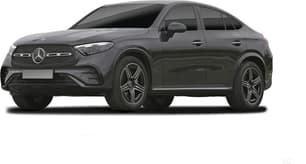
Just seeing a coupe SUV in the traffic makes some people very cranky, but others love the sight of them and it’s these fans that Mercedes-Benz is hoping to woo with its new GLC300 Coupe.
This new-generation GLC Coupe arrives six months after the regular SUV version of the GLC landed in Australia and goes head-to-head with the BMW X4 and Audi’s Q5 Sportback.
The coupe style with the ‘cut-down’ roofline which slopes towards a low tailgate means practicality is compromised and if you’re thinking of putting one in your family’s driveway then it might be an idea to read how this writer’s family coped with the GLC300 Coupe for a few days.
Welcome to one of the world’s tiniest SUVs, as well as amongst Australia’s cheapest – Suzuki’s diminutive Ignis.
There’s an Aussie connection. Holden designer Peter Hughes styled the original YG Cruze based on the first (FH) Ignis of 2000, with both models sharing most components underneath; but the latter was not well received, prompting Suzuki to change tack for its reborn Swift replacement of 2004. Yet the name and concept were revived 11 years later (without GMH) for the retro-themed high-riding hatch/crossover you see here today.
The point? This quick history lesson serves to remind us how similar both Ignis generations are, as well as how devoted Suzuki is in its pursuit of owning the light SUV space.
In June 2020, a facelifted MF arrived, brandishing a revised grille, bumpers and trim to give it a chunkier appearance, along with minor spec changes.
Here we take a long look at the GLX auto.
The GLC300 Coupe isn't quite as great when it comes to being a family car as the regular SUV version of the GLC, and that's purely down to the sloping roofline which not only makes access more difficult to the second row but reduces boot capacity.
That said, the GLC300 Coupe makes a much better family car than a Mercedes-Benz C-Class sedan, or any sedan.
Easy and enjoyable to drive, packed with great features and still practical, the GLC300 Coupe would still cut it as a good family car.
With statement styling, inherent agility, excellent efficiency, proven reliability, high equipment levels and low entry pricing, the 2021 Ignis GLX is in danger of becoming a mandatory short-list proposition for people seeking fun and affordable motoring.
But undermining all that is a distinct lack of driver-assist safety tech that can’t be – and shouldn’t be – ignored. At least give buyers the option of paying more for essentials like AEB.
If Suzuki can address this shortfall, the Ignis would join its excellent Swift supermini stablemate in being a very compelling and enjoyable compact urban runabout. We hope this happens sooner rather than later.
Coupe SUVs aren’t for everybody… they’re not even for lots of people. But the design of an SUV with its roof cut down so that it meets the tailgate at an almost sportscar-like angle appeals to more than a few fans. The thing is they don’t just like the look, they love it, and they also probably enjoy how much the styling makes other people cranky.
To my eyes the GLC300 Coupe is the best execution of the bodystyle compared to those of BMW and Audi. There’s an elegance to the GLC300 Coupe and the AMG-line adds a tough look that only enhances the solid, powerful but pretty look.
The GLC Coupe is a mid-sized SUV and this new generation model is a bit bigger the previous one and now measures 31mm longer at 4763mm end to end, it’s 1890mm wide, 1605mm tall and has a wheelbase of 2888mm.
It’s also more aerodynamic than ever. No seriously, it’s drag coefficient is now 0.27 and it looks like a bar of soap - and it's about as slippery as one, too.
More curved surfaces await inside with a dashboard that pours down into the large centre console and it's adorned with a sloping and large portrait-style media screen.
At night or in tunnels the ambient lighting glows through the air vents and skirts the edges of the door trims, console and dashboard.
It’s a minimalist and high-tech cockpit with modern sports seats up front and a Nappa leather wrapped steering wheel with its twin blade design.
So, how does the coupe design work for family practicality? Let’s take a look.
Sometimes facelifts do really improve the look of a vehicle, as is the case here with the MF Series II.
Maybe it’s the Suzuki Jimny 4x4-inspired quad-nostril grille or chunkier rear bumper inserts, but they somehow make the Japanese-built crossover seem less narrow and tippy-toed.
The styling – first seen in 2016 – actually references classic Suzukis of old like the late 1970s Cervo SC100 (as per the C-pillar slit inserts and angular silhouette) that were never offered in Australia anyway.
A good thing, then, that the Ignis’ handsome proportions, flared wheel arches, deep glass area, anthropomorphic grille and pushed-out wheelbase and tracks give it a purposeful look and stance that also stands as an attractive and individualistic 21st Century design in its own right.
Measuring in at 3700mm in length, 1660mm in width and 1595mm in height, the Ignis is substantially stubbier and narrower (though slightly taller) than the Hyundai Venue, whose corresponding numbers are 4040mm, 1770mm and 1592mm, respectively. The Suzuki’s 2435mm wheelbase is also 85mm shy of the Hyundai.
Still, the result doesn’t mean the Ignis’ cabin seems overly tight or cramped in any shape or form.
SUVs are the most practical cars for families because of the better access to the cabin thanks to their large doors and slightly elevated ride height, their big boots with wide and tall hatch openings and their high flat rooflines. They’re essentially raised station wagons.
A coupe-style SUV still has four doors but they are less boxy due to the sloping roofline which falls away quickly to meet the tailgate at a lower point. The effect is a sporty-looking shape but practicality is lost in this exercise of form over function.
The second row doorways aren’t as large as those on the regular SUV. I did a side-by-side test and felt like I had to duck under the sloping roof when getting out of the back seat.
The smaller opening also made it trickier to lift my toddler daughter into her baby seat.
The sidesteps are also surprisingly handy for bigger kids and my eight-year-old used them every time when climbing into the car.
Cabin storage is outstanding with huge door pockets and cupholders in both rows, and while the 545-litre boot in the GLC300 Coupe is 80 litres smaller than the cargo capacity of the regular GLC SUV, it's bigger than the previous version of the Coupe.
As for people space, there’s enough headroom for me at 189cm tall in the back seat and heaps of legroom, even behind my driving position.
I’ve mentioned the lack of climate control in the second row, but also should point out that there are no USB ports back there either.
There are USB ports in the big centre console box upfront and a long cord should be able to make it to the second row.
There’s a wireless phone charger but it's housed in the bowels of the centre console too, and you’ll need to weave your hand while clasping the phone under the shiny black trapdoor, past the cupholders possibly with drinks in them and almost under the dashboard.
Thinking about it, the Ignis is uniquely suited to city life.
Forget its diminutive proportions for a moment, and consider instead that it has extraordinarily high seating positions and a tall turret. Perfect for stepping inside the car with some degree of dignity.
Once sat on the big, comfy and lofty front seats, you’re immediately struck by how confidence-building the commanding driving position, assisted by the excellent all-round vision afforded by the deep glass area and upright pillars and a pleasant leather-like steering wheel cover.
The front buckets themselves are comfy and enveloping, even though there is no lumbar adjustment support fitted; there is a height lever on the driver’s side, ample rearward travel for taller folk and side bolstering to help hug you through corners, while the soft cloth material feels good to the touch.
Suzuki’s thought about storage, as demonstrated by the big glovebox, bottle-holding door pockets up front, deep lower-console shelf and trio of cupholders, though there is no central armrest or bin, even in this up-spec grade.
Suzuki’s gone for a somewhat old-school off-roader theme inside, evidenced by the chunky heater/air-con controls, toggle switchgear and 4x4-look pared-back dash, while there’s plenty of hardy, hollow-sounding plastics to remind you that this is built down to a price. One lovely retro detail is the ‘60s pull-out bonnet release.
Operating the GLX’s climate control is child’s play, and the same applies to the ageing but still effective multimedia system, with its colourful display, easy connectivity and handy sat-nav. Note that the virtual volume slider on the screen is slow, fiddly and ultimately needlessly distracting. Give us a proper knob any day of the week. And what about a digital radio receiver, please, Suzuki?
We’re also less fond of the tilt-only non-telescopic steering column, as some drivers found it difficult to find the perfect position as a result, while the lack of digital speedo when there is room for it in the instrumentation’s LCD window smacks of penny pinching. Otherwise, the Ignis’ layout and design generally really hit the mark.
The rear doors open at nearly 90 degrees, aiding entry to and egress from the back seat. Although the front passenger seat lacks a height adjuster, it is still set up high, so big feet can tuck in underneath for taller occupants behind.
Being a GLX, the bench is split 50/50, is designed to only carry two people (so there’s no centre belt but ample width as a consequence) and the backrest reclines in 10 (narrow) positions for added comfort. Both also slide forward by a significant amount, boosting cargo space. Parents and guardians of smaller children might find this helpful as they can be positioned closer to the front seats for access that’s within arm’s reach.
The backrests themselves are… OK and clearly intended for smaller folk. Your 178cm tester found a distinct lack of under-thigh support due to the short squab and the backrest doesn’t reline far enough back for true comfort. And except for the aforementioned third cupholder nestled right at the rear of the front-seat lower-console area, door-pull recess that might hold an upright smartphone as well as a small bottle receptacle built into the door card, storage is non-existent back there. Yes, there is one map pocket, but that’s your lot. You’ll also search in vain for overhead grab handles (only the front passenger gets one), reading lights and rear-seat centre armrest – a wasted opportunity given this car’s four-seater status.
On the other hand, there’s space galore in every direction due to that very status, excellent vision and windows that wind (electrically of course) all the way down for a light and airy feel. Fido will be pleased. Just remember to bring your ear plugs if constant road noise bothers you.
Further back, you’ll marvel at the versatility of the cargo area, thanks to the sliding split bench that increases cargo capacity from 264 litres in normal four-seat mode to 515L with the backrests folded and 1104L in “maximum volume” mode. Note the five-seater GL’s ranges from 271L to 505L to 1101L respectively.
It’s properly long and deep in this setting. There’s a deep floor (with a space-saver spare underneath) and a light, but not much else. The fit and finish is fine but the floor seems flimsy and the parcel shelf lightweight. At least it isn’t mesh as per the Honda HR-V’s.
Mercedes-Benz is offering Australia just the GLC300 grade in both the SUV and Coupe body styles.
High-performance AMG variants are out overseas now and will arrive in Australia soon, too.
You can expect to pay more for these AMG beasts - a lot more than the $113,900 list price of the GLC300 Coupe.
Still the GLC300 Coupe does come standard with an AMG Line body kit and 20-inch AMG alloy wheels. LED headlights are also standard, so is the panoramic glass roof, tinted rear glass, proximity unlocking and a power tailgate.
Inside there’s synthetic leather Artico upholstery, sports heated front seats, Nappa leather steering wheel, an 11.9-inch media display with Apple CarPlay and Android Auto, a 12.3-inch digital instrument cluster and a head-up display. There’s also dual-zone climate control and wireless phone charging.
The value is good in terms of features, although the price is slightly higher compared to the rivals such as the BMW X4 xDrive30i ($106,400) and Audi Q5 Sportback 55TFSI ($110,200).
It’s worth pointing out, too, that the GLC300 Coupe is about $10K more than the GLC300 SUV version. Why? The coupe versions of prestige SUVs always tend to be pricier than their regular more boxy SUV siblings. Somebody in marketing will be able to explain why.
Having lived with the GLC300 Coupe with my family over the past few days I can say the proximity unlocking which works by touching even the back door handles is excellent, the tinted windows are dark and cut out much of the sun's glare, but there’s no climate control in the second row. There are air vents back there, which is good.
I found that on hot days the semi-transparent shade on the glass roof couldn’t stop the cabin from heating up quickly.
The cheapest Ignis is the GL (what is this? 1982?) manual from $18,740 before on-road costs (ORC). Auto adds $1000 while the auto-only GLX starts from $21,740.
The series has endured two big price hikes since mid-last year, totalling a hefty $2750 in the latter grade. This places the light SUV hard up against the marginally-bigger base Hyundai Venue auto ($22,960 before ORC) and larger-still MG ZS Excite ($21,990 driveaway).
Let’s get to the bad news first.
Even as a flagship grade, the GLX lacks key driver-assist safety kit like automatic emergency braking (AEB) as found in most other competitors, along with lane keeping assistance, blind-spot monitoring and rear cross-traffic alert. Not even as an option. That’s a black mark. You will find six airbags (dual front, front side and curtain items), stability control, anti-lock brakes with electronic brake-force distribution and brake assist, and traction control.
Most punters will appreciate the GLX’s LED headlights with daytime running lights and auto on/off functionality, climate control air-conditioning, keyless entry and start, six (rather than four) speaker audio system, privacy glass and 16-inch alloy wheels (with a space-saver spare), replacing 15-inch steelies. They build on the GL’s cruise control, fog lights, 7.0-inch touchscreen, reverse camera, satellite navigation, Apple CarPlay/Android Auto connectivity, Bluetooth phone and audio streaming, leather-clad steering wheel and roof rails. Digital radio is not available on either grade.
Interestingly, the GLX swaps the GL’s fixed three-seater rear bench seat for a sliding (and reclining) 50/50 split-fold two-seater item, trading practicality for luggage-lugging versatility. More on that below.
Adding premium/metallic paint costs $595.
The GLC300 Coupe has a 2.0-litre four-cylinder turbo-petrol engine making 190kW of power and 400Nm of torque.
There’s also an overboost function which allows the engine to make an extra 17kW and 200Nm just for a brief moment, but that extra dollop of grunt combined with the regular output provides impressive acceleration (0-100km/h in about 6.3 seconds) for overtaking or moving quickly when you need to.
A smooth nine-speed automatic transmission sends the drive to all-four wheels.
The GLC300 Coupe is all-wheel drive and while there’s a setting for rougher terrain, along with one for comfort, eco and sport, but I’d make sure that it doesn’t get any more adventurous than tame gravel and dirt roads.
Mercedes-Benz refers to the GLC300 Coupe as a mild hybrid and this is because it has a 48-volt system and an integrated starter-generator.
This type of hybrid doesn’t use electric motors, doesn’t drive the wheels and won’t save much fuel, but it will provide efficiencies by supporting the engine and when coasting, plus will reduce petrol consumption to a small degree.
Nearing 10 years in production, Suzuki’s K12C 1242cc 1.2-litre twin-cam 16-valve four-cylinder petrol engine is a tried and tested naturally-aspirated unit, revving strongly and effortlessly all the way to its red line. Peak power is 66kW at 6000rpm and the torque top is rated at 120Nm at 4400rpm.
With a kerb weight of just 865kg – a Suzuki specialty – the Ignis boasts a power-to-weight ratio of a healthy 76.3kW/per tonne.
It’s a shame the GLX isn’t available with the GL’s five-speed manual gearbox. Instead, your lot is an albeit-efficient automatic of the CVT (Continuously Variable Transmission) variety, driving just the front wheels for Aussie-bound Ignis models.
Overseas there are mild-hybrid and all-wheel drive alternatives too.
As we mentioned above the GLC300 Coupe's 48-volt mild hybrid system is not the kind of hybrid that will allow you to drive miles on electric power, nor will it dramatically reduce fuel consumption in the way a parallel, series or plug-in hybrid will. But every bit of efficiency helps.
Mercedes-Benz says the GLC300 Coupe will use 7.7L/100km after a combination of open and urban roads.
We had the GLC300 Coupe for just two days, but in that time my family covered 176km of regular daily usage which took in motorways but mainly suburban duties such as the school run, supermarket dashes, that sort of thing.
In our fuel test we measured 14.48 litres at the fuel pump which works out to be an on-test fuel use figure of 8.2L/100km and not far off the manufacturer’s claim.
While this fuel consumption isn’t overly high, a plug-in hybrid or even a parallel or series hybrid could return about 5.0L/100km or less.
Mercedes-Benz has dropped plug-in hybrids from its Australian range which is a shame because it would be good to see more efficient options in the GLC range. Of course if you want more efficiency from a Benz of the same size, there is always the fully electric EQB or EQC.
Suzuki’s weight-loss obsession is great news for people wanting a high-economy urban crossover.
Tuned to run on 91 RON standard unleaded petrol, our Ignis GLX returned an efficient 6.2 litres per 100km at the pump. And while that is somewhat off the 4.9L/100km Suzuki claims, much of that was in heavy peak-hour traffic with the air-con on, or during performance testing out on the open road.
That 4.9L/100km published average figure translates to a carbon-dioxide emissions rating of just 114 grams per kilometre. Even with the Ignis’ tiny 32-litre tank, over 650km between refills is possible.
There’s a lot to like here but the short version is the GLC300 Coupe has a comfortable ride, but good handling, with a responsive engine, although rear visibility through the small back window is poor.
If we drill down a bit further I can tell you that excellent cameras around the car will help you check to make sure kids aren’t running around behind you and that forward and side visibility through the window is good.
An important takeaway is that the GLC300 Coupe is easy to drive with light steering and an engine that’s mild and controlled in its power delivery.
The gear shifter is mounted on the steering column, in the same way an indicator lever is. So putting the car into Drive, Reverse and Park is so easy and means you don’t have to take your hands off the steering wheel.
As a family car I liked the good body control and composed ride. We have a small toddler that we can sometimes only get to sleep by taking her for a drive and we found that she could nod off and not be woken by potholes and speed bumps or too much leaning in the corners.
Comparatively conventional in mechanical layout it may be, but the Ignis feels especially at home around town.
A strong and revvy 1.2-litre engine, coupled to a flexible CVT, provides eager off-the-line acceleration, though the accompanying loud exhaust drone may get tiresome for some. Aided by the Suzuki’s light mass, luckily there’s sufficient low-down response for most drivers to experience healthy performance without having to assault all occupants’ ear drums.
What this means is that the Ignis will accelerate quite vigorously once on the move, with plenty of oomph available as the revs rise towards the 6000rpm peak power point. Yes, the CVT will elicit an endless moan from the engine, but speed does build up quickly and before you know it.
We weren’t expecting to find a ‘Sport’ mode button located on the side of the auto’s shifter; locking out the highest ratios, it keeps the tacho needle within a pre-determined power band that’s useful if noticeably stronger throttle response is required. Otherwise, in Normal mode, the powertrain is tuned to upshift to top gear in the interest of efficiency. It’s good that the Suzuki at least gives the keener driver some choice in the matter.
This is also the best Ignis we’ve driven yet when it comes to steering. Around town, the turning circle is smaller than federal funding for the arts, environment and education portfolios come budget time, providing stupendously easy parking, effortless manoeuvrability and pin-point handling accuracy, especially when weaving in and out of traffic.
Yet the helm also works out on the highway as well, or through tight and twisty turns, with a blend of sporty precision and reassuring control. Keener drivers can scoot around corners at speed and – perhaps surprisingly – not experience excessive body lean, despite the Ignis’ height and narrow track. It instead just knuckles down and gets the job done, with confidence. The Ignis sticks to the road.
We expected scrappy handling but instead received no-drama agility. The chassis feels it can handle a whole lot more power than what the GLX offers. We were also pleased by how comfy the ride is on smooth roads.
However, though mid-corner bumps do not upset the Ignis’ composure, they certainly make themselves felt through inside the cabin. Indeed, around town, in the ‘burbs or out on the highway, the suspension’s inherent firmness that no doubt enhances the Suzuki’s dynamics means sharp, sudden jolts aren’t absorbed as well as we’d like, making for a hard ride at times. There’s less wheel travel from the MacPherson strut-style front and torsion beam rear end set-up than the 1.6-metre height and 180mm ground clearance suggest.
Reducing the amount of road and tyre noise piping through inside would substantially increase the Ignis’ overall appeal. That and level of driver-assist safety tech.
Two big jobs for its eventual successor, then.
The GLC was given the maximum five star ANCAP rating in 2022. There’s AEB, active lane keeping assistance and active blind spot warning and nine airbags including a centre airbag.
As mentioned above I especially liked the surround-view camera systems - which let you look right around the car - good for driveway safety and kids.
For child seats you’ll find two ISOFIX mounts and three top tether anchor points in the second row.
I was also impressed to see a space-saver spare wheel under the boot floor and not just a puncture repair kit.
The Suzuki Ignis has never been tested by ANCAP.
However, a 2016 Series 1 model that aligns closely with the Australian one scored just three stars in the European NCAP ratings, against five stars for the equivalent with AEB. Now, as neither Ignis grades offer AEB, it should be concluded that only a three-star rating is achievable with our 2021 GLX auto.
Also missing are lane departure warning, lane keep assist, traffic sign recognition, blind-spot monitor and rear cross-traffic alert technologies, as well as auto high beam, front or rear parking sensors or adaptive cruise control.
Safety features that available are six airbags (dual front, side and curtain), stability control, anti-lock brakes with electronic brake-force distribution and brake assist, traction control, hill-hold control, a pedal breakaway system to reduce driver foot/leg injury in a severe impact and reverse camera.
Brakes are ventilated discs up front and drums out back.
Two rear-seat ISOFIX points as well as two top tethers for straps are included for younger passengers in the GLX, or three top tethers in the five-seat GL.
The GLC300 is covered by Mercedes-Benz's five-year, unlimited-kilometre warranty.
Services are annually or every 25,000km. And you can buy a three-year service plan for about $3000.
Suzuki offers an industry-average five-year/unlimited kilometre warranty and roadside assistance.
Service intervals are every 12 months or 15,000km, while published basic capped-price servicing is available. Prices start at $239 (years one and five) and reach as high as $329 (year three). Total cost is $1465, averaging out to $293 annually over five years at the time of publishing.
Vehicles under five-years old but with higher mileages up to 90,000km can expect to be charged $499, according to Suzuki’s website.