What's the difference?
Just seeing a coupe SUV in the traffic makes some people very cranky, but others love the sight of them and it’s these fans that Mercedes-Benz is hoping to woo with its new GLC300 Coupe.
This new-generation GLC Coupe arrives six months after the regular SUV version of the GLC landed in Australia and goes head-to-head with the BMW X4 and Audi’s Q5 Sportback.
The coupe style with the ‘cut-down’ roofline which slopes towards a low tailgate means practicality is compromised and if you’re thinking of putting one in your family’s driveway then it might be an idea to read how this writer’s family coped with the GLC300 Coupe for a few days.
Lexus has released a revamped version of its smallest electric SUV, the UX300e and I’ve been driving the Sports Luxury grade this week with my little family of three.
This model sees a few key upgrades to its battery performance, driving range and technology.
These improvements should see it continue to be a solid competitor for its rivals, the BMW iX1 XDrive 30 M Sport, Mercedes-Benz EQA 250 and Volvo XC40 Recharge Pure Electric.
The GLC300 Coupe isn't quite as great when it comes to being a family car as the regular SUV version of the GLC, and that's purely down to the sloping roofline which not only makes access more difficult to the second row but reduces boot capacity.
That said, the GLC300 Coupe makes a much better family car than a Mercedes-Benz C-Class sedan, or any sedan.
Easy and enjoyable to drive, packed with great features and still practical, the GLC300 Coupe would still cut it as a good family car.
The Lexus UX300e Sports Luxury nails the luxury and standard features list! It certainly feels like a premium SUV inside and the updated technology and driving range were sorely needed to keep this competitive, but once you start looking at its rivals, which all offer similar specs and better driving ranges, the price point starts to feel a smidge high. However, the ongoing costs and the complimentary bonuses that Lexus throws in, are great.
Coupe SUVs aren’t for everybody… they’re not even for lots of people. But the design of an SUV with its roof cut down so that it meets the tailgate at an almost sportscar-like angle appeals to more than a few fans. The thing is they don’t just like the look, they love it, and they also probably enjoy how much the styling makes other people cranky.
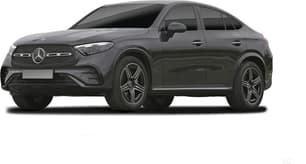
To my eyes the GLC300 Coupe is the best execution of the bodystyle compared to those of BMW and Audi. There’s an elegance to the GLC300 Coupe and the AMG-line adds a tough look that only enhances the solid, powerful but pretty look.
The GLC Coupe is a mid-sized SUV and this new generation model is a bit bigger the previous one and now measures 31mm longer at 4763mm end to end, it’s 1890mm wide, 1605mm tall and has a wheelbase of 2888mm.
It’s also more aerodynamic than ever. No seriously, it’s drag coefficient is now 0.27 and it looks like a bar of soap - and it's about as slippery as one, too.
More curved surfaces await inside with a dashboard that pours down into the large centre console and it's adorned with a sloping and large portrait-style media screen.
At night or in tunnels the ambient lighting glows through the air vents and skirts the edges of the door trims, console and dashboard.
It’s a minimalist and high-tech cockpit with modern sports seats up front and a Nappa leather wrapped steering wheel with its twin blade design.
So, how does the coupe design work for family practicality? Let’s take a look.
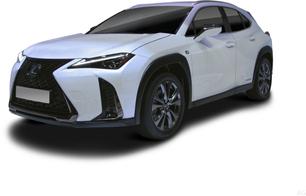
The design hasn’t seen much change and Lexus seems to be encouraging an understated EV design as it looks just like its fuel-based siblings.
I don’t mind that it’s not as futuristic as some of its competitors and that, at first glance, there isn’t anything to set it apart.
The front sports a classic Lexus 'spindle' grille and the external lights are large but the rear side lights jut out rather severely, reminding me too much of its Toyota counterparts.
The rear features a cool LED strip light for the brakes, which elevates its night-time presence.
The sporty-looking 18-inch alloy wheels are a nice touch but the plastic mouldings around the base of the car detract from the premium-level this model sits in. It’s not as slick-looking as it could be.
Having said that, the interior earns back points courtesy of its premium feel with leather-accented trims and Japanese Washi paper influenced accent panels. But there is a lot happening with the dashboard.
It’s a little overwhelming at first because it protrudes well into the cabin and features multiple cutaways, but you get used to it after a while.
There are also little knobs on either side of the instrument panel that look out of place to me and resemble horns.
SUVs are the most practical cars for families because of the better access to the cabin thanks to their large doors and slightly elevated ride height, their big boots with wide and tall hatch openings and their high flat rooflines. They’re essentially raised station wagons.
A coupe-style SUV still has four doors but they are less boxy due to the sloping roofline which falls away quickly to meet the tailgate at a lower point. The effect is a sporty-looking shape but practicality is lost in this exercise of form over function.
The second row doorways aren’t as large as those on the regular SUV. I did a side-by-side test and felt like I had to duck under the sloping roof when getting out of the back seat.
The smaller opening also made it trickier to lift my toddler daughter into her baby seat.
The sidesteps are also surprisingly handy for bigger kids and my eight-year-old used them every time when climbing into the car.
Cabin storage is outstanding with huge door pockets and cupholders in both rows, and while the 545-litre boot in the GLC300 Coupe is 80 litres smaller than the cargo capacity of the regular GLC SUV, it's bigger than the previous version of the Coupe.
As for people space, there’s enough headroom for me at 189cm tall in the back seat and heaps of legroom, even behind my driving position.
I’ve mentioned the lack of climate control in the second row, but also should point out that there are no USB ports back there either.
There are USB ports in the big centre console box upfront and a long cord should be able to make it to the second row.
There’s a wireless phone charger but it's housed in the bowels of the centre console too, and you’ll need to weave your hand while clasping the phone under the shiny black trapdoor, past the cupholders possibly with drinks in them and almost under the dashboard.
As soon as you slide in, you’re reminded that the UX is a small SUV. Even with the driver's seat at its lowest position I still knock my knees on the steering wheel when getting in and out of the car.
The higher door sills also accentuate the penned in feeling despite there being plenty of head- and legroom in the front row!
Then comes the back seat, which is super tight on space. I’m 168cm (5'6") and my headroom is fine but the legroom sucks. My knees press into the back of the driver’s seat (set for my driving position).
There’s also not a lot of space underneath the seat for toes, so I wouldn’t recommend the UX to anyone who regularly transports tall passengers.
Having said that the seats in both rows are very comfortable and the leather trims feel lovely to touch. Both front seats are electric with heat and ventilation functions but only the driver’s side enjoys adjustable lumbar support.
Storage is good throughout the car, which is not usually the case for the small SUV class. Up front you get a glove box, two cupholders, two drink bottle holders and a middle console that opens from both sides, which is handy and cool.
In the rear you get two cupholders in a fold-down armrest and map pockets but no storage bins in either door unfortunately.
Other amenities in the back are very good for this class with the heated outboard seats, directional air vents, reading lights and two USB-C ports.
On that note, the upgraded multimedia system is now easier to use while on the go, is responsive to touch and looks great.
Some of the information on the system can be annoying to find but the customisations available on the 7.0-inch digital instrument panel more than make up for it.
There is a coloured head-up display, wireless Apple CarPlay, wired Android Auto and satellite navigation.
All are easy to use and won’t confuse you too much!
The charging options are great with each row getting two USB-C ports but the front also gets a USB-A port, 12-volt socket and a wireless charging pad. You’re seriously spoilt for choice.
The boot space sits at a small 314L, which is 100L less than the previous model but that’s because Lexus has made a little storage nook underneath the floor for the tyre repair kit and cable pouches.
It's a great boot because it sits high and is easy to access, and I have plenty of room for all of the gear needed for a week’s errands. The hands-free powered tailgate is great, too.
Mercedes-Benz is offering Australia just the GLC300 grade in both the SUV and Coupe body styles.
High-performance AMG variants are out overseas now and will arrive in Australia soon, too.
You can expect to pay more for these AMG beasts - a lot more than the $113,900 list price of the GLC300 Coupe.
Still the GLC300 Coupe does come standard with an AMG Line body kit and 20-inch AMG alloy wheels. LED headlights are also standard, so is the panoramic glass roof, tinted rear glass, proximity unlocking and a power tailgate.
Inside there’s synthetic leather Artico upholstery, sports heated front seats, Nappa leather steering wheel, an 11.9-inch media display with Apple CarPlay and Android Auto, a 12.3-inch digital instrument cluster and a head-up display. There’s also dual-zone climate control and wireless phone charging.
The value is good in terms of features, although the price is slightly higher compared to the rivals such as the BMW X4 xDrive30i ($106,400) and Audi Q5 Sportback 55TFSI ($110,200).
It’s worth pointing out, too, that the GLC300 Coupe is about $10K more than the GLC300 SUV version. Why? The coupe versions of prestige SUVs always tend to be pricier than their regular more boxy SUV siblings. Somebody in marketing will be able to explain why.
Having lived with the GLC300 Coupe with my family over the past few days I can say the proximity unlocking which works by touching even the back door handles is excellent, the tinted windows are dark and cut out much of the sun's glare, but there’s no climate control in the second row. There are air vents back there, which is good.
I found that on hot days the semi-transparent shade on the glass roof couldn’t stop the cabin from heating up quickly.
There are only two variants for the electric UX and our test model is the top-spec Sports Luxury but the gear isn’t the only thing that’s been upgraded. The before on-road costs price for this model has jumped by almost $7K to a hefty $87,665!
In comparison, the BMW is the nearest rival at $84,900 (MSRP) and the Mercedes-Benz is a bit more affordable again at $82,300 (MSRP) while the Volvo sits pretty at $76,990 (MSRP).
The UX300e is the most expensive but is well-specified by anyone’s standards.
The Sports Luxury grade maintains its premium features, like the sunroof, heated front and rear outboard seats, ventilated front seats, and a heated steering wheel.
But the technology has been retooled and a new 12.3-inch touchscreen multimedia system replaces the previous model's 10.3-inch touchpad arrangement. It’s a welcome addition as it’s much easier to use.
New features, like wireless Apple CarPlay, acoustic front glass and insulation around the bonnet and wheel wells provide additional on-road comfort and practicality.
Lexus also throws in an AC Type 2 charging cable, as well as a GPO (General Power Outlet) cable. The technology is robust but I’ll go into more detail in the Practicality section.
Other standard features are solid with 18-inch alloy wheels, a tyre repair kit, handsfree powered tailgate, full suite of LED exterior lights, 10-way electric driver’s seat and an eight-way electric front passenger seat (but only the driver enjoys adjustable lumbar support).
The leather-accented trims feel luxy and the steering wheel has mounted controls and paddles to customise the regenerative braking while on the go.
The GLC300 Coupe has a 2.0-litre four-cylinder turbo-petrol engine making 190kW of power and 400Nm of torque.
There’s also an overboost function which allows the engine to make an extra 17kW and 200Nm just for a brief moment, but that extra dollop of grunt combined with the regular output provides impressive acceleration (0-100km/h in about 6.3 seconds) for overtaking or moving quickly when you need to.
A smooth nine-speed automatic transmission sends the drive to all-four wheels.
The GLC300 Coupe is all-wheel drive and while there’s a setting for rougher terrain, along with one for comfort, eco and sport, but I’d make sure that it doesn’t get any more adventurous than tame gravel and dirt roads.
Mercedes-Benz refers to the GLC300 Coupe as a mild hybrid and this is because it has a 48-volt system and an integrated starter-generator.
This type of hybrid doesn’t use electric motors, doesn’t drive the wheels and won’t save much fuel, but it will provide efficiencies by supporting the engine and when coasting, plus will reduce petrol consumption to a small degree.
The UX300e has a fully electric powertrain with a 72.8kWh lithium-ion battery that’s located on the front axle.
The power and torque remain unchanged at 150kW and 300Nm but that’s enough to produce a 0-100km/h sprint time of 7.5-seconds. Plenty of oomph for city-slickers and open-roaders to boot.
The update sees the battery increase in capacity by 34 per cent which means the driving range has jumped from 305km to 440km.
That's still a bit lower than some of the UX's competitors but it certainly helps ease range anxiety! And unlike some of its rivals, the UX300e only sports a front-wheel drive drivetrain.
As we mentioned above the GLC300 Coupe's 48-volt mild hybrid system is not the kind of hybrid that will allow you to drive miles on electric power, nor will it dramatically reduce fuel consumption in the way a parallel, series or plug-in hybrid will. But every bit of efficiency helps.
Mercedes-Benz says the GLC300 Coupe will use 7.7L/100km after a combination of open and urban roads.
We had the GLC300 Coupe for just two days, but in that time my family covered 176km of regular daily usage which took in motorways but mainly suburban duties such as the school run, supermarket dashes, that sort of thing.
In our fuel test we measured 14.48 litres at the fuel pump which works out to be an on-test fuel use figure of 8.2L/100km and not far off the manufacturer’s claim.
While this fuel consumption isn’t overly high, a plug-in hybrid or even a parallel or series hybrid could return about 5.0L/100km or less.
Mercedes-Benz has dropped plug-in hybrids from its Australian range which is a shame because it would be good to see more efficient options in the GLC range. Of course if you want more efficiency from a Benz of the same size, there is always the fully electric EQB or EQC.
My energy consumption sat at an average of 19.5kWh, which is decent considering all of the open-road driving I did.
There are four levels of regenerative braking to help conserve battery percentage but even on the firmest setting, it’s not super noticeable.
When you’re at full charge, multiple notifications and sound alerts pop up on the instrument panel stating ‘Regenerative Braking Limited Press Brake to Decelerate’. It’s quite an intrusive feature but disappears after 20 to 30km.
Despite the bigger battery size, the UX300e can only accept up to 6.6kW on AC charging, whereas, all of its rivals can accept 11kW. On a 240-volt AC charger, expect to see a charge time of nine and a half hours to get to 80 per cent.
Curiously, the UX features two charging ports, on the right-hand-side, there is a Type 2 port and, on the left, a CHAdeMo port, which allows for faster charging.
You'd think it would be easier to simply add the CCS enhancement on the Type 2 port but still, expect to get from 10-80 per cent in 80-minutes on a 50kW fast charger.
There’s a lot to like here but the short version is the GLC300 Coupe has a comfortable ride, but good handling, with a responsive engine, although rear visibility through the small back window is poor.
If we drill down a bit further I can tell you that excellent cameras around the car will help you check to make sure kids aren’t running around behind you and that forward and side visibility through the window is good.
An important takeaway is that the GLC300 Coupe is easy to drive with light steering and an engine that’s mild and controlled in its power delivery.
The gear shifter is mounted on the steering column, in the same way an indicator lever is. So putting the car into Drive, Reverse and Park is so easy and means you don’t have to take your hands off the steering wheel.
As a family car I liked the good body control and composed ride. We have a small toddler that we can sometimes only get to sleep by taking her for a drive and we found that she could nod off and not be woken by potholes and speed bumps or too much leaning in the corners.
The UX300e comes into its own when you’re zipping around tight city streets. The power is responsive and the steering crisp with excellent cornering capabilities.
It feels well-placed on the road most of the time but can move around when it gets hit by high winds.
While the power is steady, the tyres can lose a little traction if you’re too quick to accelerate from a full stop.
The ride comfort is also very good with the new acoustic glass and extra insulation around the bonnet and wheel wells providing a whisper quiet cabin space.
The suspension is well-cushioned but not floaty and you won’t wince when you hit a bump, but occasionally you get a thump-thump shudder through the frame on certain rough road surfaces.
It’s not a massive size and you’ll be thankful for that when it comes time to park because it is seriously easy to slide into a spot!
The 360-degree view camera system is top-notch providing clear graphics and a cool feature where the car becomes invisible in the video feed, which makes it even easier to see all around you. Coupled with the front and rear parking sensors, you’re set.
The GLC was given the maximum five star ANCAP rating in 2022. There’s AEB, active lane keeping assistance and active blind spot warning and nine airbags including a centre airbag.
As mentioned above I especially liked the surround-view camera systems - which let you look right around the car - good for driveway safety and kids.
For child seats you’ll find two ISOFIX mounts and three top tether anchor points in the second row.
I was also impressed to see a space-saver spare wheel under the boot floor and not just a puncture repair kit.
The UX300e has a bunch of great safety features that come as standard and I like the proximity alert that pops up a camera feed of your surroundings when you’re in stop/start traffic. It’s a practical feature to help identify pedestrians or cyclists in your blind spots.
Other standard safety equipment includes forward collision warning, blind-spot monitoring, daytime running lights, rear cross-traffic alert, lane keeping aids, lane departure warning, adaptive cruise control, intelligent seat belt reminders, traffic sign recognition, an SOS call button, and that awesome 360-degree view camera system.
Family-friendly features include two ISOFIX child seat mounts on the rear outboard seats plus three top-tethers but two seats will fit best.
The UX also has a rear occupant alert if it detects weight or seat belts in use in the back seat, which is always a great feature.
The UX has a maximum five-star ANCAP safety rating from testing done in 2019. It also has eight airbags, which includes knee airbags for both front occupants.
The GLC300 is covered by Mercedes-Benz's five-year, unlimited-kilometre warranty.
Services are annually or every 25,000km. And you can buy a three-year service plan for about $3000.
The UX comes with a five-year/unlimited km warranty but the battery is covered by a 10-year or up to 160,000km warranty, which is better than most in this class.
This also comes with a five-year capped-priced servicing plan where services cost a flat $295, which is good but the servicing intervals are more in line with a fuel-based car at every 12-months or 15,000km, whichever occurs first. It’s typical to see intervals stretched out at every two years for an EV.
Lexus also throws in a few sweeteners for owners with three-year complimentary subscriptions to both ChargeFox and Lexus Connected Services, as well as, installation of an at-home wall charger. It’s not often you see the word ‘complimentary’ coupled with a luxury brand, so that’s a nice touch.