What's the difference?
Aside from gull-winged supercars, stunning sports cars and coupes, plus saloons of all sizes that define status around the globe, Mercedes-Benz is also famous for its elegant yet very practical station wagons. Or Estates in Merc-speak.
Long before SUVs really existed (and two years before the industrial G-Class first appeared), the three-pointed star was offering wagon-bodied versions of its core sedan models that allowed owners to mix pleasure with business, or simply pleasure while carrying vast cargo in the back.
Merc Estates have never simply been an extended roof tacked onto the back, with a depth of design that integrates cargo restraints like the characteristic retractable net, but also generally including an extra two seats that fold neatly into the floor. No, your giant Mazda CX-9 wasn’t the first to do this.
Fast forward to 2017, and the popularity of the ever-expanding array of Merc SUVs and SUV-coupe spin-offs is threatening to render the Estate obsolete, outside Europe at least.
We’re still big fans of the wagon bodystyle, and Mercedes says there are enough loyal Merc wagonists to keep them on the radar for Australia. The latest C-Class Estate is actually proving more popular than the version it replaced, but the bigger E-Class is more of a niche offering.
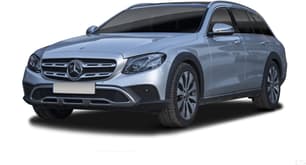
Which is where the new E 220 d All-Terrain comes in. For the first time, Mercedes has added a bit of off-road SUV flavour and ability to the E-Class Estate, and with this extra sparkle it makes sense for it to be the sole long-roof version of the W213-generation E-Class to be brought down under.
But does this extra sparkle retain the elegance that keeps E-Class Estate buyers coming back for more?
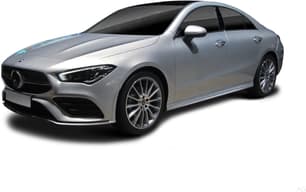
Mercedes has long been the leader in niche filling, and we’d argue that no other model encapsulates that more than the CLA four-door coupe.
Now in its second-generation form, the CLA is based on Mercedes’ MFA2 small car platform that also underpins the A-Class small car range, B-Class tallboy hatchback and GLA crossover, but is actually dimensionally longer than the one-size up C-Class.
However, while the C-Class might offer more conventional styling, Mercedes says the CLA is targeted towards a younger demographic that puts more weight on design and aesthetics.
The previous generation CLA was topped by a hardcore 45 version, which makes a return here, but new this time around is the less-potent, but still AMG-badged, 35 variant to plug the gap between mainstream grades and the range-topper.
After living with the car for a week, here are our thoughts on the new baby AMG CLA.
Given Mercedes-Benz's rich heritage with station wagons, it is a bit of a shame Australia’s preference for SUVs has reduced the line-up to just one variant this time around.
I'm glad they've picked the All-Terrain to fly the flag though, and Merc wagon loyalists should appreciate the extra versatility of its dirt road ability - if they're not mourning the loss of the extra two seats in the rear. Like the rest of the current E-Class range, the E 220 d All-Terrain is an excellent product overall.
Is the Mercedes-AMG CLA 35 the perfect choice in the sleek sedan’s line-up?
Well, if you are after outright performance, then the answer still clearly lies with the CLA 45. But for those that just want a little more pep compared to the standard CLA range, the 35 is undoubtedly the one to get.
It’s not without its flaws, though, commanding a $15,000 price premium over the CLA 250 and a tougher-than-we’d-like ride, but if you value a more engaging drive and a brisk 0-100km/h time, the CLA 35 should definitely be on your shopping list.