What's the difference?
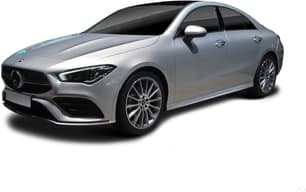
Mercedes-Benz’s Gordon Wagener is a car design rock star. He’s the guy that shapes the three-pointed star’s design strategy and a decade ago introduced the concept of ‘sensual purity’ as a key driver of the way the brand’s cars should look and feel. And this is the latest expression of that thought, the second-generation (C118) CLA four-door Coupe.
Wagener’s influence is critical here because the CLA is one of the most fashion-focused offerings in the ever-broadening Mercedes-Benz range.
But does the drive match the creative style? We got behind the wheel of the first model to arrive, the entry-level CLA 200, to find out.
If EVs are to make a meaningful difference to our collective environmental impact, there's one thing standing in the way: price.
Complexity, competency and capability have all improved since EVs started entering new car showrooms a decade ago, but in that time the price tags haven't improved all that much.
Buying an EV is still a rich person's game and scarcity on the used-car market means there are few true bargains for those willing to go with something second-hand. Even the Chinese aren't selling electric cars below the $40K barrier yet.
And that's where the Mitsubishi eK X EV comes in - or at least it would, if Mitsubishi Motors Australia chose to bring it to our shores.
Though it's unconfirmed for our market for now, we took the opportunity to spend a bit of time behind the wheel in its home (and so far, only) market of Japan.
Appetite for eco cars has been strong in Japan for a long time now, and the eK X EV (along with its platform twin the Nissan Sakura) arrives at a time where Japanese motorists are crying out for more affordable all-electric options.
Though its diminutive size and limited single-charge range would exclude it from consideration for a large number of Aussie motorists, would the compact eK X EV nevertheless make sense in Australian cities as a low-cost runabout for urbanites? It's certainly a question worth asking.
The Mercedes-Benz CLA 200 is sleek, well-equipped, and beautifully engineered. That said, it’s pricey. You can get a car that’s 80 percent as good for 50 per cent of the price. But getting that extra 20 percent in terms of refinement, dynamic ability and design sophistication is what you’re paying for. If you’ve got the extra dough, top dollar buys you a spot on the top shelf.
Note: CarsGuide attended this event as a guest of the manufacturer, with travel and meals provided.
And that’s the core takeaway from our time driving the Mitsubishi eK X EV – it’s a near-perfect tool for dealing with inner-urban congestion and tightly-packed city streets. After all, while cars have become progressively more bloated, our roads haven’t expanded in sympathy with that. The tiny measurements of the eK X EV and its slick and seamless electric powertrain allow drivers to flip that paradigm.
But even if Mitsubishi's Australian office chose to bring it here, it wouldn't be the first time the company has experimented with an ultra-compact EV in this country. Remember the i-MiEV from a decade ago? That too was a kei car EV with similar performance stats, however it languished in obscurity thanks to a high $48K price tag and a generally ho-hum offering.
By comparison, the eK X EV feels much more complete and better-equipped, though its price will need to be considerably sharper than the i-MiEV's if it's to convince would-be EV adopters to look away from the entry-level options from Chinese automakers like MG and BYD.
Will Mitsubishi take the plunge? It'll be chasing a niche within a niche if it does, but provided that audience uses the car within its urban-only design parameters, and provided Mitsubishi can offer it for a compelling price, the Japanese company could carve out a meaningful toehold in the EV space at the entry-level end of the spectrum.