What's the difference?
If you’re picturing the premium mid-size segment in Australia, you’re almost certainly picturing Mercedes-Benz. Honestly, the premium carmaker has the kind of powerful and unquestioning stranglehold on the segment that would have despots and dictators turning green with envy.
The C-Class often outsells its nearest competitor by a factor of two to one. Even more impressive, that nearest competitor is another Mercedes, the CLA. Audi and BMW are left off in the middle distance, duking it out for third and fourth place.
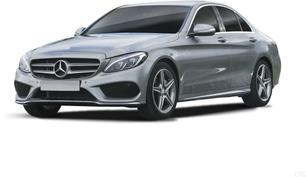
So yes, the C-Class is a very important car for Mercedes. And this new one, updated for 2019, is even more so. It’s the first major update in the current car’s four-year lifespan, with a handful of exterior tweaks, some new key cabin technology and, most importantly, a new and clever engine option for its top-selling version.
So is that enough to keep the C-Class at the top of the mid-size pile?
When the BMW iX first showed up a few years ago, it was a promising look at what BMW seemed capable of when it comes to electric cars.
While mildly flawed, the iX was fast, comfortable and felt properly premium. Now it’s had a decent update, with the iX xDrive45 M Sport here to replace the former entry-level xDrive 40.
BMW claims among other mechanical and tech updates a power increase of 25 per cent, a 30 per cent greater energy content for the battery, a 38 per cent increase in driving range and a 17 per cent faster charging rate.
But in the time since the iX launched, there have been big strides in the premium electric SUV space, including new arrivals from European opposition like the Polestar 3; even a new American in the form of the Cadillac Lyriq.
Baby steps these might be, but they're important ones for Benz. The new in-cabin tech and clever engine in the cheapest models only strengthen the C-Class proposition, without taking anything away from the drive experience, cabin ambiance and utterly sublime ride.
In short, Mercedes' reign at the top of the premium mid-size segment is unlikely to be toppled anytime soon.
If anyone was worried that it would be too late to get a decent bit of value out of an entry-level iX, there's reassuring news.
With more power, range and features added to the model and the cost remaining close to its former sticker price, the iX has held up well despite now existing in a more competitive environment.
Perhaps not quite blink and you’ll miss them, but we're not talking radical changes either, folks. Benz tells us as much as 50 per cent of the C-Class components are new or changed, but it has clearly subscribed to the 'if it ain’t broke' philosophy in the design department.
Yes, there are new bumpers front and rear, new LED light configurations and new colours and wheel designs, but we’re not talking huge changes outside. Still, the C-Class cuts a fine figure on the road, what with its intricate alloys, bonnet-defining grille and simple, understated body contours. Australia will take every available body style, too, including sedan, coupe, cabriolet and - our personal favourite - the 'estate' station wagon.
The C 43 AMG now gets the twin-blade grille design used on the V8-powered models, as well as a two pairs of rounded exhaust tips at the rear.
Inside, though, the changes are more substantial. For one, the new-generation Mercedes Touch Control steering wheel arrives as standard, as does a new and very effective 12.3-inch screen that replaces the traditional dials in the instrument cluster (standard on every model).
The cabin remains a peaceful and premium-feeling space, with a fine use of materials (including quilted leather on the door panels, polished silver or faux-wood for the centre console and leather for the steering wheel), and Benz deserves credit for ensuring that sense of luxury extends to backseat riders.
The iX was a bit divisive upon its original launch, because it was one of the early adopters of BMW’s current ‘big grille’ era.
The good news for the iX is that many have adjusted their expectations on that front and it now feels pretty well at home in the brand’s line-up.
The addition of the 'Iconic Glow' grille surround might be a step too far for some, but overall the iX has aged well and its exterior design hasn’t changed much because of that.
The adaptive LED headlights have new DRL elements, and the M Sport pack is now standard, but if you were only casually familiar with the iX you’d have to be looking closely to spot the update.
The new colour palette for the iX also includes the pictured 'Arctic Race Blue metallic', though I’m personally a fan of the iX in all black, giving it a more monolithic look.
Inside, it’s a similar story - what was once perhaps ahead of its time is now the expectation in an electric SUV. Minimalism in terms of physical controls, but plenty of space.
Helping the feeling of spaciousness is the now-standard panoramic sunroof, though a lack of physical shade is one of the iX’s few interior let-downs. Instead, it can electrochromatically ‘shade’, which still lets in plenty of light.
At night, ambient lighting joins the glow of the iX’s rather large 14.9-inch multimedia touchscreen and 12.3-inch driver display.
It all depends, really. All C-Class variants sit on the same 2840mm wheelbase, and stretch 1810mm in width. The sedan, coupe and cabriolet versions measure 4686mm in length, while the Estate’s bigger cargo area increases its size to 4702mm.
Predictably, then, the estate offers the most useable (VDA) boot space, with 490 litres with the rear seats in place, swelling to 1510 litres with the rear seats folded flat. The sedan version is next on the cargo-carrying list, with 455 litres, followed by the 380 litres of the coupe and 285 litres of the cabriolet.
We spent our entire time in the four-door sedan models, and we can report a spacious and comfortable space for driver and passenger (you could play ping pong on the wide centre console) with two cupholders and room in each of the front doors for bottles. There’s all the USB and power connections you might need (most housed in a deep storage bin that separates the front seats) and the more expensive models offer wireless charging for compatible phones, too.
Climb into the sedan’s back seat, and you’ll find impressive legroom (behind my own 176cm driving position), but headroom - especially in sunroof-equipped cars - feels a little tighter. The rear seat is actually wide enough to fit three adults at a pinch, but the tall and bulky tunnel absolutely obliterates leg room for the middle-seat rider.
There are two cupholders in the pulldown divider that separates the backseat, as well two ISOFIX attachment points. Rear occupants also get there own air vents, as well as a 12-volt power source.
The space on offer in both rows of the iX is a huge plus, and it might even be enough to make you look past some of the small downsides to the electric Bimmer’s interior.
The iX’s clever two-level central console has the phone charger pad and drinks holders down out of the way and means you can put distractions (phone) and your tall bottles out of the way. There's a slot above for your phone to sit upright with a gap under for charging, too.
The storage bin under the armrest also has plenty of space as well as a little shelf for smaller items you don't want to go hunting for, but the iX’s control panel and dial are still reflective and, at certain times of the day, this means distracting light getting in your eyes.
Speaking of distracting, I have found BMW’s multimedia software to be less intuitive and more complicated with each major update, and ‘OS 8.5’ is no different. At this point, using the brand’s touchscreen feels like operating an iPad on the move, with dozens of menu tiles to sort through.
But back to the physical space that is the iX’s interior - the big EV makes a lot of sense as a family car, especially if your kids are old enough to appreciate (and keep clean) the fit and finish.
Not only does the drive have a nicely adjustable and comfortable sports seat thanks to the M Sport pack, there's also heating and a massage function.
The front passenger gets the same, and the second row is borderline palatial. There's heaps of kneeroom, headroom, and even space under the front seats at their lowest setting to slot your feet.
The four-zone climate controls mean arguments are avoided, there is of course a central armrest, though even with it folded up and a person in the centre there's enough room in the back to be comfortable.
Behind that, the iX’s 500 litres of boot space could probably be expanded but at the expense of rear legroom, so it's acceptable. There is space under the floor for cables, but no space saver spare, just a repair kit.
There's a switch that allows you to fold the seats down from the tailgate, but you can also manually fold the middle seat for a 40/20/40 split rather than the more expected 60/40.
Mercedes is so far keeping mum on the details, ahead of the updated car’s arrival in August, but you can expect to see prices climb a little from their current levels ($61,900 - $100,611, and $120,642 for the C 43 cabriolet).
The C200 will retain 18-inch alloy wheels, artificial leather (and electric in the front) seats, nav, ambient interior lighting and keyless entry and push-button start, but critically adds a new 12.3-inch screen in the driver’s binnacle that replaces the traditional dials. It joins a landscape-oriented 10.25-inch centre screen - both now standard across the C-Class range - which propels the cabin into a clean and modern-feeling future.
The C220d and C300 features list will likely change little, but all get Mercedes’ new 'Touch Control' steering wheel, as well as new LED head and tail-lights, while the C 43 AMG 4Matic gets the best of Merc's autonomous driving technology.
Expect more information to arrive around July. The C 63 AMG is also due for updating, with a new model scheduled to arrive around December.
The sole entry-grade iX is the xDrive45 M Sport, which brings with it more than the original base xDrive40, but also a price a few thousand dollars higher.
It starts from $142,900 but can quickly become much more expensive when you start ticking options boxes. But in this market segment, it's not that unusual, especially considering recent arrivals like the Polestar 3.
Given it’s only a little more expensive than before, the extra kit and higher grade that now forms the iX entry-point is impressive.
The 'M Sport' pack is now standard as the name suggests, plus there’s M trim inside like the steering wheel, the M seats and silver design highlights.
The LED lights are now adaptive and the glowing grille surround has also been added.
There’s also now a panoramic glass roof as standard, rather than an option, plus the steering wheel is heated and there’s now a tyre pressure monitor.
Aside from that, there’s plenty that carries over, like the wireless phone charging, wireless Android Auto and Apple CarPlay, 18-speaker surround sound by Harman Kardon, four-zone climate control and heated front seats.
There’s also an 'Executive Pack' which adds some comfort features like soft-close doors, privacy glass and front seat ventilation with rear seat heating. That one’s $6500.
Then there’s active steering, which brings the rear wheels into play for more manoeuvrability and stability for $3000.
Adaptive air suspension is $4000, while the most expensive option is a 30-speaker Bowers & Wilkins ‘Diamond’ surround sound system for $9500.
It’s here where the C-Class is at its most updated, serving up a new turbocharged 1.5-litre hybrid engine in the entry-level C200. Alone, it’s good for 135kW/280Nm, but it’s combined with a clever 48-volt system that adds up to 11kW of bonus power low in the rev range, happily plugging the power void usually left by turbo lag when taking off, or if you plant your foot when overtaking.
The C300 is powered by a more conventional 2.0-litre, four-cylinder good for 190kW/370Nm, while the sole diesel (in the C220d) is a four-cylinder unit that produces 143kW/400Nm. All are paired with a nine-speed automatic transmission.
The C 43 4Matic's engine remains a fabulous thing, only now tweaked for a little bit more power. It's good for 287kW/520Nm, and is paired with a nine-speed transmission that sends the power to all four wheels, albeit with a bias toward the rear tyres.
The iX has, as the xDrive part of its name would suggest, a dual-motor electric set-up with all-wheel drive.
Power and torque now total 300kW and 700Nm for the system in the xDrive45 M Sport, up from the 240kW and 630Nm on offer in the outgoing xDrive40.
BMW says the iX is now good to hit 100km/h from a standstill in 5.1 seconds, with its claimed top speed a nice, rounded 200km/h.
Let’s start with the C200, where the addition of the clever hybrid system has helped drop fuel use to a claimed 6.0-6.3 litres per hundred kilometres. The old car delivered 6.5 per hundred, but was slightly quicker from 0-100km/h (7.2sec- 7.7sec).
The C300 will sip a claimed 6.5-6.9L/100km on the same cycle, while the diesel requires a miserly 4.7 litres. The C 43 is the thirstiest, of course, needing 9.1-9.3L/100km on the same cycle.
The C200 makes do with a 41-litre tank (as does the diesel) while the C300 steps that up to a 66-litre tank. And all those numbers related to the sedan body shape, so expect some slight variations if you’re shopping for a coupe cabriolet or estate.
The iX’s 94.8kWh battery allows a range up to 522km, but relatively low efficiency because of the size and weight.
Its 20kWh/100km is on the higher side of power use for cars around this size and this is part of the reason its huge battery capacity results in a fairly average driving range.
Maximum power input for DC fast charging is, however, up from 150kW to 175kW with the update, which is good news for those long drives.
Keen to sample the new hybrid tech in the C200, we made a beeline for the cheapest C-Class. And if you’d told me, even a handful of years ago, that a piddly 1.5-litre engine would be enough to drag the 1555kg Benz around, I’d have labelled you crazier than Donald Trump's Twitter account.
The C200’s system is a unique hybrid set-up, in the sense that it only delivers extra power in the tiniest of circumstances, but they’re the areas that it really needs it. From a standstill, the electric motor delivers its extra 11kW of oomph at just the right moment need to help get you moving (the same when overtaking) and it does genuinely make a difference.
It can’t completely overrule the concrete laws of physics, though. Plant your foot on anything that even looks like a hill and you can definitely hear that 1.5-litre engine working hard - interrupting the ambience of the cabin - but keep it in the sweet-spot of the rev range and it’s a quiet, capable-feeling engine that delivers more punch than its size might suggest.
On Germany’s epic autobahns, the needle even sailed past 215km/h without too much encouragement (even if I could have knitted a sweater in time it took to to close the last 10-or-so-kilometres). Is that relevant for Australia? Sadly not, but it does suggest the engine is more capable than we will ever need it to be.
Elsewhere, the not-too-different C-Class rides an absolute dream, smooth-sailing over bumps and road imperfections, and the cabin is serene and comfortable - though there was more wind noise at times than I was expecting.
Downsides? Well, the cheapest C-Class doesn’t feel the most dynamic offering, with the light steering serving up a slight disconnect between the steering wheel and the road below in its most comfortable settings. Switching to Sport improves matters, but if you’re life is mostly city and suburbs, it will matter little.
The nine-speed transmission can behave oddly at times, too; smooth and lightning fast as it climbs the gears, and mostly perfect on the way back down. But I noticed a definite thump occasionally as it shifted down from second to first gear, which stripped a little refinement from the drive experience.
It's more noticeable in the C 43 4Matic AMG, but it's vastly overshadowed by the thick and meaty power delivery from that stonking turbocharged engine. It's a rocket, and while it's not as fast or as loud as its C 63 big brother, I honestly think the tweaked C 43 is all the AMG I'd ever need.
The BMW iX was a relatively early entry into the catalogue of electric cars I’ve driven and because of that it had a couple of (in hindsight) unfair criticisms levelled at it.
For a start, it felt heavier than expected and its ride quality didn’t feel up to BMW’s standards - both things that plenty of electric SUVs have struggled with since.
But its drivetrain, design, and interior all impressed, aside from perhaps some of the aforementioned interior reflections.
Now years on, and the iX has aged well.
Some of the mechanicals and suspension also copped a tweak along with the entry iX now being a more powerful ‘45’. The result is a big electric SUV that holds up better than I remember.
‘Smooth’ is the key word that comes to mind in regards to a lot of the iX’s characteristics. While it’s still not perfect and feels heavy, the iX rides well in comparison to many SUVs on the market, including some of its close rivals.
Perhaps key to this is the fact its standard 21-inch wheels leave plenty of tyre to help the suspension soak up sharp edges on bumps, while we’re sure BMW’s handling engineers have learned more about getting the best out of a big, heavy electric vehicle in the last couple of years.
Road noise is well-muted as a result, and the shape of the iX doesn’t seem to lend itself to excessive wind noise. Even when you’re getting rather quick.
Despite being a 2525kg beast, its 5.1-second sprint to 100km/h is in the muscle car realm - the last of Holden’s V8 Commodores would do about that, for reference.
Its acceleration is also nicely progressive, rather than giving you an almighty but unnecessary jolt of torque right as you put your foot down. But once there’s traction and you’re rolling, the xDrive45 is impressive.
Meanwhile, its cornering and braking still reveal the heft behind the iX, it’s not something you can chuck around like a go-kart, but that’s also not really its area.
Anyone familiar with BMW’s steering characteristics will find the slightly higher force required for its weight (and thickness of the steering wheel rim) standard, though it’s still unnecessarily on the heavier side.
Detailed specifications for Australia are still being finalised for the C-Class, but we don’t think the standard safety equipment will change much.
So expect a comprehensive suite of airbags (including front, front-side, head for the first and second rows and a driver knee bag), joined by the usual kit of traction and braking aids on the C200. Blind-spot assist, tyre-pressure monitoring and AEB - part of the Collision Prevention Assist Plus package - also arrive as standard.
Higher trim levels will nab active cruise, with stop and go, rear cross-traffic alert, active blind-spot monitoring system and active lane keep assist, while the C 43 scores Mercedes' most advanced auto-driving tech.
The BMW iX holds a five-star ANCAP rating, which it earned under slightly more lenient testing back in 2021.
Seven airbags, auto emergency braking with cyclist and pedestrian detection up to 80km/h, lane-assist, rear-cross traffic alert and intersection assist, plus a surround view parking camera all help immensely.
While specific maintenance pricing is yet to be confirmed, each of these models is covered by three-year warranty, with service intervals pegged at 25,000km or 12 months.
BMW offers a five-year/unlimited kilometre warranty with an eight-year/160,000km warranty on the battery.
BMW servicing takes place as needed rather than on a schedule, meaning you’ll be alerted via the car or app when a service is required in the near future.
For the iX a six-year all-inclusive service pack costs $3475, regardless of how many km you drive.
BMW has 54 servicing dealers listed in Australia, with each capital city covered and many more locations in the eastern states.