What's the difference?
Do you know how many bones you have in your body? Stop counting, there are 207. And if say half those bones were replaced with different ones would you consider yourself to still be the same? Well that’s what Benz has done with the new C-Class – sort of. Of the roughly 13,000 parts which make up a C-Class car, 6500 of them have been modified or changed.
You don’t need to know every change to the new C-Class, but at the end of this review you will be across the differences that you can see, feel and hear.
Just a note before we start. The top-of-the-range Mercedes-AMG C63 S arrives in early 2019 and wasn’t available to drive at the Australian C-Class launch. That’s why we’ll focus on the other grades here - the C 200, C 220 d, C 300 and C 43. We’ll test drive and review the Australian C 63 S when it arrives – promise.
Aside from gull-winged supercars, stunning sports cars and coupes, plus saloons of all sizes that define status around the globe, Mercedes-Benz is also famous for its elegant yet very practical station wagons. Or Estates in Merc-speak.
Long before SUVs really existed (and two years before the industrial G-Class first appeared), the three-pointed star was offering wagon-bodied versions of its core sedan models that allowed owners to mix pleasure with business, or simply pleasure while carrying vast cargo in the back.
Merc Estates have never simply been an extended roof tacked onto the back, with a depth of design that integrates cargo restraints like the characteristic retractable net, but also generally including an extra two seats that fold neatly into the floor. No, your giant Mazda CX-9 wasn’t the first to do this.
Fast forward to 2017, and the popularity of the ever-expanding array of Merc SUVs and SUV-coupe spin-offs is threatening to render the Estate obsolete, outside Europe at least.
We’re still big fans of the wagon bodystyle, and Mercedes says there are enough loyal Merc wagonists to keep them on the radar for Australia. The latest C-Class Estate is actually proving more popular than the version it replaced, but the bigger E-Class is more of a niche offering.
Which is where the new E 220 d All-Terrain comes in. For the first time, Mercedes has added a bit of off-road SUV flavour and ability to the E-Class Estate, and with this extra sparkle it makes sense for it to be the sole long-roof version of the W213-generation E-Class to be brought down under.
But does this extra sparkle retain the elegance that keeps E-Class Estate buyers coming back for more?
This may well be just an update to the C-Class, but the changes made are significant in terms of technology and performance, and you’re paying hardly any extra money for it. A good all-rounder for dynamics, features, refinement and value.
The sweet spot in the range has to be the C 300. It’s less than $10K more than the entry grade C200, but gets a powerful 2.0-litre engine, leather seats, the extra advanced safety equipment, tinted windows and convenience features such as a power tailgate (on the wagon) and proximity unlocking.
Given Mercedes-Benz's rich heritage with station wagons, it is a bit of a shame Australia’s preference for SUVs has reduced the line-up to just one variant this time around.
I'm glad they've picked the All-Terrain to fly the flag though, and Merc wagon loyalists should appreciate the extra versatility of its dirt road ability - if they're not mourning the loss of the extra two seats in the rear. Like the rest of the current E-Class range, the E 220 d All-Terrain is an excellent product overall.
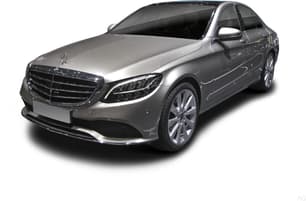
Now, to spot the difference between the new and the old C-Class from the outside just look at the headlights – the shape of the fitting is the same, but the new standard headlights on the C 200, C 220 d and C 300 have an LED set-up which looks like teeth, while the optional units (standard on the C 43 and C 63 S) are also LED but with a tall staggered design. Tail-lights also keep the same shape but with a different LED pattern, too.
The front and rear bumpers have also been restyled for all grades and the C 43 and C 63 S have had their grilles updated, with the former getting a new twin-louvre design, while its big brother now has chrome vertical slats reminiscent of the grille worn by the 1952 Carrera Panamericana winning 300SL.
The AMG Line Exterior package is standard on the Coupe and Cabriolet, but if you option it on the sedan it will fit a sports body kit with AMG front spoiler and side skirts.
The C 43’s gloss black rear diffuser looks tough with the new quad exhaust and the car in wagon form wins my award for best looking of the C-Class bunch.
Cabins haven’t been overhauled but they have been updated with a 10.25-inch dash-top display for media and a 12.3-inch fully digital instrument cluster - both are standard across the range and make a big styling impact in the cockpit. Mercedes-AMG grades have their own sporty version of the virtual instrument cluster.
The layout of controls remains the same, but you can now option a new real wood veneer to the centre console with 'open-pore brown walnut' and 'open-pore black ash' being your choices.
The Artico upholstery in the C 200 looks and feels ‘plasticky’. I’d option the real leather which comes standard on the C 300.
New to the C 43 are the optional ‘Performance’ seats with integrated head restraints and standard on this grade is a new leather AMG steering wheel. Other cool cabin features are the stainless-steel pedals, the AMG floor mats and stitched dash (even if it is Artico upholstery).
All grades now come standard with the 64-colour ambient lighting system. You should see the system fading through the colours at night and with the right music the whole effect is amazing.
The C-Class comes in four body styles: Sedan, Coupe, Estate (wagon) and Cabriolet.
Exterior and interior dimensions stay the same, all variants measuring about 4.7m in length. That’s a good size; not too big or small, making parking and manoeuvring in tight spaces pretty fuss-free.
The C-Class is made in various parts of the world, but I can tell you the C 200 Sedan we get in Australia is made at Mercedes-Benz's East London plant on South Africa's east coast.
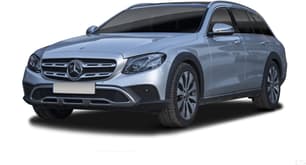
The All-Terrain styling pack is comprised of tough-looking front and rear bumpers, with unpainted plastic side skirts and wheelarch flares on all corners. This will all be welcomed by anyone who travels regularly on dirt roads, but the All-Terrain bits will also provide a handy disguise from urban parking scrapes.
The double-blade grille, wheels and roof rails are also bespoke to the All-Terrain, and the net result is a distinct personality that should satisfy the majority of previous E-Class Estate buyers previously opting for the AMG styling pack.
Interior trim is based on the regular E-Class Avantgarde package, but with specific rubber studded pedals and All-Terrain branded floor mats to align with the exterior treatment.
In the default suspension setting, the All-Terrain sits 29mm higher than a regular E-Class. Taller tyres make up 14mm of this, while the remaining 15mm is thanks to an elevated 'Air Body Control' air suspension. A further 20mm of lift is available with the All-Terrain drive mode selected, but only at speeds up to 35km/h.
The All-Terrain’s 20-inch alloys are a staggered fitment with 245/40 tyres up front and 275/35 at the rear, while taller-sidewalled 245/45R19 at each corner are a no-cost option, and essential if you wish to use snow chains.
Like the Estate available internationally, the All-Terrain rides on the same 2939mm wheelbase as the E-Class sedan but gains an extra 24mm in rear overhang to measure 4947mm overall.
The wagon body, extra kit and all-wheel drivetrain also add an extra 240kg to the kerb weight over the E 220 d sedan, with the All-Terrain tipping the scales at 1920kg.
This depends on the body style, but being a mid-sized car practicality can be limited, but Mercedes-Benz has been clever with the way it has used the available space.
The boot, for example in the C 200 is 434 litres, which isn’t as big as the cargo space offered by the BMW 3 Series or the luggage capacity of the Audi A4. This is partly because the hybrid system uses space under the bonnet, so the car’s battery needs to go to the boot.
The C 300 doesn’t use the hybrid system and so the sedan in this grade has 455 litres of boot space.
Choosing the C 300 Coupe’s will reduce your luggage carrying ability to 380 litres and the C 300 Cabriolet’s cargo capacity varies from 360 litres with the roof up and 285 litres when it’s down and eating into the luggage area.
The Estate is the best luggage hauler but it’s still not enormous – the C 43 Estate that we test drove has a cargo capacity of 480 litres.
Legroom in the back of the C 43 Estate is good and at 191cm tall I can sit behind my driving position with about 20mm to spare thanks to the sculpted seat back.
Headroom is getting tight in the Estate and especially in the Sedan – well for me, anyway – and the optional sunroof will lower the ceiling height even further.
Up front space in the Sedan and Estate isn’t an issue with plenty of head-, leg- and shoulder room offered.
Storage throughout the Sedan and Estate is good with a large centre console storage bin, two cupholders up front and another two in the back along with a storage area in the fold down armrest, but all four door pockets are on the slimmer side. Still they can fit a small bottle of water, plus a wallet or purse.
That centre console bin houses two USB ports, and a 12-volt outlet can be found in the storage area under the climate controls – which also houses the optional wireless charging pad. Without the charging pad that small area is too tiny to place my iPhone8 Plus.
Rear headroom and legroom in the four-seater Coupe and Cabriolet is limited, but both get a pair of cupholders in the back and two more up front.
Aside from the All-Terrain’s rugged looks, the greatest departure from E-Class Estate tradition is the omission of the third row of seats, which makes this one a strict five-seater.
One could argue that the Estate’s traditional rearward-facing third row is a bit old school next to the forward-facing setup used by seven-seat SUVs like the GLS, but it's a shame given the third row is still available in other markets.
The All-Terrain does offer a vast cargo area however, with an extra 130 litres (VDA) over the sedan with the seats up to total 670 litres (VDA). Seats down, this extends to 1820 litres (VDA), but it’s worth noting that both wagon figures are marginally smaller than the previous Estate’s 695/1950 measurements.
Facilitating full use of this space is the classic Merc Estate retractable cargo net, and a 670kg payload promises good scope for loading beyond a full passenger count. The air suspension will also automatically maintain a level ride height regardless of load.
As with all current E-Classes, there are bottle holders in each door plus two cupholders front and back and ISOFIX child seat mounts in the outward rear positions.
As per the non-AMG Mercedes passenger car norm, run flat tyres take the place of a spare tyre, but a space saver can be optioned to sit above the boot floor.
The range kicks off with the C 200 and its C 220 d diesel siblings, then steps up to the C 300. Prices for these grades have increased by $1500 in this update but you’re being given more features. Above the C 300 live Mercedes-AMG’s wild animals – the C 43 and C 63 S.
The C 200 Sedan now lists for $63,400 (plus on-road costs), and if you want the Estate version add another $2500, and an extra $4500 for the Coupe, while the Cabriolet is $25,000 more at $88,400.
The C 220 d Sedan lists for $64,900 and the only other form it comes in is the Estate for $67,400.
The C 300 Sedan lists for $71,400, the Estate is $73,900, the Coupe is $84,900 and the Cabriolet is $101,900.
The C 43 Sedan lists for $107,900, while the Estate is $110,400, the Coupe is $111,900 and Cabriolet is $124,900.
The C 63 S Sedan lists for $159,900, however, prices for other body styles have not yet been announced.
So, about all the stuff you’re receiving in return for the price increase – a 10.25-inch display screen replaces the smaller one in the previous car and it’s standard across the range. Don’t stab and poke at it like I did with my finger for hours, because it’s not a touchscreen.
Also new is the 12.3-inch fully digital instrument cluster, and it’s standard on all grades, too. Apple CarPlay and Android Auto come on all C-Class cars.
Other standard features, starting with the C 200 and C 220 d, include 'Artico' upholstery, which is a synthetic attempt at leather, a reversing camera, shifting paddles, dual-zone climate control, aluminium roof rails on the Estate, LED headlights, 64-colour ambient lighting and 18-inch alloy wheels.
The C 300 has the C 200’s features and adds leather upholstery, privacy glass (coupe only), proximity key and 19-inch alloys. The C 300 also gains the 'Driving Assistance Package' which I’ll tell you all about in the safety section below.
The C 43 picks up the C 300’s equipment and adds an enormous list of its own gear including a new AMG steering wheel, brushed stainless steel pedals, Burmester 13-speaker stereo, heated sports front seats, head-up display, wireless charging, intelligent LED headlights, panoramic sunroof, black roof racks on the Estate, analogue clock and 19-inch AMG alloy wheels.
Metallic paintwork is also part of the C 43’s standard features list which includes 'Obsidian Black', 'Iridium Silver', 'Mojave Silver', 'Cavansite Blue', 'Emerald Green' and 'Brilliant Blue', but you’ll have to pay for 'Hyacinth Red', which is a sort of candy apple red. Non-cost colours for the lower grades are non-metallic black and 'Polar White' non-metallic.
The C 63 S adds to the C 43’s equipment list with its own AMG steering wheel, illuminated door sills, digital TV tuner, nappa leather upholstery, an electronic rear differential lock, 19-inch alloys in matte black with high-sheen rim, plus high-performance brakes with red calipers.
The All-Terrain theme follows the same path taken by key rivals Audi and Volvo with the A6 Allroad ($112,855) and V90 Cross Country ($99,900), which leaves BMW’s upcoming 5 Series Touring as the sole option in this segment not to adopt the semi-SUV look.
The $109,900 Mercedes is priced right between the Audi and Volvo, but note that the Audi brings a more powerful V6 to justify its slight premium.
The All-Terrain is available with a V6 internationally, but the 220 d four-cylinder diesel was selected for Australia as it's the closest match for the E 250 d that proved the most popular variant last time around.
Compared with a similarly specified E 220 d sedan (which kicks off at $92,900), Mercedes reckons they're about the same on price, but the All-Terrain throws in the wagon body and all-wheel drive pretty much for free. The All-Terrain also offers a significant value improvement over the previous E 250 d Estate which bowed out at $107,900.
Key inclusions for the All-Terrain over the already opulent E-Class are genuine leather trim, proximity unlocking, widescreen dash instrument that spans two thirds of the cabin, LED 'Multibeam' headlights, underbody protection and 20-inch twinned five-spoke alloys.
The previous C 200’s 2.0-litre 135kW/300Nm four-cylinder petrol engine has been swapped for a 135kW/280Nm 1.5-litre four-cylinder turbo-petrol with what Benz calls a ‘mild hybrid’ function.
This isn’t a hybrid with an electric motor driving the wheels, it’s an electrical system which is able to provide an additional 10kW/160Nm when accelerating. Known as the 'EQ Boost', the system also allows the C 200 to coast at a constant speed if the driver takes their foot off the accelerator. The battery is then re-charged when braking.
The C 220 d offers a diesel alternative and its new 2.0-litre engine now makes 18kW more power at 143kW and the same 400Nm of torque.
The C 300’s 2.0-litre turbo four has had a 10kW increase, taking power to 190kW, while peak torque is still 370Nm.
Also getting a power bump is the C 43 and its 3.0-litre V6 petrol is now good for 287kW (up from 270kW) while torque stays at 520Nm. The C43 uses Mercedes-Benz’s '4Matic' all-wheel drive system, while every other grade, including the C 63 S, is rear-wheel drive.
The C 63 S still makes an impressive 375kW and 700Nm.
The C 200, C 220 d, C 300 and C 43 all use the same nine-speed automatic transmission, while the C 63 S uses a ‘AMG Speedshift 9G’ which is a nine-speed dual-clutch auto.
The All-Terrain’s excellent 2.0-litre turbo-diesel engine and nine-speed torque converter auto are carried across from the E 220 d sedan, which produces a decent 143kW/400Nm. Max torque is available from 1600-2800rpm.
The All-Terrain is the only Australian E-Class to pair this engine with the '4Matic' all-wheel drivetrain though, which uses a slightly rear-biased (45/55) torque split in this application.
Fuel consumption obviously depends on the engine, but did you know the body type also affects mileage?
Mercedes-Benz says the C 200 Sedan uses 6.4L/100km over a combination of open and urban roads. The trip computer in our C 200 Sedan recorded 7.1L/100km after 254km of mainly country roads.
The C 200 Estate according to Mercedes-Benz will need 6.5L/100km, the C 200 Coupe uses 6.4L/100km and the C 200 Cabriolet will need 6.8L/100km.
Mercedes-Benz is yet to announce the C300’s fuel consumption figures.
The C 220 d Sedan is frugal with diesel fuel consumption being 4.7L/100km, while the Estate version needs 4.8L/100km.
Mercedes-Benz is yet to announce the C300’s fuel consumption figures.
The Mercedes-AMG cars are the thirstiest with the C 43 Sedan using 9.4L/100km, and the Estate will use 9.6L/100km. After 286km of country roads the trip computer in our C 43 Estate was reporting an average consumption of 10.3L/100km. The Coupe economy is 9.5L/100km and the Cabriolet needs 10.0L/100km.
The C 63 S Sedan puts it away at the rate of 10.4L/100km, and the Estate’s usage is 10.7L/100km, while the Coupe and Cabriolet’s fuel efficiency is yet to be announced.
The All-Terrain’s extra 240kg and no doubt less slippery body add 1.6L/100km to the E 220 d sedan official combined fuel consumption figure, but the wagon’s 5.7L/100km claim is still very impressive for a taller body nudging two tonnes.
At this rate, the E-Class All-Terrain has a theoretical range of 1157km from its 66-litre fuel tank.
The Australian C-Class launch gave us the opportunity to drive the C 200 Sedan and C 43 Estate on a test route stretching from Melbourne's Tullamarine airport, roughly 300km north to Milawa in Victoria’s alpine region and back, with the conditions being dry and cool.
I knew the C 43 would be ridiculously fun, but you can’t eat your dessert first, right? So, I started in the C 200, which is far from just meat and three veg – it’s refined and enjoyable to drive.
Steering is well weighted and accurate, offering a better sense of connection to the road compared to some of its prestige rivals. The steering wheel itself felt good to hold, too – and this is on the base car.
The test car wasn’t without its options though and it did have the 'Dynamic Body Control Suspension' with its Comfort mode softening the dampers for a more compliant ride and the Sport setting for better handling.
And that ride was comfortable. The only disturbance to the serenity (we did go through Bonnie Doon) was a bit of wind noise created by what sounded like the wing mirrors.
Apart from that, the experience was serene – those seats up front are comfortable and supportive even after hours, the vision all-around is excellent and then there’s the engine, which is perfectly adequate.
Okay, 1.5 litres sounds small but the output is almost the same as the previous 2.0-litre and the 48 Volt EQ Boost hybrid system does provide just enough of a kick to get you away from the traffic lights or overtake without any discernible lag.
The hybrid system's coasting function is excellent – take your foot off the accelerator and your revs drop to zero but the car will maintain its speed. When you brake the battery is recharged so you’ll have the extra grunt again when you need it.
Now for dessert. Just idling the C 43 sounds sedate, but that’s with the exhaust note and engine in the Comfort setting. It means you can pull into your street at night or start it up early in the morning without waking the up the entire neighbourhood.
The C43 isn't as vicious as the V8 C 63 S, but that’s the appeal of it.
Or, to hell with them, the people next door are jerks anyway: put it in Sport and the twin-turbo petrol V6 snarls and crackles as you shift through the gears. It’s not as vicious as the V8 C 63 S, but that’s the appeal of the C 43 – it’s a milder form of wild that’s easier to live with, but still so much fun.
The back roads from Milawa to Mansfield were a great testing ground for the C 43 Estate with their hill-climbing bends and downward forest runs. Merc AMG claims the C 43 can accelerate from 0-100km/h in 4.7s, and while that’s more than half-a-second behind the C 63 S, it’s still plenty quick.
With fantastic turn-in, all-wheel drive offering superb traction and great grip from the Continental ContiSportContact rubber (225/40 R19s front, 255/35 R19 at the back), a smooth-shifting nine-speed, impressive brakes and that turbo V6 which pulled the car heroically out of corners, it was hard not to grin like an idiot.
Only my mouth hurt afterwards, not my body. There’s a line you’re not going to read in any other car review. Some sports cars have a ride so firm, and seats so hard, and driving positions with hip points so low, that I almost have to leave the vehicle on all fours.
But only my face hurt from smiling so much – you could pilot a car like the C 43 until it ran out of fuel from a full tank and still feel comfortable – which is almost what we did. How much fuel did it use? Keep reading to find out.
Climbing aboard the All-Terrain, there’s a sense you're seated higher than its 29mm static ride height lift suggests. It's probably mostly psychological, and borne from the All-Terrain styling treatment, but something SUV fans will probably appreciate.
Otherwise it's mainly W213-generation E-Class from the driver's seat, which is a very good thing.
However, the extra 240kg of Estate body and All-Terrain spec over a regular E 220 d sedan is just enough to put a dent in the 2.0-litre diesel's performance. Mercedes claims an 8.0sec 0-100km/h figure, which is still more than enough to keep up with traffic, but just not as spritely as the sedan’s 7.3sec figure.
The combination of airbag suspension and the All-Terrain’s slightly taller tyre sidewalls help the wagon ride commendably well. There's no disguising the large-diameter 20-inch wheels over sharp potholes, but the experience is generally even better than we recall from any other existing E-Class.
The steering also feels slightly heavier, as though the level of assistance has been tuned for a touch more weight to add to the All-Terrain’s semi-SUV aura. If our perception is correct, it only adds to the sense of substance from the driver’s seat.
Its overall composure is maintained on dirt too, with the All-Terrain’s Victorian launch route offering a good dose of gravel and muddy unsealed roads. The all-wheel drive system keeps you pointing where you want and enables clean acceleration from the greasiest of corners. All of this highlights the All-Terrain’s potential as a ski field chaser.
We also detoured via some moderate fire trails, which gave us the chance to try the All-Terrain driving mode that lifts the suspension an extra 20mm and slackens the stability control and ABS to better suit low grip scenarios.
At speeds above 35km/h it reverts to Comfort mode, but will return to All-Terrain settings if you slow down again. In Sport mode or above 125km/h, the suspension lowers 15mm below normal to reduce aerodynamic drag. Even at full height it won’t challenge a GLE for clearance, but it’s significantly more capable than regular E-Class models.
The C-Class was awarded the maximum five-star ANCAP rating when it was tested in 2014. The base grade C 200 is fitted with nine airbags, AEB which works most effectively at lower speeds, and blind spot warning.
Stepping up to the C 300 brings the 'Driving Assistance package' which adds a more sophisticated AEB with cross traffic function and evasive steering, plus lane keeping assistance.
No spare tyres here. The C 200, C 220 d and C 300 all come with run-flat tyres, while the Mercedes-AMG grades have a puncture repair kit.
For child seats, you’ll find two ISOFIX points and three top tethers across the back row of the Sedan and Estates, while the Cabriolet and Coupe have two ISOFIX points in the back.
There are also two hi-viz vests in the cargo area and, yes, you do get a warning triangle, too.
Like all versions of the current E-Class, the All-Terrain carries the maximum five star ANCAP and EuroNCAP safety ratings. A brilliantly integrated suite of active and passive safety features represents the forefront of occupant and pedestrian protection, which goes well beyond its AEB, nine-airbag count, 360-degree parking cameras, rear cross-traffic alerts, and a pedestrian-protecting active bonnet.
These systems work in harmony to enable semi-autonomous driving, which is perhaps the greatest technical advancement of cars since we stopped riding horses.
The C-Class is covered by Mercedes-Benz’s three-year/unlimited kilometre warranty. We’re keen to see Mercedes-Benz move to longer warranty periods as is becoming the norm with mainstream brands, many of which are offering five year coverage.
Servicing is recommended at 25,000km/12-month intervals for the regular C-Class cars and the C 43. The C 63 S needs servicing every 20,000km or annually.
It’s great to see Mercedes-Benz offers capped price servicing. For example, the C 200 will cost you $396 at its first service, the second is $792 and the third is also $792.
The E220 d All-Terrain is covered by Mercedes’ three-year, unlimited kilometre warranty, with service intervals pegged at either 12 months or a generous 25,000km.
Mercedes is yet to confirm capped service pricing for Australia, but we don’t expect the All-Terrain to stray too far from the $556, $1112 and $1112 figures applied to the E220 d sedan’s first three services.