What's the difference?
When it comes to choosing a family car, sedans are often overlooked for their long-legged wagon or beefy SUV cousins.
They're a bit of a forgotten hero but they'll always hold a piece of my heart for their practicality and (often) sexier kerb-side appeal.
If you can get used to your body cracking like a glow stick when you get in and out of them, the sedan may make a comeback!
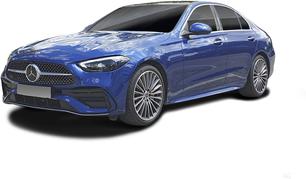
The new Mercedes-Benz C-Class, in entry-level C200 form, has definitely tempted my family to consider a sedan in the future – it looks stately and refined but the driving experience also makes it fun.
Let's see what else it did right and if there was anything that could be improved.
Did I mention, I'm fond of sedans... ?
KGM (formerly SsangYong) has revised its Musso range for 2026 with some new features and revised styling throughout the Australian line-up, as well as a name-change for this grade: the Advance which used to be the Adventure.
The updated Musso is a dual-cab 4WD ute with high and low-range gearing, an auto-locking rear differential and 3.5-tonne towing capacity, and all for under $50,000.
And with the optional XLV (extra long vehicle/version) pack, which our test vehicle has, it gets a longer wheelbase (110mm extra), a 300mm longer tub and 90kg of extra payload over the standard Musso (880kg rather than 790kg).
So, is the Musso an affordable alternative to the likes of Toyota HiLux and Ford Ranger?
The Mercedes-Benz C-Class C200 is such a stylish sedan and I would totally have one. The driving performance, luxurious features and practical size made it a winning combo for my family. The price point is definitely up there but you do get a high-end build for the cash. I've seen bigger boots in other sedans and not being able to fit a third child seat will limit some families, but this still easily earns an 8.5/10 from me.
My son really loved this one. The ambient lighting was the highlight for him and he thought it looked like a "space car" inside. He gave it a 9/10.
The KGM Musso Advance is a large 4WD ute offering a decent amount of appeal for the price and it makes a lot of sense in XLV form.
It’s generally nice to drive, it’s comfortable and capable for a ute and – as with the Rexton – the Musso is another clear sign that KGM continues to improve its vehicles, albeit incrementally in some cases, in terms of quality and functionality.
The C200 is a sleek and elegant steed.
Initially, you may think this is just a standard Merc showcase. There's the nice big badge on the pronounced nose. Beautiful sleek lines in the body... but it's the attention to detail that make this feel special.
There's a repeated badge motif in the grille and a cute cursive Mercedes logo tucked into the corner of the windscreen. The puddle lights on the doors project the badge at night time and you can often spot a badge etched into the LED lights.
However, it's the interior that's the highlight for me and I feel like it's a big step up from previous models I've been in.
Our model has the grey 'Artico' synthetic leather trim (says grey but it's really white) and a lovely mix of piano black and shiny chrome inserts that are set against soft touchpoints throughout.
The quality of the build oozes through every stitch and join. Don't even get me started on the cool customisable ambient lighting system inside, which makes this feel like you're on the set of Tron and really elevates the interior.
It's quite fun to build one of these in Mercedes' online configurator. You can customise your trims to make it feel like your own and their blue paintwork options are great (I do love a blue car).
The Musso is based on its SUV stablemate, the Rexton. It’s a body-on-frame 4WD ute, available only as a dual-cab, and its appearance is inoffensively pleasant.
Styling changes to the Advance include a black grille, black 18-inch alloy wheels, HID headlights (on short and XLV grades), and rear privacy tint.
It also has a black leather-look interior with black leather-look seats.
The Musso’s interior offers plenty of space for the driver and passengers and is neat and well laid out.
Build quality and fit and finish are impressive with a mix of durable plastic and soft-touch surfaces throughout including a leather steering wheel and leather-look seats in the Advance.
I'm not going to lie – there are sedans out there that have an almost limo-like space inside but the C200 isn't one of them.
It's not small by any means and all occupants enjoy the comforts of decent legroom and headroom but it's not cavernous considering the specs (1437mm high/1820mm wide/4751mm long).
The optional panoramic sunroof does cut into the headroom for back seat passengers, which is something to consider if your family is very tall.
The storage is maybe a tad leaner-than-average for a car of this size. The glove box and middle console aren't massive but will suffice.
The cupholders up front can be removed if you need extra storage space for larger items and back seat passengers enjoy retractable cupholders in the armrest.
The way the front doors curve out creates a larger than normal storage bin and drink bottle holder – which help make up the difference. There is a dedicated phone pocket, to tuck it out of the way.
The boot space is 455 litres (VDA), which isn't as large as some others on the market but it was plenty big enough for my family's needs.
There's a handy under-floor storage pocket for smaller items, like the puncture repair kit, because you don't get a spare tyre in this.
When it comes to ease of use, my six-year-old loved not needing my help to get into his seat and he still enjoyed a decent view out of the wide back window.
The amenities in each row are good but not class-defining. Still, creature comforts have be well-thought through.
Front occupants enjoy heated seats and fantastic lumbar and under thigh support. Dual-zone climate control sorts out the temp, and the cool circular air vents that make loud audible 'clicks' when manoeuvred give the interior a jet cockpit vibe.
While I've never had an issue opening or closing a sedan boot, the powered lid was a nice feature to have this week.
The tech throughout is great and intuitive to use. The massive 11.9-inch touchscreen multimedia system is cool and is easy to use once you become acclimatised to Mercedes system.
The customisable digital instrument panel makes the driving experiences feel individualised.
The interior is a chilled out space with gentle scrolling touchpads taking the place of most 'push' buttons and dials.
Think of each surface as being a bit like a touchscreen tablet in how you operate it. I was a little worried the touchpads would be laggy but they're very responsive.
There's only one USB port in the whole car, which limits charging for other passengers but I did enjoy the easy connectivity of the wireless Apple CarPlay.
The electric heated front seats are a nice touch but I was amused by the 'kinetic' function on both. It's what you might call a 'massage' function on another car but here they don't really work. It's best to think of them as a way to do some (very) gentle stretching on a long trip.
The 360-degree camera view is super clear and crisp but the dynamic guidelines (which tilt the camera angle) are a bit too dynamic for my liking and I relied mostly on the bird's eye view to park.
As I've mentioned, the ambient lighting system creates a stellar atmosphere inside. I've often wondered why other car manufacturers haven't jumped on that bandwagon because it's a relatively cheap way of creating wow factor. And it generates massive wow factor in here.
There is the expected array of storage spots (glove box, door pockets etc), cupholders (two to the rear of the auto shifter) and charge points (two USB-C ports and a 12-volt plug point for driver and front passenger).
The seats are comfortable and supportive and, in general, KGM has maximised space in the cabin, yielding plenty of shoulder and legroom for driver and passengers.
The 12.3-inch touchscreen multimedia system works reasonably well although you do have to cycle through numerous menus and sub-menus to change some settings and I did have to try several times to pair my phone to it, so overall functionality is clunky.
Rear-seat passengers have access to directional air vents, but there are smart-device charge points.
The tub size is as follows: 1600mm long in the XLV (1300mm in the standard Musso), 1570mm wide (1100mm between wheel-arches) and 570mm deep. The tub has a plastic tub liner and four tie-down points.
For a direct comparison of dimensions: the standard Musso is 5095mm long with a 3100mm wheelbase while the XLV is 5405mm with a 3210mm wheelbase; the standard Musso is 1950mm wide and 1870mm high (the XLV is 1885mm). For reference, the Ford Ranger XLT dual-cab ute is 5406mm long (including rear bumper and tow bar receiver) with a 3270mm wheelbase.
The difference in dimensions between a standard Musso and the XLV version also means a difference in off-road angles so approach is 22.8° / 25° (XLV), departure is 23.4° / 20° (XLV) and rampover is 23° / 20° (XLV).
Minimum ground clearance is 215mm in a standard Musso and 220mm in the XLV, so the Musso XLV does stand taller off the ground than its regular stablemate.
Kerb weight is listed as 2090kg for the standard Musso and 2100kg for the XLV. Turning circle is 11.8m for the standard Musso and 12.2m for the XLV.
Herein lies the rub. There are four models for the C-Class sedan and ours is at the bottom of the pack.
But don't let its position fool you in thinking it'll be cheap because this model starts at $78,900... and that's before you start adding the option packs.
Our model is fitted with the 'Vision Package' which adds a host of features – like a panoramic sunroof, head-up display and heated front seats, to name just a few. This adds about $3000 to the price tag.
This also has the optional 'Sport Package' which adds 19-inch AMG alloy wheels and rear privacy glass, among other things, for an extra $1300.
Unfortunately, even without all of those options, this is still one of the most expensive 'entry-level' sedans in the luxury class!
The KGM Musso is available in three grades - ELX, Advance, and the Ultimate. All three can be optioned up with an XLV Pack, which adds a 300mm longer tub giving you an additional 251L rear tub capacity, along with a 110mm longer wheelbase. XLV also increases maximum torque from 400Nm to 420Nm.
At the time of writing, our test vehicle, the Advance, has drive-away price of $48,700.
Standard features in the Advance include 12.3-inch touchscreen multimedia system (with wireless Apple CarPlay and Android Auto), 12.3-inch digital LCD instrument cluster, leather-accented heated and ventilated front seats with electric adjustment, 18-inch black alloy wheels, HID headlights, LED daytime running lights, and a suite of driver-assist tech, but more on that in the Safety section below.
Exterior paint choices include Grand White (no extra charge), Amazonian Green (metallic paint), Marble Grey (metallic paint), Pearl White (metallic paint) and Space Black (metallic paint). Metallic paint is available for $700.
The C200 has a 1.5-litre, four-cylinder, turbo-petrol engine with an integrated starter-generator.
What's that, you ask? So, glad you did. It's basically an electric battery that also acts as your starter... or alternator.
It smooths out vibrations from the engine and generates some power from braking. Making this a very mild hybrid. Note the 'mild'.
Is it powerful? Surprisingly, yeah. It has a maximum output of 165kW and 300Nm of torque. Combine that with the starter-generator and we have a powerful little engine that can push the C200 from 0-100km in 7.3 seconds, while still feeling like there's power in reserve.
The nine-speed auto transmission is damn smooth and there's no clunky gear changing at any speed. It's got great pick-up, too, for when you need to overtake or zip across traffic.
The KGM Musso Advance with the XLV Pack has a 2.2-litre four-cylinder turbo-diesel engine – producing 133kW at 4000rpm and 420Nm from at 1600-2600rpm – it gets an extra 20Nm over the shorter version's 400Nm from 1400 to 2800rpm.
It has a six-speed automatic transmission, part-time 4x4 with high and low range, and an auto-locking rear differential.
This is a sluggish combination producing a generally lacklustre performance and the powertrain is not particularly efficient but, having said that, the Aisin auto is a reliable, well-proven transmission and the Musso ultimately does reasonably well with what it has.
The 4WD mechanicals and driver-assist tech actually work better in this package than they do in the Musso’s stablemate, the Rexton.
The official combined cycle fuel figure is 6.9L/100km. Real world testing saw my figure at 7.2L, which was awesome for the heavy driving I did this week on a combo of urban and open-roads.
The light regen braking probably helps this coast comfortably into being a very efficient sedan for its size.
Minimum fuel requirement is 95 RON premium unleaded and you'll need 66 litres of it to fill the tank.
Driving range using the official consumption figure is around 950km, and 915km using our real-world number.
Official fuel consumption for the Musso Advance with the XLV treatment is 9.0L/100km.
On this test, I recorded 11L/100km, but on the test I spent a chunk of time in 4WD high and low range.
The Musso has a 75-litre fuel tank, so going by my on test fuel-consumption figures, from a full tank, you could reasonably expect a driving range of about 681km.
But it is worth noting that I didn't have a lot of weight on board during this test – it was just me and the vehicle recovery gear – and you will have a lot more weight on board: your family or your mates, pets, camping gear, surfboards, kayaks, the whole kit and caboodle.
The steering feels solid and concise. The tyres seem like they're glued to the road, making winding roads downright fun to tackle. Oh, and the sharp 11 metre turning circle is wonderful.
The handling makes this your best friend in a car park. The lower ground clearance did elicit some unladylike grunts when I parked on a hill, but otherwise the wide door apertures makes it easy to get in and out of.
The only thing I would note is the low-profile ground clearance. Just be aware of your speed and angle when you handle car park ramps or road bumps in this. They are not your friends.
On-road, the longer-wheelbase Musso is composed and comfortable with well-subdued NVH (noise, vibration and harshness) levels adding to an impressive overall sense of low-key refinement.
The engine and auto work reasonably well together, but as mentioned earlier this is a sluggish unit and it takes some urging to get it going. Pronounced lag from stand-still can be disconcerting, especially when you need plenty of zip to punch you into the traffic flow.
This ute’s suspension – double-wishbone, coil springs and stabiliser bar at the front, multi-link with coil springs at the rear – is firm, mostly controlled, but the Musso becomes jittery on irregular surfaces, such as lumpy back-roads bitumen and mildly corrugated dirt tracks.
One noteworthy annoyance: the Musso does not have adaptive cruise control.
Despite that, the Musso is actually quite reasonable for general driving duties.
As a 4WD, the Musso actually performs pretty well. It is a long wheelbase ute, so you have to drive it with consideration because you have to take into account its shallow off-road angles – approach, departure and ramp over – and it has quite a large overhang of tub behind the rear axle.
It has an auto locking rear diff, which is clunky in operation and I’d prefer a switchable diff-lock, which you could select whenever you want to, but otherwise it's effective in a workman-like kind of fashion.
Steering is not too shabby, it has a nice weight to it in all situations, whether you are on the bitumen or a dirt track. Turning circle on this long-wheelbase ute is 12.2m, but it feels nimble to steer around on the tracks.
The Musso has part-time four-wheel drive and high and low range 4WD gearing. It doesn't have a lot of power and torque in terms of the contemporary dual-cab ute market, but it does fine with what it does have; 420Nm in the XLV Musso gives it that little bit of extra punch over the standard Musso (400Nm) and that torque is available across a decent spread of revs.
If you intend to use your Musso as an off-road adventure vehicle or a weekend holiday machine, then it's handy to know that it's unbraked towing capacity is 750kg and its braked towing capacity is 3500kg and that's on par with the dual-cab ute market.
In terms of tyres, it’s the same story here as with most standard 4WDs – the Musso’s Nexen NPriz RH7 (255/60R18 108H) are not well-suited to anything other than light off-roading. The easy fix? Replace those tyres with some decent all-terrain tyres.
Payload is a listed 880kg (790kg in the standard Advance), GVM is 2980kg and GCM is 6480kg.
The safety sheet is well-stocked and has the usual suspects you want in a family car, like: AEB with car, pedestrian, cyclist and junction turning assist (effective speed 7.0-90km/h); forward and back-over collision warning, lane keeping assist, lane departure warning and emergency lane keeping assist, as well as, blind-spot monitoring.
I quite like the 'Active Distance Assist' which helps to automatically slow your vehicle speed to keep a set distance to the car in front in stop-start traffic.
Perfect for those busy city commutes. And if you're not confident on parking, this also has a 'Park Assist' feature.
It's nice to see that this has nine airbags, which include a driver's knee airbag and the newer front centre airbag.
This has a maximum five-star ANCAP safety rating which is nice and new from testing done in 2022.
There are ISOFIX child seat mounts on the outboard rear seats and three top tether anchor points but because of the narrower rear seat, you'll only comfortably fit two side-by-side.
It was super easy to fit my seats and there's a good amount of room for front passengers when a 0-4 rearward facing child seat is installed.
The Musso does not have an ANCAP rating because it has not been officially tested.
As standard, the XLV Advance has six airbags, auto emergency braking (AEB), lane departure warning, trailer sway control, blind-spot monitoring, rear cross-traffic alert, front/rear parking sensors plus reversing cameras and more.
Adaptive cruise control is not offered on Mussos in Australia, only old school cruise control.
The C200 comes with a five-year/unlimited km warranty, which is standard for the market.
There are multiple servicing options and on the five-year plan, the services average $1090 annually, which is quite expensive.
Servicing intervals are pretty good at every 12 months or a longer than usual 25,000km, whichever comes first.
The MY26 Musso range is covered by a seven-year/unlimited kilometre new-vehicle warranty, and five years of roadside assistance.
A service is required every 12 months or 15,000km, whichever occurs soonest with cost per service either $418 or $522.
Note, KGM considers off-roading as an example of a “severe driving condition” and so your Musso may require more frequent servicing.
KGM Australia has more than 50 dealerships across the country with a decent spread across metro and regional areas. Rextons can be serviced at those dealers or at approved workshops.