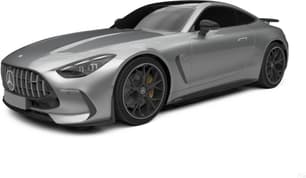
What's the difference?
Once upon a time, people would dream about owning a Mercedes-Benz 450SLC – the C107 sports/luxury coupe flagship of the 1970s.
Sexy, stylish, secure and incredibly solid, it embodied the brand’s ‘Engineered Like No Other Car' mantra of the era.
Today’s all-new, second-generation, C192 AMG GT Coupe is something of an indirect descendant of this sort of thinking, changing tack from its supercar-esque 2014 C190 predecessor, with more space, more seats, more sensibility and, conversely, even more steak and sizzle from its glorious V8.
A modern-day SLC? The Porsche 911, Aston Martin DB12, Maserati GranTurismo and Bentley Continental GT’s worst nightmare? Or something else entirely?
These questions and more are answered below.
Sometimes, a vehicle facelift doesn’t amount to much. Maybe a nip here, a tuck there, but to be sure you’re looking at the new version, you need to check the badges.
To be honest, the revised Polestar 3 SUV is a bit of that, with very little to visually distinguish the facelift from the previous car. But underneath there are some serious upgrades which, in that oh-so-Swedish understated way, serve to make the Polestar 3 an even more tantalising prospect.
The Polestar 3 has now moved to 800-volt technology which not only allows for faster charging, it also opens up the prospect of even more performance. A new generation of lithium-ion batteries also means greater range potential.
But it’s nice to see that Polestar hasn’t limited its attention to the drivetrain; there’s now a revised anti-roll-bar system and a recalibration of the power steering assistance. Which just goes to show that even though brands like Polestar trade on being an all-electric solution, there are still some engineers in Sweden who know how the rest of a car should work.
Meantime, the medium-large SUV space is a very crowded one right now, so the question is whether the new tech – invisible as it is – is enough to keep the Polestar 3 carving out its slice of that market.
The GT63 4Matic+ is a breathtaking example of everything that Mercedes-Benz and AMG are.
Ferociously fast, incredibly agile and superbly sophisticated, it should be on anybody’s shortlist, if that also includes a Porsche, Aston Martin, Maserati or even a Lamborghini. And it’s definitely much more than yesterday’s SLC ever was – for similar money in today’s terms, as it turns out.
But, around Tasmania’s glorious roads at least, the Mercedes-AMG lacks the ride comfort and road noise isolation to be a fully-rounded-out GT, and that’s a disappointment for a brand with such formidable history in making such cars.
There’s some clever design work here and some gorgeous detailing that gives the Polestar 3 a bit of an edge compared with some of its less inspired opposition. It features a truly spacious interior and it’s more than just decent to drive with, frankly, astonishing performance in 500kW Performance form. Even the entry-level Rear Motor has plenty of oomph and could be argued to be the more intelligent choice.
But the interior layout with its melange of menu-driven functions to control basic, everyday functions is annoying and does the car no favours. Not to mention it’s simply not the Scandinavian way to place form before function.
Meantime the overall performance, dynamics and accommodation of the Polestar 3 place it pretty high on the totem of electric SUVs that actually move the game forward somewhat, and that’s largely down to that 800-volt architecture that brings faster charging and better range.
It doesn’t solve all the issues of modern car making, but as a step closer to Polestar’s ultimate aim of a climate-neutral motor vehicle, it’s a move in the right direction.
Note: CarsGuide attended this event as a guest of the manufacturer with meals provided.