What's the difference?
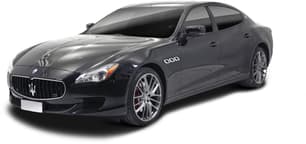
Maserati's Quattroporte is part of a dying breed. A decade or so ago, the European manufacturers took a huge amount of pride in their range-topping big luxury sedans, cars you can either drive or be driven in, bristling with the latest technology.
In 2015, all we hear about are the range-topping SUVs from those makers, with cars like the S-Class and 7 Series fading slowly into irrelevance.
While by no means low-tech, the Maserati Quattroporte takes the high style route, focussing on a luxurious interior with that handmade feel.
The Polestar 2 was one of the first electric vehicles (EVs) in Australia to break through to the mainstream, however it has always been relegated to the Tesla Model 3’s shadow.
As a result Polestar is constantly playing catch up, releasing update after update for this premium-pushing electric liftback. The most notable was a major mid-life update in 2024.
Two years after this, Polestar has just rolled out the 2026 model year (MY26) update which introduces a range of subtle changes, largely under the surface.
It comes as Polestar is now introducing newer models, there’s mounting pressure from legacy carmakers who are only now catching up to EV tech, and Australians are moving away from buying passenger cars to SUVs.
Has this latest update improved the appeal? Read on to find out.
Beauty is way more than skin-deep in the Quattroporte and while the 330 doesn't have the punch of the S, it's hardly that much slower. Maserati reasons you will want to spend the $25,000 saved on options, concentrating on the Italian craftsmanship rather than the outright performance available in the V8 or the efficiency of the less aurally attractive diesel.
As with any car of this type, you've got to want one in the first place, but for a big, beautiful sedan, there's nothing as good looking this side of an Aston Rapide. The Quattroporte 330 does nothing to dim the allure of Modena's big mover and, if you're that way inclined, nobody on the outside will ever know.
This latest update for the Polestar 2 is lovely, but driving the original is a reminder of how solid this car has always been if you overlook the inherent impracticalities of being an EV on a combustion-engine platform.
The fact you still get steady flow of over-the-air software updates bringing new features, plus you can now upgrade to the new Qualcomm processor chip, saving some coin and getting a second-hand model that’s a couple of years old isn’t a bad option at all.
Note: CarsGuide attended this event as a guest of the manufacturer, with meals provided.
Long, flowing lines mark out the Maserati as something quite different to its German, British and Japanese competition. This Quattroporte has increased in every dimension but the lines cover its size beautifully.
Big wheels, long wheelbase, low ride but it still looks like a sedan rather than pretending to be a coupe.
The elegance of the lines is complemented by a distinct lack of bling – there's little in the way of chrome work or shouty details. There's plenty satin finishes available and the beautiful paint, while available in pretty much any colour you like, is best kept to a restrained, deep hue. Or silver.
The cabin will doubtless age well. Classic shapes house a fairly conventional but hugely comfortable cabin. The front seats have heaps of adjustment and are large but supportive. Naturally, the leather is soft and supple.
The central screen isn't the dominant feature, like a 50-inch LCD screen in a small living room while buttons are kept to a minimum.
The rear seat is sensationally comfortable, with hectares of available space and a seat comfortable for either lounging or working.
I’ve always been a fan of the Polestar 2’s exterior design and unlike many new cars it has aged like fine wine over the years. You need to remember the Polestar 2 dates back to 2016 when it was first revealed as a Volvo concept.
It still has clean lines, iconic lightning signatures, plus a tough stance that evokes just a touch of muscle car.
While it has taken me a while to come around to the new blanked-out grille insert, it suits the character of this car given it’s an EV. It also aligns with the wider Polestar design language.
For 2026 there haven’t been any major changes to the exterior. There’s a new sandy-like ‘Dune’ exterior paint colour replacing the silver ‘Jupiter’, plus a new 20-inch forged alloy wheel design for the Long range Dual motor Performance.
Inside, the Polestar 2 looks fundamentally the same as it did when it first launched, in the best and worst ways.
I appreciate how traditional car-like the layouts of the steering wheel, digital instrument cluster and touchscreen multimedia system are. Sure it doesn’t scream ultra high-tech anymore like some of its rivals, but there’s still an understated premium feel to it.
The same can be said for the rest of the Polestar 2’s interior. Everything feels purposeful in a minimalist way which helps make for a clean design.
Speaking of purposefulness, the optional Bowers and Wilkins sound system features a prominent tweeter on top of the dashboard. It looks stunning and is functional, helping to create an incredibly punchy and full sound stage in the cabin.
One of the few finishes I dislike in the interior is the glossy piano black on the steering wheel buttons. You interact with these frequently and it doesn’t take long for fingerprints to present themselves.
There’s now a new synthetic leather upholstery finish for those who opt for the $4700 Plus package. It’s quilted which helps emulate a premium puffer jacket-like look.
Although it’s expensive, the $4400 ‘Bridge of Weir’ Nappa leather upholstery is beautiful and required if you want ventilated front seats. You can only get black and white finishes, which is fine, but bringing back a tan or caramel option would be delicious.
The current Quattroporte has been with us now for a couple of years in diesel and petrol turbocharged V6s and turbo V8 forms.
The 330BHP uses the same, Ferrari-built V6 but detuned to 'just' 330 bhp. The price has been detuned too, dropping $25,000 from the V6 S's entry price to kick off at $210,000.
Maserati 330bhp benefits from an overall specification improvement across the range, landing in your garage with a ten-speaker stereo with USB and Bluetooth, power everything, dual-zone climate control, keyless entry and start, front and rear parking sensors with reversing camera, cruise control, sat-nav, auto headlights and wipers, double glazed windows and an interior covered in leather and wood.
Later in the year, your Quattroporte will be available with a new silk trim from Zegna
Only very occasionally does it become clear that Maserati is part of the Fiat Group and that moment comes when you use the 7.0-inch central screen in the dash.
eight-speed ZF automatic transmission
The software is based on the group's UConnect and it isn't great. It's not bad, but it feels its age (however, it's much better than the system on the Gran Turismo), needing a lot more work or a quick surrender to Apple's CarPlay or Android Auto.
Once you work your way through the weird menus, it's fine to use and is miles ahead of the not-much-cheaper Lexus LS unit which is almost unusable.
Sound from the ten speaker stereo is crystal clear and the phone performance is also very good.
The 2026 Polestar 2 starts at $62,400, before on-road costs, for the Standard range Single motor and extends all the way to $85,080, before on-road costs, for the Long range Dual motor with the Plus and Performance packages.
This is more expensive than the similarly premium-pushing Tesla Model 3 ($54,990 to $80,900, before on-roads), as well as the more budget-oriented BYD Seal ($46,990 to $61,990, before on-roads).
Despite this, Polestar currently has some major deals and offers on new 2026 Polestar 2 stock to the tune of up to $13,000 off the drive-away price. This can see you drive away in a brand-new model for as little as $55,763, drive-away, in Victoria, which is around $5000 less than a base Model 3 RWD.
There’s a catch though… options. There is a slew of option packages and singular options available and they add up quickly.
Most notable is the new $3500 14-speaker Bowers & Wilkins sound system that must be bought in conjunction with the 'Plus package' which is $4700 on all trims besides the Long range Dual motor as it’s already standard.
Annoyingly, a heat pump is part of the $1500 'Climate package' which also brings heated rear seats, a heated steering wheel and heated wiper nozzles. So many carmakers now include heat pumps as standard fare in EVs as they help reduce energy consumption during colder months.
Beyond this, there’s a standard base of equipment which is fine for the price point. Highlights include LED headlights, a 12.3-inch digital instrument cluster, 11.2-inch touchscreen multimedia system, wired Apple CarPlay and Android Auto, wireless charger, dual-zone climate control and heated front seats with electric adjustment.
Like the S, the 330bhp is powered by Maserati's twin turbo 3.0 litre V6, made with more than a dash of Ferrari involvement. As the name suggests, it produces 243kW and a chunky 500Nm. With just under two tonnes to shift, the ubiquitous eight-speed ZF automatic transmission whisks the Quattroporte 100km/h in 5.6 seconds, only half a second down on the 301kW V6 S.
Maserati claims 9.1L/100km on the combined cycle (with the help of stop-start), which seems reasonable given our figure of 10.8L/100km, which we got a with a mix of city and highway running as well as a very enthusiastic blast through some secret back roads.
No changes have been made to the Polestar 2’s electric motor set-up for 2026.
Both the single-motor versions have been rear-wheel drive now for a few years and produce either 200kW or 220kW, depending on the battery pack.
The Long range Dual motor adds a front-mounted electric motor bringing total system outputs to 310kW and 740Nm. It’s capable of doing the 0-100km/h sprint in 4.5 seconds.
The $8980 Performance pack (available only on the Long range Dual motor) bumps the total system power output to 350kW. It also reduces the 0-100km/h sprint to 4.2 seconds.
Just a few hundred metres behind the wheel is all it will take to convince you the Maserati belongs in the same class as the competition. It's incredibly quiet – courtesy of the acoustic double glazing – and all occupants benefit from supreme comfort.
While the 330 is 58kW down on the full fat V6, you won't really miss them. There's a fat torque curve, with all 500Nm available from 1750 to 5000rpm, meaning easy progress for the 5.2 metre sedan.
The Quattroporte has two sport buttons to choose from – one looks after the drivetrain and exhaust valving while the second stiffens up the Skyhook suspension.
With the first sport button pressed, you get a more lively throttle, sharper shifts and a glorious noise from the exhausts, although they are a long way from your ears.
It's still a fast car, with strong acceleration from standstill and in the gears, the power as linear as you like with no real turbo lag and a most un-turbo noise to go with the performance.
The only dynamic problem is the electric steering – it seems to get confused between your inputs and feedback from the road, the tyres feeling like they're 'nibbling' an uneven surface, tweaking the wheel in your hands.
The assistance is a little spotty, too, unexpectedly changing weight. It's just a bit weird. In normal driving, you'll never notice it.
While outright practicality isn’t the Polestar 2’s strong suit, once you get on the road this melts away almost instantly.
This EV is and has always been a driver’s car that’s engaging and rewarding to steer. It’s a shame that many people’s first experience with it was likely in the second row as a rideshare with a driver that has a bad case of taxi foot.
Surprisingly, during the media launch drive program we had the opportunity to sample the original MY22 Long range Single motor and compare it back-to-back to the MY26 models. It’s rare this kind of thing happen.
This is notable because single-motor versions made the switch from front- to rear-wheel drive back in 2024.
While the MY22 example feels like a bulldog yet still capable of carving up corners, it holds up well if you ignore the odd cabin rattle and creak. You can also feel a marked difference with how the rear guides the latest MY26 Long range Single motor instead of the front when pushed.
This isn’t apparent in calmer, everyday driving situations. If you’re not a car person you likely wouldn’t be able to tell the difference.
The rear-mounted electric motor produces an adequate amount of oomph, allowing you to get up to speed with ease. Like all EVs you get snappy acceleration from a standstill, which is thrilling.
This is dialled up to 11 in the Long range Dual motor Performance. Although the Model 3 Performance is technically faster, it still feels like this Polestar 2 is quick enough.
In the fully loaded all-wheel drive trim you’re able to carve corners enthusiastically. It’s incredibly confidence-inspiring to chuck into corners as there’s grip for days and a bucketload of power to back it up.
Although the regenerative braking system is pretty powerful already, the Performance pack adds chunky Brembo physical brakes for added peace of mind. Perhaps Tesla could take note of this?
The aforementioned Performance pack also adds manually adjustable Öhlins dampers with a ‘Polestar Engineered’ performance chassis. It’s an incredible package with a dialled-in feel, though if you want to adjust the dampers you need to jack up the car.
If you’re not keen on outright performance, the regular Polestar 2’s suspension set-up still holds its own but has an added level of all-around comfort. It’s an improvement from the original which was a little too firm.
Across the line-up the steering is direct and makes this car feel nimble regardless of where or how you’re driving. You’re able to select from different steering feels which increase or decrease the resistance.
Given EVs have no engine noise, they can sometimes have more noticeable road and wind noise out on the open road. Thankfully the Polestar 2’s cabin is quiet enough, that is unless you’re driving on coarse-chip roads.
Six airbags, ABS, stability and traction controls, brake assist, blind spot monitoring and rear cross traffic alert.
There is no ANCAP or EuroNCAP safety rating for the Quattroporte.
The Polestar 2 received a maximum five-star ANCAP safety rating based on testing conducted in 2021.
Standard safety equipment includes eight airbags, autonomous emergency braking (AEB), blind-spot monitoring, rear cross-traffic alert, adaptive cruise control, lane-keep assist, lane centering, front and rear parking sensors as well as a surround-view camera system.
This amount of safety tech is pretty standard fare now, but I particularly like how well they are tuned. It’s more noticeable in a world where new cars from new carmakers continually chime at you even though you’re driving normally.
There are ISOFIX child seat anchorages on the two outboard rear seats, plus top-tether points on all three rear seats.