What's the difference?
Driving a whopping great SUV down the straight on a race track at more than 200km/h sounds like fun, but it actually feels a bit wrong, like entering a baby elephant in a dog show.
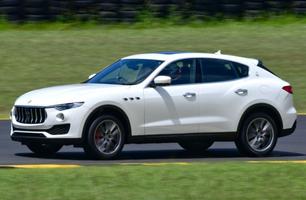
These are strange times, of course, and the Maserati Trofeo Levante is a suitably strange vehicle - stylish, classy, expensively appointed family hauler that also has the heart and soul of a race car.
Indeed, while performance SUVs are an increasingly commonplace vehicle, the Levante - which was actually getting along in the tooth as a model before this significant upgrade - has higher performance credibility than most.
That's because it has a big Ferrari V8 driving all four of its wheels and delivering a properly supercar-like 433kW and 730Nm.
It's not what you might call a typical Maserati buyer's car, but then only those who know what the Trofeo badge stands for - shouty insanity, basically - will be interested in this end of town. It is a lot of car, but is it worth the large load of money on the sticker ($330,000)?
It doesn't feel like that long ago I spent a day with the brand spanking new Mercedes-AMG GLC 63 S when it first arrived in Australia. It's a car that stuck with me, the SpaceX-worthy thrust of AMG's 4.0-litre twin-turbo V8 translating into that dirty V8 exhaust note.
Turns out it wasn't that long ago, but time waits for no car - the 2020 GLC 63 S has arrived, with some useful upgrades and a deep suspicion that someone, somewhere thought the car needed some changes.
And they may be right, because in June 2018, the GLC 63 S assumed an empty throne. Now in 2020, it has the Jaguar F-Pace SVR and BMW X3 and X4 M twins to deal with.
So, under a scorching hot Bathurst sun, I examined the box-fresh GLC 63 S for signs of nefarious activity, hoping things have not changed for the worse just because there are a couple of challengers in town.
Maseratis are built for a fairly specific niche buyer; someone with a lot of money, someone slightly older and certainly someone who likes the finer things in life and appreciates Italian style, quality and heritage.
They are not, typically, the kind of buyers who want to tear around race tracks like fiends in big, shouty SUVs. But apparently there is a niche within the niche of Maserati fans who do, and they are willing to invest big dollars in vehicles wearing the Trofeo badge, like this Levante.
It might seem a slightly strange creation, a track-mad SUV with a screaming Ferrari engine, but surprisingly, it really does work.
Obviously, I had nothing to worry about. The GLC 63 S is the same boisterous, silly car I drove 18 months ago, just with a few new bits to improve the package. As ever, the GLC 63 S is all about the experience - big noise, huge grip but all in comfort with plenty of gadgets.
The only real issues are price, service pricing and the length of the warranty. The first two probably won't bother most owners and one hopes the third won't be problem, but it would be nice if the length was reflected in the price.
If you care about badge, it has impeccable credentials, the AMG stripes and that plate on the engine with the builder's name. They're good credentials. The GLC 63 S has some very determined and capable competition, but none of them blend the speed, overall comfort and sheer sensory silliness of the AMG.
While the other two Maseratis to get the Trofeo treatment - the Ghibli and Quattroporte sedans - are undeniably lovely, the Levante is not quite as pretty.
Admittedly, for an SUV, it looks very good, and the Trofeo touches - that big, nostrilled bonnet, the red gills on the sides, the carbon, the badges - really do lift its game to another level.
Overall, though, the Levante has just never felt beautiful enough to me to be a Maserati. These guys really do style well, as you'd expect from a premium Italian brand, but making an SUV sexy is beyond even them.
I'll grant you, it does look good from front on, but at the rear they just seem to have run out of ideas.
Credit is due for feeling properly special inside, however.
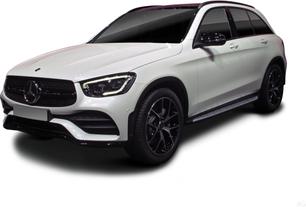
As before, the GLC 63 S comes in wagon and couple bodystyles. Little has changed, with just the usual tweaked front and rear bumpers and mildly redesigned headlights.
All the good bits have remained, like the 'Panamericana' grille from the AMG GT monsters, the jet wing-inspired front bumper and plenty of open space to feed the radiators and intercoolers.
Neither the wagon nor coupe is a pretty machine, but no mid-size SUV is much of an oil painting, with the exception of the Jaguar F-Pace.
The 'Night Package' is still a standard inclusion, blacking out various bits and pieces and looking good when allied with the dark alloys. They both look tough, though, which is classic AMG DNA.
Inside is pretty much the same as before, with just two obvious changes. The new Alcantara-trimmed steering wheel, again from the AMG GT, and also on the C 63 S, joins the party with a more expensive look and feel.
And the new MBUX screen is wider and looks much more at home in a $165,000-plus car. It's still a bit old-feeling, but the digital dash adds a bit of techno-style while the garish speaker covers don't.
If you've got to move five people in a genuine hurry, the Levante is a pleasant way to go about it.
There's plenty of head and shoulder room, the seats, while firm in the front, are pleasant to the touch and supportive and there's a 580-litre boot with an electric tailgate and split-folding seats.
The boot feels properly spacious, too, with a 12-volt power outlet and four tie-down points. You won't, however, find a spare wheel out there, so serious off-roading is out (although it probably was already if you look at those expensive wheels).
There are huge door pockets with room for bottles and two big cup holders in the front. The centre-console bin looks lovely, it's all carbon fibre, but is quite small.
There are also three USB points, one in the front and two in the rear, and Apple CarPlay and Android Auto connectivity.
A family of four will love any GLC. The wagon's extra headroom over the coupe is useful if not life-changing, while the knee, leg and foot room are generous. Front seat passengers enjoy comfortable seating as long as you're not too keen on pudding.
Underneath, the upward sweep of the centre console is a pair of cupholders and a wireless charging Qi pad that will fit larger phones. Under the split armrest is a small but handy console bin, inside which you'll find USB-C ports.
Two more USB-C ports in the rear join a 12-volt socket and there are also climate controls for the rear seat passengers. The centre armrest pops open with a shallow, carpet-lined tray and two cupholders pop out the front. Each of the four doors has a bottle holder, too.
The boot space is unchanged for each bodystyle - 550/1600 litres for the wagon and 500/1400 litres for the coupe. Both have high loading lips, which is something to consider if you're hauling heavy things about or have trouble lifting items to a reasonable height.
I'm sorry, but $330,000 for an SUV, of any kind? Personally I can't see the value, but then personally, as we'll discuss below in the Design section, I can't see the attraction.
This is one of the most expensive SUVs money can buy, well above things like Range Rover Sport SVR ($239,187) or even Porsche Cayenne Turbo Coupe ($254,000), although a pricier Ferrari one is surely on the way.
You'd want a lot for that, and the way it drives and sounds, thanks to that Ferrari engine, accounts for quite a few dollars.
There's also an undeniably high-quality feel to everything you touch on the car, inside and out, and a vast quantity of carbon fibre everywhere as well.
Other highlights include the 21-inch machine polished wheels, an 8.4-inch touchscreen with Navigation and DAB radio, full matrix LED headlights, and incredible Pieno Fiore natural leather, “the best the world has ever seen”, as Maserati says.
The lovely if firm front seats are heated and ventilated, sporty and 12-way adjustable, with Trofeo logos stitched into the headrests. The rooflining is lovely Alcantara, the steering wheel is sporty and features carbon-fibre shift paddles, ad the stereo system is Harman Kardon Premium and has 14 speakers.
And even the rear seats are heated. It feels expensive, and it should. But still, $330K?
As before, we get two bodystyles and the high(er) performance version, the GLC 63 S (a 'base' GLC 63 is available in other markets). Mercedes followed everyone else's lead and realised nobody would buy the skim milk version.
Unfortunately, that translates to the highest sticker price of the three, with the wagon coming in at $164,900, and the coupe at $171,900, before on-road costs.
That doesn't seem to hurt Mercedes too much with other cars in the range, but it's a significant difference. Incidentally, both prices are up by about $3000.
It's loaded, though - 21-inch wheels, multi-zone climate control, air suspension with dynamic dampers, electric and heated front seats, active cruise control, head-up display, reversing camera, around-view cameras, sat nav, front and rear parking sensors, keyless entry and start, electric tailgate, Nappa leather and wood trim, active LED headlights, auto wipers, auto parking, roof rails, sunroof, DVD player, and TV tuner, but no spare tyre, just a repair kit.
A Burmester-branded 13-speaker sound system is powered by Mercedes' spangly MBUX system on a new 10-inch touchscreen, which is much nicer than the old software and hardware combo.
MBUX offers deeper integration with the car's systems. The 'Themes' function is like a series of shortcuts to set the car up for a particular mood, but let's face it, most GLC 63 S drivers are just going to find the 'Race' function and go for it.
MBUX also has Apple CarPlay and Android Auto, but via USB only.
This will be the last time Maserati gets a proper Ferrari engine like this a 3.8-litre twin-turbo V8 shouty monster, which is good for 433kW and 730Nm.
The future, as is the case everywhere, is going to be more electric and less noisy. For now, anyone who can should enjoy this V8 masterpiece, which drives all four wheels through Maserati's Q4 on-demand all-wheel drive system via a limited-slip rear differential and uses an eight-speed automatic transmission.
Its claimed 0 to 100km/h time is 3.9 seconds, which puts it in what used to be super-car territory, and is still very quick indeed, while top speed is an unimaginable 304km/h.
An AMG 4.0-litre twin-turbo V8 brings the thunder, with a massive 375kW and 700Nm of torque. That's plugged into a nine-speed MCT (multi-clutch as opposed to twin-clutch) transmission and Merc's '4Matic+' all-wheel drive system.
With all that power and grip, you'll crack the ton in a supercar-baiting 3.8 seconds. One little point to note is the engine has active mounts.
Should you fancy turning your tinny into a landspeedboat, you can tow up to 2000kg for a braked trailer, and 750kg unbraked.
The official claimed fuel economy for the Maserati Levante Trofeo is 13.5 litres per 100km, but good luck with that.
A more realistic number would probably sit somewhere above 17 litres per 100km, and we would have easily exceeded 20 litres while driving it like lunatics around a track.
But you just paid $330K for an SUV, what do you care about fuel economy?
Mercedes reckons you'll get 12.2L/100km on the combined cycle which seems laughable at first and then you see what it actually does. To be fair, the car I drove on the launch copped a hammering and was hovering around the 17.0L/100km, with the start-stop and coasting functions playing only cameo roles.
We got to drive all three Trofeo-fettled Maseratis on track at Sydney Motorsport Park, and before that on the road, where the Levante felt very pleasant, and pleasantly expensive at all times.
As you might expect, a vehicle with 433kW is difficult to fully appreciate on public roads, although there was the occasional and exciting change to give it a quick, loud blat between gears.
It only takes hearing that engine note, and feeling that torque surge, a few times to see why someone might fall in love with this car, or at least this engine.
Out on the track, the rear-driven Ghibli and Quattroporte, which share the Levante's engine, were surely the more fun and frenetic things to drive, but there were those who chose the Levante as their best of the three, even for circuit driving.
There's no doubt that its on-demand all-wheel-drive system, which is biased towards the rear but asks the front wheels for help when required, made it feel the most planted, and the safest, through fast and slow bends.
There's a definite sense that its engine is being asked to work the hardest, though, to push all that bulk through the air (although its brakes never seemed to fade, which is impressive with more than two tonnes of SUV to stop).
While the big, deafening V8 is willing and keen to rev all the way to 7000rpm (where it bangs on the redline waiting for your upshift, if you're driving in manual mode - I do like that), it started to make large sucking sounds towards the top of each gear, as if it was desperately trying to get more oxygen in.
It genuinely sounded different to the other two Trofeo cars, which is odd, but perhaps they just weren't as near their limits. That bulk also slowed it slightly in terms of top speed down the straight, but it still exceeded 220km/h with ease.
What should be said is that I was genuinely shocked at how good the Levante Trofeo was around a track. So much so I asked to have a second go, just to make sure I wasn't going mad.
Sure, it makes no sense to me personally, and I don't know why anyone needs an SUV that's good on a track, but if you do, I can recommend the Levante for sure.
That hugely enjoyable engine is just too much fun, although it's even better in a sedan like the Ghibli...
Like any V8-powered AMG, the twin-turbo engine absolutely dominates the GLC 63 S. Even at walking speeds you can feel the serious firepower on offer, just a flex of your ankle away.
The figures are colossal - 375kW (over 500 horsepower) and 700Nm pushing around two tonnes of mid-sized SUV. Its famed bark is bettered only by Jaguar's completely unhinged, and surely borderline illegal, 5.0-litre supercharged V8.
You need to know you've got plenty of tech underneath you to make this stick to the road. The 21-inch alloys are wrapped in 265/40s at the front and 295/30s at the back, Continental Cross Contacts if you're interested.
They should - and would - ruin the ride, but the standard fitment of air suspension means that in normal driving, the GLC 63 S is firm but comfortable. A BMW X3 M is much harder, especially at the rear, going without the complex and heavier air set-up.
The air suspension is probably the pivotal piece of chassis tech that makes this car so versatile. While it's got driving modes up the wazoo - including the new 'Slippery' mode - it's a perfectly agreeable daily driver.
Leave it in comfort, accept that it has a firm ride and you're in good shape for the school run or the commute. You just sail along on a light throttle because there is virtually no turbo lag.
Whack it in Race and you can attack your favourite empty, bendy road with all the grip you could ever need.
The steering is remarkably light and direct for such a chunker and the optional carbon ceramic brakes were never bothered by what I could throw at them.
The V8 roars and spits and crackles, the gearbox shifting seamlessly up and down through the ratios. It's blissfully silly.
In a way, it's a velvet fist in an iron glove - comfortable inside but happy to headbutt the horizon with little provocation.
I'd prefer it if the transmission was a bit more decisive on slow speed shifts and you'll have to prepare yourself for a lot of wearying road noise on long trips. The latter is the price you pay for a ton of grip.
Maserati's safety offering on the Levante includes six airbags, a reversing camera and 360-degree overhead camera, parking sensors front and rear, adaptive cruise control and Blind Spot Detection, Forward Collision Warning Plus, Pedestrian Detection, Lane Keep Assist, Active Driver Assist and Traffic Sign Recognition.
There is no ANCAP rating for the Levante as it's not been crash tested here.
All GLCs have nine airbags, ABS, stability and traction controls, traffic sign recognition, around-view cameras, reversing camera, rear cross traffic alert, blind spot monitor, forward AEB, forward collision warning and tyre pressure monitoring.
There are also three top-tether mounts and two ISOFIX points.
The GLC scored a maximum five ANCAP stars in January 2016.
Maserati offers a three-year, unlimited kilometre warranty, but you can choose to buy 12-month or two-year warranty extensions, and even a sixth or seventh-year drive-train warranty extension.
When much, much cheaper Japanese and Korean cars are offering seven and even 10-year warranties, this is so far off the pace that such a fast vehicle should be embarrassed. And if you're buying something Italian, a better, longer warranty would seem like a must. I'd be negotiating at sale for them to throw the longer warranty offer in.
Maserati says servicing for the Ghibli has a "ball park costing of $2700.00 for the first three years of ownership" with a service schedule of every 20,000km or 12 months (whichever occurs first)
Also, "please note that the above is indicative only of the manufacturers basic routine service maintenance schedule and does not include any consumable items such as tyres, brakes etc or additional dealership charges such as environmental levies etc."
Mercedes Benz offers a three year/unlimited kilometre warranty with roadside assist which is not really up to scratch for a premium brand. Yes, the cars are complex but they're also expensive, so the investment should come with a commensurate warranty.
Service intervals are generous at 12 months/20,000km (as opposed to the 25,000km of other GLCs) and the capped price servicing means you'll know what you're paying.
Mercedes offers you the choice of an up-front payment or pay-as-you-go. Upfront ranges from $4050 for three services, $6100 for four, and $6850 for five.
If you go with PAYG, three services is a hefty $5000. Basically, each service is at least a grand when averaged out over time and that's pricey.
Service inclusions differ between your chosen method, but only slightly. The pricing includes filters, oil and, unusually, spark plugs and brake fluid, but that's small comfort.