What's the difference?
Maseratis make a certain amount of sense to a certain kind of person. As the folks who run the brand in Australia will tell you, its buyers are the kind of people who’ve driven German premium vehicles, but find themselves wanting something more.
They are older, wiser and, most importantly, richer.
While it’s easy to see the high-end lure of Maserati’s Italian sex appeal styling and luxuriously appointed interiors, they’ve always struck me as cruisers rather than bruisers.
Again, they’re for the older, more generously padded buyer, which makes the Trofeo range something of an oddity. Maserati says its Trofeo badge - seen here on its mid-sized sedan, the Ghibli, which sits below the vast Quattroporte limousine (and side on to the other car in the range, the SUV Levante) - is all about the "Art of Fast".
And it certainly is fast, with a whopping V8 driving the rear wheels. It’s also completely bonkers, a luxury car with the heart of a track-chomping monster.
Which is why Maserati chose to launch it at the Sydney Motorsport Park complex, where we could see just how quick and crazy it is.
The big question is, why? And perhaps who, because it’s hard to imagine who wants, or needs, a car with such severe schizophrenia.
There's something about Italy and four-wheeled transport. Even the most functional vehicles developed there somehow morph into high-performance hot rods.
For example, as the SUV phenomenon has swept the world Alfa Romeo, Ferrari, Lamborghini and Maserati have more than matched the German big three and others in elevating the humble family truckster to supercar status.
And the Grecale Trofeo is the latest example of Maserati's inability to let an SUV be simply practical. It's a mad twin-turbo V6 all-wheel-drive version of the more typically four-cylinder-powered mid-size SUV.
We spent a week with this ferocious beast to see how much spice it can add to family life.
The Maserati Trofeo Ghibli is a very strange beast, but there's no doubt that it is a beast. Fast, loud and capable on a race track, and yet still closely resembling a classy, expensive Italian family sedan, it is genuinely unique. And genuinely strange, in a good way.
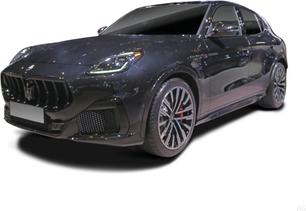
In its surprisingly crowded premium performance SUV segment, the Maserati Grecale Trofeo offers something different. Next to the X4s, GLCs and Macans of this world, it's quietly confident and charismatic with the performance, practicality and value to back up its distinctive good looks. Despite some gripes around warranty, fuel consumption and ride compliance, it's a compelling alternative to those more predictable choices.
The Ghibli Trofeo is an alluringly beautiful car from just about every angle, with a genuine sense of occasion and presence about its nose, a sleek side profile and a much improved rear end, where the light clusters have been redesigned.
The Trofeo special touches are impossible to miss, particularly from the driver’s seat where you look straight into two vast nostrils on the bonnet. There are also carbon fibre pieces on the front air duct and the rear extractor for a sportier, wilder look.
The red details on the air vents on each side are the highlight, though, while the lightning bolt on the Maserati trident badge is another nice touch.
The interior is simply beyond special and feels even more expensive than it is. Overall, I’d say it again, it’’s alluring. Italian style at its best and the Ghibli is the Cinderella point in the range, because the Quattroporte big brother really is too large, and the Levante is an SUV.
At close to 4.9m long, a fraction under 2.0m wide and less than 1.7m tall, the Grecale is a 'large' medium SUV with a robust, thick-set look and a low-key design approach relative to its often more overtly muscular competitors.
Signature Maserati elements include a trio of porthole vents in the front fenders, the broad vertically-slatted grille with trident emblem sitting proudly in the centre, and a smaller version of Neptune's weapon of choice adorning the broad C-pillar.
There's also more than a touch of MC20 around the raked headlights (including the DRL signature), a pronounced splitter-style nose piece and broad intakes on either side.
Staggered 21-inch rims fill the arches perfectly, while pronounced side skirts and a gently sloping turret also dial up the sporty look.
The rear is sleek, but again relatively low-key, the major clues to the car's performance potential being the quad exhaust outlets and the carbon nose panel, side skirts and diffuser.
The interior feels sleek and VIP special thanks mainly to the multi-tier dash design, quality of the materials used and multiple screens.
A central 12.3-inch multimedia touchscreen sits above an 8.8-inch 'comfort' screen devoted mostly to heating, ventilation and vehicle settings.
They're tied together in a single, angled panel that looks like an oversized foldable smartphone. Very cool.
The 12.3-inch digital instrument cluster is configurable through multiple custom set-ups and this time around the distinctive dashtop clock is in fact a small screen switchable through classic and contemporary faces.
It can also emit a response signal when it receives a voice command or morph into a G-meter.
From there, the double saddle stitched perforated leather trim, exposed carbon-fibre elements and brushed metal finishes complete a highly polished cabin environment.
From the driver’s seat, the Trofeo Ghibli feels spacious indeed, and while it’s not as vast in the back as a Quattroporte, there’s plenty of room for two adults, or even three small children.
The move to throw sportiness at the Ghibli has led to it having firm but fabulous seats. They’re comfortable, and the leather is luscious, but the actual seat back is constantly letting your spine know that this is no ordinary Ghibli.
Throw it around a track, though, and the seats feel just right, providing the kind of support you need.
Boot space is ample at 500 litres and the Ghibli feels like the sort of car you could take your family in, if only it didn’t make you feel like you were spoiling your children too much.
At close to 4.9m long and nearly 2.0m wide, the Grecale is a big medium five-seater and with a 2.9m wheelbase to play with, interior space and practicality are more than respectable.
There's plenty of space up front and in terms of practicality, decent door bins, two cupholders in the centre console, a lidded oddments tray in front of them (housing USB-C and USB-A sockets), a large lidded box between the seats (which doubles as a centre armrest) with a 12-volt outlet lurking inside as well as a generous glove box.
Sitting behind the driver's seat set for my 183cm position, there's plenty of head, leg and foot room, not to mention a surprising amount of breathing space in general.
Enough width for three adults on short journeys and up to teenage kids will be fine. When it comes to baby capsules or child seats, you'll be good with two but three is a bridge too far.
For storage, there are door bins with room for large bottles, hard-shell maps pockets on the front seatbacks, adjustable ventilation as part of the three-zone climate control system, a fold-down centre armrest including two cupholders and a slot for a phone in between as well as another pair of USB (A and C) sockets.
Boot volume is a healthy 570 litres with all seats up, which is 35L more than the lower GT and Modena grades because rather than a space saver spare, the Trofeo cops a repair/inflator kit. Boo...
It's enough room to fit our three-piece luggage set or the CarsGuide pram with ease, and the 40/20/40 split-folding rear seat liberates even more space.
There are seat release handles in the cargo area as well as multiple tie-down anchor points, a 12V outlet, bag hooks and a two-piece load cover set-up to deter prying eyes.
At a price of $265,000, the idea of “value” becomes a different discussion, but you only need to glance at the Ghibli to realise that it looks like four times that much money.
The interior is also spectacularly boudoir-like, with lashings of carbon fibre and a whole cattle stud worth of full-grain Pieno Fiore natural leather, “the best the world has ever seen”, as Maserati likes to say.
Perhaps most vitally, this Trofeo racy edition gets a Ferrari engine; a 3.8-litre twin-turbo V8 good for 433kW and 730Nm (the first time it’s been seen in the Ghibli), driving the rear wheels only through a limited-slip differential and an eight-speed torque converter automatic gearbox. You also get very nice, expensive feeling paddles to shift those gears with.
Speaking of nice, the 21-inch aluminium Orione wheels are dead classy, if reminiscent of Alfa Romeo cars.
Ghibli Trofeo models come with a Corsa, or Race, button for hard-core sporty driving, and a Launch Control function.
There’s also an MIA (Maserati Intelligent Assistant), featuring a rather large 10.1-inch multimedia screen with upgraded resolution.
The Active Driving Assist “assisted driving function”, which has been seen in Ghibli before, can now be activated on urban roads and ordinary highways.
At $174,900, before on-road costs, the Grecale Trofeo sits in the middle of a pack of performance-focused mid-sized SUVs spanning a roughly $50,000 price band from around $140K to $190K.
Specifically, the Alfa Romeo Stelvio Quadrifoglio ($162,700), BMW X4 M Competition ($185,200), Jaguar F-Pace SVR ($153,570), Mercedes-AMG GLC63 S ($191,800) and Porsche's Macan GTS ($141,700).
That's a quality competitive set and to keep its head above water the Grecale Trofeo comes with a solid standard features list.
Aside from the performance and safety tech we'll cover shortly, highlights include the 21-inch alloy rims, auto LED headlights, 14-way adjustable heated sports front seats (with driver memory function), an electrically-adjustable steering column, alloy door sill finishers, full leather upholstery, 14-speaker Sonus Faber audio (with digital radio), three-zone climate control (with rear touchscreen), a panoramic sunroof and ambient lighting.
Then there are the screens for multimedia (12.8-inch), instrumentation (12.8-inch), ventilation and vehicle settings (8.8-inch) and the multi-mode clock, as well as ambient cabin lighting, adaptive cruise control, a power tailgate (with kick control), Android Auto and Apple CarPlay connectivity plus layers of carbon inside and out. Impressive, even in the 'around $200K' part of the market.
This will be the last time Maserati gets to enjoy a proper Ferrari engine - a 3.8-litre twin-turbo V8 good for 433kW and 730Nm - before it moves to a more electrified future, but it’s certainly going out with a lot of loud bangs.
Deafeningly lovely, the V8, which drives the rear wheels, will shove you to a shouty 100km/h in 4.3 seconds (fast, but not stupidly so, although it feels even quicker) on your way to a very Italian top speed of 326km/h.
We can report that it exceeds 200km/h with consummate ease and has epic amounts of torque on tap.
Lurking under the Grecale Trofeo's bonnet is a 'wet sump' version of the 3.0-litre twin-turbo 'Nettuno' (Neptune) V6 that also found a home between the axles of the Maserati MC20 supercar.
It produces 390kW, which is well in excess of 500hp, and grinds out enough torque (620Nm) to pull a small cottage off its foundations.
It's brimming with performance and efficiency-focused tech. Everything from twin-spark dual-chamber heads and cylinder deactivation to high-pressure direction-injection and variable valve timing.
Drive goes to all four wheels via a ZF-sourced eight-speed auto transmission and an all-wheel-drive system incorporating an electronic self-locking limited slip diff at the rear.
Maserati claims a slightly inexact fuel-economy figure of 12.3 to 12.6 litres per 100km, but good luck ever achieving it. The desire to open the taps and really chew some fuel will aways be overwhelming.
We drove it on a race track and would easily have been exceeding 20 litres per 100km, so our test figure is probably best not spoken about.
Maserati's official combined cycle fuel economy number for the Grecale Trofeo is 11.2L/100km, emitting 254g/km of CO2 in the process.
We covered urban, B-road and freeway running, not to mention some enthusiastic driving along the way, and recorded an average of 16.9L/100km. Which is thirsty, but not outrageous relative to the competition.
The fuel tank requires 64 litres of 95 RON premium unleaded to fill it which translates to a theoretical range of around 570km, dropping to just 380km using our real-world number.
Even if you're okay with the Trofeo's hefty consumption rate, regular visits to the fuel pump will be kind of a pain.
We were fortunate enough to drive all three Trofeo models - Ghibli, Levante and Quattroporte - on the track at Sydney Motorsport Park, which really is the only way to fully appreciate vehicles with Ferrari V8 engines, 433kW and rear-wheel drive.
Maserati is keen to point out that other premium brands don’t offer that kind of grunt in their rear-drive cars, indeed most of them are going all-wheel drive, and that level of playfulness is a real USP, it believes.
The thing is, the company also acknowledges that its buyers are older, wiser and wealthier types moving up from the German brands.
The Trofeo range, in particular, then, is a real niche within a niche. I picture Maserati buyers as being slightly sedate yet stylish. Fans of the nicer things in life, but not flashy, or thrashy, about the cars they drive.
And yet, unlike other Maseratis, the Trofeos are flame-spitting beasts that sound like Game of Thrones dragons. Clearly there are people who like their classy Italian saloons to be insanely fast and track ready. And hooray for them, because as weird as it seems to flog a car like this so hard, the Trofeo Ghibli was well and truly up for it.
It’s also the pick of the litter, being less SUV like than the SUV Levante, and less stupidly long and heavy than the Quattroporte.
Its shorter wheelbase and lighter weight make it the most fun and light on its feet when being thrown around. We hit an easy 235km/h on the front straight before hurling into Turn One well north of 160km/h, and the Ghibli just held on tight before using its torque to hurl it at the next bend.
It sounds, as I’ve said, amazing, but it’s worth saying again because it’s a real Maserati (or Ferrari, really) advantage of choosing this car.
The brakes are also up to the task of repeated track-hard stops, the steering is lighter and less talkative than a Ferrari perhaps, but still excellent, and the whole Trofeo Ghibli experience is best described, on circuit, as being better than you would possibly imagine.
Out on the road, you don’t have to put up with the firm ride that pressing the Corsa button compels, and the Ghibli reverts to its smooth, cruiser persona - while still looking sporty as hell.
The only letdown is the seats, which are a little on the firm side, but everything else about the cabin is so luxe you almost forgive it.
While this car makes no sense to me, it obviously excites enough people for Maserati to make a business case, and charge $265,000 for the Trofeo Ghibli. Good luck to them, I say.
Engage the standard launch control function, step through the blast-off procedure and Maserati says you'll rocket from 0-100km/h in 3.8 seconds, which is supercar fast.
And the way this twin-turbo V6 delivers that kind of performance is impressive; beautifully linear without a hint of lag.
Trundle along at 60km/h, pin the throttle and you'll be in 'lock 'em up and throw away the key' territory in the blink of an eye. This is a full-blown rocket sled.
All 620Nm of peak torque is available from 3000-5500rpm with maximum power (390kW) arriving at 6500rpm. No matter which drive mode you've selected (more on that shortly), thunderous performance is only an extension of your right ankle away.
And the aural accompaniment walks a perfect line between potency and civility, the signature Maserati exhaust growl stepping up a notch in the racier settings but rarely crossing over into bellicose 'boy racer' territory. We have no problem with an occasional pop and bang on the overrun!
At a touch over two tonnes, the Grecale Trofeo is far from a featherweight, but when you're racing up and down the quick-shifting auto transmission's eight ratios, it feels like one.
The elegant alloy, column- (not wheel-) mounted 'manual' shift levers add to the fun and there are five drive modes to play with - 'Comfort', 'GT', 'Sport', 'Corsa' and 'Off-road' - adapting the engine, transmission, steering and suspension.
The track-focused Corsa set-up starts to soften off some of the traction and stability controls, so we didn't go there, but can confirm off-road raises ride height by 30mm (FYI, we didn't head off-road, either).
Suspension is by double wishbones at the front and multi-links at the rear supported by active dampers and air 'springs' all around.
In the softer Comfort setting, ride compliance is on the firm side. Never harsh, but a little more communicative in terms of bumps and thumps than you might expect.
Not for the first time I found the best arrangement was Sport, dialling everything up to racier settings, and the suspension in 'Comfort' which can be achieved with the press of a wheel-mounted button.
The electrically-assisted rack and pinion steering is accurate and quick to respond with excellent road feel thrown in for good measure.
Just beware the flip side of this type of 'quick' steering rack is invariably a large turning circle, and the Grecale Trofeo is no exception.
The staggered 21-inch rims are shod with high-performance Bridgestone Potenza Sport rubber (225/40 fr / 295/35 rr) and the AWD system, complete with rear LSD, help the car feel securely planted and balanced in quick cornering.
Braking is professional grade with big ventilated and cross-drilled rotors front and rear with fixed Brembo calipers at both ends - six piston front and four-piston rear.
Maserati claims the Grecale Trofeo will slow from 100km/h to a standstill in less than 40m, which is not a lot of metres from that speed.
I had one telling 'will I, or won't I?' situation when presented with an amber light and in deciding to give the brakes a workout (there was no one behind me) was rewarded with a secure and insanely rapid stop.
In terms of general observations, the placement of the start button and drive-mode dial on the steering wheel is a nice touch, the front seats are superb in terms of support and comfort, the media interface is quick and easy to use and the only strong hint of Maserati's Stellantis ownership came in the form of familiar 'Jeep-style' audio control rocker switches on the back of the steering wheel.
There is no ANCAP rating for the Ghibli as it has not been tested here.
The Trofeo Ghibli comes with six airbags, Blind Spot Detection, Forward Collision Warning Plus, Pedestrian Detection, Adaptive Cruise Control, Lane Keep Assist, Active Driver Assist and Traffic sign Recognition.
No independent ANCAP safety assessment at this stage but the Grecale Trofeo is fitted with active crash-avoidance tech including AEB (with pedestrian recognition) operating from 5.0-258km/h, adaptive cruise control (with stop and go function), 'Active Lane Management' (including lane-keep assist), blind-spot monitoring, rear cross-traffic alert and 'Drowsy Driver Detection'.
There's also a 'Surround View' camera system, 'Traffic Sign Assist' as well as front and rear parking sensors, and 'Rear Cross Path' (incorporating rear AEB).
If a crash is unavoidable, six airbags (dual front, front side and full-length side curtains) are onboard and there are three top tethers across the rear for baby capsules/child restraints, including ISOFIX anchors on the outer positions. There's even an emergency triangle and first-aid kit.
Maserati offers a three-year, unlimited kilometre warranty, but you can choose to buy 12-month or two-year warranty extensions, and even a sixth or seventh-year drive-train warranty extension.
When much, much cheaper Japanese and Korean cars are offering seven and even 10-year warranties, this is so far off the pace that such a fast vehicle should be embarrassed. And if you're buying something Italian, a better, longer warranty would seem like a must. I'd be negotiating at sale for them to throw the longer warranty offer in.
Maserati says servicing for the Ghibli has a "ball park costing of $2700.00 for the first three years of ownership" with a service schedule of every 20,000km or 12 months (whichever occurs first)
Also, "please note that the above is indicative only of the manufacturers basic routine service maintenance schedule and does not include any consumable items such as tyres, brakes etc or additional dealership charges such as environmental levies etc."
The Grecale Trofeo is covered by Maserati's three-year/unlimited km warranty, which is off the market pace, with five years/unlimited km the expected norm. Roadside assistance is included for the duration of the warranty.
Maintenance intervals are 12 months/15,000km, and service over the first three years will set you back $4639, or $1546 per workshop visit. Not cheap, but again, not out of line for a performance model in this part of the market.
Maserati also warrants the body for "perforation by rust corrosion" for four years, extendable up to eight if vehicle maintenance, from an authorised dealer, is up to scratch.