What's the difference?
You’re after a premium SUV with size for five, without exceeding the ideal metropolitan footprint. It should have adequate oomph for occasional forays into wider open spaces, but offer enough comfort and luxury to keep you cool and relaxed in the city.
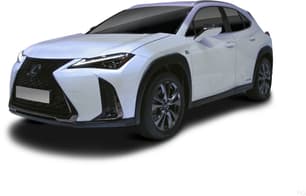
And you’d rather look at something outside the predictable Euro brand path. The Lexus UX 200 F-Sport may just be your ideal urban companion.
Hybrid campers are no longer a new development in caravanning and camping. We've been seeing trailers like them, in some form or another, for nearly two decades.
The concept is straightforward: hybrid campers offer some of the best comforts of a caravan (solid walls, proper beds, little to no set-up time) with the best aspects of camper trailers (light, small, rugged and able to be towed nearly anywhere).
Although Blue Tongue Campers has been a leader in the traditional camper-trailer market for more than a decade, its first hybrid has been a long time coming. First chance we got, we hooked it up and headed out to Wee Jasper to see what it's about.
The Lexus UX 200 F Sport really steps up in the urban context. It’s big enough, energetic enough (especially using the Sport setting and the CVT’s manual mode), and delivers good value for the price. We’d like more boot space, a little more room in the back seat, and the Remote Touch media interface deposited in the bin. But overall it’s a great premium option for young families or active couples in the city.
Given that Blue Tongue is a relative latecomer to the hybrid caravan market, it’s done its homework.
For $50,000, the HX15 is a great value, highly capable off-road camper with a comprehensive list of features to keep it self-contained and self-sufficient when you're camping.
That it includes an island bed, 2000-watt inverter, grey-water tank and enough battery capacity to free camp almost endlessly, is a testament to all that.
It might be a relatively compact SUV in the wider world, but at a bit less than 4.5 metres long, slightly more than 1.8m wide, and just over 1.5m tall, the Lexus UX is fairly sizeable if your natural habitat is the urban environment.
But it’s far from oversized, and the UX has a tight space ace up its sleeve in the form of a 10.4m turning circle. It might sound like a large arc, but that’s a full metre less than the only marginally longer Lexus NX, and considerably inside the bigger Lexus RX’s radius.
And the difference between a clunky three-point turn, and a swift U-turn in a tight traffic environment is massive. So, gold star there.
On the inside, day-to-day practicality in the form of cabin storage runs to a pair of cupholders in the front centre console, with a (Qi) wireless charging mat ahead of them, a decent glove box, as well as generous door bins with enough space for full-size bottles.
A large lidded storage box between the seats contains two USB ports, an ‘aux-in’ socket, and a 12V outlet. It also features the Lexus party trick of hinging open towards the driver or passenger depending on which side button you've pressed. Clever.
There’s a fold-down centre armrest with twin cupholders in the back, but there are no storage pockets on the front seatbacks, or bins in the doors.
Speaking of which, the rear door apertures are tight, making it more of a struggle than it should be for anything above average size adults to get in and out.
Rear headroom is good, although legroom is tight, and shoulder room will be squeezy for grown-ups. That said, twin air vents in the rear of the front centre console is a welcome addition in a car of this size, as are two USB charging ports to keep devices topped up and occupants happy.
Boot space is 371 litres (VDA) with the rear seats upright, which is modest. The small and medium suitcases from our three-piece set fitted in, but there wasn't much space left over. The bulky CarsGuide pram will squeeze in… just. And of course, the second-row backrest split-folds 60/40 to liberate extra capacity.
There are tie-down anchor points at each corner of the cargo floor, a 12-volt power outlet, strategically placed bag hooks and bright lighting, but don’t bother looking for a spare wheel, the Dunlop SP Sport Maxx tyres are run-flats.
There’s a button on the key fob that seems to indicate it remotely opens the rear cargo door, but in my experience it remained a non-cooperative mystery.
Towing capacity is the same, rather lightweight 750kg whether the trailer you’ve connected is braked or unbraked.
A lot of these hybrid campers are little more than expensive metal boxes with a large bed inside, although the Blue Tongue is a little more than that.
It has a fold-out extension from the driver's side of the camper, which contains the queen-sized bed. By expanding sideways, rather than rearwards, Blue Tongue's managed to create access around the bed from three sides. The upside is, no one ever has to climb over the other, or shuffle along it, to get in. It's a feature almost unique in the genre.
Considering the XH15 also fits a small shower and toilet cubicle, cosy dinette, a small sink, bunk bed and heaps of storage, it's quite a practical little space that doesn't feel as cramped as it sounds.
The dinette lounge is good for the occasional meal away from the bugs, while the bunk above it folds up to improve access. And even if you're not travelling with a child, it makes a great shelf.
The en-suite, if we can call it that, is naturally compact. With its own toilet and shower plumbed into the grey-water tank, this is a fully self-contained camper, which is becoming increasingly more important at many free and remote bush camps.
This was my second time in a UX 200 within the last 12 months, but this time the loan period extended to around six weeks, covering the time much of the globe was in lockdown in response to the coronavirus.
So essential trips around town were the only ones being taken. But more time behind the F Sport’s wheel highlighted some of this UX 200’s dynamic strengths, particularly aspects of the continuously variable transmission (CVT).
This Toyota designed CVT has the advantage of a conventional first gear to give the UX some extra urgency from step-off. And when you’re predominantly in stop-start traffic (although there wasn’t too much of it), that’s a big help.
Like all CVTs, in set-and-forget Drive mode, this unit aims to keep the engine in its operating sweet spot, constantly balancing performance and economy goals; the downside being a droning engine noise. For those old enough to remember manual gearboxes it feels like a constantly slipping clutch.
But slip into ‘Manual’ and the CVT is able to mimic ratio points, and using the wheel-mounted paddles to shift between them lifts driver engagement massively, even in the compacted urban context.
In terms of outright performance, a kerb weight nudging 2.0 tonnes and a peak torque number (205Nm) that doesn’t arrive until a lofty 4800rpm goes a long way towards telling the UX 200 F Sport acceleration story. Lexus claims 0-100km/h in a reasonably brisk 9.2sec.
The UX is underpinned by the ‘Lexus Global Architecture – C’ platform (a Lexus name for Toyota’s TNGA chassis architecture) and suspension is by struts at the front and trailing wishbones at the rear, with the F Sport featuring adaptive variable suspension and a rear performance damper, the latter designed to improve chassis rigidity and minimise vibrations.
Overall ride comfort is really nice, although the standard 18-inch alloy rims are shod with 225/50 Dunlop SP Sport Maxx run-flat tyres and they’re relatively noisy, with an accompanying tendency to follow irregularities in the road surface.
Dial up the Sportier drive settings and everything tightens up appreciably, so if you’re that way inclined, the sport part of the F Sport’s personality is there to be explored.
The electrically assisted steering delivers decent accuracy and road feel, With some momentum up, the UX 200 F Sport feels balanced and predictable, putting it’s power down nicely, if you decide to break away for a brisk B-road run.
Braking is by ventilated discs at the front (305mm) with solid rotors at the rear (281mm), and stopping power is reassuringly firm.
As mentioned earlier, a tight 10.4m turning circle makes parking easy, supported by a high-quality reversing camera and proximity sensors front and rear.
Under the heading of general observations, the driver’s seating position is great - comfy and secure, a one-touch up and down function on all windows is a nice… touch, and the configurable instrument cluster (which includes the central dial physically sliding into different positions) is functional and fun.
The 15-foot off-roader is well balanced behind our tow car. At tare, there's 150kg on the ball, which gives it room to move up once a load is added. We carried a load of camping gear, nearly 200 litres of water and the fridge, all of which helps add stability to the combination.
Towing the XH15 along the highway, it tracked beautifully and even with soft, off-road suspension it didn't wobble around. Onto the narrower, winding roads into Wee Jasper, it was compliant and followed without incident.
When the drive became a bit challenging, such as when we had to navigate steep, loose tracks into our campsite, the camper's high-clearance, angled cutaways and off-road hitch made sure none of its underbody scraped or bumped on the ground.
It rides on coil-spring, independent suspension with dual-shock absorbers each side and this is a robust, well-proven system, which is really great when roads become a little rougher.