What's the difference?
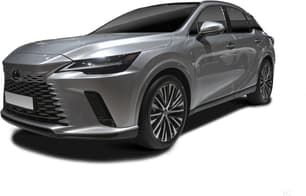
This is a BIG moment for the Lexus RX in Australia. And I'm not just referring to the spindle grille that adorns the front-end of this all-new model (though it too is almost commercially massive).
I'm talking more about the vehicle itself, and its importance to the Lexus brand here. The RX is one of Lexus' best sellers in Australia, and so this new one – which welcomes a new platform, new powertrain options and an all-new F Sport Performance trim level – is a big deal.
So, does it live up to the hype (and to its German competition)? Join me as we figure all that out ahead of the RX's debut here in early 2023.
Once upon a time Queensland was the home of Aussie camper-trailer manufacturing and companies, such as Lifestyle Camper Trailers, were pumping out camper after camper to happy customers. But then came the imports and the price that people were willing to pay for the product dropped very quickly. Many local companies succumbed and just went out of business, others started importing their own and some innovated, developing new products; Lifestyle did two of the three.
Today Lifestyle only builds light-weight, heavily off-road caravans which it calls Hypercampers and others would call a hybrid caravan, because it takes some elements of a camper-trailer and others of a caravan. It has four models, one of which is built in China in a factory the company part-owns. The other three, including the Reconn R2, which I’m testing, is built in Queensland.
The RX is a big SUV that doesn't always look, or drive, like one, and – in 500h guise especially – can put a smile on a driver's face, too.
Gone are the cabin quirks and the polarising design elements (well, mostly...), and in their place you'll find a solid, premium-feeling family offering without much in the way of drawbacks.
Note: CarsGuide attended this event as a guest of the manufacturer, with travel, accommodation and meals provided.
This is one of the campers that very finely straddles that line between camper-trailer and caravan. It’s light-weight and simple to use, even if (and mostly because) it lacks the wide-open comforts of a traditional caravan. It’s very capable, well-equipped and very well made.
If you do like to escape the great outdoors occasionally while camping (or someone you dearly love, does), this is well worth a look. It’ll follow you just about anywhere and your camp life will be better for it.
The entire RX range now rides on Lexus' GA-K platform, which is lighter (-40kg), more rigid, and offers a lower centre of gravity (-15mm) than the model it replaces.
The RX is wider (+25mm to 1920mm), lower (-10mm to 1695mm), but no longer (still 4890mm) than the outgoing model. But Lexus has lengthened the wheelbase (+60mm to 2850mm) to earn some extra backseat space for rear riders.
And it must be said, there is lots of room for backseat riders. Sitting behind my own 175cm driving position I had more than enough knee room, and enough head room, and a general feeling of airy spaciousness.
Elsewhere you get the usual practicality perks, with two cupholders up front, two more in the pull-down seat divider that splits the rear seat, and there are two ISOFIX attachment points in the back seat, too.
Charging is handled by a four USB ports, and depending on the trim/spec balance Lexus in Australia shoots for, you should at least find vents with temp controls for backseat riders, too.
Lexus is yet to confirm the luggage space specs for the new RX, but given it’s only being offered with five seats, and that there’s been no change to the vehicle’s length, you can expect a fair bit of room for bags in its auto-opening boot.
The Reconn’s interior is interesting, as unlike most modern caravans, there’s not a lot of free space in here, thanks largely, to the height of the bed. It sits right at the top of the camper, like a second-storey mezzanine. To get in, you have to climb onto the dinette lounge, or use the fold-down step built into the base.
There is also a small dinette and lounge space with a folding table that’s comfortable enough for two to sit at ease and read or eat dinner, but I get the feeling Lifestyle doesn’t expect you to be spending the majority of your time in here – that’s not what this camper is about.
Above the dinette there’s cabinet space, while all the dinette seats lift up to reveal more storage areas. The dinette closest to the door has two drawers in it, to make accessing the storage easy.
If this floorplan isn’t for you, there are three other options. One features a pair of bunks, another an ensuite with shower and toilet. The third packs both the bunks and the ensuite all in, somehow – it’s not an overly large space.
Right, let’s cut to the chase here. I like the way the all-new RX family drives, pretty much across the board. If that’s all the information you want or need, feel free to check out here and move on to the next sub-heading.
Still here? Ok, then let’s go a little deeper.
None of the powertrains on offer feel under-powered in the RX range, which is a good start, but they all do their jobs a little differently.
The RX 350 is probably the most familiar, with a traditional automatic and that well-known petrol-powered punch. It’s not the most powerful engine on offer here, but it’s more than enough to get the RX up and moving — but, for mine, it can feel a little thrashy (or like it’s straining a little too hard), when you really start to push it, but such is the price you pay for a four-cylinder engine pushing a large SUV.
Next up is the RX 350h, which Lexus reckons will be the best-selling model in Australia. Lexus and Toyota have been doing hybrid powertrains for some time now, and the system fitted to the new RX is predictably solid-feeling, though it too has its drawbacks – namely that the constantly variable transmission can drone on and on under constant acceleration, and even the commendably insulated cabin can’t block it out completely.
So if this is a Goldilocks’ scenario, then the just right has to be the RX 500h, which blends its powerful powertrain with a traditional-feeling automatic to deliver plenty of performance and a tight, engaging drive experience that makes it feel as though the big SUV is somehow shrinking around you from behind the wheel, courtesy of the best performance kit (brakes, adaptive suspension, etc).
But to be honest, no matter the RX, the thing that really stands out here is its on-road dynamics. The car doesn’t really wobble about, there’s not much in the way of body roll, and it feels tight and confidence inspiring, no matter the model - but especially the rear-wheel-steering equipped 500h.
The RX also does a commendable job of locking the outside world outside of the cabin. Where you want it to be a calm and sedate family hauler, it can be that. But it can also put a smile on your face on the right road, too.
And that, I think, is something to be celebrated. And also not something we’ve come to associate with Lexus over the years. But that’s now beginning to change. Long live F Sport Performance, then.
I towed it behind a RAM 1500 Laramie, which was serious overkill for a trailer of this size and weight, but it did all the right things. Because it has an adjustable air-suspension underneath, its ride is quite compliant and soft and its height can be adjusted to suit the terrain, or even lowered to reduce air resistance.
Off-road, it posed little trouble, although the tracks we did were mild, at worst. It has no shortage of clearance (and can be dialled up further if you are short of it) and is fitted with a Cruisemaster DO35 off-road hitch.
One of its best off-road features, though, is the completely clean underside. There’s actually no plumbing, tanks, wiring or fittings under the floor or exposed to the elements, river crossings, dust or stones. The camper’s two tanks, batteries, pumps, electricals and plumbing are all contained within a compartment under the driver’s-side storage section. There’s even room in there for expansion – it’ll fit another water tank, another batteries and extra electrical gizmos easily.