What's the difference?
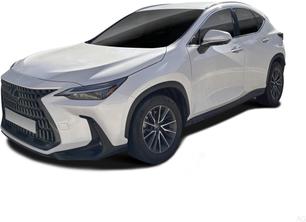
The Lexus NX 450h+ F Sport is a well-specified and plush-looking medium SUV that has a plug-in hybrid powertrain - a first for the brand.
On paper, it seems to tick the boxes for size, luxury and efficiency but we've been testing the flagship grade to see if it's a winning combo in real life.
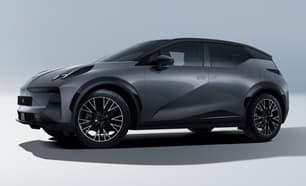
Zeekr is a new electric brand and the X small SUV is one of its first cars to come to Australia.
Owned by the Chinese carmaker Geely, which also has a big stake in Volvo, the X is designed in Sweden, built in China and now sold here.
Rivals to this little electric SUV include the Smart #1, Volvo EX30 and Xpeng G6.
The Zeekr X line-up is currently very simple - there’s the rear-wheel drive version and the all-wheel drive we tested.
The Lexus NX450h+ F Sport is a gorgeous mid-size SUV that combines great specs and a fairly efficient plug-in hybrid powertrain. It’s a comfortable and easy ride which should appeal to a wide range of driving styles. It also looks good parked at the kerbside of a city street and with it ticking most of the boxes, it may become your new best friend.
The Zeekr X all-wheel drive surprised me in a great way. Not only is this the first Zeekr I've driven, it's also one of the best small electric SUVs I've ever driven. There's so much to like - from the good price and quality design to the high level of safety and how easy it is to drive.
The NX simple looks like a scaled-down version of its larger RX cousin, so if you like that you’ll like what the NX.
It looks sweeter, though, with its smaller proportions being only 4660mm long and 1670mm high but there’s enough sharp pleating in the panelling and rear LED lights to give it a sporty edge. It’s a design that should appeal to a wide range of people.
The interior helps the NX compete against some of its flashier rivals, but the BMW X3's interior beats it hands down with the wow factor. Still, the dual-toned leather upholstery and fabrics of our test model scream understated luxury.
The perforated leather of the seats is supple underhand, but even the robust synthetic leather on the backs of the seats and some door panelling feels like the real stuff most of the time.
The dashboard components – like the air vents, displays and accents – are well integrated and seem well-built. The cockpit is intimate and plush overall, and it always reminds you that you're in the cabin of a luxury vehicle.
More than interesting, the design of the Zeekr X is intriguing with styling that ranges from 'ooohhhh' when you see it from the front to 'huh?' when you catch it in side profile.
The nose design, to me anyway, looks exquisite - Porsche-SUV-like in its sporty and luxurious shape and the way the LED running lights are embedded into the bonnet is different and so special it probably makes some prestige brands a bit envious.
That side profile also looks pretty pleasing to me, until I reach that rear quarter where suddenly I feel I’m looking at panel shapes so oddly combined it’s like a puzzle with just five pieces and all of them in the wrong place.
The rear of the X looks good, but more importantly unique compared to the same templated styling many SUVs tend to safely stick to.
Zeekr and Volvo are owned by the massive Chinese car manufacturer Geely and the X is closely related to Volvo’s EX30. Once you know this you’ll see the similarities in the looks, although the less conservatively styled X is more appealing to me.
The X is also 100mm longer and all of that extra length is in the wheelbase which is 2750mm. As for the rest of the key dimensions, the overall length is 4432mm, the height is 1572mm and the width is 1836mm. So, a fairly small car.
The X’s interior is as intriguing as its exterior with the AWD version on test fitted with the no-cost option 'Mulberry & Rose' two-tone upholstery - a colour combination of maroon and off-white which you don’t see often unless it's a bespoke choice in a high-end car.
No, it’s not leather, but I don’t think this upholstery doesn't feel cheap or ‘plasticky’ as some synthetic leather interiors do.
There are high quality touches throughout, from the dotted city scape of Hangzhou where Zeekr is headquartered that glows through the door trim fabric at night to the embossed Zeekr pull tabs on the seats.
The X’s interior feels luxurious and the styling is outstanding.
The cabin of the NX is spacious where it needs to be for four adults to be comfortable on a longer journey, and features enough equipment to satisfy most.
Access is best at the front because of the wider door apertures and while still easy enough to get in and out of from the back, the rear wheel arch cuts into the aperture a bit.
The front seats are very comfortable with thick padding, tall side bolsters that lock you into place in a turn as well as heating and cooling functions.
The back seats are almost as comfortable as the front! However, the outboard seats offer the best under-thigh support. It is a shame that they miss out on heat functions for its grade level, though.
Storage is fairly good for the class, with lots of small item cubbies up front like a sunglasses holder, a mini drawer next to the drivers' knee and a dedicated phone holder and two cupholders. The large glove box (that can hold more than just a manual) and mid-size middle console shoulder most of the storage burden, though.
In the back you get a couple of map pockets, small storage bins and two cupholders. which is most than enough for this size of SUV.
The boot offers an impressive 520L of capacity and a level loading space makes it an easy car to slide larger gear in and out of. The little storage compartment under the floor is handy for charging cables and the hands-free powered tailgate is always handy to have.
The technology is a nice mix of easy-to-use and high-end with a responsive touchscreen on the 14-inch multimedia display. The system has built-in sat nav, wireless Apple CarPlay and Android Auto. The CarPlay was simple to set up and has maintained a steady connection with my iPhone this week.
Charging options are decent with two USB-C ports and a 12-volt socket per row, as well as a wireless charging pad up front.
Small cars don’t generally have the practicality of larger ones because of the obvious space limitations but the Zeekr X has a long wheelbase for the class (longer than the Mitsubishi Outlander’s) making it roomy compared to rivals.
Second row head- and legroom is good and even at 189cm tall I can sit behind my driving position. Back there are two cupholders in the fold down centre armrest, directional air vents in the pillars and bottle holders in the doors.
Back seat downsides? No USB ports and the way the rear door sill kicks up means my two children (both under 10 years old) can’t see out of their windows well.
Up front space is good with plenty of elbow and foot room. Storage is good, too, with big door pockets, a couple of cupholders, a deep centre console bin and even a hook for a handbag or to hang a takeaway bag. There are USB ports up front and a wireless phone charger, too.
Front seat downsides? No glove box, and while we're at it the panoramic glass roof doesn’t have a sun shade and even though it is tinted I found that over summer in Australia the car heated up quickly and I’ve even had to wear a hat while driving to keep the sun off my head and face.
The Zeekr X has a decent-for-the-class 362L rear boot capacity and a tiny 21L front boot which is where the charging cable lives.
With a price hike of almost $6K, our flagship NX sits at $95,900 before on-road costs, but it's still slightly more affordable than its top-grade plug-in hybrid rivals.
The Volvo XC60 Ultra is priced from $101,390 and the outgoing BMW X3 xDrive30e sits at $102,500.
In the flagship variant, the standard features list is well-rounded to include both practical and luxury equipment. There are electric front seats with heating and cooling, an F Sport steering wheel with heating and touch controls, a sunroof, rear privacy glass, and a power-adjustable steering column.
Other items include a powered tailgate with a kick-to-open function, dual-zone climate control with a humidity sensor, parking assist, keyless entry/start, a digital key, Lexus Connected services app, a digital rearview mirror and 20-inch alloy wheels.
The technology looks gorgeous with the 14-inch touchscreen multimedia display taking centre stage with built-in satellite navigation, Bluetooth and wireless Apple CarPlay and Android Auto.
You also get a 10-speaker Lexus premium sound system, which has AM/FM radio, MP3 and WMA (Windows Media Audio) compatibility. There are four USB-C ports (2/2), a 12-volt socket and a wireless charging pad.
So while our test model misses out on some of the items you might expect to see for a top-model grade – like three-zone climate control and heated rear outboard seats – it still feels well-specified.
The Zeekr X tested is the top-of-the-range all-wheel drive which lists for $64,900. The only other variant in the X model line-up is the rear-wheel drive which lists for $56,900.
Sure, $65K might seem a lot for what is a small SUV, but the X AWD is reasonably priced compared to rivals like the tinier Smart #1 for $58,900, its Volvo EX30 Performance Ultra twin for $69,990 and the Xpeng Long Range for $59,800.
We’ll get to the technical specs soon, but the all-wheel drive variant offers more than just AWD, there’s also more standard features than the RWD.
The RWD X comes with two-tone body colour with a black roof, a panoramic glass roof, a six-way power driver’s seat, an 8.8-inch digital instrument cluster and a 14.6-inch media screen.
There’s also Apple CarPlay and Android Auto, a seven-speaker audio system, dual-zone climate control and wireless phone charging.
The AWD has all of the RWD’s features and adds 20-inch alloy wheels, a 24.3-inch head-up display, an intelligent B-pillar which provides information on charging, a power adjustable front passenger seat, heated and ventilated front seats, a heated steering wheel, a 13-speaker Yamaha stereo and LED ambient lighting.
The RWD has just one motor while the AWD has two and more power, which we’ll cover soon.
The NX450h+ F Sport is the first attempt at a plug-in hybrid powertrain for Lexus. It pairs a 2.5-litre four-cylinder petrol engine with two electric motors, one located at each end of the car for all-wheel drive. Together they produce up to 227kW of power, but Lexus doesn’t quote the combined torque figure (cheeky).
The flagship model can do a 0-100km/h sprint in 6.3 seconds and features a smooth continuously variable transmission.
Overall, it moves quickly and the shift between the electric and engine components is barely noticeable.
On test is the all-wheel drive version of the Zeekr X which has two motors while the rear-wheel drive has just one.
Two motors brings the AWD variant more power and torque than the RWD. A lot more. Zeekr’s specs state the combined output for the AWD is 315kW and 543Nm, while the RWD has 200kW and 343Nm.
Good traction and plenty of grunt means the AWD can accelerate from 0-100km/h in 3.8 seconds, while the RWD gets there in a respectable time of 5.6 seconds.
Electric cars are known for their rapid acceleration but just to put those numbers in context, a new base model Porsche 911 ($280K) has 290kW and 450Nm and does 0-100km/h in 4.1 seconds.
The flagship NX has a smallish 18.1kWh lithium-ion battery and a Type 2 charging port but no CCS enhancement, which means you can’t hook it up to a fast DC charger.
On a standard AC 240-volt domestic plug port, you can charge this from 0-100% in around 7hrs 30mins. You get a great electric-only NEDC-rated driving range of up to 87km and that means you really only have to charge it every other day, which I appreciated.
The official combined fuel cycle usage is 1.3L/100km, but you won’t really see that in the real world. After doing some longer trips mixed in with city slicking, my average real-world usage popped out at 6.5L/100km, and I averaged 20.2kWh/100km when in pure EV mode. They’re not the best hybrid figures I’ve seen for the class, but they're not too bad either.
The Zeekr X all-wheel drive has a range of up to 470km (WLTP), but if anything under 500km already has you twitching with anxiety, the rear-wheel drive's 540km range might alleviate some of that.
We found the range of the AWD to be fine for the city, but also learnt that we chewed through a lot of energy at an average of 18.4kWh/100km according to the trip computer.
Zeekr says after a combination of open and urban roads you’ll likely use 15.5kWh/100km, but you’d need to be a smooth driver that’s not tempted to test the acceleration at every traffic light and drain the battery.
Speaking of which, the Zeekr X has a 66kWh battery with a DC charging capacity of 150kW and at that rate can be charged from 10-80 percent in about 30 minutes.
This NX feels like it has lots of power in reserve when you put your foot down and never struggles going up big hills. When it’s in pure EV mode, it’s very quiet but there’s no big fanfare when this kicks over to the traditional engine. You barely notice it until you’re on the open road travelling at higher speeds, and that’s when the engine starts to sound more growly like its non-hybrid siblings.
The steering is forgiving without feeling too light and around town, the NX is nimble and sure of itself. The suspension is on the firmer side, so you’ll hear and feel the bigger bumps, but it never feels rough.
Visibility is decent with the largish windows, and the pillars that aren’t too wide from my driving position. I do like having the digital rearview mirror, though, because when you have a big car seat or tall adult in the back seat, the vision back there is hindered.
It’s pretty hard to find a modern car that’s terrible to park, especially in the mid-size SUV segment, and the NX is no different. Even in a small car space, you still have good clearance around you, which hopefully translates to less dings from neighbouring cars!
The 360-degree view camera system is top notch with its quality, and I like that the car disappears and you can see the ground underneath.
In short, the Zeekr X is outstanding to drive for the class - it’s composed, comfortable as well as easy and fun to pilot.
Everything feels good - from the steering and the pedals to the seats and visibility.
The tech works well - the head-up display is large and shows directions and speed clearly, and the shifter being on the steering column makes three-point turns and just getting out of car parking spaces easy.
The acceleration is ridiculously good, but that novelty wears off after you’ve shown everybody in your family, which is why it’s lucky it's not the only thing this small SUV does really well.
While it’s not as spacious as the other large SUV I was testing at the time - the Zeekr X’s short length means it was the car I picked if I needed to go somewhere close where I knew parking spaces would be a bit squeezy.
The NX comes with a maximum five-star ANCAP safety rating from testing done in 2022 and scored very highly across its individual assessment scores; 91 per cent for adult protection, 89 per cent for child protection, 83 per cent for vulnerable road user, and 92 per cent for its safety assist systems.
Eight airbags are standard which includes a front centre airbag and driver's knee airbag.
Other safety equipment includes emergency steering assist, blind-spot monitoring, lane departure alert, lane-keeping aid, emergency lane keeping, traffic sign recognition, safe exit assist, rear cross-traffic alert, LED daytime running lights, LED cornering lights, tyre pressure monitoring, and an emergency call button.
The only safety item which can feel intrusive when driving is the adaptive cruise control as it has a feature that scans for bends in the road and will slow the car down in anticipation of them. On paper, this isn’t a bad thing but in practice, it was sporadic when it activated and sometimes slowed the car dramatically on bends you wouldn’t even call bends!
AEB with car, pedestrian, cyclist, motorcyclist, backover and intersection turning assist is standard and operates from 5.0 - 80km/h (up to 180km/h for car detection).
There are two ISOFIX child seat mounts and three top-tether anchor points in the rear row. The seat isn't wide enough to accommodate three child seats side by side, so two will fit best.
The Zeekr X scored the maximum five-star ANCAP rating under the stringent 2024 criteria with a high 91 per cent for adult occupant protection and an impressive 87 per cent for child occupant protection.
The advanced safety tech is also impressive with AEB that not only detect pedestrians, cyclists and other cars on a straight road but also while turning at junctions and T intersections.
There’s lane keeping assistance, blind-spot warning, front and rear cross-traffic alert and airbags covering the front and rear occupants including a front centre airbag.
I used the Zeekr X to drive my own kids around and for child seats there are three top tether anchor points and two ISOFIX mounts in the second row.
The NX is offered with a five-year/unlimited-kilometre warranty, which is on par with its European rivals.
It comes with a five-year capped price servicing program, where services are competitively priced at $595 each.
Servicing intervals are reasonable at every 12 months or 15,000km, whichever occurs first.
The X is covered by Zeekr’s five-year, unlimited-kilometre warranty while the drive battery has an eight-year, 160,000km warranty. Roadside assistance and connected services are also offered for five years.
Servicing is recommended every two years or 40,000km.
Service pricing is $690 at two years/40,000km and $1420 at the four-year/80,000km mark, which covers the warranty period. For reference, the same $690/$1420 sequence is repeated at the six-year/120,000km and eight-year 160,000km intervals.