What's the difference?
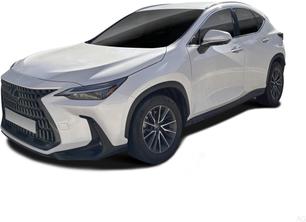
The Lexus NX 450h+ F Sport is a well-specified and plush-looking medium SUV that has a plug-in hybrid powertrain - a first for the brand.
On paper, it seems to tick the boxes for size, luxury and efficiency but we've been testing the flagship grade to see if it's a winning combo in real life.
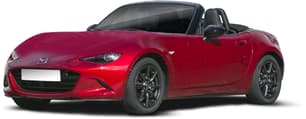
It's not often a car is elevated to 'icon' status, cars like the VW Beetle, Porsche 911, Toyota LandCruiser or Ford Mustang - but the Mazda MX-5 has quietly been the best choice for keen drivers who don't want to break the bank with a big sticker price or costly maintenance.
The ND MX-5 has been around since 2015, and while it’s been praised as a return to the original, simple formula of the NA MX-5 from the late 80s and early 90s, it’s getting close to a decade old.
So, a little refresh with some new tech and a mechanical tweak is here to make the roadster feel like a playful pup once more.
And what better place to test that out than a combination of the winding roads of the Adelaide Hills wine region, paired nicely with a main course of track driving at The Bend Motorsport Park?
The Lexus NX450h+ F Sport is a gorgeous mid-size SUV that combines great specs and a fairly efficient plug-in hybrid powertrain. It’s a comfortable and easy ride which should appeal to a wide range of driving styles. It also looks good parked at the kerbside of a city street and with it ticking most of the boxes, it may become your new best friend.
Ultimately, the design and tech changes to the ND MX-5 will be the biggest day-to-day advantages of the updated model, because the mechanical changes don’t make themselves hugely obvious on the road.
If you’re into track days, it’s still a satisfying car to hustle as fast as you can, but it’s at its most accessible on winding roads for weekend drives, where the new differential and track DSC mode won’t come into play as much.
But in a world where accessible sports cars are becoming a rarity, there’s only one rear-drive convertible with a sticker price appropriate for financial mortals, and it’s a pretty damn good thing that it’s the ND MX-5.
Note: CarsGuide attended this event as a guest of the manufacturer, with travel, accommodation and meals provided.
The NX simple looks like a scaled-down version of its larger RX cousin, so if you like that you’ll like what the NX.
It looks sweeter, though, with its smaller proportions being only 4660mm long and 1670mm high but there’s enough sharp pleating in the panelling and rear LED lights to give it a sporty edge. It’s a design that should appeal to a wide range of people.
The interior helps the NX compete against some of its flashier rivals, but the BMW X3's interior beats it hands down with the wow factor. Still, the dual-toned leather upholstery and fabrics of our test model scream understated luxury.
The perforated leather of the seats is supple underhand, but even the robust synthetic leather on the backs of the seats and some door panelling feels like the real stuff most of the time.
The dashboard components – like the air vents, displays and accents – are well integrated and seem well-built. The cockpit is intimate and plush overall, and it always reminds you that you're in the cabin of a luxury vehicle.
Alright, we’ve all seen ND MX-5s, you don’t need me to tell you about its proportions or explain its design elements to you in too much detail, so I’ll give you the headline changes.
At the front and rear are new pairs of LED head- and tail-lights, respectively… obviously, fitting into the spaces the old ones took up.
The DRLS and reverse lights have come off the bumpers for both, and are now part of the main lights at each end - no more DRLs in the front bumper, and the reverse lights have been replaced by reflectors.
There are new 17-inch wheel designs for the base and GT trim levels, too, and there’s a new colour - Aero Grey.
Inside, it’s a shame that the tan Nappa leather interior of the RF Black Roof can’t be had in a manual roadster, because it’s gorgeous, even though the inside still looks refined enough for a simple sports car in its base cloth trim.
The cabin of the NX is spacious where it needs to be for four adults to be comfortable on a longer journey, and features enough equipment to satisfy most.
Access is best at the front because of the wider door apertures and while still easy enough to get in and out of from the back, the rear wheel arch cuts into the aperture a bit.
The front seats are very comfortable with thick padding, tall side bolsters that lock you into place in a turn as well as heating and cooling functions.
The back seats are almost as comfortable as the front! However, the outboard seats offer the best under-thigh support. It is a shame that they miss out on heat functions for its grade level, though.
Storage is fairly good for the class, with lots of small item cubbies up front like a sunglasses holder, a mini drawer next to the drivers' knee and a dedicated phone holder and two cupholders. The large glove box (that can hold more than just a manual) and mid-size middle console shoulder most of the storage burden, though.
In the back you get a couple of map pockets, small storage bins and two cupholders. which is most than enough for this size of SUV.
The boot offers an impressive 520L of capacity and a level loading space makes it an easy car to slide larger gear in and out of. The little storage compartment under the floor is handy for charging cables and the hands-free powered tailgate is always handy to have.
The technology is a nice mix of easy-to-use and high-end with a responsive touchscreen on the 14-inch multimedia display. The system has built-in sat nav, wireless Apple CarPlay and Android Auto. The CarPlay was simple to set up and has maintained a steady connection with my iPhone this week.
Charging options are decent with two USB-C ports and a 12-volt socket per row, as well as a wireless charging pad up front.
One thing Mazda has significantly changed for the ND is the multimedia screen, now a larger 8.8-inch touchscreen running Mazda’s updated software.
It brings the MX-5 up to date without sacrificing simplicity and makes it a little easier to use. The physical dial and buttons for controlling the screen also remain. The USB-C ports are also new.
Oh, and the MX-5 is the first Mazda model to get Connected Services, which is coming to other Mazda models eventually.
Connected Services allows owners to find, lock, and get alerts for their cars from a phone app, even letting them set curfews to notify them if the car is started during certain hours.
Aside from that, another small tweak is the simplified instrument cluster, which aims to be easier to read even when the roof is open and the sun is bright.
The cabin isn’t built to be plush, it’s built for ‘Jinba Ittai’, Mazda’s philosophy that applies most strongly to the MX-5 which means ‘horse and rider as one’.
And trust me, you feel one with the horse- er, car, when there’s not ample room to move. It’s not restrictive, but it’s cosy.
Everything’s quite well-placed and it’s not busy with buttons or features in here though, it’s made for focusing on driving.
One downside is the lack of storage, not even a glovebox, in front of the passenger, and the central storage spot under where your elbow sits is tiny, good for keeping the key fob snug though. Also, the cupholders are able to be removed or swapped between the space behind your elbow, or above the passenger footwell.
There’s also a small storage space between the seats behind where your elbow would sit, though it’s tricky to access while you’re driving.
Then there’s the boot, which is usable for a small amount of luggage at 130 litres in the Roadster and 127L in the RF hardtop.
Finally, as a huge positive, probably the biggest advantage of the ND over any other convertible is how easy it is to open and close the roof in the Roadster. You can do it single-handed, which is great if it starts raining and you’re at a traffic light or able to quickly pull over.
The RF hard-top has a switch that automatically opens and closes the roof section.
With a price hike of almost $6K, our flagship NX sits at $95,900 before on-road costs, but it's still slightly more affordable than its top-grade plug-in hybrid rivals.
The Volvo XC60 Ultra is priced from $101,390 and the outgoing BMW X3 xDrive30e sits at $102,500.
In the flagship variant, the standard features list is well-rounded to include both practical and luxury equipment. There are electric front seats with heating and cooling, an F Sport steering wheel with heating and touch controls, a sunroof, rear privacy glass, and a power-adjustable steering column.
Other items include a powered tailgate with a kick-to-open function, dual-zone climate control with a humidity sensor, parking assist, keyless entry/start, a digital key, Lexus Connected services app, a digital rearview mirror and 20-inch alloy wheels.
The technology looks gorgeous with the 14-inch touchscreen multimedia display taking centre stage with built-in satellite navigation, Bluetooth and wireless Apple CarPlay and Android Auto.
You also get a 10-speaker Lexus premium sound system, which has AM/FM radio, MP3 and WMA (Windows Media Audio) compatibility. There are four USB-C ports (2/2), a 12-volt socket and a wireless charging pad.
So while our test model misses out on some of the items you might expect to see for a top-model grade – like three-zone climate control and heated rear outboard seats – it still feels well-specified.
Getting into an MX-5 is now a little more expensive, with the base manual Roadster up by $2310 to now start from $41,520 before on-roads.
The top-spec soft-top GT RS is now $51,640, or $2800 more than before.
Pricing for the RF hard top is also similarly bumped up, a base manual costing $46,250, and the most expensive GT RS at $56,140.
There’s also a Black Roof edition which comes with tan Nappa leather inside, but that’s only available in an automatic RF, which is possibly the biggest downside to the 2024 range.
Base models get cloth seats, while GT and GT RS models get heated leather seats. The GT RS also comes with stiffer Bilstein dampers, Brembo front brakes, a bracing strut between the front suspension towers and a DSC-Track mode. The difference there is noticeable, so it's worth the extra spend for the more keen driver.
The higher overall costs bring updated tech, a new 8.8-inch touchscreen and a new limited slip-diff in manual versions, plus tweaked mechanicals like improved acceleration response and lower steering rack friction.
But they do look a tiny bit different too.
The NX450h+ F Sport is the first attempt at a plug-in hybrid powertrain for Lexus. It pairs a 2.5-litre four-cylinder petrol engine with two electric motors, one located at each end of the car for all-wheel drive. Together they produce up to 227kW of power, but Lexus doesn’t quote the combined torque figure (cheeky).
The flagship model can do a 0-100km/h sprint in 6.3 seconds and features a smooth continuously variable transmission.
Overall, it moves quickly and the shift between the electric and engine components is barely noticeable.
Up front, you get one option: a 2.0-litre naturally aspirated four-pot. It makes 135kW and 205Nm, and it’s a delightful little thing, driving the rear wheels only - as it should.
It used to be that the smaller 1.5-litre engine was the more revvy, keen option, rest its soul, but Mazda updated the 2.0-litre to be more eager (and deliver more power) at high revs and basically made the little 1.5-litre redundant.
Anyway, you can have it with a six-speed manual in any variant, or a six-speed automatic in GT guise if you find manual gearboxes difficult or a hassle.
The flagship NX has a smallish 18.1kWh lithium-ion battery and a Type 2 charging port but no CCS enhancement, which means you can’t hook it up to a fast DC charger.
On a standard AC 240-volt domestic plug port, you can charge this from 0-100% in around 7hrs 30mins. You get a great electric-only NEDC-rated driving range of up to 87km and that means you really only have to charge it every other day, which I appreciated.
The official combined fuel cycle usage is 1.3L/100km, but you won’t really see that in the real world. After doing some longer trips mixed in with city slicking, my average real-world usage popped out at 6.5L/100km, and I averaged 20.2kWh/100km when in pure EV mode. They’re not the best hybrid figures I’ve seen for the class, but they're not too bad either.
Mazda says the MX-5 uses 6.8L/100km as a manual Roadster, or 7.0L/100km with an automatic gearbox. Or, in the heavier RF 6.9L for a manual and 7.2L for auto.
Not great for a tiny car like this, but pretty good for a sports car!
It’s got a 45-litre fuel tank, takes premium 95 RON or higher, and while it should hypothetically be able to travel more than 600km with its on-paper claims, expect fuel use to sit closer to 8.0L/100km if you’re driving it anything like it deserves.
This NX feels like it has lots of power in reserve when you put your foot down and never struggles going up big hills. When it’s in pure EV mode, it’s very quiet but there’s no big fanfare when this kicks over to the traditional engine. You barely notice it until you’re on the open road travelling at higher speeds, and that’s when the engine starts to sound more growly like its non-hybrid siblings.
The steering is forgiving without feeling too light and around town, the NX is nimble and sure of itself. The suspension is on the firmer side, so you’ll hear and feel the bigger bumps, but it never feels rough.
Visibility is decent with the largish windows, and the pillars that aren’t too wide from my driving position. I do like having the digital rearview mirror, though, because when you have a big car seat or tall adult in the back seat, the vision back there is hindered.
It’s pretty hard to find a modern car that’s terrible to park, especially in the mid-size SUV segment, and the NX is no different. Even in a small car space, you still have good clearance around you, which hopefully translates to less dings from neighbouring cars!
The 360-degree view camera system is top notch with its quality, and I like that the car disappears and you can see the ground underneath.
It feels like every motoring journo under the sun (literally if the roof is off) owns or has owned an MX-5 of some sort.
And the first time you drive one, you might understand why.
If you spend your days testing and driving a bunch of different cars that aim to be many things at once, it’s refreshing to drive something that aims to be one: fun.
That’s it, the MX-5 feels like it was built to be fun. Not for convenience, not for power, certainly not for the school run.
And fortunately its simplicity remains with this update. All Mazda has done to change the way it drives is attempt to improve the rear limited-slip differential and improve the steering a little by reducing friction in the rack, as well as improve throttle response.
Has any of that changed the way it feels to drive on-road? No, not massively, but the ND was already such a delight that Mazda could have kept this update to purely design and interior tech changes and it would have still been one of the best-value buys around in terms of fun.
The MX-5 still feels relatively softly sprung while still being a dynamic and communicative sports car that’s engaging to drive even at low speeds, and rewarding (or frustrating) to drive fast.
On tight, winding roads, the MX-5 is at home, its soft suspension keeps you humble with its shifting weight and its relatively meagre outputs keep your licence safe.
In fact, despite being slightly compromised as a daily drive, the MX-5 is still plenty of fun even in traffic, there’s something about the satisfying click as the shifter slips into gear, or the little rev matches heading back down through the cogs when approaching a red light.
The 2.0-litre four-pot is a keen unit, and the six-speed manual is light and easy to work with, plus its steering is light without sacrificing road surface feedback - that feedback can quickly turn into cabin noise on a coarse highway which could become a little irritating on a long trip.
But the MX-5 can still be plenty of fun on track, where you’re more likely to get the most out of its new limited-slip differential and Track DSC mode.
It’s equally frustrating and satisfying to hustle the MX-5 around the East Circuit at The Bend in South Australia, where the track is twisty, busy, and unforgiving. Get it wrong, and the MX-5 lurches or slides to let you know you’ve made an error.
Get it right, however, and the little roadster glides through the corners, camber changes and even over apex kerbs smoothly and carrying impressive speed.
Plus, the electronic assistance won’t usually kick-in until you really need it, a welcome change from cars that are constantly trying to keep you from having fun behind the wheel.
The NX comes with a maximum five-star ANCAP safety rating from testing done in 2022 and scored very highly across its individual assessment scores; 91 per cent for adult protection, 89 per cent for child protection, 83 per cent for vulnerable road user, and 92 per cent for its safety assist systems.
Eight airbags are standard which includes a front centre airbag and driver's knee airbag.
Other safety equipment includes emergency steering assist, blind-spot monitoring, lane departure alert, lane-keeping aid, emergency lane keeping, traffic sign recognition, safe exit assist, rear cross-traffic alert, LED daytime running lights, LED cornering lights, tyre pressure monitoring, and an emergency call button.
The only safety item which can feel intrusive when driving is the adaptive cruise control as it has a feature that scans for bends in the road and will slow the car down in anticipation of them. On paper, this isn’t a bad thing but in practice, it was sporadic when it activated and sometimes slowed the car dramatically on bends you wouldn’t even call bends!
AEB with car, pedestrian, cyclist, motorcyclist, backover and intersection turning assist is standard and operates from 5.0 - 80km/h (up to 180km/h for car detection).
There are two ISOFIX child seat mounts and three top-tether anchor points in the rear row. The seat isn't wide enough to accommodate three child seats side by side, so two will fit best.
The ND MX-5 actually scored five stars with ANCAP back in 2016, even though its score has now expired. It’s not obvious how well it would fare under newer, stricter tests, given the small car’s lack of advanced driver assistance - not that that’s a bad thing in the case of a sports car.
Still, for a two-seat convertible, the MX-5 has a decent list of kit to keep you safe including front and side airbags, alerts for driver attention, blind spots, lane departure and rear-cross traffic, parking sensors and a reversing camera, belt pretensioners and side-impact door beams and even automatic Smart City Brake Support.
The NX is offered with a five-year/unlimited-kilometre warranty, which is on par with its European rivals.
It comes with a five-year capped price servicing program, where services are competitively priced at $595 each.
Servicing intervals are reasonable at every 12 months or 15,000km, whichever occurs first.
Mazda’s five-year, unlimited km warranty covers the MX-5, including five years of roadside assist.
Servicing costs are pre-set, with intervals every 12 months or 15,000km up to seven years or 105,000km. They cost between $447 and $638, averaging out at about $544 each.