What's the difference?
For those merely gazing up to the lofty, ivory-tipped towers of high society, it would be easy to think that the mere ownership of a plush, premium vehicle, like the Lexus LC 500h for example, is a reward in and of itself.
The truth, though, is that Australia's premium manufacturers then sweeten the ownership pot even further, often inviting new owners into a secret club filled with tickets to exclusive events, seats at the fanciest of dining tables and concierge-style car maintenance, to name but a few of the perks on offer.
Lexus, though, sits atop the pile when it comes to offering ownership perks to its owners, and now more than ever, with the brand's existing Encore Club today welcoming a new and more-exclusive tier, called Encore Platinum.
We'll circle back to all of this under our 'Ownership' sub heading, but the short answer is that anyone who has bought a RC F, GS F, LX, LS or LC, like this 500h, since January 1 this year is automatically signed up, and is in line for some serious goodies.
Perhaps the most pressing question, though, is will it be the new ownership program that lures customers into a LC 500h? Or can the luxurious Lexus performance coupe stand on its own four wheels?
Let's find out.
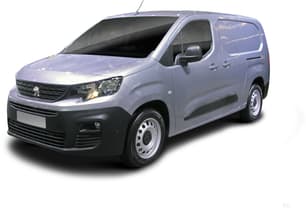
In 2023 Peugeot commands around 50 per cent of sales in Australia’s small (under 2.5-tonne GVM) commercial van segment with its Partner range, which offers a choice of wheelbase lengths and model grades.
The French marque has recently introduced its first fully electric variant to the Australian market called the e-Partner, even though this van has been on sale in Europe since 2021.
We recently put one to work for a week, which included loading it up to the max, to see how it compares to its petrol-powered sibling.
A truly fuel-efficient performance car, who’d have thought? There are some obvious trade-offs for trying to exist in two seperate worlds, but the Lexus LC 500h largely handles its dual roles with aplomb.
It’s a lot of money for a small commercial vehicle that’s well into its current model cycle in Europe, falls short on benchmark safety and requires convenient charging infrastructure to minimise inconvenience for owners. However, its emissions-free drivetrain is quiet and competent under load, with a range that should comfortably cater for the daily urban use small van operators typically require. Whether those positives outweigh the negatives, only a potential buyer can decide.
It's a little curious, the LC 500h. For mine, it's stunning from a distance. All gleaming alloys and bulging rear arches and sharp snout angled downward like its caught the scent of its prey.
But weirdly, it can start to look a little less impressive the closer you get to it - a little swollen and vague in its lines. It's very likely it's eye-of-the-beholder stuff (fellow CarsGuide scribe Richard Berry adores it from every angle, for example).
Inside, the front of the cabin is a busy but stylish space, with multiple textures layered on top of each other to produce a premium-feeling, sporty space. The low-feeling dash juts out, giving the front passengers an ensconced, cockpit feel.
Everything is predictably leather-wrapped and lovely, and while it's not as streamlined as, say, an Audi interior, it's not without a genuine sense of Japanese charm in the cabin.
The single electric motor is positioned at the front where it drives the front wheels. The 50kWh lithium-ion battery that provides its energy is located beneath the cargo bay’s load floor to ensure that the total load volume, floor loading heights, etc, are identical to the petrol version.
The same applies to its compact 2975mm wheelbase, 4753mm length, 1921mm width and car park-friendly 1880mm height.
The e-Partner rides on MacPherson strut front suspension and coil-spring trailing-arm rear suspension, with electric power steering and four-wheel disc brakes. Its 11.4-metre turning circle is larger than we expected.
There are unpainted dark grey plastic finishes in all the places where bumps, scrapes and wear usually occur in working vans including hubcaps, bumpers, body side-mouldings, door mirrors and handles. The charging port is located above the left rear wheel.
A sealed metal bulkhead with central window separates the cabin and cargo bay, which minimises tyre noise emanating from the rear-wheel housings and doubles as a cargo barrier.
The cabin architecture, with two bucket seats and wipe-clean vinyl floor, is outwardly the same as the petrol version but the driver’s analogue instrument display has been reconfigured for the electric drivetrain.
This includes continual display of energy consumption levels, comprising 'Eco' (minimum consumption), 'Power' (maximum consumption) and 'Charge' (energy recovery from regenerative braking).
It also displays energy consumption by the cabin heating/air-conditioning and battery charge-level, while the dash’s central touchscreen includes an ‘electric menu’ that monitors live energy flows and consumption statistics plus allows scheduling of delayed charging if required.
It's not really. Especially in the backseats, which would make more sense if they were painted on. I'm no giant, but even my 175cm-tall head was pushed into the ceiling, and while there’s ample shoulder space for two adults, you’re unlikely to be able to convince two to get back there.
Lexus has included something called the "Easy Access" function for 2020, which sees the front seats slide forward automatically to help with accessing the rear seats, and they do lower the Cirque du Soleil antics required to get back there, but this realistically not a car for carrying more than two adults, save an emergency. There are two ISOFIX attachment points in the rear, so child seats can be locked in there.
That's not necessarily a drawback, though. This is a two-door sporty coupe, after all, and elsewhere, the sizeable dimensions (4770mm length x 1920mm width x 1345mm height) provide plenty of space for up-front riders.
You'll also find hidden cupholders, bottle holders in the doors, and all the power and connection points you need.
A word on the tech, though. The LC 500h is crying out for a touch screen, though the brand's traditional mousepad system is improving.
The e-Partner’s 1632kg tare weight is about a quarter of a tonne (247kg) heavier than its 1385kg petrol-engine equivalent, largely caused by the lithium-ion battery pack.
So, even though the electric model has more power (100kW vs 96kW) and torque (260Nm vs 230Nm), the battery ensures it has an inferior power-to-weight ratio, with the e-Partner carrying 16.3kg/kW compared to the petrol’s 14.4kg/kW.
The e-Partner’s 753kg payload rating is also 182kg less than its petrol sibling, so be mindful of these differences if payload is important.
The e-Partner is also rated to tow up to 750kg, but given Peugeot does not publish a GCM figure (how much it can legally carry and tow at the same time) we don’t know if it can haul its maximum payload while towing its maximum trailer weight.
The cargo bay, with 3.9 cubic metres of load volume, is a window-free zone accessed by a sliding door on each side and asymmetrical rear barn-doors that open to 180 degrees for optimum loading access.
With its 2167mm length, 1527mm width, 1243mm height and 1229mm between the rear-wheel housings, it can carry one standard Aussie pallet or two Euro pallets held in place by a choice of six load-anchorage points.
The cargo bay is lined to mid-height and there’s protective mesh over the bulkhead window. However, the bulkhead protrudes into the sliding door openings given the need to allow sufficient cabin space for the seat backrests.
There’s also no load-floor protection provided as standard, so to avoid scratches and dents we’d recommend fitting a floor-liner like the thick rubber one fitted to our test vehicle.
Cabin storage includes a full-width shelf above the windscreen and bins in the base of each door. The dash offers small bottle/cupholders on each side plus a lidded upper glove box and open storage on the passenger side.
The dash extension, where the gear-selector and electronic handbrake reside, offers more open storage as does the floor-mounted centre console.
Our criticisms include the lack of a dedicated storage place for the charging cable, which is supplied in a zip-up vinyl bag.
Although it was sitting on the passenger floor when we collected the vehicle, it was difficult to find a secure place to store it with a passenger aboard. It ended up unsecured in the cargo bay.
The rear barn-doors also do not have any stays to keep them open when positioned at 180 degrees.
As a result, the slightest breeze swings them shut.
And due to the lack of any dedicated bottle-holders in the front door bins, bottles tend to topple onto their sides and can be difficult to extract when driving.
Value is all about perspective, of course, and viewed the right way, the $195k sticker price of the Lexus LC 500h does provide a certain amount of value.
Yes, it's a lot of money. But Lexus' flagship coupe doesn't just get a performance-focused hybrid setup (pairing with a thumping V6 engine), but also just about every high-end feature the brand has in its deep bag of tricks.
It starts outside with giant 21-inch alloys, a glass roof with a sun blind, LED headlights with cornering lights, hidden door handles, keyless entry, and rain-sensing wipers.
Inside, you'll find leather-accented seats, a colour head-up display, a 10.3-inch multimedia screen with Apple CarPlay and Android Auto, another 8.0-inch screen in the driver's binnacle, a heated steering wheel, heated and cooled front seats, DAB+, satellite navigation system with live traffic, and a killer 13-speaker, 918-watt Mark Levinson stereo.
Our test vehicle is available in only one specification, based on the ‘Pro Long Auto’ which means it’s the more work-focused ‘Pro’ model grade with long wheelbase and automatic, which in this application is a single-speed transmission.
With a 100kW/260Nm single electric motor and 50kWh lithium-ion battery, it has an eye-opening list price of $59,990, plus on-road costs.
That represents a substantial 56 per cent increase over its petrol-powered equivalent ($38,388) and optional metallic paint like ours adds $690.
However, the e-Partner has more power and torque with zero drivetrain emissions. It also comes standard with work-focused 16-inch steel wheels and 215/65R16 Michelin tyres with a full-size spare, a toggle-style gear selector, electric parking brake, reversing camera, two-way adjustable leather-rimmed steering wheel, 12-volt accessory socket and USB port plus a four-speaker multimedia system with 8.0-inch touchscreen, digital radio and multiple connectivity including Apple and Android devices.
The LC 500h is powered by a hybrid setup that combines a 3.5-litre V6 engine with a 650-volt "Lexus Hybrid Drive" system and a lithium-ion battery. That setup delivers 264kW of power, and somewhere north of 350Nm in torque when the engine and motor outputs combine.
That power is sent to the rear wheels via a CVT automatic, and will produce a sprint to 100km/h of around 5.0 seconds.
According to Lexus, 10 clear improvements were made the way the 2020 LC 500h drives, including a new transmission tune, more structural bracing added for rigidity, new suspension components and spring rates, and altered stabiliser bars.
Has it made a difference? Read on.
The single electric motor and 50kWh lithium-ion battery combination produces 100kW of power and 260Nm of instant torque.
It also offers three switchable drive modes including Eco (60kW, 190Nm) for minimal performance and energy use, Normal (80kW, 210Nm) which is a happy medium for everyday use and Power (100kW, 260Nm) for maximum performance when hauling heavy loads.
The gear-selector controls Park, Reverse, Neutral, Drive and Brake functions. There's also a button marked B which engages regenerative braking for optimum battery top-ups when driving.
The Mode 3 Type 2 wall-box/public station charging cable is supplied as standard, but buyers can also purchase a domestic wall socket cable for home-charging.
Quickest charge time from 0-80 per cent is 30 minutes using a 100kW DC charger while a 0-100 per cent charge using a single-phase wall-box (7.4kW) takes about 7.5 hours.
Home-charging from 0-100 per cent using a domestic wall socket (2.3kW) takes about 24 hours.
Lexus says the LC 500h will sip 6.8 litres per hundred kilometres on the combined cycle - very impressive for what is ostensibly a performance coupe - and emit 152g/km.
The LC 500h is equipped with an 82-litre fuel tank.
Peugeot claims an official WLTP driving range of 258km. The dash display was showing a projected driving range of 280km when we collected the vehicle.
A few days later when we stopped to top-up the battery at a public charging station, after 135km of unladen city and suburban driving, it was displaying average consumption of 20.4kWh/100km.
When charging was completed, the dash display was claiming 270km of driving range. This had dropped to 194km the following day when we stopped to load the vehicle for our GVM test. Average consumption had also dropped to 19.0kWh/100km.
We then drove 52km with a heavy payload in busy traffic, during which consumption dropped again to 18.8kWh/100km with regular switching between the drive modes.
After unloading and then returning the vehicle to Peugeot, there was still 96km of range remaining and energy consumption had dropped again to 18.4kWh/100km.
So, we covered a total of 271km during our test, of which about one quarter was with a heavy payload.
So, based on its lowest consumption figure, Peugeot’s claimed 258km range in real world driving conditions is pretty accurate by our measure.
There’s something very strange about hitting the start button in what is ostensibly a sports car, and being greeted not by the bark of an exhaust, but by the gentle whirring on the car’s electronics coming to life.
But then, the Lexus LC500h is not your average performance car.
It essentially trades the out-and-out grunt of its V8-powered sibling (which produces a monstrous 351kW and 540Nm) for a kind of best-of-both-worlds approach that pairs the punch of the V6 engine with the fuel efficiency of a hybrid powertrain.
If that sounds like an compromised approach to pure performance, you're right. But reframe the way you look at the LC 500h and it all starts to make a bit more sense.
Remember, this isn't a track-attack weapon, but a potent on-road bruiser, and the flow of power on offer always feels ample, and you never want for too much more off-the-line pace on public roads.
Among the biggest selling points of the LC 500h is the sheer distance between its various personalities. Engage Eco, or even Normal, drive modes, and it’s a quiet, mostly very comfortable (though it can be unsettled by bigger bumps) kilometre-eater, but engage Sport or Sport Plus and it rightly transforms into something significantly angrier.
It might not be the absolute sharpest tool in the performance car shed, but the LC 500h does bristle nicely when those modes are engaged, the hybrid factor seemingly replaced by a satisfyingly meaty exhaust note and an accelerator that’s suddenly far more sensitive to the touch.
The steering feel is nice and the inputs direct, but there is something about the car’s 1980kg weight that doesn’t inspire the deepest of confidence, at least not on the rain-slicked roads we were travelling along .
A pure performance coupe? Perhaps not. But a sporty, stylish and, when you want it to be, comfortable cruiser with the ability to turn the volume up when you come across a twisting road? Bingo.
It has a comfortable driving position thanks to a reasonably spacious cabin, two-way adjustable steering wheel, left footrest and fold-down inboard armrest.
However, the base cushion feels a tad short for proper upper-thigh support and does not have rake adjustment.
The flat top of the rectangular steering wheel provides a clear view of the instrument display while the flat bottom allows ample driver clearance.
The electric motor with its muted hum delivers a liquid-like flow of acceleration that’s different to a petrol engine.
The lack of engine noise also makes other sounds more prominent, including tyre roar on coarse bitumen surfaces and thumps from the rear suspension over larger bumps.
The extra battery weight is not a noticeable hindrance in stop-start traffic, given the instant torque of the electric motor.
Its location under the load floor also contributes to a low centre of gravity which makes the e-Partner feel well-planted on the road. Even so, it takes a leisurely 11.2 seconds to accelerate from 0-100km/h.
To test its payload rating we forklifted 650kg into the cargo bay which with driver was just under its 753kg limit. The rear suspension compressed 70mm, but there was no bottoming-out over bumps due to large rubber cones positioned inside the coil springs that assist in supporting heavy loads.
We covered more than 50km with this weight in city and suburban driving and its performance was good in all modes including the energy-saving Eco. Energy consumption did not spike as expected.
Our only gripes from a driver’s perspective are the absence of blind-spot monitoring and rear cross-traffic alert, which should be mandatory in all solid-walled vans given the huge blind-spot over the driver’s left shoulder. Relying only on the relatively small passenger door mirror is potentially hazardous.
The other is the cruise control stalk located on the steering column, which is hidden from view by the steering wheel arm. Therefore, it must be operated purely by feel, which can be fiddly and distracting when driving.
The Lexus LC 500h is yet to be ANCAP tested (the price would likely prove a sticking point), but the Japanese brand has fine form in attracting top marks, and there's certainly no shortage of safety features on offer here.
There's a total eight airbags and a reversing camera and parking sensors, as well as a host of high-tech kit like AEB, Lane Keep Assist, Blind Spot Monitoring, active cruiser control and a bonnet that will sense pedestrian and pop up before impact in an attempt to minimise injury.
Only four from a possible five ANCAP stars for the e-Partner (achieved 2018) and the lack of blind-spot monitoring, rear cross-traffic alert and adaptive cruise control, etc, highlight a safety menu in need of updating.
Even so, it does have front, side and curtain airbags for driver and passenger plus AEB, lane-keeping, audible low-speed pedestrian alert and tyre under-inflation warning.
So, to ownership. Let's start with the basics first, before we move onto the new Encore Platinum benefits.
The LC 500h is covered by a four-year/100,000km warranty, and servicing (capped for three years at $595 a pop) is required every 15,000km.
You will know already the Lexus's stellar Encore ownership program includes handy features like valet (pick-up and drop-off) servicing, but the new Encore Platinum level for owners of its more exclusive models unlocks some seriously cool stuff.
One is a new On Demand service, which allows owners to book a different style of car when heading off on a holiday or business trip. So, say you own the LC 500h, but want to take the family to the snow and need a seven-seat 4WD like the RX L, then Lexus will lend you one at no charge, which you can keep for eight days.
The loans are available in your state or somewhere else in Australia if you're travelling, with your car waiting for you at Qantas Valet for you when you arrive.
The One Demand service is available on four occasions over your first three years of ownership (which is also the length of the Encore Platinum membership).
The Platinum level also provides eight examples of free valet parking at select shopping centres, as well as hotel and restaurant benefits, and invitations to Lexus' drive days around the country.
Warranty is five years/200,000km plus eight years/160,000km for the battery. There are also three-year paintwork and 12-year corrosion warranties.
Scheduled servicing is every 12 months/25,000km, whichever occurs first.
The pre-paid service plan price of $1000 covers the first five scheduled services, or just $200 per service.