What's the difference?
Being a true Jack of all trades in the car world is rare.
Generally speaking, a vehicle is either capable or comfortable. Attractive or aerodynamic. Practical or performance orientated. And problems arise when cars try to do all those things well, all at the same time.
Which make the Lexus LC 500 Convertible such an interesting proposition. Because it is, without doubt, stylish, and lavishly equipped. It’s also rather large and rather heavy. All of which is perfect for cruising the Bondi foreshore.
But it’s also equipped with a thumping V8 engine and a throaty exhaust that sounds like bricks in a blender on the overrun. It’s stiffer than the LFA supercar, and plenty powerful, which should deliver one of Lexus’ sportiest-ever drives.
So can the LC 500 really do it all? Let’s find out.
The BYD Shark 6 Premium has burst onto the scene with plenty of hype and a bit of side-eye from Aussie ute loyalists.
We’re a tough crowd, especially when it comes to vehicles that need to juggle family life, work gear, and weekend adventures.
So we put this handsome newcomer to the test to see whether it delivers genuine practicality and fun, or if it’s simply talking the talk in a ute-shaped body.
Stunning to behold, and even more so to listen to, the LC 500 Convertible with no doubt turn as many heads as its owners surely want it to. It's not the final word in performance, but it's a lavishly equipped transporter none the less.
The BYD Shark 6 Premium is perfect for weekend camping trips or ferrying the family around the city, but the underpowered engine, mixed handling, and quirky safety tech hold it back. If it could match its rivals’ capability while keeping its sharp looks, it would be a near-perfect package but right now, it just doesn’t.
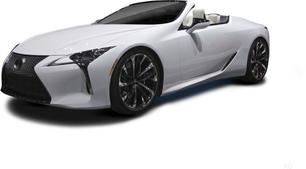
It’s eye-catching, the LC 500, if big, bolshy convertibles are your thing, and especially viewed front-on, where the aggressive nose design ends in a sharp crease in the mesh grille. I love the headlight design, too, which bleeds back into the body work, but also merges with the vertical light cluster that bookends the grille.
The side view is all shining alloys and sharp body creases, too, leading to an oversized boot that stores the fabric, aluminium and magnesium roof structure, which drops or raises in 15 seconds at speeds of up to 50km/h. The design fits into what Lexus calls an “impossibly small space behind the seats”.
Inside, it’s a snug but luxurious space, wrapped largely in leather and equipped with a wealth of technology. It’s a point we’ve made before, but why Lexus perseveres with its trackpad infotainment control technology is beyond us, but there’s no denying the cabin of the LC 500 is a wondrous place to spend time.
We particularly like the integration of the centre screen, which is recessed beneath the leather-wrapped edge of the dash. While some look like an afterthought, this appears to have been included in the broader design philosophy.
The BYD Shark 6 is a seriously handsome ute from almost every angle. It’s boxy and beefy enough to look tough in the school-pick-up line but not so over-styled that it feels try-hard. The wide lighting signature at the front and rear gives it a modern, tech-forward vibe which is a nice hint at what’s going on underneath.
From behind the wheel, space is the first thing you notice. The cabin feels huge and well thought out, finished in black synthetic leather with contrasting orange stitching that adds a sporty pop. You’ll spot the same orange highlights on the air vents, and together with the soft-touch trim and matt-metallic details, the Shark easily punches above its price point in terms of cabin quality.
And then there’s the centre console, which is one of my favourite parts of the interior. With its chunky grab handles, large gear selector and row of tactile switches, it has a bit of a cockpit-meets-ute look going on. The orange starter button is a fun touch too. The only quirk? The tailgate release button sits close enough that it’s a little too easy to tap by mistake and although you have to confirm the selection via the media display, it's still annoying to accidentally press.
It’s not, really. But then, what were you expecting?
As mentioned above, the interior feels snug for upfront riders, but not in a bad way. More that elements of the interior feel like they’re reaching out to greet you, leaving you with the impression of being tucked into the cabin.
Backseat riders are out of luck, though, with the seats really only reserved for emergencies. Legroom is tight, and while Lexus promises the roofline is about on-par with the Coupe, it’s not going to be a comfortable journey.
The LC 500 Convertible stretches 4770mm in length, 1920mm in width and 1350mm in height, and it rides on a 2870mm wheelbase. It will sit four at a pinch, and provide 149 litres of luggage space.
There are two ISOFIX attachment points in each of the rear seats, as well as top-tether points.
Comfort is clearly a priority in the Shark 6 Premium. There’s loads of cabin space and the powered front seats are properly plush for a ute, with four-way lumbar support plus heating and ventilation which is a luxe touch you really notice on long drives.
Up front, storage is excellent with a glovebox and dash cubby, large door bins, a deep centre console, two phone trays with a wireless charger, a USB-A and C port, cupholders and a sunglasses holder. Everything has its place, and it’s easy to keep the cabin tidy.
The rear bench is also impressive. Generous seat bases, thick padding, and a flat floor mean adults will be comfortable back there, and kids are happy too. Rear passengers score map pockets, cupholders, big door bins, directional air vents, a USB-A and C port and even a 230-volt outlet.
Despite the 230mm ground clearance, getting in and out is surprisingly easy thanks to big door apertures, side steps and grab handles. My nine-year-old found it easy to get in, though younger kids will still need a hand. He loves the great view, thanks to the low window line, but the doors feel heavy on a slope.
Tech-wise, the 15.6-inch touchscreen looks sharp and responds quickly. The system is simple enough to use once you spend some quality time with it but first-timers might get flustered initially. Wireless Apple CarPlay and Android Auto worked consistently, although most controls live inside the screen, including climate functions, which may frustrate some. The rotating display is clever, but I found portrait mode blocked some forward vision from my driving position. Also, fun fact, when CarPlay fills the full screen, everyone can see it, including cyclists who now know my husband’s nickname!
Out back, the tray is slightly smaller than key rivals but still practical, offering 790kg payload and a 1200L capacity. The soft-opening tailgate is handy but lacks gas struts, and without a step, climbing in requires a bit of a hop. On the plus side, the tub gets lighting, three 230-volt AC outlets and a full-size spare underneath.
It costs $214,000 - and that’s rather a lot of money - but unlike some premium and luxury cars, with Lexus, once you’ve handed over the cash, that’s it. There’s no tempting option list to lure you into parting with even more of your hard earned.
And I mean that literally - Lexus proudly proclaims that “there is no option list” for the LC 500 Convertible, so suffice it to say it arrives with plenty of gear.
Take a deep breath…
You get 21-inch two tone alloys, triple-stack LED headlights, keyless entry, retractable door handles and rain-sensing wipers outside, while inside, you’ll find dual-zone climate, leather-accented seats which are heated and ventilated, neck-level heating for when the roof is down, a heated steering wheel and sports pedals.
The tech stuff is handled by a 10.3-inch centre screen with Apple CarPlay, Android Auto and on-board navigation, both of which are controlled via Lexus’ impossible-to-kill touchpad. There’s a second, 8.0-inch screen for the driver, and the lot pairs with an impressive 13-speaker Mark Levinson stereo.
There’s also a heap of safety stuff, but we’ll come back to that in a moment.
If that’s not enough for you, you can spring for the Limited Edition, which is $234,000 for each of its 10 available examples. It arrives in a unique Structural Blue hue, with a white leather interior with blue highlights. It is designed to be the most blue of blues, too, with Lexus saying the paint colour was the result of a 15-year research project. Which sounds like a thrilling way to spend a decade and a half.
The BYD Shark 6 arrives in a single, well-equipped Premium grade, priced at $57,900 before on-roads, making it the most affordable PHEV dual-cab ute you can buy right now. Its closest rival, the GWM Cannon Alpha Lux, is $2K more, and the next step up is the Ford Ranger XLT Hybrid from $71,990. So before you even look inside, the Shark 6 already offers strong value.
Standard equipment is generous for the money, with synthetic leather upholstery, powered heated and ventilated front seats, dual-zone climate control, full LED exterior lighting, wireless phone charging, four USB-C ports and a 360-degree camera system. You don’t get everything as there’s no sunroof or heated steering wheel but you don't miss them too much.
Inside, the tech looks properly premium. There’s a 15.6-inch touchscreen that swivels between portrait and landscape (although wireless Apple CarPlay sticks to landscape), wireless Android Auto, built-in sat-nav, a 10.25-inch digital driver’s display, a coloured head-up display, and a digital key via the BYD app.
On the practical side you’ll find keyless entry, push-button start and a full-size spare tyre. There are four 230-volt AC outlets, three of them in the tray, which is brilliant for camping, tradies, or powering kids’ gadgets at sport. BYD also includes a portable home charging cable, which is handy if you’re not ready to commit to a wallbox just yet.
It’s a lusty power plant, this one, and not something you immediately expect to find in a luxurious Lexus convertible.
The 5.0-litre V8 produces 351kW and 540Nm - 260kW of which arrives from 2000rpm - and it sounds like a God of Thunder as it’s doing it.
It pairs with a 10-speed automatic and sends all that grunt to the rear tyres, with Lexus’ Active Cornering Assist and a mechanical limited-slip differential helping you to not make a mess of things when tackling corners.
The Shark 6 pairs a 1.5-litre four-cylinder turbo-petrol engine with two electric motors - one on each axle. On its own, the petrol engine makes 135kW/260Nm, but the hybrid system boosts total outputs to a more impressive 321kW and 650Nm.
Despite the strong numbers, braked towing capability sits at a low 2.5 tonnes, which is a full tonne less than key rivals. If you regularly haul larger caravans, horse floats or big trailers, that’s worth keeping in mind.
It’s also worth noting the Shark 6 runs an AWD system rather than a full 4WD, with no low-range gearing or diff locks. So while it’ll handle gravel roads, campsites and wet grass just fine, it’s not aimed at hardcore off-road buyers. For a deeper look at its rough-terrain performance, check out Crafty’s recent Adventure review.
Remember when I said it was lusty V8? When has that ever been good news for fuel use?
Lexus reckons you’ll get 12.7L/100km on the combined cycle, but the temptation of all that grunt will pretty much ensure that never happens. Emissions are pegged at 290g/km of C02.
The LC 500 Convertible’s 82-litre fuel tank only accepts 98RON fuel.
Official combined fuel use for the Shark 6 in hybrid mode is 7.9L/100km, but after over 800km of mixed driving (starting with three-quarters charge and regen braking keeping the battery hovering around 25 per cent), I saw 8.9L/100km. So it’s a touch thirstier than the claim, but you’ll unlock its best efficiency when you charge daily and make full use of the 100km pure EV range for school runs, commuting and errands.
There is a 29.58kWh BYD Blade battery paired with a Type 2 CCS port. It takes up to 7kW on AC home charging and up to 55kW on a DC fast charger, where you can expect around 30 - 80 per cent in roughly 25 minutes. There’s also vehicle-to-load capability, so you can power tools, camping gear or larger tech items when you're out and about which is very handy for family trips and weekend adventures.
It’s a tough nut to immediately crack, the LC 500 Convertible.
It feels like it really wants to be a super-accomplished performance car, and on longer, more sweeping bends it is, with that thick flow of power ensuring you simply surf through corners before rocketing out the other side, the air filled with that growling exhaust note as your right foot finds its way to the carpet.
But on the tighter stuff, there are some factors that play against it. The suspension feels sorted and that engine is always willing to deliver, but for mine, the steering and brakes felt a little disconnected from the experience, not inspiring much in the way of late-braking confidence. And then there’s the sheer two-tonne-plus weight of the thing, which can’t be totally hidden, even by Lexus’ best wizardry.
Don’t get me wrong, it’s very capable, even on surprisingly tight stuff. It’s just that there’s something of a disconnect between car and driver.
That’s not a bad thing, really. Are you really buying a premium convertible to attack a mountain pass? Probably not. And keep it flowing through corners and the LC 500 Convertible will keep a smile painted on your face, owing mostly to wave of torque you can ride to your destination.
Hovering your foot over the accelerator must surely be what the President feels like whenever he stands near the nuclear football, with that big V8 always ready to turn on the fireworks.
Away from the red mist, you’ll find the LC 500 Convertible positively flows from destination to destination, the 10-speed gearbox - which can feel flustered at pace - seamlessly flicking through its options, and the ride in its most comfortable settings disposing of most road imperfections before they enter the cabin.
The cabin is also very cleverly insulated, not just when the four-part roof is up, but also when it’s down, with the climate and ambience of the interior largely unaffected by what’s going on in the outside world.
On the road, the Shark 6 is a bit of a mixed bag. In EV or hybrid mode it’s genuinely impressive being smooth, quiet and quick off the line with a nice, immediate power delivery. But once the petrol engine fires up, things change. It becomes noticeably loud and whiny, and it can feel short on grunt, especially on hills. I wouldn’t rely on the petrol side alone if you regularly drive with heavy loads or tackle steep country roads.
Around town, the ride is comfortable and almost glides over the road, which sounds lovely, but in a big ute I prefer a bit more feedback. Out on regional roads, the Shark can start to feel less composed, particularly over big bumps or loose gravel, so it’s definitely happier in urban settings.
Visibility is mostly good thanks to the high driving position and big windows. The thick B-pillar does require a proper head-check, and parents take note: I can’t always see my son when he’s right up close to the vehicle, so extra awareness around kids is essential.
Regen braking is subtle but effective and the battery never dipped below 20 per cent and often gained charge on downhill runs. The lack of that grabby EV brake feel is also very nice.
Parking, however, is where things get entertaining and not always in a good way. With a 13.5m turning circle and at almost 5.5m long, it’s not what you’d call nimble. My mum and I genuinely had an Austin Powers three-point-turn moment in a tight ramp. It's also best to reverse into spaces to allow for the tray overhang. The saving grace? The 360-degree camera system is genuinely helpful due to its clear, wide feed.
The Lexus LC 500 Convertible arrives with six airbags, a reversing camera with guide lines, parking sensors, and the usual suite of traction and braking aids, but there’s much more to the safety story, too.
The more high-tech stuff includes parking sensors, pre-collision assist with AEB, lane keep assist, blind-spot monitoring, rear cross-traffic alert and active cruise, as well as bespoke convertible safety gear, like active roll bars that deploy when the car is in danger of rolling over, protecting the occupants beneath that soft roof.
The BYD Shark 6 has a maximum five-star ANCAP safety rating from testing done in 2025 and is fitted with seven airbags, including a front centre airbag and curtain airbags that cover both rows, which is great to see on a family ute.
There’s a suite of safety equipment including big ticket items like forward and rear collision warning, front and rear cross-traffic alert and braking, blind spot monitoring, lane keeping aid, lane departure warning, intelligent seat belt warning, driver attention warning and a super clear 360-degree camera system.
However, some systems don’t always feel properly dialled in. Traffic sign recognition occasionally displays the wrong speed (once showing 150km/h) and the lane keeping aid is pushy. The adaptive cruise control is quick to slow down but slow to get back up to speed. It’s also worth noting that while it does have child presence detection, ANCAP says it falls below their required functionality limits, which is something to consider if you have kids.
There are two ISOFIX child seat mounts and two top tether anchor points, so you’ll only be fitting a maximum of two child seats in the rear row.
The autonomous emergency braking has car, cyclist, pedestrian and motorcycle detection and is operational from 4.0 - 150km/h but it is usual to see the top figure hover closer to 180km/h.
Overall, the Shark 6 offers strong baseline protection, but a few calibration quirks are needed.
Lexus vehicles are covered by a four-year, 100,000 kilometre warranty, and the LC 500 Convertible requires servicing every 15,000kms.
Lexus's Encore ownership program includes pick-up and drop-off servicing, but the new Encore Platinum level for owners of its more exclusive models unlocks even more stuff.
One is a new On Demand service, which allows owners to book a different style of car when heading off on a holiday or business trip. The loans are available in your state or somewhere else in Australia if you're travelling, with your car waiting for you at Qantas Valet for you when you arrive.
The On Demand service is available on four occasions over your first three years of ownership (which is also the length of the Encore Platinum membership).
The BYD Shark 6 comes with a six-year/150,000km warranty, which is solid, though some rivals offer unlimited-kilometre terms and ongoing roadside assistance if you service through their dealer networks.
BYD provides a price guide for servicing rather than a fixed capped-price or pre-paid program, with average costs around $515 per service (subject to change). This method doesn't add the peace of mind its competitors do.
Finding somewhere to service your Shark 6 is fairly straightforward thanks to 46 BYD service centres across Australia, though most are concentrated in major cities. Regional owners will appreciate BYD’s partnership with select mycar Tyre and Auto service centres, which helps extend access outside metro areas.