What's the difference?
The new Lexus GX 550 showcases a brand new design for its third-generation iteration but the model is new to the Australian market.
And while it hasn't been as hotly anticipated as its cousin, the Toyota Prado, it's still one that should excite. It's a capable full-time four-wheel drive that manages to look good on- and off-road! It feels like a breath of fresh air.
Will it find itself more likely adorning the garage of a city slicker? Perhaps, but you can't deny it has some star power now with its design and it couldn't have come soon enough. Especially when you compare the flagship Sports Luxury grade my family and I have on test to its European luxury rivals, the BMW X7 and Land Rover Defender.
The MG HS +EV Essence is a smart-looking hybrid medium SUV that comes well-stacked with features and has a price point that will make you swoon.
Add the plug-in hybrid engine/motor combination and it’s pitched as a firm competitor against heavyweights like the Ford Escape, Toyota RAV4 and the newer-kid on the block – the Haval H6.
For the top model, it has the goods on paper but how does it perform in real life? I’ve been driving it with my family of three to find out for you.
The new Lexus GX 550 Sports Luxury looks fantastic and has enough mod cons to satisfy a family but it’s not as luxurious as you’d expect from a premium brand and the fuel economy and driving range will turn off some. But if you’re still interested, there’s a lot here that will make you happy and it’s one of the smoothest 4WDs I’ve driven.
The MG HS +EV Essence is a nicely specified medium SUV that should suit a lot of people. It looks really nice and I love that it's fairly practical with its features and size but would like some of the tech to improve. It’s not always seamless to use and in this market, tech is very important. The price tag and the on-going costs are hard to beat and if you’re looking for a greener option that will happily cruise in the city or on the open-road, this isn’t a bad option.
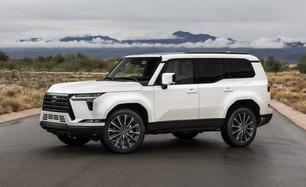
The new GX 550 looks massive and while it shares the same platform as the Toyota LandCruiser 300 series, it doesn't share all of its bulk. They both stand at 1980mm wide but differ on length (5015mm vs 4980mm) and height (1670mm vs 1950mm), respectively.
The new design is fabulously rugged but each body panel looks meticulously crafted and is just the right size. This just means the proportions look right and your eye sort of glides over the big body rather than stopping on any one feature.
But having said that, there are a lot of nice features to focus on, like the long LED headlights and rear strip light, auto-folding side steps, 22-inch alloy wheels and sharply styled rectangular side mirrors.
The tailgate window can also be opened if you need to pop something into the boot but don't want, or have the space, to open the tailgate itself.
The styling takes a minor nose dive once you hit the cabin, though, because it doesn't look as sumptuous as you'd expect in a premium SUV.
I love the utilitarian and military vibe of the vertical dashboard, chunky air vents and relatively small windscreen. It looks great but some trims are plasticky and the touchpoints, while soft, are not Lexus-plush.
However, the technology looks gorgeous with an integrated 14-inch multimedia display and a 12.3-inch digital instrument cluster. The fixed sunroof with its two settings (clear or opaque) is also a lovely feature.
But on a whole, the GX 550's European rivals outclass it with their flashier cabins.
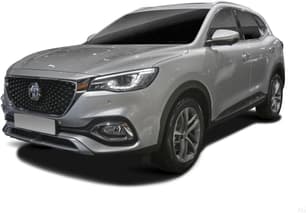
It has an inoffensive exterior design that you won’t be embarrassed to be seen in. Curvy in all of the right places, it still manages to look sharp with its tapered LEDs and chrome accents.
It sits firmly within the medium SUV specs at 4574mm long, 1876mm wide and 1685mm high, so navigating your local shopping centre car park will be manageable.
The interior looks polished with the Bader leather sports seats and their suede-like inserts. The air vents are cute and add some personality to the robust dashboard.
There’s a plethora of soft touchpoints throughout that enhance the overall comfort and refinement, too.
The cabin of the new GX 550 is fairly practical with plenty of head- and legroom in each row (yep, even the third!). When you first hop in, it can feel a big snug on elbow-room but this feeling quickly dissipates.
Despite a 215mm ground clearance, access is pretty good for the front and middle rows due to the wide door apertures and side-steps. Third row access is a bit awkward for an adult but my eight-year old loved scampering back there this week.
The electric front seats are comfortable with their extra functions and I like the way the massage feature extends to the seat cushion as it limits fatigue on longer journeys. However, you sit on top of them rather sink into them which makes it feel a little trucky at times.
The wide middle row has a bench seat that will be comfortable for kids but an adult might get a sore behind on a long trip. The transmission tunnel also compromises foot room for adults but the seat is wide enough to make use of all three top-tether anchor points (there are ISOFIX mounts too).
It was a little bit of an effort to lift my big booster seat into the back because the GX 550 sits so tall but otherwise, there's plenty of room around a child seat for them not to feel like a sardine.
Individual storage is made up of a glove box that fits an owner's manual, a small shelf in the dashboard and a middle console that doubles as a cool box (mini fridge) and can fit up to four cans or bottles in it.
Each row gets four drinkholders and two USB-C ports but the front also enjoys a 12-volt socket and wireless charging pad. There's a 220V domestic plug port in the boot for larger appliances, too.
It's sometimes awkward to use the wireless charging pad because it's easy for your phone to slide around on it and it quite often disengaged from charging.
My son enjoyed all of the other amenities in the middle row, like the reading lights, climate control, two USB-C ports and retractable sunblinds and I applaud carmakers when they position rear directional air vents in the pillars and/or roof. It just makes it so much easier to cool down sweaty kids!
The 14-inch multimedia display has clear graphics and a responsive touchscreen. The layout is easy enough to get used to after spending some time with it and the sat nav is simple to use.
I like that the sat nav directions can be pulled into the 12.3-inch digital instrument cluster and head-up display.
There is a Lexus connected services app, which you get a three-year subscription to. It's easy to connect to the wireless Apple CarPlay and there is also wireless Android Auto.
The system also has Bluetooth and digital radio, which is a delight to use through the 21-speaker Mark Levinson sound system.
The cabin is rounded out by the well-shaped boot which has a massive 1063L of capacity when the third-row is folded. That's been more than enough for my family's needs this week and my German Shepherd was pretty comfy back there, too. The powered tailgate has a kick-function and there is a full-size spare wheel underneath the car.
The cabin space is very practical with its size. Each row has a decent amount of head and legroom. The big sunroof also makes the cabin feel airy and light-filled, which adds to that roomy feeling.
The leather-accented sports seats are quite comfortable and both are electric but the passenger side misses out on additional lumbar support.
I did have a few comments this week about the front seats, though, mainly that it feels like you’re perched forward in them. It would have been nice to be able to dip the bottom of the seats back.
The individual storage options are solid for this sized SUV with a glove box, two cupholders, drink bottle holders in the doors for front occupants and an air-cooled middle console box.
I missed having a utility tray next to the two USB-A ports and 12-volt outlet, as the Essence features wired Apple CarPlay and Android Auto, but there is a dedicated phone holder next to the cupholders.
Back seat passengers enjoy two cupholders in the fold-down armrest, map pockets and drink bottle holders in the doors.
The seats in the back are well padded but you feel like your knees are propped up a bit because of the shallow footwell. Taller passengers may feel like they’re folding in on themselves.
The technology looks good but isn’t always easy to use. The 10.1-inch touchscreen multimedia system is simple to understand but regularly feels laggy.
It has built-in satellite navigation but a lot of the controls are found via accessing the touchscreen – like the climate control and heating function for the front seats.
The 12.3-inch digital instrument panel is very easy to read but not really customisable.
Charging options are okay and I like the two USB-A ports in both rows but there’s no wireless charging pad or USB-C port which would provide faster charging speed.
The boot is a decent size for the class at 451L and you can bump that up to 1275L if you fold the back seats down. The rear seats have a 60/40 split for added practicality.
There’s a cargo blind and some underfloor storage for the charger and a tyre puncture repair kit. I liked using the powered tailgate but found it a bit glitchy, it sometimes stopping mid-action.
The Lexus GX 550 shares the same platform as the recently introduced Toyota Prado but both models are now based on the same 'body-on-frame' platform shared by the beastie Toyota LandCruiser 300 Series. So it's bigger and features a more rigid chassis than before.
Surprisingly, that hasn't translated to a massive price tag for the GX 550 and you can pick up the flagship grade on test for this review for $128,200, MSRP.
Which sounds inexpensive when you compare it to the BMW X7 xDrive 40i M Sport which is priced from $171,300 MSRP but the Land Rover Defender 110 P400 X-Dynamic HSE is a lot closer at $128,815 MSRP.
The only issue here is that shared platform, because while they don't share the same powertrain, the flagship Toyota Prado Kakadu ($99,990 MSRP) is still almost $30K more affordable and boasts a similar equipment list. So, ask yourself, is it the brand and engine you're after or the new good looks?
The standard equipment is well-rounded with a 14-inch touchscreen media display with satellite navigation and wireless Apple CarPlay and Android Auto.
A fully digital 12.3-inch instrument cluster, colour head-up display, three-zone climate control and a 21-speaker Mark Levinson sound system round out multimedia requirements.
Other technology includes a digital rear view mirror, two USB-C ports in each row, a 12-volt socket, a 220-volt domestic outlet and a wireless charging pad.
There are two particularly handy features for families, the 'cool box' (basically a mini fridge) middle console and rear retractable sun-blinds.
The fixed panoramic sunroof features two settings allowing you to make it clear or opaque. The electric front seats feature heat, ventilation and massage functions and the rear outboard seats are heated as well. The third row electrically adjusts and there are multiple buttons throughout the car to access this feature.
Upgraded leather-accented upholstery is standard in the flagship grade and is available in three combinations. The Sports Luxury also features 22-inch alloy wheels, a full-size spare wheel and a powered tailgate with kick-function.
There are only two models in the HS +EV line-up and the Essence is the top dog.
It will cost you $51,990 drive-away and that positions it as one of the most affordable options relative to its rivals. Only the Haval H6 is more affordable at $41,990 (drive-away) but admittedly, it’s by a fair chunk of change - almost $10K!
The Essence is well-specified with Bader leather-accented trims, heated front seats, electric front seats with four-way adjustment for the passenger seats and six-way for the driver, a powered tailgate, as well as a massive panoramic sunroof. The middle console is even cooled with air-control for added convenience.
The exterior hosts full LEDs with its daytime running lights, headlights and tail-lights, as well as, a heated rear window with timed cut off.
It also sports dual-zone climate control up front and directional air vents in both rows, plus multiple charging options add to interior practicality.
Its technology feels up to category standard with the sizing but the usability isn’t as great as its rivals. More on that later.
And an added bonus. All the paintwork colours are included in the price.
All GX 550 grades share the same 3.5L V6 twin turbo-petrol engine which produces up to 260kW of power and 650Nm of torque.
This 4WD has high- and low-gearing, as well as a bunch of driving modes to suit most occasions, like 'Eco', 'Comfort', 'Sport' and 'Sport+'.
The 10-speed automatic transmission shifts through its gears smoothly and it always feels like it's engaged in the right gear. Which isn't always the case for a big SUV!
The Sports Luxury is fitted with a towing hitch and cover but unlike the base Sports grade which has a 3.5-tonne braked towing capacity, this model only has a 3130kg capacity which might not appeal to families with big toys to tow.
Both HS +EV models share a 1.5-litre, four-cylinder petrol engine and electric motor hybrid combination. Maximum outputs are 189kW of power and 370Nm of torque.
It’s very responsive with its power output and you definitely will be surprised by how much grunt this thing has.
Drive goes to the front wheels via a 10-speed auto transmission but it’s clunky and a bit too slow to shift out of the lower gears. This can make it feel like the engine is pulling back even when you’re accelerating, which I didn’t like.
On the electric motor side of things – the lithium-ion battery has a 16.6kW capacity and 63km (NEDC) driving range.
It has a Type 2 AC charging port but it can’t be hooked onto a fast charger as it lacks the CCS enhanced port. On a 7.0kW system you should see a full charge be completed in around five hours.
I didn’t have high hopes for fuel economy because the official combined (urban/extra-urban cycle figure is a hefty 12.3L/100km but after mostly open-road driving, with some urban stuff mixed in, my real-world average came in at 11.8L.100km! This figure is based on my actual km travelled (358km) and litres of fuel used (42.41L).
While I’m surprised by the fuel usage result, I wouldn’t say this car has good fuel economy compared to its diesel-powered counterparts but it’s not terrible!
The GX 550 has a relatively small fuel tank compared to its Toyota cousins at 80L and based on the combined fuel cycle, you’ll get a theoretical driving range of up to 650km.
Not all that great. Not for a big family mover and not if you’re typically driving in the city, where fuel usage will be a lot higher.
The GX 550 only accepts premium unleaded petrol (95 RON), too.
With the electric motor being used, the official combined cycle fuel figure is 1.7L/100km and the urban figure comes out at 5.8L/100km.
My real-world usage came to 6.6L. That’s not bad at all, but I have done a lot of open-road driving this week.
Based on the urban figure and the 55L fuel tank, you should see an approximate driving range of 948km.
MG recommends a minimum 95RON petrol be used.
Oh my goodness the Sports Luxury is a masterclass on 4WD refinement! You never feel the bulk or weight of this massive SUV when you’re driving it. The power delivery is effortless and there’s lots of grunt available when you hit hills.
The handling is also very good with responsive steering and enough road feedback as a driver to make you feel comfortable with what the car is doing. There is some roll in corners but it can tackle more corners at speed than I thought it would.
The high driving position makes me feel like I can see a long way ahead yet while visibility is mostly good, it can be compromised when you have the side window shades and the third row headrests up. Which is why I love the digital rear view mirror.
Overall, ride comfort is good with forgiving suspension and low cabin noise, even at higher speeds. It’s pretty easy to chat with all rows and there’s not a lot of engine noise which adds to the refinement. I do like hearing a V6 rumble but that’s just a personal preference.
I was a little worried about hitting my local Westfield car park but this is a nimble SUV to manoeuvre and parking it is a breeze with the 360-degree camera system and parking sensors.
I’ve been pleasantly surprised by the overall driving experience. Besides the slower gear shifting, it’s generally smooth to handle. The power is there and makes it easy to keep up with traffic or overtake if you need to.
The suspension handles bumps very well and the steering is responsive. You can tackle corners or a winding road with confidence and without too much roll!
The cabin is quiet, even at higher speeds but you will note the whining of the engine at lower speeds as those gears shift.
On a windy day at higher speeds, the car moves about in the lane more than I like but otherwise, is firmly placed.
The regen braking isn’t customisable but it’s firm enough that you’ll feel it when you pull off the accelerator.
Going down a mountain let me gain five per cent charge on the battery and despite driving over 500km this week I only popped it on charge once (with 15 per cent left) - just to give you an indication of its performance.
I kept the EV mode on default but you can switch it over to a full EV if you want to wring out the most from the electric range.
This is not a difficult car to park and you’ll love its size in a small car park. However, the 360-degree camera view, while pretty clear, is jumpy.
At first, I thought it was laggy but the image just shudders, like a bad connection. I's prefer to see front parking sensors, too, as this MG only has them at the rear.
The new GX 550 hasn’t been tested by ANCAP and is unrated but its cousin, the Toyota Prado, which shares the same platform just achieved a maximum five-star rating from assessment in 2024. It's fair to expect a good result for this model.
Overall, the Sports Luxury has a long list of standard safety equipment and features nine airbags which is good for a family SUV.
Safety equipment includes adaptive cruise control, lane departure alert, lane keeping aid, traffic sign recognition, emergency steering assist, driver monitoring, safe exit assist, emergency call functionality, blind-spot monitoring, rear cross-traffic alert and tyre pressure monitoring.
The GX 550 has autonomous emergency braking (AEB) with pedestrian, cyclist, motorcyclist and junction turning assist.
The safety features are good on the HS and I like the 360-degree camera view but don't like the way the image shudders while in use.
It has a blind-spot monitoring system but the interior ‘alert’ light is in a blink-and-you’ll-miss-it position.
Other features that come standard, are LED daytime running lights, forward collision warning, rear cross-traffic alert, lane keeping aids, lane departure warning, intelligent seat belt reminders, rear parking sensors, traffic sign recognition, a driver fatigue monitor and adaptive cruise control.
It has autonomous emergency braking with car, pedestrian and cyclist detection which is operational from 0-80km/h.
The HS +EV hasn’t been assessed by ANCAP but its fuel-based sibling achieved a maximum five-star rating in 2019.
It only has six airbags, which is pretty low for an SUV, but the curtain airbags cover the back row.
There are ISOFIX child-seat mounts on the outboard seats and three top-tether anchor points but two seats will fit best.
Front passenger space may be compromised a little when a 0-4 rear-facing child seat is installed but overall, it was very easy to install my booster seat this week.
Lexus offers the GX 550 with a five-year/unlimited km warranty, which is fairly standard compared to its Euro rivals.
You get five years capped-priced servicing which costs $5950 but the servicing schedule is a bit of a bear at every six months or 10,000km, whichever occurs first.
The ongoing costs are great on this! It comes with a seven-year/unlimited km warranty, which includes the hybrid battery.
It also has a seven-year capped-price servicing plan, which is above average for the class, and services average $426 which is competitive.
Servicing intervals are every 12 months or 10,000km, whichever occurs first, which is fine if you don’t clock a lot of kays every year.