What's the difference?
Ah, yes, the Lexus GS. Toyota's luxury off-shoot had high hopes for the new big boy when I first saw it a few years ago. Not thousands-of-sales high hopes, but the company thought a rear-wheel drive luxury sedan stacked with gear you didn't even know you wanted would be a dead-set winner.
And to be fair, they were right. I ran a GS as a long-termer and it was impeccably-mannered. In hybrid form. It wasn't sparkling, but my goodness, it used barely any fuel; especially impressive given its size.
As the sun is surely setting on the GS, it's time to have a look and see if it's a match for the BMW 5 Series or the Mercedes E.
Like most people in this day and age, I like to consider myself fairly green-minded. I recycle. I canvas bag. One time I even took public transport, despite having a perfectly good car at my disposal.
But most importantly, at least as far as our only planet is concerned, I’ve embraced electrification in the automotive world, confident in the knowledge that, 99 times out of 100, introducing a hybrid, plug-in hybrid or fully electric powertrain to the equation improves both the driving experience and your fuel bill.
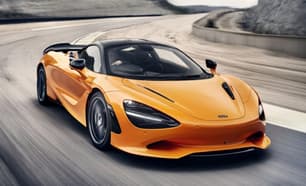
The one out of that 100? That would be the McLaren 750S — the British brand’s new apex predator, and a vehicle that might just be the marque's last non-electrified series-production supercar ever.
It’s powered by a spectacular twin-turbo V8 engine that contributes to a drive experience so raw, so pure, and so unfiltered, that to sully it with heavy batteries or silent electric motors would just about qualify as a crime against humanity, or at least against the parts of humanity fortunate enough to be able to afford one.
So, is this McLaren 750S the best of the current supercar bunch? Let's find out.
Weirdly, given all the good things I've had to say about the GS F Sport, it doesn't quite hang together. It's missing that certain something the Europeans have in their chassis, particularly the BMW 5 Series, and with ageing interior tech, it's struggling to keep up.
It's a car built for specific tastes, and they're more California than Straya. And that's perfectly okay, but unfortunately, that doesn't translate to a stampede of buyers. Having said that, none of its German rivals (or its beleaguered Japanese counterpart, Infiniti) could claim wild sales success either.
The GS is a terrific car, underrated but also just not quite there for my taste. The GS F, though, that's another thing altogether.
Not just a love letter to the intoxicating delights of the mighty V8 engine, the McLaren 750S is a genuine joy across the board.
Note: CarsGuide attended this event as a guest of the manufacturer, with travel, accommodation and meals provided.
The GS is ageing well, but it's still a bit heavy-handed around the headlights and a little on the slabby side along the flanks. It doesn't look poised for action, even with the F Sport additions, but nor does it look frumpy, mostly due to the whopping blacked-out spindle grille, a Lexus signature.
The rear end is good looking but a bit bluff, again neither surprising or delighting.
Little has changed inside, but it's still a very nice cabin, and always will be apart from a couple of clangers (the gear shifter looks super-cheap).
What's more, it's welcoming, lots of very nice materials, comfortable, seats - it's exactly what it needs to be. Whatever you might think of the looks, one thing is absolutely certain - if anyone builds cars better than Lexus, it's a very, very short list.
McLaren concedes the cosmetic updates for the 750S are “relatively subtle”, but there have been some key changes.
The front bumper and splitter are new, as is the rear bumper, while the rear wing is now bigger, with 20 per cent more surface area.
Also at the back, a new (and lighter, of course) stainless steel exhaust is now centre-exit, rather than off to either side.
Like the 720S before it, the 750S looks more like a statement of intent than a designer’s dream, with aerodynamic function over form the order of the day.
In the cabin, you’re looking at two sports seat, a grippy Alcantara steering wheel, and two relatively small screens by today’s sizeable standards.
You can have your cabin trim in full Nappa leather, or the leather mixed with Alcantara, and the audio is taken care of by Bowers & Wilkins.
Still, the 750S delivers everything you need and nothing you don’t in a car in this category.
Being a big car, there's plenty of room inside. Four passengers will be very comfortable although rear legroom was a bit on the skinny side given the car's size.
The cabin contains a good-sized console bin, four cupholders and each door pocket into which you could conceivably slot a bottle.
The 520-litre boot is a useful shape, with a sensible load height and a space-saver spare under the floor. The 5 Series and E Class both best the Lexus by 10 litres, so the GS isn't far off the norm.
Next question, please. This is a stripped-back, lightweight, two-seat supercar designed to get you to, and then around, a corner in the least amount of time possible. So, no, you can’t fit much in the way of grocery shopping in the back.
You can, however fit a total 150 litres (front) and 210 litres (rear) in the 750S, and it gets bonus points for having deep cut-outs in the roof that make slipping in under those scissor doors far easier than you might expect.
We had the pleasure of the GS 350 F Sport for the week, which is well over $10,000 cheaper than the Luxury and is therefore the 'default. If you're not sure what F Sport means, it's Lexus' answer to an M Sport or AMG pack, without all the high-powered engine shenanigans to go with it. If that's what you're after, the V8-powered Lexus GS F is definitely for you.
Starting at $95,300, the F Sport has a spectacular standard features list - 17-speaker stereo, 19-inch alloys, variable-geared four-wheel steer (!), adaptive suspension, dual-zone climate control (with moisturising function), hectares of leather trim, head-up display, electrically-operated heated and ventilated front seats, rear sunshade, F Sport instrument screen, auto LED headlights, keyless entry and start, sat nav, front and rear parking sensors with around-view cameras and a space-saver spare.
The media system is run from Lexus' 12.3-inch screen embedded in the dashboard and controlled from an infuriating console-mounted mouse-clicker with a couple of shortcut buttons. It really is spectacularly irritating and made worse by the rotary dial stationed next to it that acts as the drive mode selector. Why not use that instead?
As ever, the system is mildly baffling to use and hard to look at, but the sound is absolutely lovely from the Mark Levinson-branded speakers. Lexus is persisting with a DVD player but it also has DAB+.
The McLaren 750S can be yours in hardtop ($585,800) or drop-top Spider ($654,600) guises, both of which have travelled north from the pricing applied to the 720S, which was $489,900 at launch, and its Spider equivalent, which was $556,000.
What you’re getting, though, is more — and less— of everything. More power, more performance, more downforce and more stiffness, combined with less weight, with McLaren having taken a forensic approach to stripping kilos from the 750S.
What you're not getting, though, is much in the way of niceties, with the McLaren 750S offering less interior tech and comforts than a mid-range hatchback (“it now has Apple CarPlay,” they exclaimed excitedly).
But for mine, that only enhances the drive experience, with the 750S offering a genuinely pure-feeling drive — a steering wheel free of buttons, a cabin largely free of distractions, no safety chimes bonging, and a nuclear reactor attached to your right foot. These are all good things.
Elsewhere, the McLaren 750S rides on ultra-lightweight forged alloy wheels (19-inch front / 20-inch rear) wrapped in Pirelli P Zero rubber as standard, and there are thinly cushioned carbon-fibre-shelled racing seats that hold you snuggly in place, and are every bit as comfortable on bumpier roads as cuddling a cactus.
In the cabin, McLaren has worked to up the tech, though its best to remember this is pared-back over plush.
A steering column-mounted driver display is new, and delivers all your key driving info, and it’s framed by all your go-to switches, like your 'Drive Mode' options.
In the centre, an 8.0-inch portrait-style screen now has Apple CarPlay as standard (but not Android Auto), and there are USB-C and USB-A connections for your devices, too.
Lexus fits a 3.5-litre (2GR-FKS) naturally-aspirated V6, delivering 232kW/380Nm to help shift the 1745kg GS. Power goes to the rear wheels via an eight-speed automatic. Lexus claims the sprint from 0-100km/h is completed in just six seconds.
Ah, now we’re talking. In the huge-displacement world of supercars, a 4.0-litre twin-turbo V8 might sound a little on the small side when put up against V10s and V12s out of Italy.
But this mid-mounted, twin-turbo powertrain perfectly compliments the overall balance of the 750S, and when its 552kW and 800Nm (fed through a seven-speed automatic) meets the lightweight McLaren, the results are staggering.
The zero to 100km/h dash is dispatched in 2.8 seconds, while 200km/h flashes by in 7.2 seconds. Want to push to 300km/h? You’ll need just 19.8 seconds.
A real world 13.7L/100km is a solid miss of the claimed 9.3L/100km, which itself is hardly earth-shattering. It's a big heavy car and that's the penalty. It drinks fuel fast, so the 66-litre fuel tank does drain quickly and it's worth knowing you have to fill it with the 95 RON or better.
McLaren says you can expect 12.2L/100km on the combined cycle, with emissions pegged at 276g/km. But you can also expect to win the lottery. It doesn’t make it likely.
It’s hard to imagine how softly you’d have to treat the 750S to get anywhere near those numbers, but I know you almost certainly won’t. The temptation is simply too great.
There are things you expect in a Lexus. Quietness. Composure. Smoothness. The GS delivers all three of those things effortlessly. But it has a few extra things in its bag that I can't say I was expecting.
For a start, the 3.5-litre V6 moves the car without any carry-on and in doing so, I was constantly amazed at how quickly the speed in the head-up display reached the posted limit. It just doesn't feel or sound like a six second car, but there you are. The transmission is virtually faultless, the engine sound distant and refined, the power impressive.
It's a heavy car, no question, but two things work to make it feel much lighter. First - and it doesn't matter which mode you choose - the adaptive suspension somehow knocks about 200kg out of how heavy the car feels. The brakes, while a little soft on pedal feel when you first step on them, are very effective and again help to make the car feel lighter than it is.
The four driving modes are quite distinct. As usual, Eco makes everything soft and doughy or as I prefer to say, unpleasant. Normal is great for every day, with just the right throttle response and steering weight.
Moving to sport ups the aggro slightly while Sport+, while never harsh, firms everything up to the point where it starts to feel like a different car. Sport+ makes the car feel race-car pointy, the suspension holds the body in check and the power seems readily available without jerky progression
The all-wheel steer is a big part of the change in feel. It's is especially sharp in Sport+ mode. The steering's gearing changes up quite a bit, meaning a lot less steering lock required for your favourite hairpin bend. Of course, at real speed it all calms down because neither you nor Lexus are fond of sneezy lane-changes or Armco-swiping. At first I thought it just made the big car feel a bit too nervous but as I got used to it (and was able to dial it down by switching back into a less racy mode) I found it fun but a little bit out of character with the car itself.
And just because it's the F Sport, that doesn't mean it can't do all the things you'd expect from a Lexus. You can still waft, you can still creep up on people and it's really very comfortable when you're cruising or stuck in traffic.
Usually we wouldn’t be dedicating much space to the kilogram’s shaved here and there off the total weight of a vehicle, but it’s important in this case.
In the 750S, that starts with a bespoke carbon-fibre monocoque platform, which is not only light, but also so inherently stiff that even chopping the roof off for the Spider version required no extra bracing or supports, and only marginally impacts the performance figures.
Then, there are the lightest alloys ever fitted to a series McLaren, which reduce unsprung weight by up to 14 kilos.
That rear wing isn’t just bigger, but also lighter, saving another 1.6 kilos, the carbon-fibre-backed seats save a whopping 17.5kg, the new suspension springs shave another two-or-so kilograms. The list goes on and on.
All up, they've found 30 kilos between 720S and 750S, which is now 1389kg total.
The result is a vehicle that feels endlessly athletic — light, lithe and perfectly balanced — but also one that, when you’re feeding on that endless power, feels as though it might suddenly take flight.
Flat-footed acceleration is laugh-out-loud fun, the tyres scrabbling for grip with each donkey-kick gear shift, even past 100km/h, with the rear end shifting around slightly as the Pirelli rubber deals with the physics of what’s happening. It’s loud, visceral and intoxicating, and you absolutely never tire of it.
But the magic in this McLaren is that it's more than just brutally fast in a straight line, it's also one of the most engaging vehicles I've ever driven, and one that provides a near-telepathic connection to the car, its tyres, and the tarmac below.
The more time you spend behind the wheel, the more tameable it feels, and even at warp speeds (somewhere above 270km/h), you feel connected and in control, owing mostly the open lines of communication between the tyres, the steering and the driver.
Also ferocious is the McLaren's braking force, combining carbon ceramic discs with a rear wing that doubles as a jet-style air brake, and stamping on the brake pedal produces vision-blurring force that leaves you feeling like you're not just stopping, but hurtling backwards through time.
So, race track, tick. But away from it, the McLaren – with its 'Proactive Chassis Control' hydraulic suspension – is surprisingly compliant when you want it to be, with its 'Comfort' drive mode delivering exactly that, softening the important bits so you don’t rattle yourself to death on the freeway.
If the 720S was a benchmark, then this 750S is something else entirely, shifting the needle in every important way to create a vehicle that sparks pure, unadulterated joy from behind the wheel.
The GS scores 10 airbags, ABS, stability and traction controls, blind spot monitoring, rear cross traffic alert, forward AEB, active cruise, auto high beams and lane departure warning with lane keep assist.
The GS doesn't have an ANCAP or Euro NCAP rating while the USA's IIHS (Insurance Institute for Highway Safety) rating is good for each key crash-worthiness measure. The IIHS suite of tests is quite rigorous but differ from our ANCAP/Euro NCAP standards.
Safety systems hardly abound here, and nor is McLaren or ANCAP likely to pony up for the 750S for crash testing.
You do get front and front-side airbags, front and rear parking sensors and a reversion camera, as well as a handy nose-lift function which should stop you scraping over steep speed bumps and the like.
There's one area where Lexus smashes the Germans and that's after-sales. While the warranty is hardly ground-breaking at four years/100,000km and service intervals are reasonable at 12 months/15,000km, it's how it all comes together.
For the duration of the warranty, when the car needs a service, Lexus will either come and get it then return it to you, or give you a loan car. Anecdotal evidence suggests this continues long after the warranty runs out. Like, 10 years after the warranty runs out.
This is a small thing, but if there's one thing I hate about car ownership, it's the servicing experience. If I was a betting man, I'd dare you to find someone who genuinely has a problem with Lexus after-sales care.
On top of that, you get a generous roadside assist package for four years.
The 750S is covered by a standard three-year, unlimited-kilometre warranty, which is fully transferable.
Owners can also spring for an extended warranty, which can cover the McLaren for up to 15 years.
Servicing is required every 12 months or 15,000km.