What's the difference?
Ah, yes, the Lexus GS. Toyota's luxury off-shoot had high hopes for the new big boy when I first saw it a few years ago. Not thousands-of-sales high hopes, but the company thought a rear-wheel drive luxury sedan stacked with gear you didn't even know you wanted would be a dead-set winner.
And to be fair, they were right. I ran a GS as a long-termer and it was impeccably-mannered. In hybrid form. It wasn't sparkling, but my goodness, it used barely any fuel; especially impressive given its size.
As the sun is surely setting on the GS, it's time to have a look and see if it's a match for the BMW 5 Series or the Mercedes E.
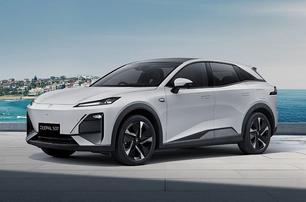
You’re getting flooded with new electric mid-size SUVs from China, I know. But if you’re struggling to recall them all, just remember – this is the good-looking one.
It’s the Deepal S07, the spearhead for the Deepal brand's new presence in Australia, and I reckon it looks damn sharp.
But is there substance to match the style? And can it take on the likes of the Kia EV5, Tesla Model Y and XPeng G6?
Let's find out, shall we?
Weirdly, given all the good things I've had to say about the GS F Sport, it doesn't quite hang together. It's missing that certain something the Europeans have in their chassis, particularly the BMW 5 Series, and with ageing interior tech, it's struggling to keep up.
It's a car built for specific tastes, and they're more California than Straya. And that's perfectly okay, but unfortunately, that doesn't translate to a stampede of buyers. Having said that, none of its German rivals (or its beleaguered Japanese counterpart, Infiniti) could claim wild sales success either.
The GS is a terrific car, underrated but also just not quite there for my taste. The GS F, though, that's another thing altogether.
The Deepal S07 has the makings of a great family friendly EV, but with some quirks that really need to be ironed out.
The GS is ageing well, but it's still a bit heavy-handed around the headlights and a little on the slabby side along the flanks. It doesn't look poised for action, even with the F Sport additions, but nor does it look frumpy, mostly due to the whopping blacked-out spindle grille, a Lexus signature.
The rear end is good looking but a bit bluff, again neither surprising or delighting.
Little has changed inside, but it's still a very nice cabin, and always will be apart from a couple of clangers (the gear shifter looks super-cheap).
What's more, it's welcoming, lots of very nice materials, comfortable, seats - it's exactly what it needs to be. Whatever you might think of the looks, one thing is absolutely certain - if anyone builds cars better than Lexus, it's a very, very short list.
If you’re left a little underwhelmed from the bland same-sameness of so many new SUVs, I reckon you’d like the Deepal S07 in the metal. Because boring it ain’t.
It’s sharp and purposeful and full of lovely creases and angles, and it stands out on the road — especially in this 'Sunset Orange' colour.
Deepal says it was designed in Turin, Italy, but I'm not sure that matters much. I mean, being in Italy doesn’t guarantee design success – just look to the modern Lancia range for proof – but I guess it’s something for a newish Chinese brand to hang its hat on.
Inside, the design is lovely, too. I like the materials used, the extended dash and the size of the central screen (though it tilting towards you or the passenger is probably overkill). And the flat-bottom wheel is a nice touch.
I'd like to know where the air con was designed, though. It feels massively underwhelming on a piping hot Sydney day. The main outlet is at the bottom of the dash, which is perfectly positioned to chill absolutely nothing, and you can’t really change the direction of the vents, either. Or, at least, I couldn't figure out how to.
Being a big car, there's plenty of room inside. Four passengers will be very comfortable although rear legroom was a bit on the skinny side given the car's size.
The cabin contains a good-sized console bin, four cupholders and each door pocket into which you could conceivably slot a bottle.
The 520-litre boot is a useful shape, with a sensible load height and a space-saver spare under the floor. The 5 Series and E Class both best the Lexus by 10 litres, so the GS isn't far off the norm.
At just over 4.7m long and 1.9m wide, with a 2.9m wheelbase, the Deepal is a sizeable proposition, which means good passenger room and decent luggage space.
Starting at the boot, you’ll find 445 litres with the rear seats in place, but with the seats folded flat that number grows to 1385 litres. There’s a frunk up front, too, that holds another 125 litres.
In the back, the room is ample for full-size adults. When sitting behind my own 175cm driving position, I had more than enough knee and headroom to sit comfortably.
There’s also a heavy pulldown divider that’s home to twin cupholders, and there are two more up front, and USB connection points galore. Bonus points for the back seat riders being able to adjust their own air temps, too.
We had the pleasure of the GS 350 F Sport for the week, which is well over $10,000 cheaper than the Luxury and is therefore the 'default. If you're not sure what F Sport means, it's Lexus' answer to an M Sport or AMG pack, without all the high-powered engine shenanigans to go with it. If that's what you're after, the V8-powered Lexus GS F is definitely for you.
Starting at $95,300, the F Sport has a spectacular standard features list - 17-speaker stereo, 19-inch alloys, variable-geared four-wheel steer (!), adaptive suspension, dual-zone climate control (with moisturising function), hectares of leather trim, head-up display, electrically-operated heated and ventilated front seats, rear sunshade, F Sport instrument screen, auto LED headlights, keyless entry and start, sat nav, front and rear parking sensors with around-view cameras and a space-saver spare.
The media system is run from Lexus' 12.3-inch screen embedded in the dashboard and controlled from an infuriating console-mounted mouse-clicker with a couple of shortcut buttons. It really is spectacularly irritating and made worse by the rotary dial stationed next to it that acts as the drive mode selector. Why not use that instead?
As ever, the system is mildly baffling to use and hard to look at, but the sound is absolutely lovely from the Mark Levinson-branded speakers. Lexus is persisting with a DVD player but it also has DAB+.
It’s easy picking in the Deepal range, given there’s one model with just the one trim level, simply called the S07.
It’s currently $58,521 drive-away in NSW, or $53,900 before on-road costs. And that’s probably about right. You can get an entry-level Kia EV5 for $56,770, though with less range and kit, or the XPeng G6 Standard Range for $54,800, though that’s before on-road costs. The new Model Y is a bit of a jump, at $63,400 on the road.
For that you get 19-inch alloys, a fixed sunroof with a sun shade, LED lighting all around and a powered boot.
Inside, there’s a giant 15.6-inch touchscreen that can swivel towards the driver or the passenger, wireless Apple CarPlay and Android Auto, a 14-speaker Sony stereo and wireless device charging.
There’s dual-zone air con, the seats (heated and ventilated up front) are trimmed in synthetic leather and there’s an interior camera with gesture control, so you can use a kind of sign language to take a photo, control the stereo or answer or hang up the phone. It's weird and makes you look like a turkey, which is why I used it once and once only, but you might like it.
Lexus fits a 3.5-litre (2GR-FKS) naturally-aspirated V6, delivering 232kW/380Nm to help shift the 1745kg GS. Power goes to the rear wheels via an eight-speed automatic. Lexus claims the sprint from 0-100km/h is completed in just six seconds.
The S07 is powered by a single 160kW/320Nm rear-mounted electric motor and it's rear-wheel drive. That’s enough output, says Deepal, to push the S07 to 100km/h in 7.9 seconds — not bad for a two-tonne-plus SUV.
A real world 13.7L/100km is a solid miss of the claimed 9.3L/100km, which itself is hardly earth-shattering. It's a big heavy car and that's the penalty. It drinks fuel fast, so the 66-litre fuel tank does drain quickly and it's worth knowing you have to fill it with the 95 RON or better.
The 79.97kWh ternary lithium battery delivers a claimed driving range of 475km. It is, however, set up for just 92kW DC fast charging, which means going from 30 to 80 per cent will take just over half an hour. That’s at an appropriate DC fast charger, of course. Your 7.0kW AC home wallbox will take 11 hours, or eight hours if you can draw 11kW.
There are things you expect in a Lexus. Quietness. Composure. Smoothness. The GS delivers all three of those things effortlessly. But it has a few extra things in its bag that I can't say I was expecting.
For a start, the 3.5-litre V6 moves the car without any carry-on and in doing so, I was constantly amazed at how quickly the speed in the head-up display reached the posted limit. It just doesn't feel or sound like a six second car, but there you are. The transmission is virtually faultless, the engine sound distant and refined, the power impressive.
It's a heavy car, no question, but two things work to make it feel much lighter. First - and it doesn't matter which mode you choose - the adaptive suspension somehow knocks about 200kg out of how heavy the car feels. The brakes, while a little soft on pedal feel when you first step on them, are very effective and again help to make the car feel lighter than it is.
The four driving modes are quite distinct. As usual, Eco makes everything soft and doughy or as I prefer to say, unpleasant. Normal is great for every day, with just the right throttle response and steering weight.
Moving to sport ups the aggro slightly while Sport+, while never harsh, firms everything up to the point where it starts to feel like a different car. Sport+ makes the car feel race-car pointy, the suspension holds the body in check and the power seems readily available without jerky progression
The all-wheel steer is a big part of the change in feel. It's is especially sharp in Sport+ mode. The steering's gearing changes up quite a bit, meaning a lot less steering lock required for your favourite hairpin bend. Of course, at real speed it all calms down because neither you nor Lexus are fond of sneezy lane-changes or Armco-swiping. At first I thought it just made the big car feel a bit too nervous but as I got used to it (and was able to dial it down by switching back into a less racy mode) I found it fun but a little bit out of character with the car itself.
And just because it's the F Sport, that doesn't mean it can't do all the things you'd expect from a Lexus. You can still waft, you can still creep up on people and it's really very comfortable when you're cruising or stuck in traffic.
Binging, bonging safety systems aside, the Deepal S07's drive experience is relatively peaceful.
It can feel heavy, and isn't dynamically perfect through tighter bends, and even in the city the suspension - which does a good job ironing out most road imperfections - can clang over sharper, bigger stuff, especially if you're too enthusiastic with a speed bump.
But provided you're not asking too much of it on some twisting pass, and you're gentle enough over really big bumps, the S07 behaves much as you'd expect a big, wafty electric SUV might.
That is, with a smooth flow of power, steering that isn't overly direct, but not overly sharp either and with comfort the order of the day.
There are some annoying quirks, though, that would seem easy enough to iron out. The safety systems are often intrusive – and other Chinese brands can get them to be far less annoying – but I also found the tech and user interface annoying and fiddly, which again would be easy enough to fix.
The GS scores 10 airbags, ABS, stability and traction controls, blind spot monitoring, rear cross traffic alert, forward AEB, active cruise, auto high beams and lane departure warning with lane keep assist.
The GS doesn't have an ANCAP or Euro NCAP rating while the USA's IIHS (Insurance Institute for Highway Safety) rating is good for each key crash-worthiness measure. The IIHS suite of tests is quite rigorous but differ from our ANCAP/Euro NCAP standards.
Handing out a low score for a five-star ANCAP car seems harsh, but bear with me.
All the major bases are covered, the standard spec including auto emergency braking (AEB) with car-to-car and 'vulnerable road user' (pedestrian, backover, cyclist, motorcycle) detection, blind-spot monitoring, lane-departure warning, lane keeping assist and more. And there are front, front side (chest), side curtain and front centre airbags.
But the single biggest drawback of the Deepal experience has to be the most annoying, infuriating active (crash-avoidance) safety systems I’ve ever come across. Honestly, it has to be experienced to be believed.
For one, whenever I wear sunglasses it gives me an “occlusion” warning, which I genuinely had to Google, but that’s nothing compared to the driver attention monitor, which seems rigged to go off if you so much as blink, sending chimes binging and bonging throughout the cabin, increasing in number like a bomb about to go off.
And if you have to turn them off every time you get in, you have to wonder if they have any business being there at all.
So yes, it wears a maximum five-star ANCAP rating from assessment in January this year, but it’s a tree falling in the forest, kind of vibe, like if a car has every active safety system known to man, and you want to switch them off every time you get in, is it any safer than a car that doesn’t have any systems at all?
There's one area where Lexus smashes the Germans and that's after-sales. While the warranty is hardly ground-breaking at four years/100,000km and service intervals are reasonable at 12 months/15,000km, it's how it all comes together.
For the duration of the warranty, when the car needs a service, Lexus will either come and get it then return it to you, or give you a loan car. Anecdotal evidence suggests this continues long after the warranty runs out. Like, 10 years after the warranty runs out.
This is a small thing, but if there's one thing I hate about car ownership, it's the servicing experience. If I was a betting man, I'd dare you to find someone who genuinely has a problem with Lexus after-sales care.
On top of that, you get a generous roadside assist package for four years.
The S07 is covered for seven years or 160,000km, while the battery is covered for eight years or 240,000km.
Servicing is required every 12 months or 10,000km, and the brand’s capped-price servicing program covers the first seven services (or eight, if you include the initial 5000km check-in, which is free), for a total $2981.43 (or an average of $426 per paid workshop visit).