What's the difference?
Lamborghini is famous for making glamorous supercars whose pilots seem so carefree they don’t appear to need a boot, or back seats, or even families.
They don’t even seem to mind them being so low they have to get in and out on all fours – well that’s how I need to do it, anyway.
Yup, Lamborghini is famous for these exotic race cars for the road… not SUVs.
But it will be, I know it.
I know, because the new Lamborghini Urus came to stay with my family and we torture tested it, not on the track or off-road, but in the 'burbs doing the shopping, the school drop-offs, braving multi-storey car parks and the potholed roads daily.
While I never like to give the game away this early in a review, I need to say the Urus is astounding. This is truly a super SUV that is every bit as Lamborghini as I hoped, but with a big difference – you can live with it.
Here’s why.
Lexus has finally brought a plug-in hybrid to the Australian market with the RX450h+, and we’ve been testing the second-from-the-top Sports Luxury grade to see how it stacks up.
Promising a blend of electric efficiency and the high-end comfort Lexus is known for, this large SUV steps into a competitive segment. But does it deliver on both fronts?
Lamborghini has nailed it. The Urus is a super SUV that’s fast, dynamic, and has Lamborghini looks, but just as importantly it’s practical, spacious, comfortable and easy to drive. You’re not going to find those last four attributes in a sentence about an Aventador.
Where the Urus loses marks is in terms of warranty, value for money and fuel consumption.
I didn’t take the Urus on the Corsa nor the Neve, nor Sabbia and Terra, but as I said in my video we know this SUV is capable on the track and that it can go off-road.
What I really wanted to see was how well it handled regular life. Any competent SUV can deal with shopping centre car parks, dropping kids off at school, carrying boxes and bags, and of course fitting and being driven as you would any car.
The Urus is a Lamborghini anybody could drive, pretty much anywhere.
The new Lexus RX450h+ Sports Luxury is packed with a wealth of premium features and strikes a solid balance between refinement and practicality. There are enough thoughtful touches that make everyday driving a little easier.
You’ll get the most out of the plug-in hybrid powertrain if you’re able to charge it regularly; ideally every day. That might not always be practical for busy people on the go, but overall, the RX450h+ manages to blend efficiency with Lexus’ signature comfort and quality.
Anything interesting about the Urus? That’s like asking is there anything tasty about that really tasty thing you’re eating there? See, whether you like the look of the Lamborghini Urus or not, you have to admit it doesn’t look like anything you’ve ever seen before, right?
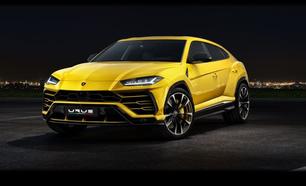
I wasn’t a major fan of it when I first clapped eyes on it in pictures online, but in the metal and in front of me wearing that 'Giallo Augo' yellow paint I found the Urus stunning, like a giant queen bee.
As I’ve mentioned, the Urus is built on the same MLB Evo platform as the Volkswagen Touareg, Porsche Cayenne, Bentley Bentayga and Audi Q8. While that offers a ready-made base with great comfort, dynamics and technology, it would limit shape and styling, but nevertheless I think Lamborghini has done an excellent job of ‘dressing’ the Urus with styling that doesn’t give away its Volkswagen Group bloodline too much.
The Urus looks exactly how a Lamborghini SUV should – from its side profile with the sleek glasshouse and haunches which look spring loaded, to its Y-shaped tail-lights and tailgate lip spoiler.
At the front, as with the Aventador and Huracan, the Lamborghini badge takes pride of place and even that broad flat bonnet which looks just like the lid on its supercar siblings has to skirt around the emblem almost out of respect. Below is the giant grille with its enormous lower air-intake and front splitter.
You can also see a few hat tips to the original LM002 Lamborghini off-roader from the late 1980s in those squared-off wheel arches. Yes, this isn’t Lamborghini’s first SUV.
The optional 23-inch wheels do look a bit too big, but if anything can pull them off, I feel the Urus can because so much else about this SUV is over the top. Even everyday elements are extravagant – the fuel cap on our car was carbon-fibre for example.
But then everyday objects which I think should be there, aren’t – like a rear windscreen wiper.
The Urus’s cockpit is just as special (and Lamborghini) as its exterior. As with the Aventador and Huracan the start button hides beneath a red flip-up cover fighter-jet rocket launcher-style and the front passengers are separated by a floating centre console which is home to more aircraft inspired controls – there are levers for selecting drive modes and there’s a giant one just for selecting reverse.
As we’ve covered above, the interior of our car had been optioned to the hilt, but I have to mention those seats again – the Q-Citura diamond stitching looks and feels beautiful.
It’s not just the seats, though, every touch point in the Urus has a quality feel – actually even places that never come in contact with passenger such as the headlining look and feel plush.
The Urus is large – look at the dimensions: it’s 5112mm long, 2181mm wide (including the mirrors) and 1638mm tall.
But what’s the space like inside? Read on to find out.
The RX isn’t breaking new ground with its plug-in hybrid design, but it still delivers that signature Lexus understated refinement.
The strong, flowing body lines, 21-inch alloy wheels and updated 'spindle grille' all give it presence without screaming for attention.
And in a segment where boxy and bulky designs tend to dominate, the RX’s swoopy silhouette helps it stand apart in all the right ways.
Inside, the cabin feels considered and luxurious. There's a heavy use of premium materials, including the leather and suede upholstery, plush soft-touch surfaces and the big, crisp displays that make the space feel modern and high-end.
The panoramic sunroof brings in loads of natural light, too, which is especially welcome given the dark headliner that might otherwise feel a little heavy.
If I have one gripe, it’s the thin steering wheel, which doesn’t quite match the otherwise solid, tactile feel of the rest of the interior. But overall, the cabin is a space that feels luxurious and well-executed. It's quietly confident, just like the RX.
From the outside the Urus’s cabin looks like it could be a cramped place – it is a Lamborghini, after all right? The reality is the interior of the Urus is spacious and storage is great.
Our test car was a five-seater, but the Urus can also be ordered with just four seats. Alas, there is no seven-seater version of the Urus, but Bentley does offer a third row in its Bentayga.
The front seats in our Urus were snug but offered outstanding comfort and support.
Head-, shoulder- and legroom up front is excellent, but it’s the second row which is most impressive. Legroom for me, even at 191cm tall, is outstanding. I can sit behind my driving position with about 100mm to spare – take a look at the video if you don’t believe me. Headroom is good back there, too.
Entry and exit through the rear doors is good, although they could open wider, but the height of the Urus made putting my child into his car seat easy on my back. Also installing the car seat itself was easy – our is a top tether which hooked to the seatback.
The Urus has a 616-litre boot and that was large enough to fit the box for our new child car-seat (have a look at the images) along with several other bags – that’s damned good. Making loading easier is an air suspension system which can lower the rear of the SUV.
The big door pockets were excellent and so was the floating centre console which has storage underneath and two 12-volt power outlets. You’ll also find a USB port up front, too.
The centre console bin is the downfall – it’s only has space for the wireless charging pad.
There are two cupholders up front and another two in the fold down centre armrest in the rear.
The rear climate control system is outstanding and offers separate temperature options for left and right rear riders, with plenty of vents.
Grab handles, 'Jesus handles', call them what you will, but the Urus doesn’t have any. Both the youngest and oldest members of my family pointed this out – my son and my mother. Personally, I’ve never had a use for them, but they both feel it’s a glaring omission.
I’m not going to mark the Urus down for a lack of handles – this is a practical and family friendly SUV.
The RX cabin is thoughtfully laid out and impressively practical, with a premium feel that doesn’t come at the cost of everyday usability.
Up front, there’s plenty of space for driver and passenger, yet the stepped dash design brings a sense of intimacy. The electric front seats are seriously comfortable, with four-way lumbar support and extra adjustment functions that make this an easy choice for long drives.
Storage options are generous, too. There’s a clever dual-opening centre console, large glove box, multiple phone-sized shelves, map pockets and a couple of cup- and drink holders in each row.
Charging is taken care of by four USB-C ports, one USB-A port and a wireless charging pad.
Tech is up-to-date and well-integrated. The upgraded 14-inch media display looks crisp, supports wireless Apple CarPlay and Android Auto, and is paired with a revamped 12.3-inch digital instrument cluster and a colour head-up display.
The cluster’s new layout is modern and much easier to read than the previous offering. The digital rear view mirror also earns its keep when the cabin’s packed with passengers or gear.
One of my favourite touches? The seat controls on the side of the front passenger seat. It makes quick work of moving the seat forward, especially helpful when you’ve got a kid clambering in with a school bag full of projects.
Access to the rear row is easy, but the stadium-style seating, where you're perched noticeably higher than those in the front, won’t be for everyone.
That said, the rear seats are plush and padded, though they lack side bolsters, which rear passengers might notice during cornering.
Legroom is generous and the hardened kickplates are a dream to clean when your child’s treating the seatbacks like a climbing wall.
My eight-year old gives the back seat a glowing review, thanks to its creature comforts, including rear climate control, directional air vents, seat heating/ventilation on the outboard seats, two USB-C ports and retractable sun-blinds, which are a crowd favourite in our household.
There are three top-tether anchor points, and the bench is wide enough to fit three child seats, though bulky booster seats might be tricky due to the raised seating height.
At the back, the boot is well set up for families, offering electrically folding rear seats, a 12-volt socket, flat loading floor, and a hands-free powered tailgate.
Under the floor, there’s a small compartment for your charging cables (Lexus throws in two!) and a usable 612L of capacity when all seats are in use. One downside, though, is the lack of a spare tyre as you just get a tyre repair/inflation kit.
When it comes to Lamborghinis value-for-money is almost irrelevant because we’re in the realm of the supercar, where the laws of price and features don’t really apply. Yes, the old, if-you-have-to-ask-how-much-it-is-then-you-can’t-afford-it rule is coming into effect here.
Which is why the first question I asked was – how much is it? The five-seater version we tested lists for $390,000, before on-road costs. You can also have your Urus in a four-seat configuration but you'll pay more at $402,750.
The entry Lamborghini Huracan also lists for $390K, while the entry-level Aventador lists for $789,809. So, the Urus in comparison is an affordable Lamborghini. Or an expensive Porsche Cayenne Turbo.
You may know this already, but Porsche, Lamborghini, Bentley, Audi and Volkswagen have the same parent company and share technology.
The 'MLB Evo' platform which underpins the Urus is also used by the Porsche Cayenne, but that SUV is almost half the price at $239,000. But it’s not as powerful as the Lamborghini, not as fast as the Lamborghini, and … it’s not a Lamborghini.
Coming standard is a full-leather interior, four-zone climate control, two touch screens, sat nav, Apple CarPlay and Android Auto, DVD player, surround view camera, proximity unlocking, drive-mode selector, proximity unlocking, leather steering wheel, power and heated front seats, LED adaptive headlights, power tailgate and 21-inch alloy wheels.
Our Urus was fitted with options, lots of options - $67,692 worth. This included the giant 23-inch rims ($10,428) with carbon ceramic brakes ($3535), the leather seats with 'Q-Citura' diamond stitching ($5832) and optional stitching ($1237), the Bang & Olufsen stereo ($11,665) and digital radio ($1414), night vision ($4949) and the ambient light package ($5656).
Our car also had the Lamborghini badge sewn into the headrests which is a $1591 option and the plush floor mats are $1237.
What are the Lamborghini Urus’s rivals? Does it have any other than the Porsche Cayenne Turbo, which isn’t really in the same monetary ballpark?
Well, the Bentley Bentayga SUV also shares the same MLB Evo platform and the five-seat version lists for $334,700. Then there’s the Range Rover SV Autobiography Supercharged LWB at $398,528.
Ferrari’s upcoming SUV will be a true rival to the Urus, but you’ll have to wait until about 2022 for that.
Aston Martin’s DBX will be with us sooner – it’s expected in 2020. But, don’t hold your breath for a McLaren SUV. When I interviewed the company’s global product boss in early 2018 he said one was totally out of the question. I asked him if he wanted to bet on it. He declined. What do you think?
There are four variants in the RX range, and we’re testing the 450h+ Sports Luxury AWD, which sits just below the flagship and packs in plenty of premium kit for its $123,500, before on-road costs, price tag.
That makes it slightly more affordable than its main PHEV rivals; the BMW X5 xDrive50e (from $125,885 MSRP) and the Volvo XC90 Ultra (from $124,466 MSRP).
The Volvo does offer seven seats to the Lexus’ five, which may matter for larger families, and both rivals also outdo the RX on electric-only driving range - 65km in the RX compared with 77km in the Volvo XC90 and a generous 101km in the BMW X5.
Still, the RX fights back with a seriously stacked features list. Highlights include a panoramic sunroof, 10-way powered front seats with heating and ventilation, electrically folding rear seats (also heated and ventilated in the outboard positions), and a heated, power-adjustable steering wheel. Sound is taken care of by a premium 21-speaker Mark Levinson surround system.
Technology has had a solid upgrade with the 14-inch touchscreen multimedia display, 12.3-inch digital instrument cluster, digital rearview mirror, colour head-up display, live traffic navigation, wireless Apple CarPlay and Android Auto, 4G connectivity, four USB-C ports, one USB-A port and a fast wireless charging pad.
There’s also access to the 'Lexus Connected Services' app, allowing you to remotely lock or unlock the vehicle, pre-set the cabin temperature via three-zone climate control, configure driver profiles and even use your phone as a digital key.
Practical features include keyless entry and start, rain-sensing wipers, dusk-sensing LED headlights, rear sun-blinds, intelligent seatbelt reminders for the first two rows, a child presence alert and a hands-free powered tailgate. However, due to the plug-in hybrid system there’s no spare tyre, just a tyre repair kit.
The Lamborghini Urus has a 4.0-litre twin-turbo petrol V8 engine making 478kW/850Nm.
Any engine which can make 650 horsepower has my attention, but this unit, which you’ll also find in the Bentley Bentayga, is superb. The power delivery feels almost naturally aspirated in how linear and controllable it feels.
While the Urus doesn’t have the same screaming exhaust note as a V12 Aventador or the V10 found in the Huracan, the deep V8 grumble on idle and crackle on the down shifts let everybody know I’d arrived.
An eight-speed automatic transmission can change its personality from a brutally hard-shifter in Corsa (Track) mode to gelato smooth in Strada (Street).
Under the bonnet the RX450h+ Sports Luxury runs a plug-in hybrid powertrain that pairs a 2.5-litre four-cylinder petrol engine with a CVT auto and dual electric motors - one on each axle. Together, they produce a total of 227kW of power, though Lexus doesn’t quote a combined torque figure.
Still, it’s quick off the mark for a large SUV, with a 0-100km/h time of 6.5 seconds. There’s more than enough grunt for daily driving and overtaking, even if it doesn’t quite match the outright power of its key PHEV rivals.
A V8 combustion engine that makes 478kW is not going to be frugal when it comes to fuel consumption. Lamborghini says the Urus should use 12.7L/100km after a combination of open and urban roads.
After highways, country roads and urban commutes I recorded 15.7L/100km at the fuel pump, which is close to the serving suggestion and good considering there weren't any motorway kays in there.
That’s thirsty, but not surprising.
The plug-in hybrid system brings solid efficiency, with claimed fuel use of just 1.3L/100km. In real-world conditions (mostly urban driving with regular recharging) I managed a respectable 4.8L/100km, which makes a strong case for the hybrid set-up.
The fuel tank holds 55 litres and it's worth noting Lexus recommends using a minimum of 95 RON unleaded petrol to fill it.
Using our real-world economy figure you can expect a range in excess of 1100km between fills.
The RX450h+ is fitted with a relatively small 18.1kWh lithium-ion battery, supporting an NEDC electric-only range of up to 65km.
While that’s fine for short daily trips, it’s shorter than you'd ideally want in a family SUV of this size and it lags behind rivals like the BMW X5 and Volvo XC90 in this department.
Charging is simple enough. The RX uses a Type 2 charging port and accepts up to 7.0kW on AC power, which means a full charge takes around 7.5 hours, perfect for overnight top-ups. Lexus also includes an at-home charging cable and second adapter cable as standard, which is a thoughtful touch.
The Lamborghini Urus is a brute, but not brutal, in that it’s big, powerful, quick and dynamic without being hard to drive. Actually, it’s one of the easiest and most comfortable SUVs I’ve ever driven, while also being the fastest I’ve piloted.
The Urus is at its most docile in the Strada (Street) drive mode and for the most part I drove it in this setting which kept the air suspension at its cushiest, the throttle calm and steering light.
The ride quality in Strada even on Sydney’s pot-holed and patchy streets was outstanding. Remarkable, given that our test car rolled on giant 23-inch wheels wrapped in wide, low profile tyres (325/30 Pirelli P Zeros at the rear and 285/35 at the front).
Sport mode does what you’d expect – firms the dampers, adds weight to the steering, makes the throttle more responsive and dials back the traction control. Then there’s 'Neve' which is for snow and probably not hugely useful in Australia.
Our car was fitted with optional extra drive modes – 'Corsa' for the racetrack, 'Terra' for rocks and dirt, and 'Sabbia' for sand.
Alternatively, you can ‘build your own’ mode using the 'Ego' selector which lets you adjust steering, suspension and throttle in light, medium or hard settings.
So, while you still have the Lamborghini supercar looks and colossal grunt, with the ability to head off road you could pilot the Urus all day as you would any large SUV in Strada.
In this mode you’d really have to plant your foot for the Urus’s reaction to be anything other than civilised.
Like any large SUV the Urus gives its occupants a commanding view, but it was a strange feeling looking out over that very Lamborghini bonnet but then pulling up next to the No.461 bus and glancing over almost at head height with the driver.
Then there’s the acceleration – 0-100km/h in 3.6 seconds. Combine that with this height and piloting it feels like watching one of those videos of a bullet train shot from the driver’s seat.
Braking is almost as astonishing as the acceleration. The Urus has been equipped with the largest brakes ever for a production car – sombrero-sized 440mm diameter discs at the front with giant 10-piston calipers and 370mm discs at the rear. Our Urus was fitted with carbon ceramic brakes and yellow calipers.
Visibility through the front and side windows was surprisingly good, although seeing through that rear glass was limited as you’d expect. I’m talking about the Urus not the bullet train – bullet train rear visibility is terrible.
The Urus has a 360-degree camera and an excellent reversing camera, too, which makes up for the small rear window.
The RX450h+ delivers power that’s pert and prompt, with genuine bursts of acceleration that make driving fun. It’s always ready to go and there's no lag in stop-start traffic - which gives it a lively, dynamic feel around town.
The transition between petrol and electric power is seamless; you hardly notice the switch, which makes for a smooth, refined driving experience. The cabin is impressively quiet, even on the highway, making long trips comfortable and peaceful.
Regenerative braking isn’t adjustable and is subtle enough that many won’t notice it which is likely a plus for fans of traditional internal combustion engines who are making the PHEV leap.
The adaptive variable suspension adds a sporty edge to handling, letting you confidently take corners at speed. There’s some body roll but the RX never feels top-heavy or unsettled.
The steering carries the weight of the SUV but remains well-balanced and responsive. Overall, it’s a well-tuned machine that’s a pleasure to drive.
Maneuverability is a strong suit, too, thanks to a tight 11.8-metre turning circle and a clear, easy-to-use 360-degree camera system. Parking is easy-as-pie, which a lot of drivers will appreciate.
The Urus hasn’t been assessed by ANCAP, and as with super high-end cars it’s unlikely to be fired into a wall. Still, the new-gen Touareg which shares the same underpinnings as the Urus scored five stars in its 2018 Euro NCAP test and we’d expect the Lamborghini to achieve the same result.
The Urus is fitted standard with an outstanding array of advanced safety technology including AEB which works at city and highway speeds with pedestrian recognition, there’s also rear collision warning, blind spot alert, lane keeping assistance and adaptive cruise control. It also has emergency assistance which can detect if the driver is not responding and bring the Urus safely to a halt.
Our test car was fitted with night vision which stopped me from running up the back of a ute with its tail-lights out while on a country road in the bush. The system picked up the heat of the ute’s tyres and diff and I spotted it on the night vision screen way before I saw it with my own eyes.
For child seats you’ll find two ISOFIX points and three top tethers across the second row.
There’s a puncture repair kit under the boot floor for a temporary fix until you replace the tyre.
The RX earned a maximum five-star ANCAP safety rating in 2022, scoring highly across all protection categories: 90 per cent for adult protection, 89 per cent for child protection, 89 per cent for vulnerable road users, and 93 per cent for safety assist systems.
Standard safety gear includes eight airbags (dual front, front side, curtains, front centre, and driver’s knee) plus a comprehensive suite of driver aids. Standout features include emergency call functionality, child detection alert, side exit assist, front and rear collision warnings, park assist and emergency steering assist.
Additional tech covers blind-spot monitoring, driver attention monitoring, tyre pressure monitoring, daytime running lights, LED cornering lights, rear cross-traffic alert, lane departure alert, lane keeping assist, traffic sign recognition, and intelligent seatbelt warnings for the front two rows.
Visibility and parking are enhanced by a 360-degree camera system and front/rear parking sensors, while adaptive cruise control adds comfort on longer drives.
The rear seats have two ISOFIX mounts plus three top tether anchors, accommodating child seats safely. Autonomous emergency braking is active from 5.0 to 80km/h for pedestrians, cyclists, and backover and up to 180 km/h for cars.
This is the category which brings the total score down. The three-year/unlimited kilometre warranty on the Urus is falling behind the norm with many carmakers moving to five-year coverage.
You can purchase the fourth year of the warranty for $4772 and the fifth year for $9191.
A three-year maintenance package can be bought for $6009.
The RX comes with a five-year, unlimited-kilometre warranty, which matches its key rivals but isn’t exactly class-leading by today’s standards.
Servicing is handled via a capped-price program, with each service costing $695. The intervals are well spaced at every 12 months or 15,000km, whichever comes first.
This Sports Luxury grade also includes a three-year complimentary 'Lexus Encore' membership, granting access to a handy phone app and member benefits at partners like Westfield and Ampol. On top of that, you get 24/7 roadside assistance for added peace of mind.