What's the difference?
In light of the large volume of dirt-road-friendly camper-trailers being seen on bush tracks of late you’d be safe in assuming that they are the flavor of the month.
Sure, lots of people buy into the idea of the off-road-camping lifestyle and may get a surprise when faced with the reality of it, but the number of those who swiftly grow to love the camper-trailer way, far out-weigh the number of those who don’t.
We took a Hawk Outback into the bush to check it out.
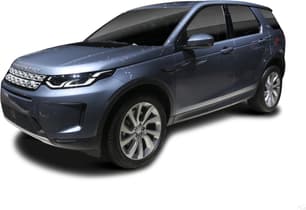
The Land Rover Discovery Sport is the sort of Land Rover you consider if you're not that serious about going off-road but still want something capable, but you don't want a car as large as it's Range Rover cousins.
Bonus points, the P300e mid-spec model I'm testing this week is a plug-in hybrid. So, you get the best of all worlds - capability, decent size and economy.
The new powertrain pits it against the Lexus NX450+, Volvo XC60, Audi Q5 and even the BMW X3 but while the P300e is great on paper, how does it stack-up in real life?
The Jayco Hawk Outback is a solid, feature-packed camper-trailer without being flash about it. It looks good – checker plate is always a nice touch – and it is easy to tow and set up. Sure, it may not be as gung-ho an off-road unit as its name suggests, but it is more than capable of handling gravel or dirt tracks on the way to your campsite and will be a comfortable camper when you actually arrive there.
The Land Rover Discovery Sport P300e has a beautiful and practical cabin space. The powertrain didn't always convince me on the road but it does offer decent economy, if you charge it often.
The media system left a lot to be desired and having to pay around $15K extra for all of the customisations means it's not as affordable as what it initially seems. Still, if you’re looking for a plug-in hybrid with a great cabin and on-road looks, this is a good option.
Jayco camper-trailers have a nice touring-friendly floor-plan but where the Hawk Outback deviates from the line-up norm is that its kitchen is positioned to the left of the door as you step inside, rather than in front and to the right of you as you step inside on other models.
The interior height tops out at 2070mm high – pretty standard for these campers – and inside is roomy enough not to feel like a confined space, although it will get squeezy if all four adults and two kids are in here and milling about at the same time.
Looking from the door, to the left is the four-burner stove, then, as you look to the front, the extended lift-up bed and storage, and, swiveling to your right, the Dometic 95-litre fridge (Touring models get the 90-litre fridge), then stainless-steel sink, dinette seat, table, club lounge, double bed, then TV cabinet.
Drawers are all Ezi glide pull-out style. The pop-in/pop-out button on each handle – to lock it in place and unlock it – is generally a good system but can be prone to becoming fiddly, even sticking. This is a minor problem and can be found in many campers with a similar mechanism on their drawers.
Interior lighting includes overhead LEDs for the main area and reading lights for the beds. There’s a fan for the beds.
With it's 4597mm length, 2173mm width and 1727mm height, the Discovery Sport is technically classed as a medium SUV but the cabin space is much larger than it has any right to be.
Both rows have ample head- and legroom for both my 168cm (5ft6') height and those much taller. When you have a co-pilot, you’re also not jostling for elbow room and it’s easy to slide in and out of because of the 212mm ground clearance.
The amenities up front are good with the update seeing more decent sized individual storage options.
There are two cubbies in the centre console as well as two cupholders and a medium-sized middle console. The glove box can hold more than a manual and the storage bins with their single drink bottle holders are also larger than before.
The powered front seats are comfortable and the optioned heat functions are most welcome on the cooler days we've been having lately.
The back seats also have superior padding comfort but you sit on top of, rather than in, them which is typical of an SUV.
The amenities and storage are what you would expect for the grade level with a fold-down armrest with two cup holders and small storage cubby, directional air vents, reading lights, map pockets and small storage bin in each door.
There is also an accessory hole to attach device holders on the backs of the front seats - perfect for hooking up a screen for little ones on a long journey.
The P300e loses points on its practicality with the multimedia system. You eventually get used to using it while on the go, even though the lack of buttons/dials means more time is spent with your eyes on the screen.
That's when the screen turns on. The display has cut out a few times this week and the wireless connectivity for Bluetooth and the connection for Apple CarPlay (wireless or wired) drops out a lot.
The P300e I'm driving is brand-spanking-new, so it may just be a case of something that needs calibrating but for a lot of the Land Rovers I've sampled in the past, the media system seems to be the area with the biggest teething issues.
That being said, the built-in satellite navigation is top-notch and easy to use. The directions also get displayed on the instrument cluster and optioned HUD.
The charging options are excellent with the front row getting three USB-C ports and a large wireless charging pad. The rear gets two USB-A ports and two USB-C ports plus a 12-volt socket and the boot also has a 12-volt socket. Totally spoiled for choice.
The boot is a great size at 897L with all seats in use and that jumps up to 1749L when the rear seats are folded flat. The rear row also has a 40/20/40 split, which opens up storage opens.
There is a temporary spare tyre housed underneath the flat floor and a powered tailgate comes standard in this model, which I always like.
Because of its compact size – especially relative to caravans which are, by their very nature, generally bigger and bulkier than camper-trailers – the Hawk Outback is a very easy thing tow as it sits low and stable on all surfaces and well within the confines of even narrower bush tracks.
The single-axle camper – 5060mm long (including drawbar), 1910mm high, 2240mm wide, and with a 1285kg tare weight – hardly registered behind our tow vehicle, a 2019 Ford Everest, with the new 2.0-litre four-cylinder bi-turbo-diesel engine (157kW/500Nm).
It always felt secure on the towball (with a 145kg download) during highway, gravel track and undulating dirt-road driving.
The Hawk Outback, like other Outbacks, has a hot dip galvanised Endurance chassis on Jayco’s JTech coil-spring suspension set-up. (Note: Jayco’s Outback models are designed and engineered for, at worst, dirt roads and gravel roads, not 4WD tracks. They are not built for hard-core off-roading.)
Another bonus: visibility is clear and open along both of its sides and even over the top – no need for towing mirrors here.
The Discovery Sport P300e has the goods on paper when it comes to power and it does... once you're up to speed. That's when you can punch it and feel confident at overtaking or keeping your speed consistent on hills.
It's when you're accelerating from a full-stop that it becomes a bit lacklustre as there's serious lag between accelerating and actually moving forward. Accept that you will have to accommodate for this inaction whenever you are joining or crossing traffic from a standstill.
Besides this little hiccup in the power delivery, handling on the whole is good.
The Disco Sport is easy to manoeuvre and you don’t feel like you’re driving something big, despite the ample cabin space. It also handles itself well in corners without too much roll.
The switch between the electric and petrol components isn’t always the smoothest but when it’s in its electric mode it’s blissfully quiet. The cabin feels refined too because you don’t get a lot of external noise in the cabin at all.
The wide windows and higher ride means visibility is great and the optioned digital rearview mirror adds another viewpoint if the back window isn’t clear.
The Disco Sport proves to be nimble and easy to park with the optioned and clear 360-degree camera system, and the sensors at the front and rear are sensitive.