What's the difference?
People with camper-trailers are increasingly looking to push their travel boundaries and so they head off the bitumen, onto dirt roads and go bush.
But on-road camper-trailers are not suited to cope with the extra stresses that dirt-road or gravel-track driving bring, which is why campers better equipped for light-duty bush driving, such as Jayco’s Outback versions of its models, are finding favor with buyers.
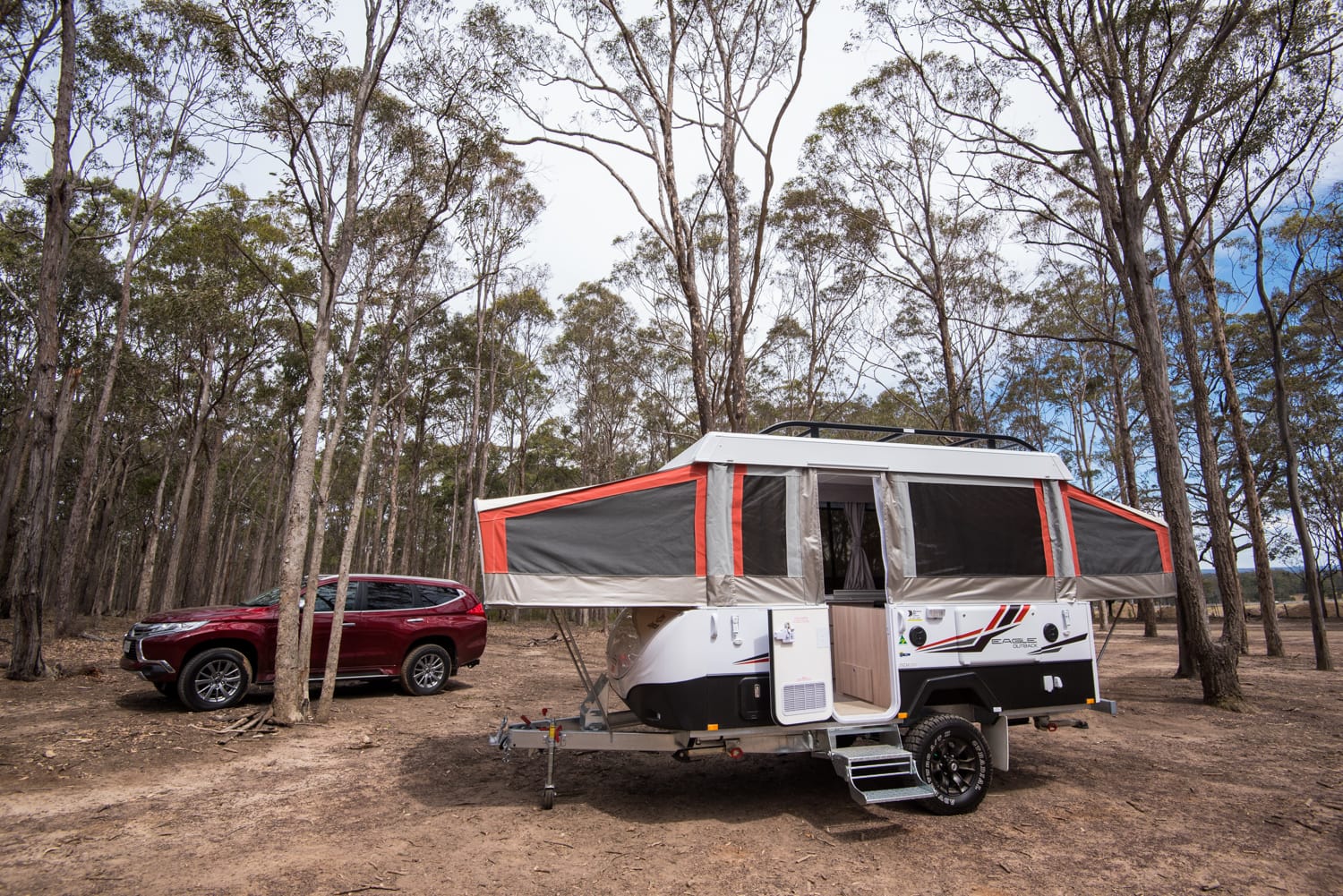
We took an Eagle Outback into the bush to check it out.

Remember when electric vehicles were the next big thing? Well they still are, it's just that hybrids are making a huge comeback and have entered a new era of the super hybrid. These are plug-in hybrids with enormous driving ranges and Chery’s just arrived Tiggo 9 Super Hybrid is one of these.
The Tiggo 9 is a large seven-seater SUV that competes with the likes of plug-in versions of the Hyundai Palisade and GWM Tank 500, only for less money.
The value is excellent, but how does the Tiggo 9 score in other areas such as the way it drives, its practicality and safety, or its styling and interior feel?
We found out in this first Australian drive.
The Jayco Eagle Outback, for me, is an example of a camper-trailer getting closer to what I reckon a truly off-road-capable Jayco camper will be like.
There's nothing in Jayco's current line-up that offers comfort and full functionality and is also capable of tackling decent off-roading, so we're looking forward to testing Jayco's first line-up of dedicated off-road campers, including the JTrak Outback and Outback X.
The Chery Tiggo 9 Super Hybrid is outstanding in many ways, especially value and the way it drives. I can only stress the importance of charging this vehicle frequently, however, otherwise it will go from super hybrid to super fuel consumer.
These Jayco camper-trailers have a familiar touring-friendly floor-plan – check out the accompanying photos for proof of that – and most adhere to a similar approach to interior functionality – neat and simple – and that’s well suited to those who venture off the blacktop and hit the dirt.
Interior height is 2070mm, standard for campers of this type, so there’s plenty of stretch space for those of us not gifted with the vertical inches of Collingwood’s Mason Cox. Bench height, also standard for a camper-trailer, remains just lower than an average bloke’s hip so stooping to work in the kitchen is still an issue, but that’s part and parcel of the lifestyle, so stop whinging and get used to it.
Looking from the door, to the left is the front bed and club lounge; along the wall is the kitchen area (replete with four-burner stove, Dometic 95-litre fridge*, storage drawers and pantry); and to the right is the rear bed and dinette area. (* Outback models get the 95-litre fridge; Touring models get the 90-litre fridge.)
Overhead interior lighting includes LEDs for the main area and reading lights for the beds; there’s a fan for the beds.
There are also power points and USB port.
The Chery Tiggo 9 is not overly large and with a relatively short wheelbase the cabin room is adequate but not outstanding. I’m tall at 189cm, but there is still room for me to sit behind my driving position and headroom is good, too. That said, the cabin floor is high which raises the knee height for second row passengers.
The third row is really just for children and for those occasional but unpredictable times when as a parent you’re suddenly thrown into having to transport more kids home or to parties.
Cabin storage is good with door pockets and cupholders front and back, while a large storage area under the centre console is great for loose items or even a handbag or small backpack.
The wireless charger is perfectly situated on top of the console and features a grippy soft surface.
I would have liked more physical dials and buttons for climate and the stereo, which are accessed through the central screen.
Boot space, according to Chery, is larger than it looks, with the manufacturer saying with the third row up there is 143 litres of cargo capacity and with five seats in place it's 819 litres.
This single-axle camper – at 5060mm long (including drawbar), 1910mm high, 2240mm wide, and with a 1270kg tare weight – towed smoothly behind the Mitsubishi Pajero Sport we used on this review.
It sat snug and steady on the towball (with a 150kg download) during open-road driving, as well as during short sections of slightly bumpy gravel track and undulating dirt road.
The Eagle Outback has a hot dip galvanised Endurance Chassis riding on Jayco’s own JTech coil-spring suspension set-up.
Please note: Jayco’s Outback models are designed and engineered for, at worst, dirt roads and gravel roads, not 4WD tracks. Do not think that because these campers have been branded ‘Outback’ that they are actually able to tackle hard-core off-roading.
The Chery Tiggo 9 Super Hybrid drives silently and smoothly with strong acceleration just like an electric car for the most part while in the city at lower speeds.
Hills and higher speeds call on the engine to help but even then the transition is almost imperceptible.
A comfortable ride with well set up suspension, light and accurate steering make for an impressive and effortless driving experience.
There are downsides, like the brake pedal feel. As in many hybrids there’s a ‘wooden’ sensation and I felt I needed to depress the brake pedal harder and longer to pull up at times. This is a heavy vehicle at 2200kg and brake response could be better.
The active safety tech is also intrusive, as is the case with so many cars these days, but the alerts and warnings can be turned off.