What's the difference?
There’s a fairly big change hiding under the metal of one of Australia’s favourite utes. The Isuzu D-Max has a new 2.2-litre engine, replacing the 1.9-litre unit, and it brings a couple of other things with it.
A bigger engine designed to be more powerful and more efficient can only be a good thing, surely, especially with Isuzu looking down the barrel of stringent emissions laws with only two models in the line-up, both diesel powered.
But is this new 2.2-litre engine any good? Isuzu’s gone to the trouble of a new gearbox and some new tech to go with it, so we check it out to see if it stacks up against the increasingly strong competition.
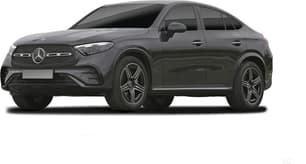
Just seeing a coupe SUV in the traffic makes some people very cranky, but others love the sight of them and it’s these fans that Mercedes-Benz is hoping to woo with its new GLC300 Coupe.
This new-generation GLC Coupe arrives six months after the regular SUV version of the GLC landed in Australia and goes head-to-head with the BMW X4 and Audi’s Q5 Sportback.
The coupe style with the ‘cut-down’ roofline which slopes towards a low tailgate means practicality is compromised and if you’re thinking of putting one in your family’s driveway then it might be an idea to read how this writer’s family coped with the GLC300 Coupe for a few days.
The new engine makes the D-Max a much more likeable ute than it already was, which is high praise.
It’s smoother and quieter and makes for a more pleasant drive. The added efficiency is a bonus both for your wallet and Isuzu’s emissions credits.
The 3.0-litre engine will probably remain the favourite, but anyone who test drives a 2.2L might even be tempted to opt for the smaller unit. Isuzu sure hopes so.
Note: CarsGuide attended this event as a guest of the manufacturer, with travel, accommodation and meals provided.
The GLC300 Coupe isn't quite as great when it comes to being a family car as the regular SUV version of the GLC, and that's purely down to the sloping roofline which not only makes access more difficult to the second row but reduces boot capacity.
That said, the GLC300 Coupe makes a much better family car than a Mercedes-Benz C-Class sedan, or any sedan.
Easy and enjoyable to drive, packed with great features and still practical, the GLC300 Coupe would still cut it as a good family car.
The look of the D-Max depends on the grade you end up with, but the 2.2-litre SX and X-Rider variants down the lower end of the model-run are still pretty standard-looking utes. Inside and out.
You get fairly rugged styling that fits in for both work and play, and the interior is functional, if getting a little outdated.
The black trim (and extra features) that comes with the LSM X-Rider as opposed to the SX is worth it if you’re keen to get a 2.2-litre-powered D-Max for the family rather than one for a fleet as it just elevates things slightly.
Inside, it also means nicer cloth, and not having the vinyl flooring looks a little less ‘farm ute’.
Coupe SUVs aren’t for everybody… they’re not even for lots of people. But the design of an SUV with its roof cut down so that it meets the tailgate at an almost sportscar-like angle appeals to more than a few fans. The thing is they don’t just like the look, they love it, and they also probably enjoy how much the styling makes other people cranky.
To my eyes the GLC300 Coupe is the best execution of the bodystyle compared to those of BMW and Audi. There’s an elegance to the GLC300 Coupe and the AMG-line adds a tough look that only enhances the solid, powerful but pretty look.
The GLC Coupe is a mid-sized SUV and this new generation model is a bit bigger the previous one and now measures 31mm longer at 4763mm end to end, it’s 1890mm wide, 1605mm tall and has a wheelbase of 2888mm.
It’s also more aerodynamic than ever. No seriously, it’s drag coefficient is now 0.27 and it looks like a bar of soap - and it's about as slippery as one, too.
More curved surfaces await inside with a dashboard that pours down into the large centre console and it's adorned with a sloping and large portrait-style media screen.
At night or in tunnels the ambient lighting glows through the air vents and skirts the edges of the door trims, console and dashboard.
It’s a minimalist and high-tech cockpit with modern sports seats up front and a Nappa leather wrapped steering wheel with its twin blade design.
So, how does the coupe design work for family practicality? Let’s take a look.
The D-Max remains straight-forward inside, given nothing has changed with the update aside from the 2.2-litre engine and the addition of stop-start - there’s a button for that now.
The interior and usability of the D-Max, especially in the lower-end variants where the 2.2L engine is available, is focused on the basics.
Tech remains at a relative entry point, where the 8.0-inch screen and its software feel outdated but do everything you need. Plus of course there’s the phone mirroring workaround.
The D-Max is comfortable and spacious enough, there’s also physical buttons for everything including media and climate settings, and adjustability in terms of the seating position means not needing to reach.
In dual-cab versions, there’s enough space for an adult to sit in the second row behind another adult, so the D-Max also holds its own as a family hauler. Tick.
Importantly, Isuzu is now able to claim a 3500kg braked towing capacity across the full D-Max range thanks to the new 2.2-litre engine.
SUVs are the most practical cars for families because of the better access to the cabin thanks to their large doors and slightly elevated ride height, their big boots with wide and tall hatch openings and their high flat rooflines. They’re essentially raised station wagons.
A coupe-style SUV still has four doors but they are less boxy due to the sloping roofline which falls away quickly to meet the tailgate at a lower point. The effect is a sporty-looking shape but practicality is lost in this exercise of form over function.
The second row doorways aren’t as large as those on the regular SUV. I did a side-by-side test and felt like I had to duck under the sloping roof when getting out of the back seat.
The smaller opening also made it trickier to lift my toddler daughter into her baby seat.
The sidesteps are also surprisingly handy for bigger kids and my eight-year-old used them every time when climbing into the car.
Cabin storage is outstanding with huge door pockets and cupholders in both rows, and while the 545-litre boot in the GLC300 Coupe is 80 litres smaller than the cargo capacity of the regular GLC SUV, it's bigger than the previous version of the Coupe.
As for people space, there’s enough headroom for me at 189cm tall in the back seat and heaps of legroom, even behind my driving position.
I’ve mentioned the lack of climate control in the second row, but also should point out that there are no USB ports back there either.
There are USB ports in the big centre console box upfront and a long cord should be able to make it to the second row.
There’s a wireless phone charger but it's housed in the bowels of the centre console too, and you’ll need to weave your hand while clasping the phone under the shiny black trapdoor, past the cupholders possibly with drinks in them and almost under the dashboard.
Pricing is up across the board for D-Max (and its MU-X sibling) regardless of drivetrain, but we’ll stick to the 2.2-litre variants here to stay on track.
Most of the lower-level D-Max variants are $1500 more than the previous equivalent, and with the manual gearbox dropped, the cheapest grade is the 4x2 single-cab chassis SX with a 2.2L engine at $36,200 before on-roads.
You can get the SX in crew-cab with a chassis or ute back in either 4x2 or 4x4 with a 2.2L engine, which is also available in the LSM X-Rider 4x4.
That one will set you back $59,500, which is still far from the most expensive D-Max around. That’s still the Blade, with a 3.0-litre engine and 4x4 only, but it’s now $80,900.
Back to the 2.2s, and the SX grade comes with the basics. Cloth upholstery, polyurethane steering wheel and gear selector, vinyl flooring and even halogen lights.
There’s basic air-conditioning, but it does have a HEPA filter, and rear vents for crew-cab models, plus there’s wireless Apple CarPlay and Android Auto, auto wipers, and USB-C power ports as well as a USB-A port.
The central multimedia touchscreen is 8.0 inches, but the driver display is a little 4.2-inch unit between physical dials.
Stepping up to the LSM X-Rider brings with it auto-levelling LED headlights and LED daytime running lights, black styling trim, nicer cloth trim upholstery and gloss black 17-inch alloy wheels.
The rest of the D-Max line-up is 3.0-litre-only, and remains as it was before.
Mercedes-Benz is offering Australia just the GLC300 grade in both the SUV and Coupe body styles.
High-performance AMG variants are out overseas now and will arrive in Australia soon, too.
You can expect to pay more for these AMG beasts - a lot more than the $113,900 list price of the GLC300 Coupe.
Still the GLC300 Coupe does come standard with an AMG Line body kit and 20-inch AMG alloy wheels. LED headlights are also standard, so is the panoramic glass roof, tinted rear glass, proximity unlocking and a power tailgate.
Inside there’s synthetic leather Artico upholstery, sports heated front seats, Nappa leather steering wheel, an 11.9-inch media display with Apple CarPlay and Android Auto, a 12.3-inch digital instrument cluster and a head-up display. There’s also dual-zone climate control and wireless phone charging.
The value is good in terms of features, although the price is slightly higher compared to the rivals such as the BMW X4 xDrive30i ($106,400) and Audi Q5 Sportback 55TFSI ($110,200).
It’s worth pointing out, too, that the GLC300 Coupe is about $10K more than the GLC300 SUV version. Why? The coupe versions of prestige SUVs always tend to be pricier than their regular more boxy SUV siblings. Somebody in marketing will be able to explain why.
Having lived with the GLC300 Coupe with my family over the past few days I can say the proximity unlocking which works by touching even the back door handles is excellent, the tinted windows are dark and cut out much of the sun's glare, but there’s no climate control in the second row. There are air vents back there, which is good.
I found that on hot days the semi-transparent shade on the glass roof couldn’t stop the cabin from heating up quickly.
The new 2.2-litre turbo-diesel four-cylinder comes with 120kW and 400Nm, that’s 10kW and 50Nm more than before. Isuzu also says there’s 60 per cent more torque ready from near-idle at 1000rpm.
An eight-speed auto replaces the six-speed, but the brand has also culled the manual options that remained in the line-up.
As ever, that sends power and torque to a part-time 4WD system capable of 2H, 4H and 4L with a rear diff-lock.
The GLC300 Coupe has a 2.0-litre four-cylinder turbo-petrol engine making 190kW of power and 400Nm of torque.
There’s also an overboost function which allows the engine to make an extra 17kW and 200Nm just for a brief moment, but that extra dollop of grunt combined with the regular output provides impressive acceleration (0-100km/h in about 6.3 seconds) for overtaking or moving quickly when you need to.
A smooth nine-speed automatic transmission sends the drive to all-four wheels.
The GLC300 Coupe is all-wheel drive and while there’s a setting for rougher terrain, along with one for comfort, eco and sport, but I’d make sure that it doesn’t get any more adventurous than tame gravel and dirt roads.
Mercedes-Benz refers to the GLC300 Coupe as a mild hybrid and this is because it has a 48-volt system and an integrated starter-generator.
This type of hybrid doesn’t use electric motors, doesn’t drive the wheels and won’t save much fuel, but it will provide efficiencies by supporting the engine and when coasting, plus will reduce petrol consumption to a small degree.
The biggest advantage for the new drivetrain from Isuzu’s perspective is that it’s more fuel efficient.
The old engine’s 6.9 litres per 100km become 6.6L/100km in the new engine, in part thanks to a new stop-start system. That system is also now on the 3.0-litre engine, where 8.0L per 100km drops to 7.1L.
With its 76L diesel tank capacity, the D-Max should theoretically be able to travel more than 1000km on a single fill, although that comes down to a lot of variables - that 6.6L figure was achieved in almost lab-like conditions.
As we mentioned above the GLC300 Coupe's 48-volt mild hybrid system is not the kind of hybrid that will allow you to drive miles on electric power, nor will it dramatically reduce fuel consumption in the way a parallel, series or plug-in hybrid will. But every bit of efficiency helps.
Mercedes-Benz says the GLC300 Coupe will use 7.7L/100km after a combination of open and urban roads.
We had the GLC300 Coupe for just two days, but in that time my family covered 176km of regular daily usage which took in motorways but mainly suburban duties such as the school run, supermarket dashes, that sort of thing.
In our fuel test we measured 14.48 litres at the fuel pump which works out to be an on-test fuel use figure of 8.2L/100km and not far off the manufacturer’s claim.
While this fuel consumption isn’t overly high, a plug-in hybrid or even a parallel or series hybrid could return about 5.0L/100km or less.
Mercedes-Benz has dropped plug-in hybrids from its Australian range which is a shame because it would be good to see more efficient options in the GLC range. Of course if you want more efficiency from a Benz of the same size, there is always the fully electric EQB or EQC.
Let’s start with the most important part of the updated D-Max. The new 2.2L is smooth.
It feels so much more refined physically, but it's also quieter. Paired with the new eight speed, it makes the D-Max a much more likeable ute than it was with the rattly 1.9L.
At the launch, Isuzu had a bunch of MU-Xs to drive (keep an eye on a review coming soon), and the new drivetrain actually suits that big family SUV down to a tee.
The power and efficiency changes are second to how much it changes the characteristics of the thing.
If anything, the D-Max sits in a slightly higher gear than necessary, probably to try and eke as much out of the diesel dual-cab as possible in terms of fuel efficiency, but put your foot down and a more appropriate gear is close-by, and without much fuss.
There's also a relatively good stop-start system. It's not seamless but it's better than some. You take your foot off the brake and the engine rattles back to life, rather than waiting for you to put your foot back down.
The rest of the D-Max’s behaviour is pretty standard ute stuff, as it was before.
The steering is on the light side, but accurate enough even though it has a slightly doughy spot dead-straight. It’s not anything you wouldn’t expect from a ute.
Similarly, the brakes are a bit spongy but predictable, and once you’re used to where the ‘bite’ point is it’s easy to live with.
The suspension is a bit busy, but easy to keep on top of and doesn’t jostle you around.
There’s a lot to like here but the short version is the GLC300 Coupe has a comfortable ride, but good handling, with a responsive engine, although rear visibility through the small back window is poor.
If we drill down a bit further I can tell you that excellent cameras around the car will help you check to make sure kids aren’t running around behind you and that forward and side visibility through the window is good.
An important takeaway is that the GLC300 Coupe is easy to drive with light steering and an engine that’s mild and controlled in its power delivery.
The gear shifter is mounted on the steering column, in the same way an indicator lever is. So putting the car into Drive, Reverse and Park is so easy and means you don’t have to take your hands off the steering wheel.
As a family car I liked the good body control and composed ride. We have a small toddler that we can sometimes only get to sleep by taking her for a drive and we found that she could nod off and not be woken by potholes and speed bumps or too much leaning in the corners.
Isuzu has done well to include pretty much the full range of safety features across all its variants, with the SX only missing out on rear parking sensors - it still has a camera though, obviously.
Key features like rear cross-traffic alert with braking and adaptive cruise control are standard, plus the D-Max achieved a five star crash safety rating from ANCAP, even though that was under slightly easier testing back in 2020.
The biggest (but only) gripe on-test with the D-Max’s safety gear was its lane-keep during adaptive cruise. There seemed to be a need for the ute to sit close to either the centre line or shoulder during cornering, which led to some discomfort on fast country roads.
The GLC was given the maximum five star ANCAP rating in 2022. There’s AEB, active lane keeping assistance and active blind spot warning and nine airbags including a centre airbag.
As mentioned above I especially liked the surround-view camera systems - which let you look right around the car - good for driveway safety and kids.
For child seats you’ll find two ISOFIX mounts and three top tether anchor points in the second row.
I was also impressed to see a space-saver spare wheel under the boot floor and not just a puncture repair kit.
Isuzu’s six-year/150,000km warranty covers the D-Max, which could do without the limited distance, especially for a workhorse.
There’s also five years of flat-rate servicing every 12 months or 15,000km, costing $469 each time.
That’s gone up about $20 per visit since the update, with total cost over the five years at $2345.
There are 164 Isuzu dealers across the country, so finding somewhere to service shouldn’t be a challenge.
The GLC300 is covered by Mercedes-Benz's five-year, unlimited-kilometre warranty.
Services are annually or every 25,000km. And you can buy a three-year service plan for about $3000.