What's the difference?
This is the baby SUV for Hyundai’s line-up but it does tend to remind you of this a little too often for this to truly be fun.
Still, it presents an interesting road-side presence and a comfortable urban driving experience.
Coupled with the competitive price tag, is this the little SUV that could? I’ve been driving it for the last week to find that out for you.
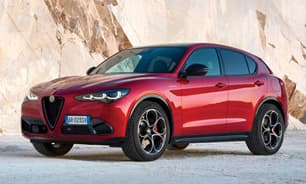
This week I’ve taken the recently updated Alfa Romeo Stelvio Veloce on a massive road trip and after the first few hours of driving it, I thought this is the sort of car you get when you need some extra boot space but still want that sports car vibe.
It helps that our test model is finished in the classic 'Alfa Red' but while its on-road performance can't be ignored, it has some tough medium SUV competition from the likes of the BMW X3, Genesis GV70 and Lexus NX.
So, is it just a fun car to drive or will it suit the family, too? I've been cruising around in it for the last week with my family of three to find out for you!
The Hyundai Venue Elite is a sweet-looking, compact SUV that should suit drivers who only need an A-to-B sort of car in the city. Or an empty nester who doesn’t want to feel flustered by any high-end tech and wants knobs and dials where they expect them to be.
Some elements of the safety set could be better though and that’s something to consider. However, for an urban landscape, you can practically fit it anywhere. With its engine specs, it's also happiest in the city - don't consider this a road trip car.
The Alfa Romeo Stelvio Veloce is the car you get when you want a sports car but happen to have a kid or two. Its ride comfort is on the lower end but it has heaps of power and enough features that it manages to slide into its price tag without feeling too cheeky. The back seat’s size will limit this to smaller families, though. And I would prefer to see better tech at this grade level, so this gets a 7.1/10 from me.
My son didn’t spend much time in this one but he liked the red paintwork. My mum, however, loved the power and sexy packaging. She gives it an 8/10.
Cute is the adjective that comes to mind when you look at the Venue’s compact styling. And it is compact with its wee 4040mm length. The benefits of its dimensions means that you should be able to tuck this away in most garages or apartment car spots!
The Venue does have a boxier shape than I ordinarily like but because it’s small, it manages to get away with it and still feel sharp.
Our model’s paintwork and roof colour has been finished in Atlas White but you can customise the Venue with a two-tone roof job (either black or white, depending on main body colour), to add some more personality.
You just lose the sunroof with that option, which I actually think adds a lot of oomph to the interior and stops it from looking too plain inside.
Speaking of, the interior is pleasing but simplistic. There are a lot of traditional design elements from the gear shifter and handbrake to the easy-to-access buttons and dials. This is a no-fuss interior that is banking on having a no-fuss sort of driver.
There is some cool cred with the white painted metal accents around the air vents and gear shifter. Plus, the contrasting piping and stitching on the cloth seats adds some fun, too.
While the Veloce has had a facelift, the changes are so minor I would dare to ask, why bother?
The daytime running light signature has been tweaked but only die-hard Stelvio fans will notice it. I do like the larger 12.3-inch digital instrument display but surprisingly the multimedia screen remains on the smaller side at 8.8 inches.
Otherwise, there’s no denying the Veloce looks like an Alfa Romeo, staying true to its Italian heritage. It’s solid, with a 1903mm wide stance, but so robust that it moves away from words like 'sleek' or 'sexy'.
The black grille, 20-inch alloy wheels and red brake calipers make it look sports car mean and hint at what's under the bonnet.
The interior looks well made and it's got a bat cave element with the black headliner and panoramic sunroof. There's a plethora of soft touchpoints throughout and the circular air-vents found in both rows add some flair.
Overall, though, the interior is understated and if you’re looking for something as flashy as the exterior, you may be disappointed.
It ain't a people mover. Period.
If you plan on having regular passengers and they’re tall, look elsewhere because they won’t find much comfort (especially in the back seat).
On the back seat, I barely fit with my 168cm (5’6”) height and had to accommodate my driving position by spreading the ol’ knees apart. So ladylike.
However, kudos to the clever high roofline because headroom isn’t an issue. The 170mm ground clearance also makes this a super easy car to get in and out of.
Front passengers definitely enjoy the most room and amenities but you will be jostling for the premium position on the armrest. The storage is good for this size SUV with a glovebox, middle console, two cupholders and a cute little storage shelf in front of the passenger.
There’s also a dedicated phone tray that has the wireless charging pad, a USB-A and C port plus a 12-volt port too.
The tech is simple to use and it was easy to get my iPhone connected to the Bluetooth and wired Apple CarPlay (there’s Android Auto, too for those users). The new-for-2023 4.2-inch digital instrument panel adds some pizzazz but unfortunately, isn’t customisable.
The boot is a solid size for this class at 355L. You can adjust the floor to sit a little lower and there is a space-saver spare tyre.
No Venue grade has a powered tailgate but honestly, you don’t need it.
The front row benefits the most in terms of space and features. I have stacks of headroom and legroom in the front seat and didn’t feel like I was too close to my passenger this week.
I like the comfortable electric seats and the fact you can adjust the side bolsters and under-thigh support.
Individual storage options are on the slim side throughout the car and it was something my mum and I found annoying on our road trip because there aren’t a lot of spots to put your little items up front. Think snacks, sunglasses, lip balm etc.
The two cupholders are really drink bottle holders because they’re too large to fit a small takeaway cup without popping the lid off but I like the large storage bins in each front door.
It's a tight squeeze in the back seat for my 168cm (5'6") height and that’s behind my driving position! It could feel a tad cramped back there for those with longer legs.
It’s also a bit awkward getting in and out of the back seat because of the large wheel arches.
The storage bins in the doors are too small to hold a drink bottle but the middle armrest has two cupholders and a phone holder.
Charging options are fantastic up front with two USB-A ports, one USB-C port, a 12-volt socket and a wireless charging pad to choose from. You even get an 'aux' jack, too.
The amenities in the back seat are okay and you get a couple of net map pockets, reading lights, a USB-A and C port, as well as directional air vents.
This Alfa has a no-nonsense approach with the other tech, though. I usually don’t mind that but the touchscreen multimedia system is a little too no-nonsense for this spec-level.
I found it to be laggy and too small. It also regularly turned itself off and rebooted. This happened a few times while needing satellite navigation directions, which was annoying.
Also on the sat nav, you can’t search for a general name of something, like a business, you have to input an address which meant using my iPhone anyway. It’s great that you get wired Apple CarPlay and Android Auto, though.
The digital instrument panel looks upmarket but isn’t properly customisable and I was disappointed the ambient lighting package only meant that there are lights in the footwells and a tiny overhead light. Adding some extra lighting would have transformed the night-time driving experience.
The boot is the highlight for me because you get a decent capacity at 499L. The load space is level and I like the back row's 40/20/40 split-fold. We had plenty of room on our road trip for luggage and shopping.
You get a temporary spare tyre and a retractable cargo blind. The latter is stiff enough to double as a shelf which is handy and a handsfree powered tailgate comes standard, as well.
Even though the Elite is the top model for the Venue line-up, it’s just $28,500 before on-road costs.
That puts it on par with the Mazda CX-3 in Maxx Sport guise, but about $4500 cheaper than the Toyota Yaris Cross Urban.
The Elite has an okay spec sheet but is a few items short of feeling like a top model should.
For example, this has wired Apple CarPlay and Android Auto, whereas the lower grades enjoy wireless.
This is a common trait in Hyundai and Kia products due to a quirk with the vehicle architecture. It also just makes do with halogen headlights but they stand out against the rest of the LEDs on the road.
However, the other standard equipment for the Elite still makes it a competitive player, like the tilt and slide sunroof, 17-inch alloy wheels, temporary space-saver spare tyre, steering wheel-mounted controls, tilt and telescopic steering wheel, 8.0-inch touchscreen multimedia system and wireless charging pad.
There are three models for the Stelvio and ours is the mid-spec Veloce grade, which will cost you $82,950, before on-road costs. The pricing should make it competitive compared to its rivals but the features list isn’t as robust as it could be.
The interior gets most of the big-ticket items with leather upholstered sports front seats, extended leather trim on the doors and dashboard as well as a heated steering wheel.
Both front seats are electric with six-way power adjustment, powered side bolsters and four-way adjustable lumbar support. They also feature a heat function and extendable under-thigh support.
The luxury items continue with the panoramic sunroof, real aluminium accents throughout and a premium Harman Kardon sound system that boasts 14 speakers.
Other standard features include full LED adaptive 'Matrix' headlights, aluminium sports pedals, dual-zone climate control, keyless entry, push-button start and a handsfree powered tailgate.
It's the technology that lets the Stelvio down but I'll go into that later.
All Venue grades share the same engine – a 1.6-litre four-cylinder petrol drivetrain with a maximum output of 90kW and 151Nm of torque. Which sounds as gutless as it feels.
The six-speed auto transmission and under-powered engine can feel a bit rough on the open-road when you need to put your foot down.
Basically, you’re not going to do Daytona 500 in this. Think the odd bit of shopping, taking your small lap dog to get trimmed and going for a coffee with your friends.
The Veloce has a 2.0-litre, four-cylinder turbo-petrol engine that gives a maximum power output of 206kW and 400Nm of torque. It’s an all-wheel drive and has an eight-speed auto transmission which is very smooth.
Checking out the specs I didn’t think this would be as powerful as it is. But it’s really fun when you need to put your foot down! I mean, it can go from 0-100km/h in just 5.7 seconds.
It earns back some points with the fuel efficiency, especially considering how hard you have to drive this to wring out its power.
The official combined fuel figure is 7.2L/100km and I achieved the same according to the trip computer. Not too shabby but there are hybrid versions for the Venue’s rivals now - like the Yaris Cross - so it would be good to see one for this as well.
It has a 45L fuel tank and based off the official combined figure, you should be able to get around a 625km driving range, which means you should be able to go a couple of weeks without filling up if you’re doing shorter commutes.
The official combined cycle fuel economy figure is 7.0L/100km and my real-world usage came to 8.4L/100km.
I drove our test model hard but did A LOT of open road driving - 2051km to be exact - so I was happy with the average but I would expect it to be higher in the city.
Based on the official combined cycle number and 64L fuel tank, you theoretically should be able to get a driving range of around 914km but my real-world tests see that figure come in closer to 700km.
Alfa Romeo recommends a minimum 95 RON petrol be used for the Stelvio.
This is an urban dweller for sure. It’s happiest going under 70km/h but it handles that range very well. You have enough kick to cross traffic without too much fuss and the steering feels direct.
Those feelings disappear on the open road where it’s a struggle to maintain your speed and the engine complains so loudly, I was nervous it was going to conk out.
The cabin also gets loud at higher speeds with wind and road noise, which just reaffirms that this is a city car. At lower speeds, it’s fairly quiet and you can chat without interruption.
There’s some roll when you tackle corners but once you get used to how to drive it, it won’t bother you. The ride comfort is good until you hit bumps and then, you probably feel more connected to the road than you might like but it’s short lived because of the short wheelbase.
I really like the 10.2m turning circle and compact size - it made navigating around tight city streets an absolute breeze. Parking? Hurrah for a small car. I got into spaces that would ordinarily elude me. I just would have liked a clear reversing camera, it’s a bit blurry for a top-spec model.
The Veloce is downright fun to drive because of how damn responsive it is. There is plenty of power, so much so, that you’ll look forward to hitting the open road.
The sporty steering makes for sharp handling and the car moves decisively. I have felt confident all week that it would do what I wanted it to do. It's wide stance also makes it hug the road like an old friend.
However, the suspension is also sporty, aka firm! The padded seats help soften the impact when you hit a bump but you’ll still know it when you hit one. There's also a resonating 'ker-thump' in the cabin, in case you didn't feel it.
The big thing that marred the driving experience for me, at least for a longer trip, is how loud road and wind noise are at higher speeds. It’s loud enough that you need to raise your voice to talk, which I didn’t enjoy.
The Veloce earns back points with how easy it is to park and it handles those stupidly small hotel car parks extremely well.
I don't rate the reversing camera, though. The quality of the image is terrible for this grade-level.
This little SUV has some good safety features that come as standard, like: blind-spot monitoring, auto emergency braking (AEB) with forward collision warning - car, pedestrian and cyclist detection (operational from 5.0 – 60km/h), rear cross-traffic alert, rear parking sensors, driver attention warning, check rear occupant alert, lane keeping aid, rear view camera with dynamic guidelines and tyre pressure monitoring.
However, the Venue was awarded a four-star ANCAP safety rating back in 2019. It missed out on that extra star because of the forward collision system, which had a lower ability to avoid rear-end impacts with vehicles in front. That dropped the Safety Assist and Vulnerable Road User scores down to just 62 per cent. That’s something to consider for the sort of traffic you’d get in an urban setting.
It only has six airbags but that does include curtain airbags covering the back row.
The Stelvio has most of the major items that I like to see on a family car and the standard safety features include adaptive cruise control, forward collision warning, driver attention monitor, traffic sign recognition, lane keeping aids, blind-spot monitoring, rear cross-traffic alert, a reversing camera, daytime-running lights, front and rear parking sensors, and a tyre pressure monitoring system.
It's important to note though that the safety systems only scored a 60 per cent with ANCAP.
It has autonomous emergency braking with pedestrian and car detection and is operational from 7.0 - 200km/h.
The Veloce has a maximum five-star ANCAP safety rating but it was done ages ago in 2017, which means it will expire this December. It also only has six airbags, which is low for a family car but the curtain airbags cover the back row.
There are ISOFIX child seat mounts on the outboard rear seats and three top tethers in the second row but two seats will fit best.
You can just squeeze a 0-4 rearward facing child seat in but it will encroach on front passenger comfort.
Ongoing costs are great as the Venue comes with Hyundai’s five-year/unlimited kilometre warranty, which is a standard term for the class.
You can pre-purchase servicing plans for up to five-years or 75,000km (whichever occurs first). The five-year plan averages $315 per service, which is very competitive!
Servicing intervals are reasonable at every 12 months or 15,000km, whichever comes first.
The ongoing costs aren’t too shabby on the Stelvio because it comes with a five-year/unlimited km warranty and you also get five years roadside assistance.
It’s a 24/7 complimentary service that covers a host of items but check out the terms and conditions for more information.
There’s capped priced servicing for five years or up to 75,000km, whichever occurs first.
Services cost an average of $573, which is competitive for the class and servicing intervals are good at every 12 months or 15,000km, whichever occurs first.