What's the difference?
Nearly every car brand has jumped well and truly onto the SUV bandwagon in 2021, offering models in small, medium and large varieties for buyers of all budgets and lifestyles.
Honda Australia is a notable exception here however, and while it has the HR-V and CR-V to satisfy small- and medium-crossover buyers, there is nothing for those after a large SUV that seats seven.
To try and fill that gap, Honda has updated its Odyssey people mover with fresh looks, more safety and new tech to not only compete against the Kia Carnival and Toyota Prius V, but also the likes of the Toyota Kluger, Mazda CX-8 and Hyundai Santa Fe.
Can Honda’s Odyssey still cut it in a world that has gone SUV crazy? Let’s find out.
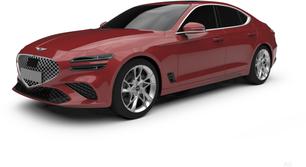
I’m family testing the updated Genesis G70 this week, which has seen some tweaks to its technology and safety systems.
The G70’s release also sees the line-up trimmed to one highly-specified Sport Luxury grade, available as a four-cylinder Shooting Brake wagon or the V6 sedan on test here.
It competes with other mid-size sedans like the Audi A4, BMW 3 Series and Mercedes-Benz C-Class. So, how does the G70 handle life with a small family of three? Keep reading to find out!
The Honda Odyssey isn’t a bad choice for those looking to ferry around a large gaggle of people, but its far from the best option.
The first two rows are great and are supremely comfortable for those four occupants, but third-row usage will depend on how much those passengers are susceptible to motion sickness.
However, the Odyssey’s biggest weakness might be its sluggish engine and mundane CVT, with rivals like the new Kia Carnival and even Toyota Prius V offering better performance and better economy, respectively.
Still, the Honda Odyssey, and people movers in general, remain a solid option for those that don’t want another SUV or value the practicality and space afforded.
The updated Genesis G70 3.3T Sport Luxury is beautiful to look at and drive. It features premium features, trims and great power but the cabin is tight on space. Which makes it a little awkward to use, so this will suit a small family best or families where this may not be the primary mover. That said, I love the after-care program and it suited my small family of three, so it gets an 8.0/10 from us.
Gone are the days where people movers could be considered daggy or uncool. No, please, don’t click away, we’re serious!
The 2021 Honda Odyssey features a new front grille, bumper and headlights that combine for a much more imposing and aggressive front fascia.
The chrome highlights look especially good against the 'Obsidian Blue' paintwork of our test car, at least to our eyes, and between this and the new Kia Carnival, people movers might just be cool again.
In profile, the 17-inch wheels do look a little small next to the massive doors and huge panels, but they do feature a funky two-tone look.
The chrome touches also follow along the Odyssey’s flanks and are found in the door handles and window surrounds to break things up a bit.
From the rear, the Odyssey’s large dimensions are hard to hide, but Honda has tried to jazz things up with a roof-mounted rear spoiler and more chrome around the tail-lights and rear fog light surrounds.
Overall, the Odyssey looks handsome and confident without straying into the ‘trying too hard’ or ‘over the top’ territory, and if anything, at least it’s not another high-riding SUV, which are quickly overtaking streets and car parks the world over.
Step inside and the Odyssey’s layout is nothing special, but gets the job done.
The first- and second-row seats are plush and comfortable, while the dashboard also features woodgrain touches to lift the interior ambience.
The 8.0-inch multimedia screen sit proudly in the centre stack, while the shifter is on the dashboard to maximum interior space.
The G70 sedan is absolutely gorgeous to look at and the our test vehicle's 'Kawah Blue' paintwork makes the crisp pleating across the body stand out.
The G70 has a muscular stance, much like its BMW rival, but the rear is softer in its shaping.
The front looks sophisticated with the wide-set LED lights and black air-intake vents. The sporty 19-inch alloy wheels and red calipers behind them hint at what the powerful V6 engine can do.
The interior looks high-end with our test vehicle’s white quilted Nappa leather upholstery and a soft-touch black headliner. The dashboard looks solid and robust but the slick looking 10.25-inch touchscreen multimedia system and digital climate control panel elevate the overall design.
The only thing I didn’t like about the design was the ambient lighting. It’s limited to two panels on the roof and is a little distracting when you drive at night. I think if it was scattered more throughout the cabin, it would be less intrusive.
Measuring 4855mm long, 1820mm wide, 1710mm tall and with a 2900mm wheelbase, the Honda Odyssey is not just an imposing behemoth on the outside, but also a spacious and practical people mover on the inside.
Up front, occupants are treated to plush and comfortable seats with electronic adjustment and individual fold-down armrests.
Storage options abound, with deep door pockets, a dual-chamber glove box, and a tricked-out centre storage console that can retract into the centre stack and features two hidden cupholders.
Because of the compact engine and transmission package, and the fact the centre console tucks away, there is actually just empty space between the two front occupants, which is a missed opportunity.
Maybe Honda could have put another storage bin there, or even a cooled box for chilled drinks on long road trips. Either way it’s a notable, unexploited cavity.
The second-row seats are probably the place to be in the Odyssey, though, with its two captain’s chairs offering supreme comfort.
Adjustability is also plentiful, with forward/backwards, recline and even left/right positioning available.
However, while there are cupholders and roof-mounted climate controls present, there really isn’t much else to keep second-row occupants, well, occupied.
Would be nice to see some charging ports or even entertainment screens to keep kids and adults placated on long journeys, but at least the head, shoulder, and legroom is generous.
In the third row, it’s a tighter squeeze, but I managed to get my 183cm (6'0") frame comfortable.
The three-row bench is the least comfy place to be, but there is a charging outlet and cupholders back there.
Those with child seats also take note, the second-row captain’s chairs top-tether anchor point is very low down on the seat back, meaning you might have to max out the strap length to get it there.
Also, because of the captain’s chairs, the top tether strap can be knocked off quite easily, as the inner shoulders of the seats are smooth offering nothing for the strap to catch onto if pushed towards the middle of the car.
And you can’t even install the car seat in the third row because the bench seat doesn’t feature any ISOFIX points.
With all seats in place, the boot will happily swallow 322 litres (VDA) of volume, more than enough for groceries, school bags or even the stroller.
With the third-row folded, though, that cavity is filled in and the Odyssey features a completely flat floor then able to take on 1725L of volume.
Honda has even found a place for the space saver spare wheel, though it’s not underneath the car or tucked into the boot floor as you'd expect.
The spare is under the two front seats, and requires the removal of some interior carpets and trim to access.
It’s not in the most convenient of places, but props to Honda for getting one in there when other seven-seaters just opt for a puncture repair kit.
The practicality is hurt a little by the space available for passengers. The front row benefits the most when it comes to head- and legroom but if you’re ferrying passengers in the back seat, you’ll have to scoot your seat forward to accommodate them.
Especially if they’re tall because my knees brush the back of the driver’s seat when it’s in my driving position and I’m only 168cm tall!
The individual storage options throughout the car are okay for the class with the front enjoying a small middle console and glove box, two cupholders and two small drink bottle holders in each door.
The rear gets map pockets, two cupholders in a fold down armrest and two very small storage bins in the doors.
The other amenities are great in both rows and a high-level of comfort will be found for adults with the heat and ventilation functions on the front seats and the heat function on the rear outboard seats.
However, the width of the rear seat and the tall transmission tunnel means the middle seat should be strictly reserved for a kid. Think of the G70 as more of a four-seater if you have adults to carry.
The boot has a 330-litre capacity and it’s not too hard to reach to the very back if items roll that way. The back seat has a 60/40 split and there is a temporary spare tyre underneath the floor.
In terms of technology, you get a USB-A and USB-C port up front, as well as, a 12-volt socket and wireless charging pad to choose from. Rear passengers get two USB-C ports and the boot features another 12-volt outlet.
The 10.25-inch multimedia system looks great and is easy to use with a responsive touchscreen. It also has built-in satellite navigation, wired Apple CarPlay and Android Auto and the system now features over-the-air updates and Genesis Connected Services functionality.
The digital climate panel is responsive and very simple to operate, which is handy when on the go. The 12.3-inch digital instrument cluster is semi-customisable and it’s handy that the 8.0-inch coloured head-up display pulls through satellite navigation directions and traffic sign information.
The 2021 Honda Odyssey range kicks off at $44,250, before on-road costs for the base Vi L7, and extends to $51,150 for the top-spec Vi LX7, which we have here.
Compared with the likes of the Kia Carnival (from $46,880) and van-based Toyota Granvia (from $64,090), the Honda Odyssey is more affordable, but doesn’t skimp on equipment to bring its price down.
As standard, the 2021 Odyssey is fitted with 17-inch alloys, keyless entry, push-button start, second- and third-row air vents, and a powered rear passenger door, while new for this year’s update is a 7.0-inch customisable tachometer, fresh leather-wrapped steering wheel and LED headlights.
Handling multimedia duties is a new 8.0-inch touchscreen with Apple CarPlay and Android Auto functionality, as well as Bluetooth connectivity and a USB input.
Stepping up to the top-spec Vi LX7 nets buyers tri-zone climate control with second-row controls, powered tailgate, gesture controls to open/close both rear doors, heated front seats, a sunroof and satellite navigation.
It’s a good list of equipment, but there are some notable omissions such as a wireless smartphone charger and rain-sensing wipers, while the handbrake is one of those old-school foot-operated ones, which is a shame to see in 2021.
Nevertheless, even the top-spec Vi LX7 we have on test here is still relative affordable compared to rivals, and offers plenty of space for the price.
The G70 3.3T Sport Luxury sedan on test here is priced at $88,000, before on-road costs, which is $7000 more expensive than the 2.0T Shooting Brake version. That positions it right in the middle of its nearest competitors and you get some fab features included.
The premium items include electric front seats with heat and ventilation functions, heated rear outboard seats, Nappa leather upholstery and other leather trims, a sunroof, a heated leather-wrapped steering wheel and a premium 17-speaker Lexicon by Harman sound system.
The update sees the G70 now have an intelligent speed limit assist feature, the 'Genesis Connected Services' app and over the air updates to its software.
Other standard features include keyless entry, keyless start, remote start from the key fob, a powered tailgate, 19-inch alloy wheels, a temporary spare wheel, dual-zone climate control and extendable sun visors.
All 2021 Honda Odysseys are powered by a 129kW/225Nm 2.4-litre ‘K24W’ four-cylinder petrol engine, which drives the front wheels via a continuously variable automatic transmission (CVT).
Peak power is available at 6200rpm, while maximum torque is on stream from 4000rpm.
Honda diehards might note the K24 engine designation and be reminded of the rev-hungry 2.4-litre unit of the Accord Euro from the early 2000s, but this Odyssey’s powerplant is built for efficiency rather than performance.
Compared to the likes of the Kia Carnival (which is available with a 216kW/355Nm 3.5-litre V6 or 148kW/440Nm 2.2-litre turbo-diesel) the Odyssey is noticeably down on power.
The Australian Odyssey also doesn’t feature any form of electrification, such as the Toyota Prius V, which would excuse the lower outputs and push the Honda people mover more into green territory.
The G70 3.3T Sport Luxury sedan has a 3.3-litre V6 turbo-petrol engine with a maximum power output of 274kW and 510Nm of torque. The G70 sedan is a rear-wheel drive and features an eight-speed auto transmission.
The V6 engine responds eagerly, being able to do a 0-100km/h sprint time in just 4.7-seconds. Suffice it to say it’s fun to drive.
The 2021 Honda Odyssey, regardless of grade, will return a fuel consumption figure of 8.0 litres per 100km, according to official figures.
This betters the fuel economy of the petrol-powered Kia Carnival (9.6L/100km), as well as the Mazda CX-8 (8.1L/100km) and soon-to-be-replaced Toyota Kluger (9.1-9.5L/100km).
In our week with the Odyssey Vi LX7, we managed an average of 9.4L/100km in a mix of inner-city and freeway driving, which isn’t too far off the official figure.
Though the fuel consumption isn’t too bad for a naturally aspirated petrol engine, those who want to save costs at the bowser should look to the petrol-electric Toyota Prius V hybrid, which sips just 4.4L/100km.
The compromise for getting all of the power is that she’s a thirsty gal and the official combined cycle fuel consumption figure is 10.4L/100km and my real-world usage came to 10.6L/100km.
However, that’s after mostly doing open-roading – expect the fuel usage to be higher in an urban setting.
Based on the combined cycle and the 60L fuel tank, expect a driving range of around 577km on average. Which means you’ll be filling up more on a longer journey than more efficient sedans.
Though the Honda Odyssey looks like a bus on the outside, it doesn’t feel like one behind the wheel.
The Odyssey drives differently to an SUV, which is a good thing, feeling more hunkered down and connected to the road compared to the wallowy and bouncy nature of some high-riders.
Don’t get me wrong, this isn’t Honda’s best handling model, but there is certainly enough feedback in the steering wheel to know exactly what’s happening underneath, and the Odyssey always feels predictable, regardless of road condition.
And because visibility is excellent all around, the Honda Odyssey is just an easy, no-fuss car to drive.
The second-row is also great while on the move, and might actually be the better place to be.
The seats do a great job at soaking up little bumps and road imperfections, and there is plenty of room to stretch out and relax while someone else handles driving duties.
It’s a shame, then, that there isn’t more going on in the second row to keep passengers happy.
The third-row seats, though, are nowhere near as comfortable.
Maybe it’s the fact they are positioned right over the rear axle, or it’s the thick and vision-obscuring C- and D-pillars – or a combination of both – but time in seats five, six and seven, aren't ideal for those prone to motion sickness.
Maybe kids, or those with stronger stomachs can get comfortable in the third row, but for us, it was not a pleasant experience.
The G70 sedan is a lovely car to drive with graceful handling and a good well of power to dip into.
That oomph is there when you need it and it’s as easy to drive in the city as it is on the open-road.
The responsive steering makes the G70 sedan feel nimble and well-balanced in turns, even when you accelerate out of a hair-pin corner.
The suspension is on the firm side and that can lead to a few grunts when you hit bigger bumps but the ride is not unpleasant, even for back-seaters.
The cabin is generally quiet but you can get road/wind noise at higher speeds. It’s not enough to intrude on chatting but you don’t forget it’s there, either.
The G70 sedan is easy to park because it has an outstanding 11m turning circle. The 360-degree camera system is clear and the front and rear parking sensors make light work of a tight car park.
The 2021 Honda Odyssey wears a maximum five-star ANCAP safety rating from its test in 2014, as the current model is a heavily revised version of the fifth-generation car that launched seven years ago.
While back then the Odyssey did not come with advanced safety features, a key part the model’s 2021 update is the inclusion of Honda’s 'Sensing Suite' comprising, forward collision warning, autonomous emergency braking, lane-departure warning, lane-keep assist and adaptive cruise control.
On top of that, the Odyssey also comes standard with blind-spot monitoring, hill-start assist, a reversing camera and rear cross-traffic alert.
The long list of safety is a huge boon for the Odyssey, and with it featuring a third-row of seats, also comes with curtain airbags that extend to seats in the rear.
There are some omissions to the safety list though, with a surround-view monitor not available and the third-row seats missing out on ISOFIX anchoring points.
The Genesis G70 has a great suite of safety features and it’s almost a case of what doesn’t it have.
But a real highlight is the blind-spot view monitor which pops a video feed of your blind spot onto your instrument cluster. Very handy to have in a city setting!
The G70 has a maximum five-star ANCAP safety rating from testing done in 2018, with the update now featuring 10 airbags, which is fantastic for the class.
Other standard safety features include blind-spot monitoring, blind-spot collision avoidance assist, driver attention warning, forward collision warning, lane keeping aid, lane departure alert, rear cross-traffic alert, rear occupant alert, adaptive cruise control with stop and go function and a tyre pressure monitoring system.
A clear 360-degree camera system as well as front and rear parking sensors also come standard.
The G70 has AEB (operational from 10–180km/h) with pedestrian and cyclist detection.
There are ISOFIX child seat mounts on the rear outboard seats and three top tether anchor points but only two child seats will fit. Front passenger comfort may be compromised for front occupants when a 0-4 rearward facing child seat is installed.
Like all new Hondas sold in 2021, the Odyssey comes with a five-year/unlimited kilometre warranty, with six-years of rust protection assurance.
Scheduled service intervals are every six months or 10,000km, whichever occurs first, but this is much sooner than the industry standard of 12 months/15,000km.
According to Honda’s 'Tailored Service' price guide, the first five years of ownership will cost buyers $3351 in servicing fees, averaging out to around $670 per year.
The Kia Carnival petrol meanwhile, is about $2435 to service over five years, averaging out to be about $487 per year.
The Toyota Prius V also needs to be serviced every six months/10,000km, but the cost of the first five years of ownership totals just $2314.71 – more than $1000 less than the Odyssey.
The Genesis after-purchase program is hard to beat and such a treat because you get five years or up to 50,000km complimentary servicing with the G70. How good is that?
The G70 also comes with a five-year/unlimited km warranty and the servicing intervals are every at 12-months or 10,000km, whichever occurs first. The interval could be annoying if you travel a lot but any annoyance will be softened by the fact that the services are free.