What's the difference?
Like many car brands, Honda is storming the hybrid field. The new HR-V brings with it a hybrid powertrain and external facelift but is it enough to keep it competitive in the small SUV segment?
As with any cosmetic surgery you may wonder whether the facelift has been successful.
No tricks – I’ll tell you straight up the new external design might be what you’re looking for if you’re on the hunt for a small SUV that doesn’t look like it moonlights as an Uber for Mr Big Ears (a Noddy reference for any youngsters out there).
We're testing out the top hybrid model, the L, to see what else this urban dweller gets right and what it sometimes gets wrong.
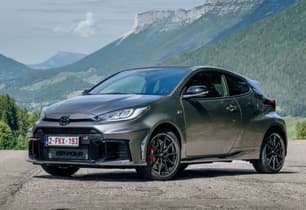
Thank the automotive gods cars like the GR Yaris still exist.
Not only are hot hatches the funnest way to drive, but in a world that’s obsessed with electric vehicles, these combustion-powered beasties remind us what we’ve got before it's gone.
The GR Yaris arrived in 2020 and won praise for its rally-car-for-the-road feel with Toyota’s high-performance division Gazoo Racing heavily modifying the docile Yaris hatch - while adding a bit of Corolla - to create this little monster.
In early 2025 Toyota added more power and torque, along with an automatic transmission for the GR Yaris and now a new variant has been launched - the GTS Aero Performance Package and this is what we are testing.
The Honda HR-V e:HEV L offers a respectable driving experience in the city but compared to its rivals, it’s features list and safety don’t always stack up. It sort of straddles the fence between basic and lux at times, which is an odd place for a top-model to be but its sharper styling will win hearts and the cabin is still practical.
The GR Yaris GTS with the Aero Performance Package is a so wonderfully special with its brilliant engineering, mind-blowing dynamics and fun-to-drive nature. The new aero package makes an already angry beastie look furious, making it the perfect enhancement that's also functional.
The only lower marks here are for warranty, fuel use and practicality. But if there was a score for fun it'd be a 10/10.
The small SUV segment can often be littered with odd-looking cars that highlight pillowy or severely angular body-shapes (lookin' at you C-HR) but the HR-V offers something stylish and modern instead.
The 2025 HR-V has a sharper design that accentuates the coupe styling, slim LED headlights and crisp-looking grille. A feature highlight is the eye-catching full-length tail-light treatment which makes the design pop at the back.
The interior is gorgeous with a streamlined dashboard that features just the right number of buttons and dials for those who want more tactility in a world where screens rule.
While the technology screens are on the smaller end, they look great against the synthetic leather trims and soft touchpoints that are liberally splashed throughout the cabin.
The cockpit is driver-orientated with everything within reach and easy to use while on the go. The steering wheel looks sporty and feels wonderful.
Everything looks well-built and feels solid; it's a cabin you’ll be pleased to spend time in.
The GR Yaris exists so that Toyota could go racing in the World Rally Championship. As with many racing series it required Toyota to build a road-going version of their Yaris race car, also known as a homologation vehicle. It’s a good deal, they get to race, you get a race car for the road. And so the GR Yaris was born.
Wildly different from a regular five-door garden variety Yaris, the GR Yaris is a hand-built three-door hatch with a wider track, wider and lower body and the use of forged carbon and aluminium for lightweight construction.
The GR Yaris already looks very angry, but the GTS Aero Performance Pack makes it look furious. It adds a huge adjustable rear wing, fender ducts that channel air, a front spoiler lip that aids stability, a giant bonnet scoop to help release air, and rear bumper ducts to reduce drag.
The GR Yaris’s cabin was redesigned for the 2025 update and that saw the dashboard angled more to the driver much like in a race car, but it's more functional than fancy and it’s all very plain.
Still, we’re not complaining. The seats are lovely and the red stitching is a nice touch but this isn’t a Lexus. It’s supposed to favour function over form and so the design is absolutely fitting. And by function I mean dynamics and not practicality.
For a small SUV, the cabin is large. Both seating rows feature excellent access with the 195mm ground clearance not eliciting one grunt from my occupants (even the oldies).
Head- and legroom is decent in both rows but taller passengers might brush the ceiling on bumps when seated in the back.
The only area that lacks this feeling of space is the boot, as it only has 304L of capacity available when all seats are in use and that's on the tiny side compared to its rivals. The Kia Niro has 425L which rivals some sedans!
Seat comfort is best in the front where thick padding and a longer cushion offer more comfort on a longer journey, despite lacking lumbar support.
The rear seats are harder and shorter and you should expect some big stretches from adults after a road trip. However, the directional air vents and other amenities keep it from feeling too basic on comfort.
There are lots of storage options with a glove box that's large enough to fit a manual with room to spare, a small middle console, two large 'stacked' shelves in front of the gearshift, four cupholders, four drink-bottle holders and two map pockets that also feature a device holder large enough to fit my iPhone 15 Pro Max.
The HR-V has 'Magic' seats in the rear which means the base can fold up or the backs can be folded flat. It’s a cool feature that opens up extra storage options.
The technology is simple to use and responsive. The touchscreen multimedia system has built-in satellite navigation, the Honda Connect app, wireless Apple CarPlay and wired Android Auto. The CarPlay is easy to set up and maintains a steady connection.
Charging options are good with a single USB-A and three USB-C ports, as well as, a 12-volt socket but you miss out on a wireless charging pad despite the L being the top grade.
The regular Yaris is small, the GR Yaris is smaller at 3995mm end-to-end and with two fewer doors. As a tall person (I’m 1890mm end-to-end) the space on board is adequate up front with just enough knee, head and elbow room.
The GR Yaris is a four seater with the two rear seats accessed through the front doors. There’s not much room in there for adults and not even my lanky 11-year old would be happy in there. Still if you need to carry three other people, technically you can.
Cabin storage is limited to fairly large door pockets and two cupholders between the front seats. There is a little shelf carved into the dashboard which is great and a small glovebox below it.
Boot space is tiny at 174 litres but again this is a small car with other priorities.
There are three HR-V variants available, starting with the petrol base-model Vi X, moving to the mid-spec e:HEV X and on to the top-grade e:HEV L; which is the model on test here.
The L is priced from $42,900, drive-away (2000, NSW postcode), which positions it as the most affordable compared to its similarly graded rivals. The Kia Niro HEV GT-Line is $55,487, drive-away, and the Toyota C-HR Koba is $55,180, drive-away.
Despite having a much higher price tag, the rivals sport a few extra features including electric front seats, ventilated front seats, larger media screens, wireless Android Auto, a wireless charging pad and upgraded sound systems... just to name a few.
Oh, and the HR-V is only a four-seater, so the rivals also boast a fifth seating position.
That being said, the L isn't a total lump in the features department and the standard equipment is still pretty good (just not full-bodied like it's rivals).
The L comes with synthetic leather and cloth mixed upholstery and trims, heated front seats, a heated steering wheel and 18-inch alloy wheels.
Technology includes a 9.0-inch touchscreen multimedia system with satellite navigation, wireless Apple CarPlay, wired Android Auto, six-speaker sound, the 'Honda Connect' app, a 7.0-inch digital instrument cluster, one USB-A port, three USB-C ports, a 12-volt socket and Bluetooth connectivity as well as AM/FM and digital radio.
Practicality feels well-rounded with keyless entry and start, rain-sensing windscreen wipers, dusk-sensing headlights, dual-zone climate control and a powered tailgate.
The GR Yaris GTS Aero Performance Pack sits at the top of the model range with the six-speed manual version listing for $64,990 before on-road costs, while the automatic is $67,490. That’s $4500 more than the standard GTS without the aero pack
The aero pack significantly toughens up the look of the GR Yaris, and also improves its dynamics. So if you plan to use the GR Yaris as a track car and drive it hard and fast, the kit will help.
That's thanks to improved down force from the giant rear wing, air ducts in the fenders to improve steering under braking, a front splitter for stability, underbody cladding to maximise airflow and a bonnet scoop to help release hot air from the engine bay.
The rest of the high-performance equipment comes on the regular GTS including a Torsen limited slip differential, high performance suspension tune and 18-inch forged wheels with Michelin Pilot Sport 4S tyres.
Standard features are the same as the regular GTS and include heated GR sports front seats with suede leather upholstery, a 12.3-inch digital instrument cluster, leather-wrapped steering wheel, aluminium pedals, dual-zone climate control, proximity unlocking and push-button start.
There's also an eight-speaker, eight-inch media screen with Apple CarPlay and Android Auto, and an eight-speaker JBL sound system.
The value is actually great considering all the high-performance engineering around you in the GR Yaris, and it will save you money from being tempted to go down the aftermarket route and buy equipment that hasn't been designed for the car by the people who made the car.
There are some nice comforts, too, like the leather seats, although the media screen is small.
The L is a hybrid which combines a 1.5L four-cylinder petrol engine with an electric motor and together they produce up to 96kW of power and 253Nm of torque.
Which is plenty to make the L feel like a zippy city car but on the open road, the engine has a tendency to over-rev and can get whiny going up a hill, which may be a by-product of the continuously variable auto transmission.
It still boggles my mind how 221kW and 400Nm is extracted from a 1.6-litre three-cylinder petrol engine but here we are. The GR Yaris has this set up with this output, along with all-wheel drive.
Thanks to lightweight materials such as forged carbon and aluminium the GR Yaris weighs nothing in car terms - just 1300kg - so acceleration from 0-100km/h is a rapid 5.1 seconds.
I’ve already detailed the juicy engineering bits the GTS Aero Package is fitted with, from the limited slip diff to the adjustable rear wing, and it’s not an exaggeration to say that not many small hatches are this gifted with this kind of genius.
Our test car has an eight-speed automatic, which is easy to drive in city traffic. However, I'd opt for the six-speed manual because if you've come this far you may as well go the whole way.
The HR-V L has a low combined (urban/extra-urban) fuel cycle figure of just 4.3L/100km which is not far off the 4.0L/100km claims of its rivals. Combined with the 40L fuel tank, you have a theoretical driving range of up to 930km, which is pretty darn good!
After doing a lot of urban driving, with a couple of longer trips thrown in, my real-world usage came out at 5.1L, which is isn't too far off the claimed figure, is still a good result overall and computes to a range in excess of 780km.
The GR Yaris is a hungry beastie that eats through its 50L petrol tank fairly quickly and then wants more. Toyota says you should see 9.1L/100km of 98 RON used in the automatic and 8.2L/100km with the manual over a combination of driving conditions.
Stop-start city driving in traffic saw fuel use increase dramatically to 13.0L/100km in the auto. According to our car's trip computer, my own testing used an average of 14.5L/100km after mainly suburban driving.
The HR-V L is an SUV perfectly suited to city life. Its power delivery is responsive around town, allowing for quick bursts when needed and the well of power feels deep until you get onto the open road. And as mentioned, that’s when it’s let down a bit.
The HR-V has a tendency towards mild understeer in quicker sweeping bends but is otherwise surefooted on the road. The suspension is firm, and you’ll notice the bumps here and there, but ride comfort still manages to be okay most of the time. Also road noise isn’t too high around town.
The visibility is great until you’re trying to look out of the back window and have a passenger to your left or a car seat installed. A digital rearview mirror would have been quite welcome in these scenarios.
Like most small SUVs the HR-V is easy to park and it’s small enough to be your best friend in a tiny car park. However, the reversing camera doesn’t reflect the grade level as the quality of the feed isn’t the best.
There’s been a multitude of electric cars through the test garage over the past six months and the GR Yaris is like a diamond found in a tub of Lego when it comes to driving.
So much sound. The three cylinder snarls on start up sending vibrations into the cockpit and up through the steering wheel, the transmission can be heard engaging gears, the big brakes creak as they’re released. And we’re hardly even moving yet. There’s so much theatre. It’s all real and I love it!
I even love that in the first 10 minutes of driving, a message appears on the instrument cluster asking that excessive acceleration be avoided while the engine is cool. You don’t get that beautiful inconvenience in an electric car.
But when you can excessively accelerate (on a race track of course, right?) it's wonderful and it's loud. Lift off, and the wastegate lets out a little "weeee!" in excitement.
I don't need to tell you that the GR Yaris handles better than just about anything in this price range and while the ride is firm and speed bumps feel like you’ve hit a gutter I still drove the GR Yaris every day, even to do the school run, because it is so much fun. Meanwhile my hybrid long0term test car looked lonely in the driveaway all week...
Being an automatic makes it easy to drive in traffic and the small size makes finding parking spots quick and simple.
Visibility is good, steering is excellent, the seats are big enough to accommodate me but snug enough to offer good lateral support, too.
The HR-V has a four- out of a possible five-star ANCAP safety rating from testing done in 2022. It only features six airbags and its individual assessment scores aren’t as high as its rivals.
In fact, both the rivals I’ve mentioned performed much better and have additional safety features to boot, including safe exit assist, 360-degree view camera systems and rear occupant alert. Which the HR-V misses out on.
The top model HR-V benefits the most in safety compared to the lower grades and includes blind-spot monitoring, front fog lights, forward collision warning, rear cross-traffic alert, lane keeping aid and departure warning, traffic sign recognition, intelligent seatbelt warning, adaptive cruise control and a reversing camera as well as front and rear parking sensors.
Some notes, though. The lane departure and keeping aids seem to 'activate' whenever they feel like it. I had them come on more on unmarked roads than marked.
The adaptive cruise control can be too sensitive at times and having the car slam on brakes when you're passing a parked car on the highway going 100km/h is a scary experience to say the least.
The HR-V has AEB with car, pedestrian, and cyclist detection which is operational from 5.0 to 100km/h (170km/h for car).
Being a four-seater, you only get two ISOFIX child seat mounts and two top-tether anchor points and while it is easy to fit a child seat in, the top of it wipes out your rearview vision.
The safety is pretty disappointing as it lets down an otherwise solid SUV.
The GR Yaris has not been crash tested by ANCAP and the score for the regular Yaris can't be applied to the GR version.
Still the GR Yaris comes equipped with an array of advanced safety tech such as auto emergency braking (AEB), lane keeping assistance and a blind spot warning.
There are six airbags, two child seat ISOFIX points and two top tether anchor mounts in the rear row.
Honda offers the HR-V with a five-year/unlimited km warranty and an eight-year battery warranty which is on the lower end considering it's rivals can get up to seven-years unlimited km warranty now.
The five years capped-priced servicing program offers excellent value, however, as services are a flat $199, which is great for the class.
Servicing intervals are at every 12 months or 10,000km, whichever occurs first and that should be fine for the average city dweller. But it could get annoying if you put higher than average kays on your car every year.
The GR Yaris is covered by Toyota's five-year/unlimited-kilometre warranty which is lacking compared to many other mainstream manufacturers’ seven-year-plus warranties. The good news is that the engine and driveline is covered by an extra two-year warranty.
Servicing is capped at about $300 for the first six visits, although services are six months apart which means that after three years you’ll run out of capped-price servicing.
Still, Toyota’s reputation for reliability does provide some peace of mind.