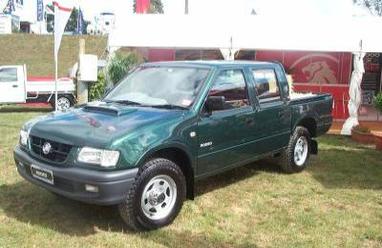
Holden Rodeo 2003 Problems

Are you having problems with your 2003 Holden Rodeo? Let our team of motoring experts keep you up to date with all of the latest 2003 Holden Rodeo issues & faults. We have gathered all of the most frequently asked questions and problems relating to the 2003 Holden Rodeo in one spot to help you decide if it's a smart buy.

Used Holden Rodeo review: 2003
By Graham Smith · 01 Oct 2005
Imported one-tonne utes have become the staple of local trades and industries which want a tough work vehicle that can carry a decent load around the job site, and Holden's Rodeo is one of the leading models. The Rodeo showed up on the local landscape in the 1970s when Holden utes began to lose favour with tradies.They had simply become too expensive compared to the imported utes which, despite being a bit rough and rugged, went on to conquer the market.  Local utes have made a comeback in recent times, but they're now more a lifestyle vehicle for people who want a dual-purpose daily driving/weekend escape car.MODEL WATCHThe RA Rodeo hit the market in 2003. It was bigger, more powerful, better equipped and safer than its predecessors.  Built on a tough chassis, the RA Rodeo boasted substantially increased torsional rigidity, up by as much as 60 per cent, and that equates to better crash protection and a more stable platform for better handling.The RA's larger external dimensions translated into substantially more space inside the Rodeo's new cabs.  Holden offered three engines: a 2.4-litre single overhead camshaft fuel-injected four-cylinder (94kW at 4800rpm and 207Nm at 3200rpm), a 3.5-litre all-alloy double overhead camshaft V6 (147kW at 5400rpm and 280Nm at 3000rpm), and a 3.0-litre turbocharged four-cylinder diesel (96kW at 3800rpm and 294Nm at 2400rpm).There was a choice of manual or automatic transmissions across the range, and a choice of two or four-wheel-drive, the latter with a choice of two-wheel-drive, and high and low range four-wheel-drive.  All models, except for the entry level DX 2.4-litre two-wheel-drive which has coil front springs, have torsion bars at the front and heavy duty leaf springs down back.Holden offered three models: the DX entry level, the LX and the range topping LT, three body styles, single cab, space cab and crew cab, with a range of two and 4WD variants. In total, there were 56 model variants to choose from.IN THE SHOPAs the Rodeo is essentially a work vehicle it is important to look for signs of damage caused in the daily grind on the job site. Look for dings and scrapes, inside and out.  Be on the alert for wear and tear from big burly bodies. Check for such things as rips in the trim and broken plastics on controls often used and sometimes abused.Not surprisingly for a vehicle meant to carry a substantial load, the Rodeo's ride is firm, although it gets better when there's a load in the back.  Although noisy, the diesel is the pick of the engines. It has lots of get up and go and returns decent fuel consumption. The V6 has even better performance, but is a petrol guzzler.If you prefer the V6 it might be worth switching it to dual-fuel to cut running costs. Holden has a dual-fuel system which is a sequential vapour-injection system that offers equivalent power and performance whether on petrol or gas.CRUNCH TIMEIncreased chassis rigidity proves a stable platform for responsive handling that increases the ability to avoid a crash, and the Rodeo has side intrusion bars for protection in side impacts. ABS adds another level of crash avoidance on the LT which also boasts dual front airbags in its list of standard features. Airbags are also optional on the LX models.HOLDEN RODEO RA 2003Roomy interior with larger cabinStrong masculine styling. Thirsty V6 engineHard ride, particularly when emptyEconomical diesel engine top choiceToo wide turning circleRating15/20 Tough work ute with goodperformance and cabin, but petrol-guzzling V6 engine.
Read the article
Used Holden Rodeo review: 2003
By Graham Smith · 23 Jan 2009
Imported one-tonne utes have become the staple of local trades and businesses that want a tough work vehicle that can carry a decent load around the job site, and Holden’s Rodeo is one of the leading models. The Rodeo first showed up on the local landscape in the ’70s when Holden’s utes began to lose favour with tradies. They simply became too expensive compared to the imported utes, which despite being a bit rough and unrefined conquered the market.While local utes have made a comeback in recent times, they’re now more a lifestyle vehicle for people who want a dual purpose daily driving weekend escape car. The imports have mostly stuck with their strength, which is their carrying capacity and their toughness on and off road.Even so the importers have keenly watched the growth in the popularity of the local utes and have also attempted to address the demand for cool vehicles without giving away the advantage they hold in cargo capacity.The all-new RA Rodeo hit the market in 2003. It was bigger, more powerful, better equipped, safer and Holden also claimed it was tougher than ever before.As with all cars looks are important in the ute market and the new Rodeo arrived with a new muscular look that was perfectly appropriate for the segment. All sat high and handsome making it difficult to pick a 2WD from a 4WD model, which ensured all had a rough and tough look on the road.Built on a tough chassis the RA Rodeo boasted substantially increased torsional rigidity, up by as much as 60 per cent, and that equates to better crash protection and a more stable platform for better handling.The RA’s larger external dimensions translated into more space inside the Rodeo’s new cabs, which delivered substantially more leg room, shoulder space and head room than the outgoing model. Wider and higher doors across the range made it generally easier to get in and out, with wider opening doors made it easier to get in and out of crew cabs.Inside, the dash was what you might expect to find in a passenger car, while easy to read graphics on controls and instruments, a new four-spoke steering wheel and upgraded sound systems made the RA feel even more car-likeFor power Holden offered the choice of three engines; a locally developed 2.4-litre single overhead camshaft fuel-injected four-cylinder which produced 94 kW at 4800 revs and 207 Nm at 3200 revs, a 3.5-litre all-alloy double overhead camshaft V6 that boasted peaks of 147 kW at 5400 revs and 280 Nm at 3000 revs, and a 3.0-litre turbocharged four-cylinder diesel which delivered 96 kW at 3800 revs and 294 Nm at 2400 revs.There was a choice of manual or automatic transmissions across the range, and a choice of two or four-wheel drive, the latter with a choice of two-wheel drive, and high and low range four-wheel drive.All models, except for the entry-level DX 2.4-litre two-wheel drive, which had coil front springs, had torsion bars at the front and heavy-duty leaf springs down back.All models had rack-and-pinion steering, and all but the DX base model also had speed sensitive power assistance.There were three models, the DX entry level, the LX and the range topping LT, three body styles, single cab, space cab and crew cab, with a range of two and four-wheel drive variants. In total there were 56 model variants to choose from.As the Rodeo is essentially a work vehicle it’s important to look for signs of damage caused in the day-to-day grind on the job site. Look carefully for dings and scrapes on the body, outside and inside.Check for wear and tear inside from big burly bodies getting in and out. Things like rips and tears in trim, broken plastics on controls often used and sometimes abused.Not surprisingly for a vehicle meant to carry a substantial load the Rodeo’s ride is firm, although it gets better when there’s a load in the back. It also has a large turning circle so allow plenty of room if you’re doing a U-turn.Although it’s noisy the diesel is the pick of the engines. It’s got plenty of get up and go and returns decent fuel consumption. The V6 has even better performance, but it’s a gas-guzzler.If you prefer the V6 it might be wise to consider switching it to dual-fuel to cut running costs. Holden has a dual-fuel system available which is a sequential vapour-injection system that offers equivalent power and performance whether on petrol or gas.Increased chassis rigidity proves a stable platform for responsive handling that increases the ability to avoid a crash, and the Rodeo has side intrusion bars for protection in side impacts.ABS adds another level of crash avoidance on the LT, which also boasts dual front airbags in its list of standard features. Airbags are also optional on the LX models.Hugh Eastwood owns two RA Rodeos, an LX Cab chassis for work and an LT Crew cab for recreation, both with the 3.5-litre V6. The work truck is always fully loaded, but performs very well, he says. The V6 has plenty of power, the gearbox is smooth and easy to use, and the brakes have no problems stopping well over two tonnes. The LT Crew cab has all the same positive characteristics, however he finds the ride is too firm without a load and the gearing is to low for normal road use. Two major drawback with both are the massive turning circle, and very high fuel consumption – 16 L/100 km – whether loaded or not.Steve Hoogen owns a 2004 Rodeo LX Duel-cab 4WD five-speed manual diesel long wheel base tray top and loves it. It does everything he expects of it well, with great fuel consumption – 10 L/100 km – around town and a bit better on freeway. He says he would like another gear for speeds over 80 km/h. It handles and brakes well on the road and is great off road. The ride is good with a little weight in back or four on board, but a bit hard when riding solo and empty.• Strong masculine styling• Roomy interior with larger cabin• Thirsty V6 engine• economical diesel engine top choice• Large turning circle• Hard ride, particularly when empty• Tough work ute with good performance and roomy cabin, but gas guzzling V6 petrol engine.
Read the article
Holden Rodeo 2003: Leaky turbo diesel
Answered by CarsGuide team · 14 Feb 2003

Holden's service people say the problem was fixed with the introduction of a new seal last year. Holden's response was: "Vehicles undergo a continuous cycle of product development." To this end, the O-ring on the Jackaroo Turbo Diesel model was revised, and last year a procedure was developed in order to allow fitting of such by Holden retailers, as required. "To our knowledge completion of this replacement has resolved any issue." If you have had the new seal fitted and are not satisfied it has fixed the problem I recommend you return to the dealer and register your complaint.

Holden Rodeo 2003: How to reduce fuel consumption?
Answered by Graham Smith · 27 Apr 2006

THE 3.5-litre V6 petrol engined RA Rodeo has a reputation for being thirsty. There is a factory-approved dual-fuel kit available, and this may be the best way to reduce your fuel bills. The jury is still out on the economy of the new Alloytec V6 Rodeo. When asked, Holden wouldn't say if the new engine was more economical than the old one.

What's the best ute for 4WD and beach driving?
Answered by CarsGuide team · 12 Dec 2003

The trade holds the Hilux up as the best of those you've mentioned. The Toyota turbo diesel is easily the best, but the downside is that you'll have to pay up to $3000 more to get behind the wheel of a Hilux. The others are OK, and all rated equally, but there are plenty of reports from the trade about problems with the Nissan turbo diesel so I'd recommend caution. If you were to consider a Navara, make sure it has an extended warranty for peace of mind.

Braking performers
Answered by CarsGuide team · 07 Feb 2003

No doubt the Rodeo delivers adequate brake performance -- it has to, to meet ADRs and customer expectations. But I'm sure you'd agree it doesn't brake as effectively as your BMW. The Rodeo doesn't have the high performance of the BMW so it doesn't need the same level of braking performance. German cars (including the Opel-sourced Holden) do tend to use a pad/rotor combination that gives good pedal feel and stopping performance, but higher wear. But all car companies are striving for greater braking performance and even homegrown models now chew up pads and discs in less than 60,000km.

Holden Rodeo 2003: Oil and fuel use
Answered by Graham Smith · 06 Sep 2011

It would be possible, but I wouldn’t recommend doing it, as there’s too much work required. I would recommend converting it to LPG, you’ll get the savings and it won’t cost you anything like as much. Use a good quality sequential LPG injection system, and check the general condition of the engine before making the conversion.

Disclaimer: You acknowledge and agree that all answers are provided as a general guide only and should not be relied upon as bespoke advice. Carsguide is not liable for the accuracy of any information provided in the answers.
Have a new question for the CarsGuide team?
More than 9,000 questions asked and answered.
Complete guide to Holden Rodeo 2003
Complete guide to Holden Rodeo 2003 CarsGuide Logo
Reviews, price, specs and more