Diesel cars buyers guide
By Craig Duff · 04 Aug 2011
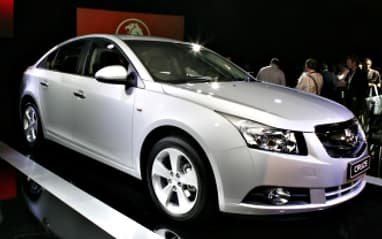
New-age diesels in every size and price class promise more kilometres from every litre and more kilometres between refills, thanks to massive advances in efficiency and refinement. The days when diesels were black-smoke rattlers, and only favoured by farmers with a diesel tank to top-up their Benz or Peugeot, are long gone. The diesel-engined Ford Territory easily outsold the petrol-powered model during its first month in showrooms, reflecting the backlog of buyers who now put diesel first. But is diesel the right choice for everyone? Petrol power is also more efficient than ever in 2011, LPG is making a solid surge, especially with a new gas-powered Falcon on the road and a Commodore coming soon, and it still costs more to choose a diesel. At the most basic level, new-car buyers need to work out how quickly the extra cost of a diesel car will be recovered. If it takes three years and you plan to keep the car for five, that's all good. But if it takes seven years to make up the difference and you only plan to keep the vehicle for five, then ... So it's a horses-for-courses situation. The more you drive the more a diesel makes sense. Diesels generally have the advantage of lower fuel consumption, and many modern diesels can also get 1000 kilometres from a single tank, as well as a tougher engine to cope with the higher compression and better values at resale. Diesel is already the first-choice pick with some luxury brands, as BMW's diesel-powered fleet has outsold the petrol models through the first half of 2011 and Mercedes is also reporting record diesel sales on its C and E-Class cars. Most European-built cars have always had diesel variants and the 4WD and SUV classes have also been long-term diesel strongholds, but the move to maximise fuel efficiency means they're also appearing in baby and small cars in Australia. It's in these price-sensitive segments where choosing a hi-tech oil-burner can represent up to 15 per cent of the cost of the car. Buying a diesel Holden Cruze adds up to $4000 to the price and if you pick a Ford Focus with diesel the extra cost is around $4300. The good news is that diesel cars will maintain their price advantage at resale time, says Glass's Guide managing director Santo Amoddio. "The only area where the diesels aren't strong is the manual four (cylinders)," he says. "In Europe it's the sensible way to drive but Australians have yet to embrace the idea of manual-powered small diesels, so the used values reflect that." Amoddio says diesels are a quick way to cut fuel use and CO2 emissions. "There's a lot of talk about electric cars and hybrids but I think diesel is the way to go for private buyers at the moment in terms of costs of running and resale," he says. "That's especially the case in the medium in large SUVs. For example, we expect the turbodiesel Ford Territory to outsell the petrol model. It's probably two years too late to market but it's a good engine and will suit that application." The diesel engine in the Territory is up to a $5000 option but in this class people often believe they need the extra towing capacity of the diesel, yet then don't order the heavy-duty towing pack, which pulls it back to the 1600kg the six-cylinder petrol engine can haul. At Ford's claimed fuel use rates of 8.2 litres for the diesel against 10.6 litres for the petrol it will take about six years travelling 15,000 kilometres a year (assuming the same pump price for both petrol and diesel) to recover that five grand. The relative difference between diesel and petrol models isn't usually as big on SUVs as it is with the smaller cars. Choose diesel on a Toyota Prado and it's a $1000 premium, while Subaru's Outback is $2000 more with a diesel donk - but only comes as a manual - and the Mitsubishi Pajero is around $3000 dearer with an oil burner. Step up to the larger off-roaders and Nissan's turbodiesel Patrol is $3000 cheaper than the comparably-equipped petrol model, Range Rover offers $500 off its diesel Evoques and diesel is the entry option for Audi and BMW's SUV ranges. Diesel is even the preferred option for the Toyota LandCruiser despite its $10,000 dearer purchase price. The traditional argument that servicing costs are higher is also starting to lose momentum. Ford has capped servicing costs for the new Territory and the diesel is only $20 dearer at $290 for each visit to the dealer. It's a similar story with the Polo - over the first five services and/or five years the diesel is about $100 cheaper to maintain at $1910. "If you know what you plan to do with the car it isn't hard to work out whether you should buy diesel or petrol," Amoddio said. "About five years ago diesels accounted for 1 per cent of passenger vehicles in Australia - now it's nudging 10 (per cent). It's the improvements in refinement that have driven that and we see that trend continuing." VW Polo Comfortline Petrol (diesel) Price: $19,850, ($22,350) Engine: 1.2-litre turbo petrol (1.6-litre turbodiesel) Outputs: 77kW/175Nm (66kW/230Nm) Transmission: Six-speed manual (five speed manual), front-wheel drive Fuel use: 5.5 litres/100km, 128g/km CO2 (4.7 litres/100km, 124g/km CO2) Weight: 1048kg (1115kg) Price after three years: $10,900 ($12,500) Percentage of new cost: 55 per cent (56 per cent) Annual fuel cost* $1152.30 ($979.21) Diesel saving of $173.09 a year means it would take 14.4 years to recover the $2500 difference in purchase price. Holden Cruze CD Petrol (diesel) Price: $22,240 ($24,990) Engine: 1.4-litre turbo petrol (2.0-litre turbodiesel) Outputs: 103kW/200Nm (110kW/320Nm) Transmission: six-speed manual (both), front-wheel drive Fuel use: 6.4 litres/100km, 146g/km CO2 (5.6 litres/100km, 147g/km CO2) Weight: 1329 (1489) Price after three years: $11,100 ($15,100) Percentage of new cost: 50 per cent (51 per cent) Annual fuel cost: $1340.86 ($1166.72) Diesel saving of $174.15 a year means it would take 15.8 years to recover the $2750 difference in purchase price. Mercedes-Benz C-Class 250 Avantgarde Petrol (diesel) Price: $67,900 (both) Engine: 1.8-litre turbo four-cylinder (2.2-litre twin-turbodiesel) Outputs:150kW/310Nm (150kW/500Nm) Transmission: seven-speed automatic, rear-wheel drive (both) Fuel use: 7.2 litres/100km, 167g/km CO2 (5.1 litres/100km, 134g/km CO2) Weight: 1480kg (1587kg) Price after three years: $36,700 (both) Percentage of new cost: 54 per cent (both) Annual fuel cost: $1508.42 ($1062.54) The same price for both cars means a diesel Merc owner will pocket more than $445 a year in lower fuel bills. Ford Territory 2WD TX Petrol (diesel) Price: $39,990 ($43,240) Engine:4.0-litre six-cylinder (2.7-litre V6 turbodiesel) Outputs:195kW/391Nm (140kW/440Nm) Transmission: Six-speed automatic, rear-wheel drive (both) Fuel use: 10.6 litres/100km, 240g/km CO2 (8.2 litres/100km, 217g/km CO2) Weight: Price after three years: $22,000 ($25,100) Percentage of new cost: 55 per cent (58 per cent) Annual fuel cost: $2220.81 ($1708.40) Diesel saving of $512.41 a year means it would take 6.3 years to recover the $3250 difference in purchase price. Toyota LandCruiser 200 VX Petrol (diesel) Price: $88,414 ($98,664) Engine: 4.7-litre V8 (4.5-litre V8 diesel) Outputs: 202kW/410Nm (195kW/650Nm) Transmission: Five-speed automatic (six-speed automatic), four-wheel drive Fuel use: 14.5 litres/100km, 341g/km CO2 (10.3 litres/100km, 273g/km CO2) Weight: 2610kg (2675kg) Price after three years: $53,900 ($60,200) Percentage of new cost: 61 per cent (both) Annual fuel cost: $3037.89 ($2145.92) Diesel saving of $891.96 means it would take 11.5 years to recover the $10,250 difference in purchase price. *Fuel costs calculated based on national petrol average last Friday of $143.5 a litre for petrol and $142.7 a litre for diesel. Annual travel of 14,600 based on Australian Bureau of Statistics' average for the national vehicle fleet.