What's the difference?
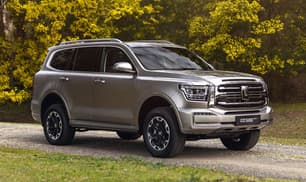
The arrival of the GWM Tank 500 Ultra PHEV is noteworthy because it’s the first plug-in hybrid Tank model in Australia.
It’s also a major event for the Aussie adventure-travel community because it’s a plug-in hybrid 4WD with five seats, high- and low-range gearing, and a front, centre and rear diff lock.
The Tank 500 PHEV gets more power and torque than its hybrid stablemate, offers about 120km electric-only driving range (listed), and it can be used as a 6kW mobile power station (V2L) at your campsite. Towing remains at 3000kg.
There’s a lot in this Tank’s favour: it’s a body-on-ladder-frame chassis large 4WD with a packed standard features list and real off-road adventure potential.
All of that – and more – for under $80 grand.
But does the plug-in set-up add anything substantial in terms of daily driveability or does it simply make this Tank an $80,000 camp-site generator?
Read on.
Ford has introduced what is being touted as an adventure-type van to its Transit Custom line-up and it’s called the Trail.
The Trail is based on the long-wheelbase Transit Custom Trend and it’s equipped with a suspension lift, on-demand all-wheel drive, 'Trail' drive mode, LED headlights and daytime running lights, a variant-specific grille, black wheel arch moulding and side strip, yellow exterior decals and 16-inch matt black twin-spoke alloy wheels.
With all that in mind, maybe a van is your next adventure vehicle?
Read on.
The GWM Tank 500 Ultra PHEV is an impressive five-seat 4WD wagon. It’s reasonably nice to drive, it’s comfortable and it’s a capable 4WD. These vehicles keep improving and are increasingly stacked with characteristics to like.
There are still glaring range-specific issues with some of its driver-assist tech and its plug-in hybrid set-up doesn’t offer the fuel economy you’d hope for. At least not under real-world testing conditions. But the Tank 500 is packed with features and represents decent value-for-money when cross-shopped against the likes of its stablemate the regular hybrid, or the Prado and Everest.
The Ford Transit Custom Trail has plenty of appeal as a work van or a camper fit-out candidate. It’s a well-packaged, comfortable and contemporary van that’s nice to drive and as a bonus, with all-wheel drive it’s given the scope of capability to be able to tackle mild off-roading situations with confidence.
It’s built for work and play and though it’s limited to two-up for travels, the Trail offers so much potential as a camper conversion for adventure seekers its few niggles are easily forgotten when you’re busy making memories.
In terms of dimensions, the Tank 500 Hi4-T PHEV is 5078mm long (with a 2850mm wheelbase), 1934mm wide and 1905mm high. It has a listed kerb weight of 2820kg, so it’s not an insubstantial vehicle.
There are plenty of old-school 4WD design cues in the Tank 500’s appearance. It’s mostly chunky and straight up and down, with some softer curves here and there as concessions to contemporary styling.
It's clear to see where the GWM Tank 500 takes its cues from – most of the current crop of popular 4WD wagons, such as the Toyota LandCruiser 300 Series.
The Tank 500 is a large vehicle straddling that line between large and extra-large 4WD wagons. It is longer than any 300 Series, but it’s narrower and shorter.
It has a sunroof, roof rails, electric side steps (that extend when doors are opened and retract when doors are shut) and 18-inch alloy wheels.
The interior is well laid-out and functional with some understated class to it. There are soft-touch surfaces and genuine Nappa leather seating throughout.
It looks like a van but with some striking yet low-key flourishes that all kind of work as a whole. Those include a Trail grille and the matt black alloy wheels. The yellow sticker-pack is a neat touch.
The Trail has more presence than a regular Trend with its 30mm-taller raised suspension and overall adventure-ready look with strong front end and chunky wheel arches.
The striking but low-key theme continues inside with a neatly laid-out yet spartan cabin. The two synthetic leather seats are topped with Trail embossing and lined with yellow stitching.
The cabin is separated from the rear cargo area by a bulkhead, which incorporates a small wired window.
This Tank 500 has five seats because the two at the very rear have been removed to accommodate the hybrid battery.
The front seats are Nappa leather, power-adjustable (eight-way for the driver, six-way for the front passenger), as well as being ventilated with massage and memory functions.
The three-position second row – set up in a 60/40 split-folding configuration – breaks the usual 4WD wagon second-row seat tradition of being fine but not fantastic. The second-row set-up in this Tank is a first-class-cabin-style back seat with a flip-down control console (which includes air-con controls) instead of a basic centre armrest.
As mentioned there is no third row in this Tank 500 because of its underfloor battery.
Up front, the 14.6-inch multimedia screen (with wireless Apple CarPlay and Android Auto) dominates the dash. It's generally easy enough to use, although I had difficulty getting my iPhone hooked up to the system and the cabin set-up remains clunky and counter-intuitive in its operation.
The cabin has wireless charging, front and rear USB ports, as well as 12V and 220V power outlets.
The second row folds away to expand the rear storage capacity. Cargo volume is a listed 640 litres when all seats are in use and 1400 litres when the second row is stowed away.
The rear cargo area has tie-down points and a cargo slide cover.
It’s a van so there are two distinct sections to the Trail, the cabin and the load space.
Firstly, the cabin. More a work-friendly than family-friendly interior, this Trail is a two-seater with plenty of durable plastic everywhere – ready for work and life – as well as charging (with USB-A and -C ports) and storage (including a van-favourite dash-top slot for logbooks etc, outboard moulded cupholders and a nifty pop-out cupholder), all amenities enough to cope with most daily van-related duties.
The seats are comfortable, supportive and have a fold-down lock-in-place armrest.
Now for the load space. There are no seats back there and as such it has plenty of potential as a work van or touring vehicle.
Access to the rear load space is via a barn door at the back and this Trail has a sliding door on both sides.
The cargo area is substantial – 3002mm long (to the bulkhead; 3450mm long if load-through hatch is used), 1392mm wide (between wheel arches) and 1425mm high (floor to roof). Easily big enough for work equipment or recreational gear. It can cope with four Euro pallets (each measuring 1200mm x 800mm) and it has a listed maximum load volume (with the bulkhead) of 6.8 cubic metres.
Load height through the rear barn doors is 531-585mm, depending on how much weight is already onboard.
The load space has the aforementioned metal bulkhead (with window and load-through hatch), load area protection kit (full height walls and moulded floor), LED lights and eight tie-down loops.
Otherwise, this is a load area ripe for customisation. Maybe a plethora of shelves for a tradie, or some bedding and extra storage for an adventurous person or couple.
The GWM Tank 500 PHEV is only available in high-spec Ultra trim and has a listed drive-away price of $78,990.
Standard features in the Ultra include a 14.6-inch multimedia touchscreen (with wireless Apple CarPlay and Android Auto), three-zone climate control, 18-inch alloy wheels, electric side steps, a 360-degree view monitor plus 'clear chassis view', auto parking assist, auto reversing assistance, lane departure warning and lane keep assist, all-terrain driving modes and an electronic rear diff lock.
Worth noting the Tank 500’s 37.11kWh battery supports Vehicle-to-Load (V2L) functionality, which means you can power your camping gear (lights, fridge etc). It offers up to 6.0kW of off-grid power, according to GWM.
'Marble White' paint is standard. Metallic paint, including 'Crystal Black' ($495), 'Dune Gold' ($595), and 'Onyx Silver' ($595) costs extra.
The 2025.75Y Ford Transit Custom Trail has a MSRP of $61,990 (excluding on-road costs).
Standard features onboard include a 13-inch multimedia touchscreen (with wireless Apple CarPlay and Android Auto), a 12-inch digital instrument display and synthetic leather upholstery with Trail logos on the seats.
Other gear includes an eight-way manually adjustable driver’s seat, keyless entry and start, front and rear parking sensors, climate-control air and automatic LED headlights.
It also has all-wheel drive, LED headlights and daytime running lights, a variant-specific grille, black wheel arch moulding and side strip, yellow exterior decals and 16-inch matt black Trail twin-spoke alloy wheels.
The standard no-cost exterior paint is 'Frozen White'. Anything else – 'Agate Black Metallic', 'Grey Matter', 'Magnetic' or 'Moondust Silver' – will cost you $700.
Every Tank 500 Hi4-T PHEV has a 2.0-litre turbo-petrol engine, a 37.11kWh lithium-ion battery and an electric motor. And that combination produces a total* of 300kW and 750Nm.
* Electric motor 120kW, petrol engine 180kW at 6000rpm. Motor 400Nm, engine 380Nm at 1700-4000rpm.
This system is mostly seamless in operation but as for GWM’s claims that it delivers “outstanding efficiency, performance, and refinement smooth, responsive take-offs, strong acceleration, and exceptional fuel savings - while ensuring minimal noise and maximum driving confidence”. Well, let’s just say this Tank 500 gets off the mark well for a large 4WD but the prompting requires a heavy right foot.
It is generally quiet and comfortable and yields a smooth driving experience. And as for fuel saving, flick your eyes down to ‘Efficiency’ to see how it did on this test.
This Tank 500 has a nine-speed automatic transmission, low- and high-range 4WD gearing, as well as a front, centre and rear diff lock.
The Ford Transit Custom Trail has a 2.0-litre four-cylinder turbo-diesel engine producing 125kW at 3500rpm and 390Nm at 1750-2500rpm.
The Trail has a clever eight-speed automatic transmission and an on-demand all-wheel drive system.
It all works rather well, but it’s a van afterall and as such it is less dynamic and more dependably driveable than perhaps a cross-shopped SUV wagon. However, as an AWD van the Trail can be trusted to keep its grip on wet bitumen, soggy grass and loosely-gravelled tracks and that’s a strong part of its appeal over a 2WD van.
Official fuel consumption is 2.1L/100km on a combined cycle on regular unleaded fuel (91) with low-charge consumption at 8.4L/100km. For reference, low-charge fuel consumption on this test was 10.2L/100km as recorded. Okay, but not a particularly compelling result.
The Tank 500 has a 70-litre fuel tank so, going by those fuel figures, you could reasonably expect a driving range of about 686km out of a full tank.
The Ford Transit Custom Trail has an official combined cycle (urban/extra-urban) fuel consumption figure of 8.5L/100km. On this test I recorded 8.8L/100km.
The Trail has a 70-litre fuel tank so going by my on-test fuel figure you could reasonably expect a driving range of about 795km from a full tank of diesel. However, as with any vehicle, once you’ve loaded the Trail with real-world burdens (e.g kids, dogs, camping gear, etc) you’ll soon see that fuel consumption increase.
The Tank 500 Hi4-T PHEV is decent on road – and that’s good news for anyone thinking about buying this large 4WD.
It has more power and torque than its hybrid stablemate (300kW/750Nm vs 255kW/648Nm) for general day-to-day drivability while it retains all of the regular hybrid’s positive driving characteristics and few of the negatives.
This Tank 500’s turbocharged petrol engine and the electric motor work seamlessly together, with no discernible clunking or shifting between systems in the powertrain.
This is a big, heavy four-wheel drive – even heavier in this plug-in hybrid form than the regular hybrid because of this vehicle’s battery. But it is nicely settled and composed because of that weight.
This flip side is the extra heft on-board means there is some body-roll to this vehicle. It’s noticeable, but not a deal-breaker.
On highways, sealed surfaces or well-maintained bush tracks the Tank 500 is quite impressive. It’s settled, controlled and quite nice to drive.
Overall, this Tank 500’s suspension – double wishbone independent with coil springs at the front, and multi-link live axle with coil springs at the rear – is firm. There has been talk of it having been retuned for Australian conditions, but it remains stiff and jittery at pace, especially through backcountry bitumen in poor condition and lightly corrugated dirt roads. However, GWM informs me that the suspension set-up will undergo more retuning for Australian conditions and those changes will be incorporated into 2026 production vehicles.
Besides that, the engine, electric motor and transmission work quite well together. It is a reasonably smooth 4WD wagon to drive.
There are, however, glaring issues with the driver-assist tech, which is quite annoying in its operation. It’s either very jarring or intrusive in its application (example: adaptive cruise control braking way too early), or bloody annoying/dangerous (example: road-sign recognition abruptly tried to cut my speed from 100km/h to 40km/h because it registered the school zone sign off to the side of the highway. At the time it was outside school drop-off and pick-up times anyway.).
You can switch off the driver-assist features every time you start up, but the system resets and defaults to being annoying again when you switch off.
When it comes to 4WDing though, the good news returns.
This hybrid retains all of the regular Tank 500’s 4WD mechanicals, including the (BorgWarner-sourced) transfer case with high- and low-range 4WD, and it offers up plenty of torque across a decent spread of revs.
The off-road traction control system is suitably dialled in, hill descent control is effective, keeping you to a nice controlled low speed and there’s low-speed cruise control or the equivalent that keeps the vehicle to a controlled pace across varying terrain.
Not forgetting, the Tank 500 is triple locked – front, centre and rear diff locks – so there are few excuses to not be able to crawl over most off-road obstacles.
However, the tyres on this vehicle (Giti Xross HT71 SUV - 265/60R18) aren't up to scratch when it comes to off-roading beyond anything other than well-maintained tracks in the dry. The Tank 500 as is well suited, straight out of the dealership, for light to moderate off-roading. But if you swap in a decent set of aggressive all-terrain tyres the Tank 500 will be able to more comfortably take on more challenging terrain.
But it's capable of climbing. I took on a 30-35 degree incline of rock steps and the Tank 500 did it easily and comfortably on its standard highway tyres.
Most of the plug-in hybrid Tank’s off-roading characteristics check out. Approach, ramp over and departure angles are as per the regular hybrid Tank 500 (30, 22.5 and 24 degrees) and wading depth is a listed 800mm although the country was so dry at our proving ground that I never had the chance to test that claim.
Ground clearance on the Tank 500 Hi4-T PHEV is listed as 213mm (it’s 224mm in the normal hybrid) but that doesn't negatively impact this vehicle's off-roading capability if you drive it with control and consideration.
It is big, so it can be a little bit tricky to steer around, especially when the track becomes tighter and the obstacles become a bit more cheeky, but generally this can be driven very safely and with the utmost control through a lot of tricky four-wheel driving challenges.
It's not as polished in its off-road performance as something like the Toyota Prado or Ford Everest, but it does the job and there's a bit of a gruff edge to it, which some people might consider part of its charm.
As mentioned, the Tank 500’s 37.11kWh battery supports Vehicle-to-Load (V2L) functionality, which in theory means you’ll be able to power your camp-site (lights, fridge etc), but I’ll reserve final judgement on this set-up until I have the opportunity to test it over a long weekend with several appliances drawing power at the same time.
If you’re thinking about using this Tank PHEV as an adventure touring vehicle then it’s handy to know its payload is listed as 610kg, while it’s noted as 790kg in the Tank 500 HEV. Throw two adults, two teenagers, a dog, and camping gear in and you’ll hit that 610kg mark in no time.
The Tank 500 is rated to tow a 750kg unbraked trailer and 3000kg braked. Gross vehicle mass is 3430kg and gross combined mass is 6430kg.
It’s easy to get in and out of the Trail’s driver seat with a wide-opening door and a big step to help you inside.
The seats are comfortable and it’s simple enough to dial-in your driving position via the tilt-and-reach adjustable steering wheel and manually-adjustable seat.
Word of warning: the auto transmission is operated via a stalk mounted on the right-hand side of the steering wheel column, which takes some getting used to.
Once underway, the Trail is punchy enough around town and in the suburbs with its 2.0L 'EcoBlue' turbo-diesel engine offering a more-than-adequate amount of power and torque (125kW and 390Nm) and its clever auto helping out with nifty moves through traffic (for a van, anyway).
Visibility is impressive from the cabin and you’re afforded a convenient vantage point with the Trail standing a bit taller than its regular Transit Custom stablemates as it’s on lifted suspension, but feeling composed on most surfaces.
The Trail has a listed kerb weight of 2046kg and a turning circle of 12.1m, pretty standard for a long wheelbase van, so this is not an insubstantial vehicle and it’s a bit tricky to 'flip a u-ee' if the situation demands it.
It has six drive modes – 'Normal', 'Eco', 'Slippery', 'Tow/Haul', 'Sport', 'Trail' – which each adjust engine torque, throttle response and traction control, among other things, to suit the road surface and conditions.
But we’re all here to see how it goes off-road, aren’t we?
Well, obviously this is no rock-crawling machine and it’s not intended to be. It’s best thought of as having an all-wheel drive system that gives this van mild off-road capabilities, as in it can tackle wet bitumen, soggy grass, lightly corrugated bush tracks and very shallow mud puddles with more confidence than the Transit Custom Trend it's based on.
In a nutshell, the AWD Trail will be able to handle most low-level traction-compromised scenarios. But it does not have enough ground clearance, wheel articulation, grip or underbody protection to tackle any terrain beyond modest off-roading.
Speaking of grip, the Trail as standard rides on Bridgestone Duravis R660 (215/65 R16) rubber, a van/light truck commercial tyre and they are not so well suited to dirt tracks and the like. Grippier all-terrain tyres would help this van perform slightly better off-road than on its showroom rubber.
In its favour, the Trail has a front skid plate and underbody protection in case it cops some knock from the ground during its adventures.
Not in its favour, however, especially as a potential touring vehicle, is the fact it has a space-saver spare wheel and tyre.
If you’re thinking of using your Trail as a tourer, it’s worth knowing payload is listed as 1179kg, maximum braked trailer towing capacity is 2500kg, Gross Vehicle Mass (GVM) is 3225kg and GCM is 5725kg.
The Tank 500 has the maximum five-star ANCAP rating from testing in 2024. As standard, it has seven airbags and a comprehensive suite of driver-assist tech including AEB, lane departure warning, adaptive cruise control, tyre pressure monitoring, front and rear parking sensors and a 360-degree around-view camera.
The Ford Transit Custom was tested as part of ANCAP’s Commercial Van Safety Comparison in 2024 and received a Platinum score “achieving a near-perfect score in safety assessments”, according to ANCAP.
The Trail has all of the Custom’s driver-assist tech and safety features, including six airbags (driver, front passenger, front side curtain and front side seat), as well as AEB, adaptive cruise control (with stop and go), traffic sign recognition and lane centering, blind-spot monitoring and assist, rear cross-traffic alert, forward collision warning, hill launch assist, side wind stabilisation, front and rear parking sensors, a rear view camera (with 180-degree split view) and on-board tyre pressure monitoring.
The Tank 500 is covered by a seven-year/unlimited km warranty, seven years' roadside assistance and seven years' capped price servicing.
The Tank 500’s 37.1kWh traction battery has an eight year/unlimited km warranty.
The first service is scheduled at 12 months/10,000km; the rest of the servicing appointments are set for every 12 months/15,000km. Lowest price per services is $335, highest is $975.
GWM has 122 dealerships nationwide at time of writing.
Ford’s five-year/unlimited kilometre warranty applies to the Trail.
Servicing is set down for every 12 months or 30,000km and capped-price servicing is offered. Four scheduled services will set you back $2000 (including a brake fluid change at year three) which isn't over the top for a vehicle of this type.
Ford Australia has about 195 independent Ford dealers in Australia, with many located in metropolitan or suburban areas.