What's the difference?
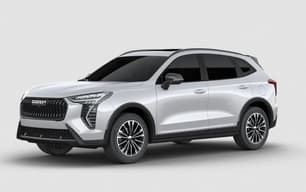
The new GWM Haval Jolion Lux sits second from the bottom in the Jolion line-up but offers a longer features list than most of its competitors. A boast that stands it in good stead from the outset.
But the question is how do those features perform in the real world? In this review we unpack how the new Jolion handles urban life.
Mercedes-Benz has the C-Class, BMW has the 3 Series, Audi has the A4 and Jaguar has the one people in Australia seem to forget – the XE.
Yep, the default setting we seem to have when it comes to buying a prestige car is as strong as buying the same brand of milk every week.
There’s a decent choice of milk, but it can sometimes seem that there are only three brands and we tend to zero in on the same one again and again. Same with prestige cars.
But all milk is the same, I hear you say. And I’m inclined to agree, and that’s the difference, cars vary greatly despite them having the same purpose.
The latest version of Jaguar XE has arrived in Australia and while it’s very similar in size and shape to its German rivals there are some big differences, and some compelling reasons to add it to your shopping list.
I promise, there are no more mentions of milk.
The GWM Haval Jolion Lux offers affordability in a modern, attractive package. However, the execution of some of its features isn’t always convincing. So yes, it’s sharply priced but it also feels underdone in some respects which doesn’t necessarily equate to value. But if affordability is at the top of your priority list and one or two shortcomings doesn't mean the end of the world, this could be the urban SUV you're looking for.
The Jaguar XE is a dynamic, prestige mid-sized premium sedan, for those who are more concerned with engaging driving than cargo space and rear legroom.
The sweet spot in the range is the entry R-Dynamic SE. Buy that one and option the handling pack, and you'll still come in under the costs of the HSE.
Bang for you buck is the XE’s strong point and you won’t find more horsepower at this price in rivals such as BMW 3 Series, Benz’s C-Class or the Audi A4.
The Jolion is now longer and wider than it's rivals at 4472mm long, and 1874mm wide. The next largest 'small' SUV is the Kia Seltos at 4385mm long and 1800mm wide which does the Jolion a whole lot of favours for internal passenger space and kerb-side appeal.
The Jolion looks substantial and well-shaped, with enough bells and whistles in the design to keep it fresh; like the swoopy LED DRLs at the front and a curvy behind that’s accentuated by a black spoiler.
The interior has interesting features, like the rotary-dial gear selector, push-button starter and minimalist button panel that sits below the large technology screen.
The dashboard juts out into the cabin and the low-key design is too pared back for my taste. But the cabin looks nice and new with lots of tactile accent panels and shiny screens.
There is still too much plasticky-looking styling to elevate it properly, but for its grade level this is almost luxurious.
This freshen up of the XE sees a sharper, wider look for the mid-sized sedan with sleeker headlights and tail-lights, plus redesigned front and rear bumpers.
From front-on the XE looks low, broad and planted, a black mesh grille and the way it’s flanked by much larger air intakes is tough, and the signature Jaguar long bonnet curving down towards it looks magnificent.
The rear of the car has benefited greatly, too. Gone are those overly simple tail-lights, replaced by more refined units with a strong resemblance to the F-Type's.
How much smaller is the XE than its big sister the XF? Well, here are the dimensions. The XE is a mid-sized car at 4678mm long (276mm shorter than the XF), 1416mm tall (41mm shorter in height) and 13mm narrower at 2075mm wide (including the mirrors).
The Mercedes-Benz C-Class is almost the same length at 4686mm, while the BMW 3 Series is 31mm longer.
The XE’s cabin has been updated, too. There’s the new steering wheel which has a more minimalist and cleaner design than the previous tiller, the rotary gear shifter has been replaced with an upright trigger-grip device (another functional improvement), and there’s the 12.3-inch digital instrument cluster.
New materials and trims are used throughout the interior. Both grades have premium carpet mats, and aluminium trim around the centre console.
In the SE four types of two-tone leather upholstery can be specified as non-cost options, while another four which are $1170 options in the base grade are available free in the HSE.
The standard cabins of both grades feel luxurious and premium.
It's a running theme but the practicality of the Jolion doesn't always land. However, what it does well, it does very well.
Take the access and space for passengers. Both rows offer class-leading head- and legroom for its occupants, even middle seaters should be happy considering the transmission tunnel isn't tall.
Despite the manual passenger seat being set too high and both seats lacking lumbar support, front seaters still enjoy the most comfort. The heated front seats are also a pleasant surprise for the grade level, although their function is buried deep within the multimedia system and I mostly forgot about them.
The rear seat is fairly hard and doesn't offer much side bolstering, although the middle armrest helps to secure outer passengers in corners.
Storage is solid throughout the cabin with a reasonably sized glove box that can hold a thick manual, middle console and dedicated phone shelf, as well as a second phone 'slot'.
There is a sunglasses holder (sunnies rattle when stored, though) and a cubby underneath the centre console that can hold a small handbag but anything stored might interfere with the USB ports housed there.
There are two cupholders up front but you can't fit two cups side by side. Two cupholders, a couple of map pockets and storage bins finish up the storage in the back seat.
The boot capacity sits at 337 litres and while large enough for a good grocery haul it falls on the lower end for the class. By comparison, the Kia Seltos offers 433L.
Now, on to what the Jolion doesn't do all that well. It's new 10.25-inch multimedia screen and 7.0-inch digital instrument cluster look the part - all shiny and new-looking - but their usability falls somewhat short.
The media touchscreen is responsive but a punish to use on the go as most functions, including climate control, are accessed via the screen. A few dedicated buttons would be welcome, so changing bits on the road doesn't leave you flustered.
The digital instrument cluster isn't customisable and is set to a dark display screen with a typeface that looks blurry on some key displays, especially the speedometer.
There is a rather large and in-your-face driver monitoring camera installed on the A-pillar which feels too much like you're under surveillance while driving (not a fan, clearly).
Charging options include four USB-A ports and a 12-volt socket but that's it and it would be good to see a newer, faster USB-C port somewhere in the car.
A feature the Jolion does get right is the wired Apple CarPlay as it maintains a steady connection and is very quick to set up. The Lux also has wired Android Auto.
You don't get a powered tailgate and you might miss it as the boot lid is fairly heavy.
Mid-sized sedans have a tough job on their hands when it comes to practicality – they need to be small enough to park and pilot in the city but big enough to carry at least four adults comfortably along with their luggage.
I’m 191cm tall and while space up front for me is plentiful, space behind my diving position is limited. Headroom in the second row is getting tight, too.
The small rear doors also made entry and exit a bit of a challenge for me.
Boot space is also not the best in the class at 410 litres. I’m being kind. See, the Mercedes-Benz C-Class has a cargo capacity of 434 litres, while the BMW 3 Series and Audi A4 have 480 litres volumes.
Up front you’ll find a USB and a 12-volt outlet, but if you want the wireless charger for your iPhone or Android device you’ll need to option it for $180.
The Jolion line-up consists of six variants and the model on test here is the Lux, which sits second-from-the-bottom.
Its $29,990, drive-away, price tag positions it as one of the more expensive options compared to its nearest rivals with the MG ZS Excite the most affordable at $25,083, drive-away and the Mitsubishi ASX ES next at $27,990, drive-away.
Despite a similar specification, the Kia Seltos Sport+ FWD is hamstrung on price as it sits a way up the price ladder at $38,890, drive-away, but comes with the longest servicing schedule.
Premium equipment for the Lux includes synthetic leather upholstery, an electric driver's seat, heated front seats, dual-zone climate control, keyless entry and start, a 360-degree view camera system and rear parking sensors.
Other standard features include a 7.0-inch digital instrument cluster, four USB-A ports, a 12-volt socket, a 10.25-inch touchscreen multimedia system and (wired) Apple CarPlay and Android Auto.
A fixed cargo cover and temporary spare tyre round out its features list. Not bad at all considering it's almost a base model but the usability of those features can be hit or miss.
There are two members of the Jaguar XE family: the R-Dynamic SE which lists for $65,670, before on-road costs, and the R-Dynamic HSE for $71,940. Both have the same engine, but the HSE has more in the way of standard features.
Coming standard on both cars is a 10.0-inch screen with Apple CarPlay and Android Auto, LED headlights with auto high beam and direction indicators, metal treadplates with R-Dynamic branding, dual-zone climate control, ambient lighting, digital radio, sat nav, proximity key with push button ignition, reversing camera, Bluetooth connectivity and power front seats.
The R-Dynamic HSE grade adds more standard features such as a second touchscreen below the 10.0-inch display for climate control, swaps the 125W six-speaker stereo in the SE for an 11-speaker 380W Meridian system, also adding adaptive cruise control, and an electrically adjustable steering column.
The only other difference is that the SE has 18-inch alloy wheels while the HSE has 19-inch rims.
It’s not incredibly good value as far as standard features go and you’ll have to option privacy glass, wireless charging, the head-up display and a 360-degree camera on both grades.
The Jolion Lux has a 1.5-litre, four-cylinder, turbo-petrol engine that produces 105kW of power and 210Nm of torque.
The Lux is a 2WD and has a seven-speed dual-clutch automatic transmission which isn’t always smooth with its gear changing but power is sufficient if you don't expect it to be zippy.
There’s one engine for both the R-Dynamic SE and R-Dynamic HSE – a 2.0-litre turbo-petrol four cylinder making 221kW/400Nm. Drive is sent to the rear wheels via an eight-speed automatic transmission.
The four-cylinder felt strong and all that torque arrives low in the rev range (1500rpm) for good off-the-line acceleration. The transmission is also excellent, shifting smoothly and decisively.
It’s a shame the V6 isn’t offered anymore, but 221kW is a lot more power than you’ll get for this money in a BMW 3 Series or Mercedes-Benz C-Class
The Haval Jolion Lux has an official combined (urban/extra-urban) fuel cycle figure of 8.1L/100km and based on its 55L fuel tank, theoretical driving range is around 680km, which is respectable for a little SUV.
My real-world usage came in at 7.8L/100km after mostly open-road driving, with a smattering of urban stuff. Overall, it's a solid result.
Jaguar says that the XE will use 6.9L/100km of premium unleaded petrol when driven on a combination of open and urban roads.
After my time with it the trip computer was reporting an average of 8.7L/100km. Not bad considering the test drive would have been thirsty work for the four-cylinder turbo engine.
The Jolion's on-road experience is underwhelming and unsophisticated most of the time. It's strictly an A to B style car, which will work well for some people.
The power and its delivery are okay but this car doesn't get close to zippy and its well of performance feels decidedly shallow on the open road.
The engine whines loudly when trying to get up to speed and its gear changes can come a tad too swiftly, especially between first and third.
The accelerator and brakes are touchy, and until you get used to them the Jolion can feel a little jerky in the city. But the steering is on the right side of firm and that at least feels direct and responsive.
Suspension is hard and you get all the bumps which also translates into a loud cabin. Your senses take a battering on a longer trip and kids in the back will ask you to repeat yourself.
The Jolion is redeemed somewhat by an excellent 360-degree view camera system but you miss out on front-parking sensors.
It’s small enough that it’s not hard to park and for an urban dweller that is a big plus as it's quite suitable for a dash to a busy shopping centre car park.
The launch took place on twisty country roads snaking away from the coast in Northern NSW, but I was only a few corners in before it became darn clear the R-Dynamic HSE was talented dynamically. Impressively so.
The HSE I tested was fitted with the $2090 'Dynamic Handling Pack', which adds bigger front brakes (350mm), adaptive dampers and configurable settings for throttle, transmission, chassis and steering.
Steering which felt a tad heavy in town became the XE's secret weapon as the roads curled through the hills. The confidence the steering, delivering great feedback and accuracy, gives the driver can’t be overstated.
This combined with the XE’s excellent handling and powerful four-cylinder engine makes it a clear dynamic standout among its competitors.
A comfortable ride even, on potholed roads, but flat handling regardless of how hard it was pushed through corners amazed me.
Sure, optional adaptive dampers were fitted to our test car, but considering the work out they were getting without skipping a beat, their response was impressive.
Following this I dropped into the seat of the red R-Dynamic SE you can see in the images. While this wasn’t fitted with the handling package the HSE had, the only real difference I could feel was in the comfort – the adaptive dampers were able to produce a more composed and cushioned ride.
Handling, however, felt sharp, sure and the steering gave me the same confidence I experienced in the HSE.
The Jolion has a maximum five-star ANCAP rating from testing done in 2022 and has seven-airbags, including a front-centre bag.
Standard safety equipment is good for the grade level and includes blind-spot monitoring, driver attention alert, tyre-pressure monitoring, forward collision warning, LED DRLs, rear cross-traffic alert, lane departure alert, lane keeping aid, traffic sign recognition, an intelligent seatbelt warning, adaptive cruise control, a USB outlet near the interior mirror for a dashcam, a 360-degree camera view system and rear-parking sensors.
Despite featuring a robust safety list a running theme has emerged this week. Everything sounds good on paper but the execution is another matter.
Its not enough to just have all of these safety systems in place, they also have to work well for everyday driving. And some of the systems are annoying and intrusive.
There are lots of bings, bongs and chime alerts from the driver monitoring system, traffic sign recognition tech and lane keeping aids.
You also get nonsensical text boxes displayed on the multimedia screen asking non-binary (open) questions requiring a yes or no response.
For families, you get two ISOFIX child seat mounts and three top tethers across the back seat but two seats will fit best.
The Jolion has AEB (operational from 1.0 to 85km/h) including pedestrian, cyclist and back-over detection. It's usual to see this type of system operating from 4.0km/h, so that's excellent.
The Jaguar XE was given the maximum five-star ANCAP rating when it was tested in 2015. Both the R-Dynamic SE and R-Dynamic HSE come with AEB, lane keeping assistance, rear cross traffic alert, traffic sign recognition and automatic parking.
The HSE adds blind spot assist which will steer you back into your lane if you’re about to change lanes on top of somebody else; and adaptive cruise control.
The lowish score is due to the need to option safety equipment – it’s becoming the norm for advanced technology to be included as standard.
The Jolion is offered with an excellent seven-year/unlimited km warranty.
There is a five-year capped priced servicing program and services average $310 which is mid-range for the class.
The first service is before 10,000km but thereafter, servicing intervals are at every 12-months or 15,000km, whichever occurs first.
The Jaguar XE is covered by a three-year, 100,000km warranty. Servicing is condition-based (your XE will let you know when it needs a check-up) and there’s a five-year/130,000km service plan which costs $1750.
Again a low score here, but that’s because of the short warranty compared to the five-year coverage which has become an industry expectation and while there is a service plan there’s no service-by-service price guide.