What's the difference?
Ford has introduced what is being touted as an adventure-type van to its Transit Custom line-up and it’s called the Trail.
The Trail is based on the long-wheelbase Transit Custom Trend and it’s equipped with a suspension lift, on-demand all-wheel drive, 'Trail' drive mode, LED headlights and daytime running lights, a variant-specific grille, black wheel arch moulding and side strip, yellow exterior decals and 16-inch matt black twin-spoke alloy wheels.
With all that in mind, maybe a van is your next adventure vehicle?
Read on.
If you're in the market for a premium-style four-wheel drive wagon with eight seats and a petrol V8 engine and you live in Australia, your choices have been rather limited. You'd be looking at something like the Nissan Patrol or the Land Rover Defender 130.
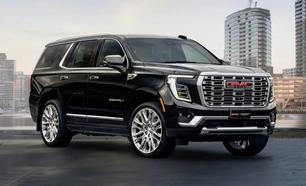
Well, that has now changed as General Motors Specialty Vehicles (GMSV) is importing the GMC Yukon Denali to Australia. This top-of-the-range Yukon arrives here as a left-hand drive vehicle and is converted to right-hand drive at a facility in Victoria to suit our market.
The Denali has a price tag just under $175,000, though, and that makes it a lot more expensive than most vehicles that could be considered rivals in the Aussie market. Is it worth it?
Read on.
The Ford Transit Custom Trail has plenty of appeal as a work van or a camper fit-out candidate. It’s a well-packaged, comfortable and contemporary van that’s nice to drive and as a bonus, with all-wheel drive it’s given the scope of capability to be able to tackle mild off-roading situations with confidence.
It’s built for work and play and though it’s limited to two-up for travels, the Trail offers so much potential as a camper conversion for adventure seekers its few niggles are easily forgotten when you’re busy making memories.
The 2025 GMC Yukon Denali is a big, comfortable, eight-seat 4WD with few rivals in the Aussie market. However, while it may occupy its own niche, it doesn't offer enough in terms of premium look and feel and towing capacity over what could be considered its rivals – and it all comes back to that price tag.
While it lacks a competitive warranty and its price puts it way out of reach of a lot of 4WD buyers, if you are in the market for a big premium-style wagon with a V8 and eight seats – and the Nissan Patrol and Land Rover Defender 130 aren’t your cup of tea – then the Yukon Denali just might be the right choice for you.
But when all is said and done, for the price of the Denali, you could buy two Nissan Patrols – maybe not brand-new ones – and a camper trailer and a couple of cartons of beer.
It looks like a van but with some striking yet low-key flourishes that all kind of work as a whole. Those include a Trail grille and the matt black alloy wheels. The yellow sticker-pack is a neat touch.
The Trail has more presence than a regular Trend with its 30mm-taller raised suspension and overall adventure-ready look with strong front end and chunky wheel arches.
The striking but low-key theme continues inside with a neatly laid-out yet spartan cabin. The two synthetic leather seats are topped with Trail embossing and lined with yellow stitching.
The cabin is separated from the rear cargo area by a bulkhead, which incorporates a small wired window.
The 2025 GMC Yukon Denali is 5337mm long (with a 3071mm wheelbase), 2378mm wide, 1943mm high and has a kerb weight of 2813kg.
Suffice it to say, it’s big.
The signature Denali grille – with LED headlights and chrome accents – is the size of a house and it’s eye-catching.
In terms of design, the rest of the Denali is standard SUV, but it's so massive it can't help but have plenty of presence on the road.
This 4WD has 24-inch rims, which are not suited to off-roading at all, but I’ll get to that later.
The Denali’s dual exhaust system, with polished stainless-steel tips, adds to the street-cool aesthetic.
The rest of the Denali exterior works – but it’s an in-your-face kind of success.
Inside, the space is cavernous and with leather upholstery, wood-look trim and soft-touch surfaces you’d expect it to feel like a plush, well-appointed cabin. But it doesn’t quite hit the mark.
Sure, all three rows of seats offer enough in terms of comfort and amenities but, for a $175,000 vehicle, the cabin lacks a distinctive premium feel, as you'd assume it should in a vehicle at this price point. That's a bit of a disappointment.
It’s a van so there are two distinct sections to the Trail, the cabin and the load space.
Firstly, the cabin. More a work-friendly than family-friendly interior, this Trail is a two-seater with plenty of durable plastic everywhere – ready for work and life – as well as charging (with USB-A and -C ports) and storage (including a van-favourite dash-top slot for logbooks etc, outboard moulded cupholders and a nifty pop-out cupholder), all amenities enough to cope with most daily van-related duties.
The seats are comfortable, supportive and have a fold-down lock-in-place armrest.
Now for the load space. There are no seats back there and as such it has plenty of potential as a work van or touring vehicle.
Access to the rear load space is via a barn door at the back and this Trail has a sliding door on both sides.
The cargo area is substantial – 3002mm long (to the bulkhead; 3450mm long if load-through hatch is used), 1392mm wide (between wheel arches) and 1425mm high (floor to roof). Easily big enough for work equipment or recreational gear. It can cope with four Euro pallets (each measuring 1200mm x 800mm) and it has a listed maximum load volume (with the bulkhead) of 6.8 cubic metres.
Load height through the rear barn doors is 531-585mm, depending on how much weight is already onboard.
The load space has the aforementioned metal bulkhead (with window and load-through hatch), load area protection kit (full height walls and moulded floor), LED lights and eight tie-down loops.
Otherwise, this is a load area ripe for customisation. Maybe a plethora of shelves for a tradie, or some bedding and extra storage for an adventurous person or couple.
The Denali has retractable sidesteps, which is a big help to hobbits, such as me, and it also has big grab handles, again a welcome addition for the purposes of easier ingress for those on the wrong side of tall.
Once you climb inside, it’s easy to appreciate the fact that this wagon’s interior is vast, functional and comfortable, with plenty of storage spaces for everything – glove box, centre console, sunglasses case, door pockets etc – and plenty of charge points for your array of smart devices, even a wireless charge pad.
It’s a well-designed cabin but, as mentioned earlier, the Denali lacks the prestige fit and finish and even build quality usually showcased in something at this price-point.
Instead, there are expanses of hard plastic throughout, storage receptacles with flimsy lids, and lacklustre fit and finish here and there.
The vertically-oriented 16.8-inch touchscreen multimedia system is simple enough to use, even when the road gets bumpy, although it sometimes took a few stabs of my finger to get the system to register a command.
Climate control switches and the like are located under the screen.
The three rows of seats offer more than adequate levels of comfort – the front seats are heated and ventilated and the second row’s outboard seats are heated – and each row also has the appropriate amount of amenity to suit its occupants, including cupholders, USB-C sockets, map pockets and the like.
The second-row seats even have 12.6-inch HD colour touchscreens – one on the back of each front-row headrest – with which to enjoy… whatever. Those units also have wireless headphones so everyone else in the vehicle doesn’t have to listen to… whatever.
Those in the third row get air vents, a USB-C plug and two cupholders on both sides.
Rear cargo volume with all seats up is 722 litres. With the second row folded that number expands to 2056 litres, and with only the front seats left standing you have a 'yuge' 3480 litres to play with.
The boot area has tie-down points, a shallow section of underfloor storage and plenty of packing potential. The tailgate door is power-assisted with remote open and close.
As I mentioned, the Denali’s interior is very functional and very comfortable and that includes the second and third row, which offer plenty of space.
Overall, my thoughts on the Denali’s cabin interior boil down to “massive”, “comfortable” and “feels cheap”.
The 2025.75Y Ford Transit Custom Trail has a MSRP of $61,990 (excluding on-road costs).
Standard features onboard include a 13-inch multimedia touchscreen (with wireless Apple CarPlay and Android Auto), a 12-inch digital instrument display and synthetic leather upholstery with Trail logos on the seats.
Other gear includes an eight-way manually adjustable driver’s seat, keyless entry and start, front and rear parking sensors, climate-control air and automatic LED headlights.
It also has all-wheel drive, LED headlights and daytime running lights, a variant-specific grille, black wheel arch moulding and side strip, yellow exterior decals and 16-inch matt black Trail twin-spoke alloy wheels.
The standard no-cost exterior paint is 'Frozen White'. Anything else – 'Agate Black Metallic', 'Grey Matter', 'Magnetic' or 'Moondust Silver' – will cost you $700.
The 2025 GMC Yukon Denali is a top-shelf, eight-seat, 4WD V8-powered wagon with a price-tag of $174,990, before on-road costs.
The standard equipment list is a comprehensive and its more notable features include a 16.8-inch touchscreen multimedia system (with wireless Apple CarPlay and Android Auto - but no sat-nav), a 14-speaker Bose sound system, power-adjustable heated and ventilated leather-accented seats, a head-up display, 12.6-inch rear HD touchscreens for the second-row passengers, a panoramic sunroof and an auto-sense power rear door.
It also has a 360-degree high-definition camera system (with up to 11 camera views), power-retractable sidesteps, 24-inch machined and painted 'pearl nickel' alloy wheels (on Bridgestone all-season tyres), all-around adaptive air suspension and a maximum braked towing capacity of 3628kg (when it has a 70mm ball and weight-distribution hitch).
Exterior paint choices include 'Onyx Black', 'Summit White', 'Titanium Rush Metallic', 'Volcanic Red Tintcoat' (on the test vehicle and costs $2000), 'Downpour Metallic', 'White Frost Tricoat' and 'Sterling Metallic'.
The Ford Transit Custom Trail has a 2.0-litre four-cylinder turbo-diesel engine producing 125kW at 3500rpm and 390Nm at 1750-2500rpm.
The Trail has a clever eight-speed automatic transmission and an on-demand all-wheel drive system.
It all works rather well, but it’s a van afterall and as such it is less dynamic and more dependably driveable than perhaps a cross-shopped SUV wagon. However, as an AWD van the Trail can be trusted to keep its grip on wet bitumen, soggy grass and loosely-gravelled tracks and that’s a strong part of its appeal over a 2WD van.
The GMC Yukon Denali has a naturally-aspirated 6.2-litre V8 petrol engine – producing 313kW and 624Nm – and that’s matched to a 10-speed automatic transmission.
This is an impressive set-up – the Denali is punchy off the mark, smooth and refined at highway speeds and overall it offers a composed and comfortable driving experience.
The Denali has a full-time 4WD system, selectable driving modes include 'Normal', 'Sport', 'Off-road' and 'Tow' and an electronic limited-slip differential is standard.
The Ford Transit Custom Trail has an official combined cycle (urban/extra-urban) fuel consumption figure of 8.5L/100km. On this test I recorded 8.8L/100km.
The Trail has a 70-litre fuel tank so going by my on-test fuel figure you could reasonably expect a driving range of about 795km from a full tank of diesel. However, as with any vehicle, once you’ve loaded the Trail with real-world burdens (e.g kids, dogs, camping gear, etc) you’ll soon see that fuel consumption increase.
Obviously, with such a big vehicle – almost three tons – driven by such a big V8 engine, fuel consumption is a concern. The 2025 GMC Yukon Denali has a listed fuel consumption figure of 12.8L/100km (on a combined, urban/extra-urban cycle).
I recorded 16.2L/100km on this test. I did a lot of high- and low-range 4WDing and this wagon was never working hard.
The Denali has a 91L fuel tank so, going by my on-test fuel-consumption figure, you could reasonably expect a driving range of about 560km from a full tank.
It’s easy to get in and out of the Trail’s driver seat with a wide-opening door and a big step to help you inside.
The seats are comfortable and it’s simple enough to dial-in your driving position via the tilt-and-reach adjustable steering wheel and manually-adjustable seat.
Word of warning: the auto transmission is operated via a stalk mounted on the right-hand side of the steering wheel column, which takes some getting used to.
Once underway, the Trail is punchy enough around town and in the suburbs with its 2.0L 'EcoBlue' turbo-diesel engine offering a more-than-adequate amount of power and torque (125kW and 390Nm) and its clever auto helping out with nifty moves through traffic (for a van, anyway).
Visibility is impressive from the cabin and you’re afforded a convenient vantage point with the Trail standing a bit taller than its regular Transit Custom stablemates as it’s on lifted suspension, but feeling composed on most surfaces.
The Trail has a listed kerb weight of 2046kg and a turning circle of 12.1m, pretty standard for a long wheelbase van, so this is not an insubstantial vehicle and it’s a bit tricky to 'flip a u-ee' if the situation demands it.
It has six drive modes – 'Normal', 'Eco', 'Slippery', 'Tow/Haul', 'Sport', 'Trail' – which each adjust engine torque, throttle response and traction control, among other things, to suit the road surface and conditions.
But we’re all here to see how it goes off-road, aren’t we?
Well, obviously this is no rock-crawling machine and it’s not intended to be. It’s best thought of as having an all-wheel drive system that gives this van mild off-road capabilities, as in it can tackle wet bitumen, soggy grass, lightly corrugated bush tracks and very shallow mud puddles with more confidence than the Transit Custom Trend it's based on.
In a nutshell, the AWD Trail will be able to handle most low-level traction-compromised scenarios. But it does not have enough ground clearance, wheel articulation, grip or underbody protection to tackle any terrain beyond modest off-roading.
Speaking of grip, the Trail as standard rides on Bridgestone Duravis R660 (215/65 R16) rubber, a van/light truck commercial tyre and they are not so well suited to dirt tracks and the like. Grippier all-terrain tyres would help this van perform slightly better off-road than on its showroom rubber.
In its favour, the Trail has a front skid plate and underbody protection in case it cops some knock from the ground during its adventures.
Not in its favour, however, especially as a potential touring vehicle, is the fact it has a space-saver spare wheel and tyre.
If you’re thinking of using your Trail as a tourer, it’s worth knowing payload is listed as 1179kg, maximum braked trailer towing capacity is 2500kg, Gross Vehicle Mass (GVM) is 3225kg and GCM is 5725kg.
The Denali is imported to Australia as a left-hand drive vehicle and then Walkinshaw's subsidiary company Premoso remanufactures the US 4WD wagons to right-hand drive at their facility in Clayton, Victoria.
And that mob has done a commendable job.
Firstly, the Denali is very impressive on general driving duties – settled and composed, that V8 just rumbles along. It’s pretty close to flawless on the open road - smooth and refined.
But off-road is a different story – especially in low-speed technical low-range 4WDing – and a lot of that has to do with the Denali’s sheer bulk and its 24-inch wheels.
The big pizza plate rims and paper-thin Bridgestone all-season tyres (285/40) aren't suited to four-wheel driving as they don’t offer the grip of a decent all-terrain and you can’t drop air pressures because there isn’t enough tyre there. Worth noting the spare is a Maxxis Bravo HT-750 (265/70R17).
In its favour, though, the Denali has a range of drive modes – one of which is Off-road and that seems well calibrated for a variety of 4WD situations – as well as high- and low-range gearing and an electronic limited slip diff.
Steering has a nice balance to it at low speeds, throttle response is quite impressive and controlled. And you can call on that 624Nm from the big 6.2-litre V8 pretty much as you see fit, and it delivers it smoothly and in a controlled fashion.
This top-shelf variant has air suspension – that does some levelling out of even major imperfections in the road or track surface – and it does have a special damper system also working away to even out ride and handling.
In terms of off-road measurements, the Denali offers approach, departure and rampover angles of 24.8 degrees, 20.5 degrees and 22.5 degrees, respectively.
Ground clearance is listed as 205mm, wading depth is not quoted, but likely a guesstimated 700-800mm, and turning circle is 12.4m.
And again, this is a big vehicle – 2813kg – so it requires more consideration, more patience, more skill and probably more experience than perhaps some smaller four-wheel drives do.
The Denali's payload is listed as 634kg, which is not a lot for a massive vehicle like this. Its towing capacities are 750kg (unbraked) and 3500kg braked.
If you do, however, put a 70mm tow ball and a weight-distribution hitch on the Denali, you can tow as much as 3628kg legally (braked).
That's not a lot more than something like the Nissan Patrol, which is 3500kg, or the equivalent 4WD wagon or ute available in Australia already. So the extra towing capacity in the Denali is not that big of a selling point. GVM is 3447kg and GCM is 6577kg.
Ultimately, even though the Denali has sound four-wheel drive mechanicals and reasonable off-road traction control, it's hampered by its gargantuan dimensions and let down by its 24-inch wheels and paper-thin tyres.
If you got rid of the standard wheel-and-tyre combination and replaced it with a set of decent, aggressive all-terrain tyres on 17 inch or 18 inch, or even (if you had to) 20 inch wheels, those changes would go a long way to making this over-sized 4WD capable in some off-road scenarios.
In its current state, however, the Denali is a tow vehicle playing at 4WDing rather than the other way around.
The Ford Transit Custom was tested as part of ANCAP’s Commercial Van Safety Comparison in 2024 and received a Platinum score “achieving a near-perfect score in safety assessments”, according to ANCAP.
The Trail has all of the Custom’s driver-assist tech and safety features, including six airbags (driver, front passenger, front side curtain and front side seat), as well as AEB, adaptive cruise control (with stop and go), traffic sign recognition and lane centering, blind-spot monitoring and assist, rear cross-traffic alert, forward collision warning, hill launch assist, side wind stabilisation, front and rear parking sensors, a rear view camera (with 180-degree split view) and on-board tyre pressure monitoring.
The GMC Yukon Denali does not have an ANCAP safety rating because it has not been tested.
Standard safety features include six airbags (including full-length curtain airbags for all three rows) and a full suite of driver-assist tech includes AEB (with pedestrian detection), adaptive cruise control, blind-spot monitoring, lane-keep assist, rear cross-traffic alert, front and rear parking sensors, tyre-pressure monitoring, a surround-view camera, trailer sway control, trailer hitch guidance with hitch view and more.
Ford’s five-year/unlimited kilometre warranty applies to the Trail.
Servicing is set down for every 12 months or 30,000km and capped-price servicing is offered. Four scheduled services will set you back $2000 (including a brake fluid change at year three) which isn't over the top for a vehicle of this type.
Ford Australia has about 195 independent Ford dealers in Australia, with many located in metropolitan or suburban areas.
The 2025 GMC Yukon Denali has a three-year/100,000km warranty – which is on the wrong side of ordinary in this day and age.
Roadside assistance is available for three years but check with your dealership for more details on that.
Servicing is scheduled for every 12 months or 12,000km. The first three workshop visits come in at $398.33, $420.33 and $506.48, including GST. Not outrageous for such a hefty beast.