What's the difference?
This idea hasn’t always worked out too well. Take a parcel-van (in this case the Ford Transit Custom) strip out the rubber matting and cargo barrier and bolt six or seven seats into what was the load area. Sure, the original vehicle to use this concept, the Volkswagen Kombi way back in the 1950s, got away with it, possibly because there wasn’t anything better around.
Ford has plenty of history with this notion, too. The first Transit of 1965 was also available as a mini-bus, but worked okay because the Transit itself was such a car-like departure from the commercial-vehicle norm.
Things didn’t go so well for Ford in the early 1980s, however, when the Econovan-badged parcel van it shared with Mazda (the E2200) was fitted with eight seats, given some fuzzy velour trim and dubbed the Spectron. And it was dreadful. In fact, so bad, that it made the contemporaneous Mitsubishi Nimbus and the even more forgettable Nissan Prairie seem like vastly superior alternatives to the job of moving people. Only because they were.
Early versions of the Spectron retained the Econovan’s crude suspension, wheezy (and fragile) little engines and even the tiny dual rear wheels that entirely deprived the vehicle of any traction. In fact, dreadful doesn’t even cover it.
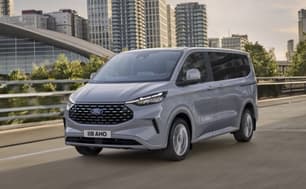
So you can see why Ford might be a bit antsy about me referring to the new Tourneo (a badge that has been around in Europe for decades) as a Transit Custom with extra seats and windows. Yet that kind of sums it up (up to a point, anyway). Luckily, the Transit Custom itself is a pretty sorted thing these days, so maybe Ford has nothing to worry about. Maybe…
Sometimes it really is all a matter of timing.
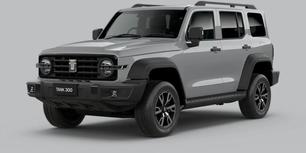
GWM was always going to offer up the plug-in hybrid version of its Tank 300 4X4, but for it to arrive in showrooms right now must be being looked on as some kind of blessing at GWM HQ.
Consider the circumstances: The Tank 300 Hi4-T PHEV (to give it its full name) not only saves fuel by making use of plug-in hybrid tech, but the fossil stuff it does use is petrol, not diesel with that fuel’s buck-a-litre cost penalty right now.
And with the planet on a knife’s edge waiting for the next increase in brinkmanship from those referred to as our world leaders, overseas travel has never seemed sketchier to the average Aussie. Which is when keeping it local and hitting the outback in a four-wheel drive suddenly looks really, really good. Except for the cost of fuel, that is, which is where we circle back to square one.
All of which means the GWM Tank 300 Plug-in hybrid concept could not really have come at a better time. But does the reality match the promise?
There’s absolutely no doubt that the van-based people-mover has some distinct advantages over a three-row SUV. The rear seat is bigger, access to it is far better and there’s more luggage space even when all eight seats are occupied. But the Tourneo goes a step or two further with the sliding, swivelling seats that make it one of the most practical and flexible interiors on the market.
True, the driving experience is a bit alien at first, but it’s a case of different, rather than worse. Meantime, the ride is excellent and the performance and economy from the turbo-diesel driveline are both absolutely spot on for this vehicle’s intended purpose.
And perhaps that’s the metaphor for the whole thing: By not trying to be something it’s not, and concentrating on what it needs to do, the Tourneo emerges as a bit of a quiet achiever.
As we said earlier, this type of vehicle concept is never a sure-fire proposition. Parcel vans converted to passenger duties haven’t always worked out. This time, though, it’s different.
There’s a lot to like here. The GWM Tank 300 in any of its forms is a competent vehicle from the helm and backs up its off-road claims with real ability. The ride quality, in particular, is a highlight, and it’s a good size for couples or young families. Its value for money is also quite brilliant.
Add this plug-in hybrid driveline to the mix and the performance is quite astounding, while the petrol engine and EV potential have arrived at a critical point in history where such things carry more weight than ever before. It remains to be seen what happens globally and what effect that has on fuel prices, specifically the price gap between petrol and diesel. There’s also the question of what happens electronically when you dunk the Tank into Nolan’s Brook on the track to Cape York. But for now, this is a car whose time appears to have come.
But while the overall concept deserves praise, there’s still some work required in terms of the way the car drives and in its attempts at keeping its occupants safe. The calibration of both the throttle response and some of the driver aids is, frankly, in need of some final polish. And though it sounds odd, the Tank 300 would be a better thing to live with if GWM ditched the contentious driver aids and took the points hit on its ANCAP rating. Even better would be to stick with the tech but refine it to the point where it works in the background and not as an irritant.