What's the difference?
Forget California! Ferrari is an Italian brand, so when the time came for the marque to redo its entry-level model - as well as rename it - the geographical tack was at last rightfully placed in its home country.
Enter the all-new Ferrari Portofino 2019 model.
If you’ve travelled the Italian coast, you might know Portofino. It’s located on the picturesque Italian Riviera at the edge of the Ligurian Sea, between Cinque Terre and Genoa, and it’s known for attracting wealth and celebrity to its exclusive shoreline.
It’s gorgeous, classic, timeless; all terms also suitable for this new convertible model, which looks so much better than the California did. And, quite truthfully, it looks more Italian, which is important for this macchina, a true auto sportivo italiana.
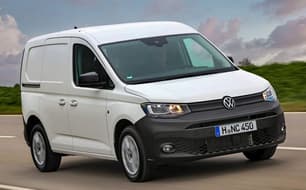
The venerable VW Caddy was launched in 1979 and after five generations and more than four decades of service, it remains one of the world’s most popular range of small vans.
In Australia’s light-commercial vehicle market, the Caddy’s work-focused Cargo model competes in the small van (under 2.5-tonne GVM) segment against the Renault Kangoo and Peugeot Partner.
The VW range offers Cargo (SWB), Cargo Maxi (LWB) and Crewvan (LWB) models with a unique choice of petrol/diesel engines and manual/auto transmissions.
We recently revisited this German workhorse to find out why it remains such a strong seller in Australia from a business perspective.
The overall score doesn’t necessarily reflect how good this car is, but that’s because we have to factor in safety kit and equipment. Those things matter, sure. But if you really want a Ferrari Portofino, you’ll probably read the drive impressions and look at the photos, both of which should be enough to push you over the line if you’re not quite there yet.
The Ferrari Portofino 2019 model is not just bellissimo to look at, it’s also a more Italian offering. And that’s buonissimo.
It’s not hard to see why the Caddy Cargo maintains its enduring favouritism in the small van class. It has outstanding workhorse capabilities, unmatched five-star safety and drivetrain choice, combined with a spirited car-like driving experience, be it unladen or with a heavy payload. It’s not perfect, but it's also hard to fault in a workhorse role.
It’s a more angry-looking entry-level car for the iconic Italian brand, but not in an ugly way.
Sure, some angry faces aren’t pretty. But I bet if Elle Macpherson or George Clooney got cranky at you, you’d still probably find them attractive. And so it is with the Portofino, which has a mildly menacing front end, some scintillating curves over its taut metalwork, and a pair of high-set hips with bold tail lights.
It is undeniably more muscular than the old California was. And filling the wheel arches are 20-inch wheels, which measure eight inches wide at the front (with 245/35 rubber) and ten inches wide (285/35) at the back.
This isn’t a compact car, either - with dimensions of 4586mm long, 1938mm wide and 1318mm tall, the Portofino is longer than some mid-sized SUVs. But boy, does it pull its size off well.
And like many of the beachside manors in the seaside town for which the new model is named, you can shutter yourself in to combat bad weather. The folding electronic roof system takes 14 seconds to raise or lower, and can be operated at speeds up to 40km/h.
I actually think it looks better with the roof on. It’s not often you can say that about a convertible…
Our test vehicle rides on a 2755mm wheelbase with 4500mm overall length, yet its 11.4-metre turning circle is slightly larger than a Toyota HiAce mid-sized van, which highlights the restrictions in steering lock shared by front-wheel-drive vehicles like the Caddy and its French rivals.
Underneath you’ll find robust MacPherson strut front suspension, a coil-spring beam rear axle with Panhard rod, four-wheel disc brakes and electric power-assisted steering.
It comes well armoured for work duties with unpainted dark grey plastic used in areas where bumps, scrapes and wear usually occur like the front/rear bumpers (including the rear pillars from top to bottom), door-handles and door mirror-shells. The bright silver alloy-look plastic wheel-covers can also be easily replaced if damaged by kerbs to keep this van looking sharp on the job.
Its purposeful external appearance is matched by a neat and practical cabin design with wipe-clean rubber flooring and fabric-trimmed bucket seats for driver and passenger. Hard surfaces abound in contrasting shades of grey with splashes of satin chrome.
The minimalist dash design is achieved by corralling most functions into the comparatively small (by today's standards) central touchscreen including often-used climate control, engine auto start-stop etc., which can be fiddly and distracting when driving. Thankfully, at least physical dials for audio volume and tuning remain.
You aren’t buying a Ferrari if you want the most practical car for the money, but that doesn’t mean there isn't some semblance of pragmatism to the Portofino.
There are four seats. I know, it’s amazing to think there’s a point in making the Portofino a 2+2 seater, but according to Ferrari, owners of the outgoing California model used those back seats about 30 per cent of the time.
I wouldn’t want to be in the back row that much. It’s designed to play host to little kids or small adults, but anyone nearing my height (182cm) will be very uncomfortable. Even tiny adult males (like fellow auto scribe Stephen Corby, for example) reckon it’s tight and not a pleasant place to be back there. (link to existing review). But if you have kids, there are two ISOFIX child seat anchor points.
The boot space is not huge, but with 292 litres of cargo capacity with the roof up, there’s enough room for a weekend’s worth of luggage for a couple (Ferrari says you can fit three cabin bags in that configuration, or two with the roof down). And - a tidbit for the actual customers out there- it has more luggage capacity than you get in a new Corolla hatch (217L).
As for cabin comfort, the front seats are sumptuous, and there are some nice elements like the 10.25-inch infotainment screen, which is pretty easy to use, if a little slow to load when you’re skipping between screens or trying to key locations into the sat-nav system.
There are also two 5.0-inch digital screens in front of the driver, mounted either side of the rev counter, and the front passenger can have their very own display with speed, revs and gear on show. It’s a neat option.
While it may have some long-distance touring pretence, the Portofino isn’t a beacon of loose-item storage. It has a pair of cupholders, and there’s a small storage tray that will fit a smartphone.
The Caddy’s 1508kg tare weight and 2250kg GVM results in a 742kg payload rating, of which up to 100kg can be legally carried on the roof where external anchorage points are provided for roof racks or rails.
It’s also rated to tow up to 1500kg of braked trailer, although its relatively low 75kg tow-ball download (TBD) limit could present a challenge, given that TBD is typically about 10 per cent of trailer weight. So, a 150kg TBD rating would be better.
Volkswagen also does not publish a GCM (Gross Combination Mass) rating, so we don’t know how much it can legally carry and tow at the same time.
The cargo bay, which offers up to 3.1 cubic metres of load volume, is accessed through a kerbside sliding door or asymmetric rear barn-doors.
Its 1797mm length and 1614mm width with 1230mm between the rear wheel-housings provides good versatility, given it can carry an 1165mm-square Aussie pallet or 1000 x 1200mm Euro 3 pallet, two 800mm x 1200mm Euro pallets, or two 720 x 830mm bread-roll containers.
However, with the sliding side-door’s 695mm opening, all of these would need to be loaded through the rear barn-doors which offer 180-degree opening for easy forklift or loading dock access. The load floor is protected by a thick moulded-rubber liner and there are six load-anchorage points.
The cargo bay walls and doors are lined to mid-height and there are two bright LED roof lights and a handy 12-volt socket.
Driver and passenger have ample cabin storage with large-bottle holders and bins in each front door, a handy pull-out compartment to the right of the steering column, numerous bins embedded in the dash-pad, full-width overhead shelf, a large glovebox and a centre console with dual small-bottle/cup holders and numerous storage nooks.
It would be silly to think that people who can afford a Ferrari aren’t conscious of finance. Most people who can buy a car like this are very specific about what they will and won’t spend their hard-earned cash on, but according to Ferrari, about 70 per cent of projected Portofino purchasers will be buying their very first Prancing Horse. Lucky them!
And at $399,888 (list price, before on-road costs), the Portofino is as close to an affordable new Ferrari as you’ll get.
Standard equipment includes that 10.25-inch media screen that runs Apple CarPlay (an option, of course) and includes sat nav, DAB digital radio, and acts as a display for the reversing camera with parking guidance lines, plus there are front and rear parking sensors as standard.
The standard wheel package is a 20-inch set, and of course you get leather trim, 18-way electronically adjustable front seats, plus heated front seats and dual-zone climate control, and there’s proximity unlocking, too (keyless entry) with a push-button starter on the steering wheel. Auto LED headlights and auto wipers are standard, as is cruise control and an auto-dimming rear-view mirror.
Speaking of Ferrari’s fantastic Formula One-inspired wheel (with paddle shifters), the version with the carbon fibre trim and integrated shift LEDs fitted to our car cost an extra $8300. Oh, and if you do want CarPlay, that'll be $6793 (which is more than the best Apple computer you can buy), and that reversing camera will add $6950 to the price. WHATTTT???
Some of the other options fitted to our car included the Magneride adaptive dampers ($8970), the LCD passenger display ($9501), adaptive front lighting ($5500), a premium hi-fi sound system ($10,100), and a foldable rear-seat backrest ($2701), among plenty of other interior elements.
The as-tested price for our just-under-four-hundred-grand Ferrari, then, was actually $481,394. But who's counting?
The Portofino is available in 28 different colours (including seven blue hues, six grey options, five red and three yellow paint choices).
Our test vehicle in standard Candy White is the Cargo SWB, which at entry-level is available with a 1.5-litre turbo petrol engine with six-speed manual or seven-speed auto. Or you can step-up to a 2.0-litre turbo-diesel with either a six-speed manual or (like our example) a seven-speed auto for a price of $45,990 plus on-road costs.
That’s higher than its two small van competitors, given the Renault Kangoo SWB petrol auto lists at $42,990 and Peugeot’s Partner Pro Short petrol auto is $39,990, but the Cargo is unique in offering five-star safety and its drivetrain choices.
The work-focused standard equipment list includes 16-inch steel wheels with plastic covers, 205/60R16 tyres and a full-size spare. There’s also an electronic handbrake, separate cargo bay locking system, a reversing camera, rear parking sensors, heated door mirrors, daytime running lights, two USB-C ports and two 12-volt sockets.
A moulded composite bulkhead with window separates the cabin from the cargo bay. The driver also gets a leather-trimmed flat-bottom steering wheel with multi-function controls, plus adjustable lumbar support for both driver and passenger seats.
The four-speaker multimedia system is controlled by an 8.25-inch colour touchscreen with Apple CarPlay, Android Auto and MirrorLink connectivity and FM radio, but no DAB or (sorry, talkback fans) AM band.
Volkswagen also offers numerous paint colour options and four option packs, plus there’s a genuine accessories range containing useful workhorse items like all-weather floor mats, roof racks, cargo barriers, dashcams and more.
The 3.9-litre twin-turbocharged petrol V8 engine produces 441kW of power at 7500rpm and 760Nm of torque from 3000rpm. That means it has a sizeable 29kW more power (and 5Nm more torque) than the Ferrari California T it replaces.
Plus the 0-100 acceleration time is better, too; it will now hit highway speed in 3.5 seconds (was 3.6sec in the Cali T) and moves past the 200km/h marker in just 10.8sec, if you believe Ferrari’s claim.
Top speed is “more than 320km/h”. Didn’t get a chance to test that, sadly, nor the 0-200km/h time.
The kerb weight for the Portofino is 1664 kilograms, while the dry weight is 1545kg. The weight distribution is 46 per cent front, 54 per cent rear.
Our test vehicle’s premium 2.0-litre four-cylinder turbo-diesel engine, dubbed TDI320, meets Euro6 emission standards using AdBlue, and produces 90kW at 4250rpm and 320Nm between 1500-2500rpm.
The seven-speed dual-clutch automatic offers three drive modes comprising (default) Drive, Sport or sequential manual-shifting using steering wheel-mounted paddles. There’s also an electronically-controlled automatic locking diff.
The twin-turbo-V8-powered Ferrari Portofino uses a claimed 10.7 litres per 100 kilometres. Not that fuel costs are a big concern if you’re spending $400k on a car.
But that’s more than, say, a Mercedes-AMG GT, (9.4L/100km; 350kW/630Nm) but not as much as a Mercedes-AMG GT R (11.4L/100km; 430kW/700Nm). And the Ferrari has more power than both of those, and it's quicker, too (and more expensive…).
Fuel-tank size for the Ferrari Portofino is 80 litres, enough for a theoretical mileage range of 745km.
The official combined average fuel consumption is a hybrid-like 4.9L/100km and the dash display was showing 5.6L after our 355km test, of which about one third of that distance was hauling a near-maximum payload.
That wasn’t far south of our own fuel-sipping figure of 6.5L/100km, based on actual tripmeter and fuel bowser readings. Therefore, you could expect an excellent real-world driving range of up to 770km from its 50-litre tank.
Compared to the California T it replaces, the new model is stiffer, has a lighter all-aluminium chassis, gets a reworked transmission and also includes an electronically controlled limited-slip differential.
It’s faster, has more tech - like electronic exhaust bypass valves to make it sound better - and it's gorgeous.
So it's fast and fun? You bet. It has electronic power steering, which mightn’t be as tactile in terms of road feel as a vehicle with a hydraulic steering setup, but it is rapid in its reactivity, and arguably offers better point-and-shoot ability as a result. Old diminutive Corby criticised it for being very light and somewhat lacking, but I reckon that as an entry point to the brand, it serves as a very manageable steering setup.
The adaptive magnetorhelogical dampers do a magnificent job in allowing the Portofino to ride over rough patches of road, including pockmarks and potholes. It hardly ever feels ruffled, although there is some scuttle shake to the windscreen, as is often found in convertible cars.
The most surprising element to this Ferrari is that it is supple and reserved at times, but can turn into a manic machine when you want it to.
With the Manettino drive-mode dial on the steering wheel set to Comfort, you will be rewarded with sedate progress and cushioning from the road surface below. In Sport mode, things are all a bit more growly and rigid. I personally found the transmission in this mode, when left in Auto, was eager to upshift to help save fuel, but still responded pretty quickly when I put my foot down hard.
Turning Auto off means it’s you, the pedals and the paddles, and the car won’t overrule your decisions. If you want to see just how realistic that 10,000rpm tacho top is, you can test it in first, second, third… oh wait, you need to keep your licence? Just keep it to first.
Its braking is tremendous, with aggressive application resulting in seatbelt-tensioning response. Plus not only was the ride comfortable, the balance and control of the chassis was both predictable and inherently manageable in corners, and there was plenty of grip, even in the damp.
With the roof down, the noise of the exhaust is exhilarating under hard throttle, but I found it droned a bit under less-urgent acceleration, and in most instances of ‘regular driving’ it actually just sounded loud, rather than lush.
Things that were annoying? The throttle response is dull for the first part of the pedal travel, making for some testing moments in traffic. Not helping that is the fact the engine stop-start system is exceptionally overactive. And that there’s no fuel use readout on the digital trip computer screen - I wanted to see what the car was claiming in terms of fuel use, but I couldn’t.
Its compact external dimensions are deceptive, as the cabin has ample headroom and it’s not hard for even tallish drivers (I’m 186cm) to find a comfortable position, even though the close-fitting bulkhead restricts backrest recline adjustment and the base cushion rake is fixed.
Small vans are the closest you’ll get to a car-like driving experience in light commercials and, given the Cargo’s unique turbo-diesel powertrain, it has unmatched torque output that provides energetic performance.
The shift calibrations of its seven-speed dual-clutch automatic ensure vigorous response in city and suburban driving, given that for most of the time they keep the engine operating between 1500-2500rpm, where its 320Nm of torque is served at full strength.
Combined with nicely weighted steering and four-coil suspension that provides an ideal balance of responsive handling and supple bump absorption, it’s an enjoyable and engaging vehicle to drive. The Sport drive mode and sequential manual-shifting options raise the fun level.
The gearing also ensures low-stressed highway driving with only 1600rpm required to maintain 110km/h, at which speeds the solid bulkhead minimises cargo bay noise that mostly emanates from the rear tyres. However, tyre noise can still be intrusive on certain grades of coarse bitumen.
To test its payload rating, we forklifted 650kg into the cargo bay through the rear barn-doors, which with driver equalled a total payload just shy of its 742kg payload limit. The rear suspension compressed almost 60mm under this weight, with long jounce rubbers positioned inside the rear coil springs providing additional load support and, in effect, a second stage of springing.
The Caddy took this heavy load haul in its stride on city and suburban roads, gliding over bumps without a hint of bottoming-out. The payload’s effect on engine, steering and braking performance was minimal and its handling composure was maintained regardless of speed or road conditions.
It also made light work of our 13 per cent gradient, 2.0km-long set climb at 60km/h, and although engine braking on the way down required some assistance from the quartet of disc brakes to keep speeds in check, they handled this task with ease.
Our only criticism of the driving experience is that, given the substantial blind-spot over the driver’s left shoulder caused by the cargo bay’s solid walls, a Cargo buyer must pay extra to get blind-spot monitoring and rear cross-traffic alert as part of an options pack. We reckon these active features are crucial to safe van operation (any solid-walled van that is) and should be standard.
There is no ANCAP or Euro NCAP crash-test score available for any Ferrari model, and it’s fair to state that safety tech isn’t the reason you buy a Ferrari.
The Portofino, for instance, has dual front and front-side airbags, and an advanced stability control system… but that’s about it.
Things like auto emergency braking (AEB), lane-departure warning, lane-keeping assist, blind-spot monitoring and rear cross-traffic alert are all unavailable.
Unmatched by its small van rivals is a five-star ANCAP rating (tested 2021, expires 2027) which applies to all Cargo variants built from July 2022.
It’s equipped with seven airbags, AEB with pedestrian and cyclist monitoring, a reversing camera, rear parking sensors, daytime running lights, non-adaptive cruise control, driver fatigue alert system and more, but you must pay extra for extra safety.
Ferrari servicing won’t cost you a cent for the first seven years, and that’s whether you hold on to it or sell it - the new owner will have access to complementary maintenance for whatever is left of the initial seven-year period.
The standard warranty offer from Ferrari is a three-year plan, but if you sign up for the New Power15 program, Ferrari will cover your car for up to 15 years from the first registration date, and that includes cover for major mechanical components including the engine, transmission, suspension and steering. It reportedly costs $4617 for V8 models like this - a drop in the financial ocean at this price point.
The Caddy comes with a five-year/unlimited-kilometre warranty and 12 months roadside assist.
Scheduled servicing is every 15,000km or 12 months, whichever occurs first.
An optional five-year pre-paid service package is available for the price of a three-year package ($2000), so that’s two free services and savings of up to $1439 compared to pay-as-you-go capped-price servicing. In other words, an average annual servicing cost of $400.