What's the difference?
Hybrid campers tread the line between caravan comfort and camper trailer-manoeuvrability and are touted as somewhat of a new thing; almost an evolution of comfort as more people look for a perfect camping experience.
But camper-trailers like the Cub Longreach LE prove that the concept has been around for decades.
It hasn't always been called the Longreach, but this high-walled, super-sized, off-road camper-trailer was one of the first to offer caravan-like comfort and space in a product that'll go anywhere off-road*. (* In terms of reasonable use and having obviously scrutinised your camper's warranty conditions before setting off to make sure you're covered for that sort of usage.)
The 2019 LE takes the comfort levels even further, so we grabbed one for a night to check it out.
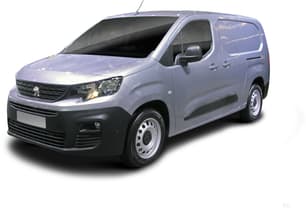
In 2023 Peugeot commands around 50 per cent of sales in Australia’s small (under 2.5-tonne GVM) commercial van segment with its Partner range, which offers a choice of wheelbase lengths and model grades.
The French marque has recently introduced its first fully electric variant to the Australian market called the e-Partner, even though this van has been on sale in Europe since 2021.
We recently put one to work for a week, which included loading it up to the max, to see how it compares to its petrol-powered sibling.
This isn’t the camper for everyone – my guess is that plenty of people look at this and find it too sparse, too basic. I kinda get it.
But there are very few campers which offer the same amount of open, internal space, or that are as easy to set up.
That the Longreach, albeit with a few different names, has lasted so long on the Cub Campers' product roster is a testament to its versatility and ability to accommodate a small family on off-road camper trips.
It's arguably one of the forerunners of the hybrid camper scene, and it's now starting to evolve with campers' desires for more comfort.
It’s a lot of money for a small commercial vehicle that’s well into its current model cycle in Europe, falls short on benchmark safety and requires convenient charging infrastructure to minimise inconvenience for owners. However, its emissions-free drivetrain is quiet and competent under load, with a range that should comfortably cater for the daily urban use small van operators typically require. Whether those positives outweigh the negatives, only a potential buyer can decide.
For a rear-fold camper-trailer, the space inside couldn't be more practical. The long body and high sides mean that when the camper is open and set up, it has a lot more space than most. Behind the bed, for instance, there is enough space for Cub to have fit a small dinette.
The dinette has cushioned benches for two and a swivel table that can also become a counter over the rear floor area.
The camper's length also means that the rear floor area is massive. It is easily big enough to lie a couple of kids on, or if your nest is empty, to set up some camp chairs and a table to enjoy a covered living area.
It is still a rear-fold camper-trailer, though so, despite the fact it has nearly twice the space of other hybrid-style campers, it's very sparsely furnished. There's no internal kitchenette or anything like that.
The e-Partner’s 1632kg tare weight is about a quarter of a tonne (247kg) heavier than its 1385kg petrol-engine equivalent, largely caused by the lithium-ion battery pack.
So, even though the electric model has more power (100kW vs 96kW) and torque (260Nm vs 230Nm), the battery ensures it has an inferior power-to-weight ratio, with the e-Partner carrying 16.3kg/kW compared to the petrol’s 14.4kg/kW.
The e-Partner’s 753kg payload rating is also 182kg less than its petrol sibling, so be mindful of these differences if payload is important.
The e-Partner is also rated to tow up to 750kg, but given Peugeot does not publish a GCM figure (how much it can legally carry and tow at the same time) we don’t know if it can haul its maximum payload while towing its maximum trailer weight.
The cargo bay, with 3.9 cubic metres of load volume, is a window-free zone accessed by a sliding door on each side and asymmetrical rear barn-doors that open to 180 degrees for optimum loading access.
With its 2167mm length, 1527mm width, 1243mm height and 1229mm between the rear-wheel housings, it can carry one standard Aussie pallet or two Euro pallets held in place by a choice of six load-anchorage points.
The cargo bay is lined to mid-height and there’s protective mesh over the bulkhead window. However, the bulkhead protrudes into the sliding door openings given the need to allow sufficient cabin space for the seat backrests.
There’s also no load-floor protection provided as standard, so to avoid scratches and dents we’d recommend fitting a floor-liner like the thick rubber one fitted to our test vehicle.
Cabin storage includes a full-width shelf above the windscreen and bins in the base of each door. The dash offers small bottle/cupholders on each side plus a lidded upper glove box and open storage on the passenger side.
The dash extension, where the gear-selector and electronic handbrake reside, offers more open storage as does the floor-mounted centre console.
Our criticisms include the lack of a dedicated storage place for the charging cable, which is supplied in a zip-up vinyl bag.
Although it was sitting on the passenger floor when we collected the vehicle, it was difficult to find a secure place to store it with a passenger aboard. It ended up unsecured in the cargo bay.
The rear barn-doors also do not have any stays to keep them open when positioned at 180 degrees.
As a result, the slightest breeze swings them shut.
And due to the lack of any dedicated bottle-holders in the front door bins, bottles tend to topple onto their sides and can be difficult to extract when driving.
Cub Campers are famously good to tow, and even the largest of them lives up to the reputation.
As big as it is, the Longreach LE is quite light thanks to the effort Cub puts into engineering. As a result, it's not a strain, even for older dual-cabs like the D22 Navara.
And because it isn't any higher or wider than a modern SUV, there was very little wind-drag or buffeting as we cruised along the highway.
Cub developed the camper's Australian-made and -designed independent, coil-spring suspension and the set-up yields excellent ride in any conditions.
For the LE, Cub has added an extra shock-absorber each side to improve its performance even on the most corrugated roads.
An AL-KO off-road ball hitch is standard but can be upgraded to the Click-Lock version if you'd prefer that or need a more low-profile hitch.
In reverse, the long drawbar makes it an easy camper to manoeuvre around a campsite, plus it has enough size that the tow-vehicle driver never really loses sight of it while positioning it.
It has a comfortable driving position thanks to a reasonably spacious cabin, two-way adjustable steering wheel, left footrest and fold-down inboard armrest.
However, the base cushion feels a tad short for proper upper-thigh support and does not have rake adjustment.
The flat top of the rectangular steering wheel provides a clear view of the instrument display while the flat bottom allows ample driver clearance.
The electric motor with its muted hum delivers a liquid-like flow of acceleration that’s different to a petrol engine.
The lack of engine noise also makes other sounds more prominent, including tyre roar on coarse bitumen surfaces and thumps from the rear suspension over larger bumps.
The extra battery weight is not a noticeable hindrance in stop-start traffic, given the instant torque of the electric motor.
Its location under the load floor also contributes to a low centre of gravity which makes the e-Partner feel well-planted on the road. Even so, it takes a leisurely 11.2 seconds to accelerate from 0-100km/h.
To test its payload rating we forklifted 650kg into the cargo bay which with driver was just under its 753kg limit. The rear suspension compressed 70mm, but there was no bottoming-out over bumps due to large rubber cones positioned inside the coil springs that assist in supporting heavy loads.
We covered more than 50km with this weight in city and suburban driving and its performance was good in all modes including the energy-saving Eco. Energy consumption did not spike as expected.
Our only gripes from a driver’s perspective are the absence of blind-spot monitoring and rear cross-traffic alert, which should be mandatory in all solid-walled vans given the huge blind-spot over the driver’s left shoulder. Relying only on the relatively small passenger door mirror is potentially hazardous.
The other is the cruise control stalk located on the steering column, which is hidden from view by the steering wheel arm. Therefore, it must be operated purely by feel, which can be fiddly and distracting when driving.